Jiří Anger – författare
Visar alla böcker från författaren Jiří Anger. Handla med fri frakt och snabb leverans.
3 produkter
3 produkter
435 kr
Kommande
This volume in the film|minutes series focuses on Alfréd Radok’s Daleká cesta (Distant Journey, 1948), a pioneering Czechoslovak film admired by figures such as André Bazin and Alain Resnais. Renowned for its bold experiments in cinematic montage, the film combines fictional scenes with newsreel footage, Nazi propaganda, and images of liberated concentration camps. Produced shortly after the war, Daleká cesta remains one of the earliest and most formally daring cinematic attempts to grapple with the Holocaust. Drawing on the creators’ ideas of editorial montage as a means of rescuing victims of atrocity—at least momentarily—from historical determinism, the book explores how a montage like experiment in film analysis can challenge not only deterministic narratives of history, but also the conventions of established theoretical frameworks and academic writing.Volumes in the film|minutes series cut up films into segments of exactly one minute and transform each minute into an innovative tool for thinking with the film. Each volume works rigorously with the concept of “the minute” as a non-cinematic scale/quantity, a means to zoom in on (dis)orderly fragments that do not necessarily respect the confinements of cinematic form or meaning. As a critical practice, the focus on minutes causes disruptions and displacement that create novel connections and perspectives, and uncovers hidden traces, making it possible to watch each film anew.
Towards a Film Theory from Below
Archival Film and the Aesthetics of the Crack-Up
Inbunden, Engelska, 2024
1 290 kr
Skickas inom 10-15 vardagar
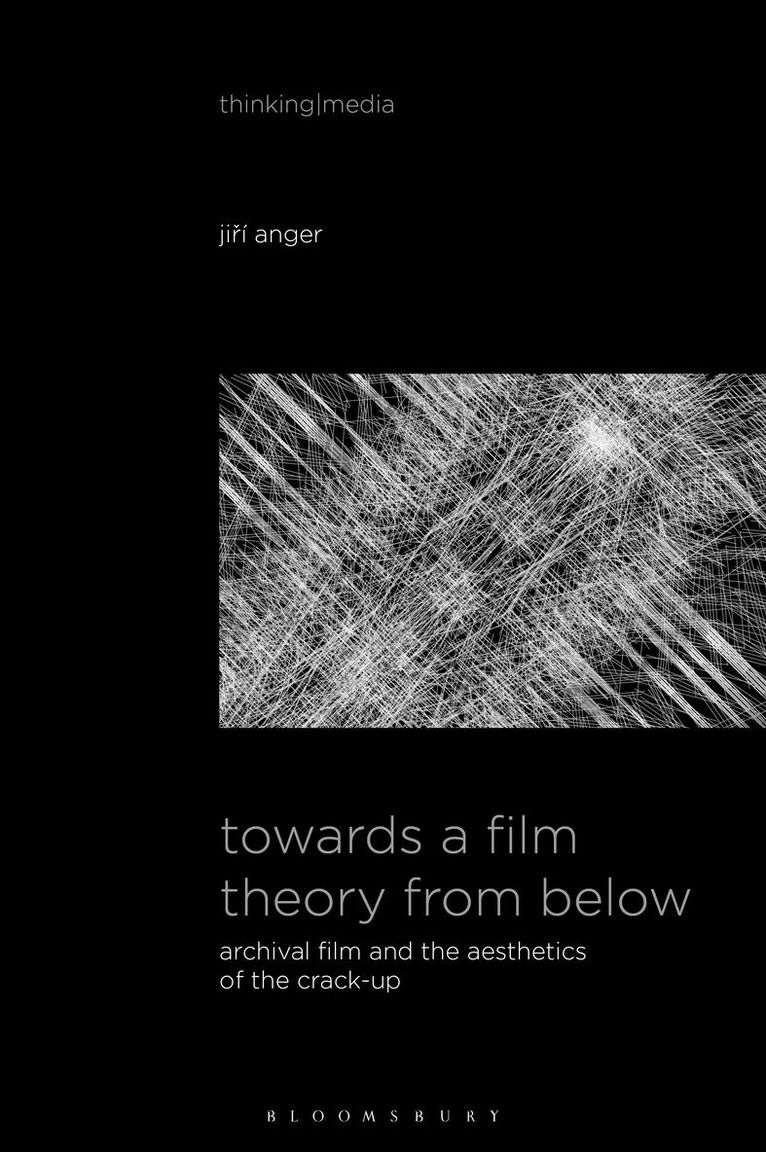
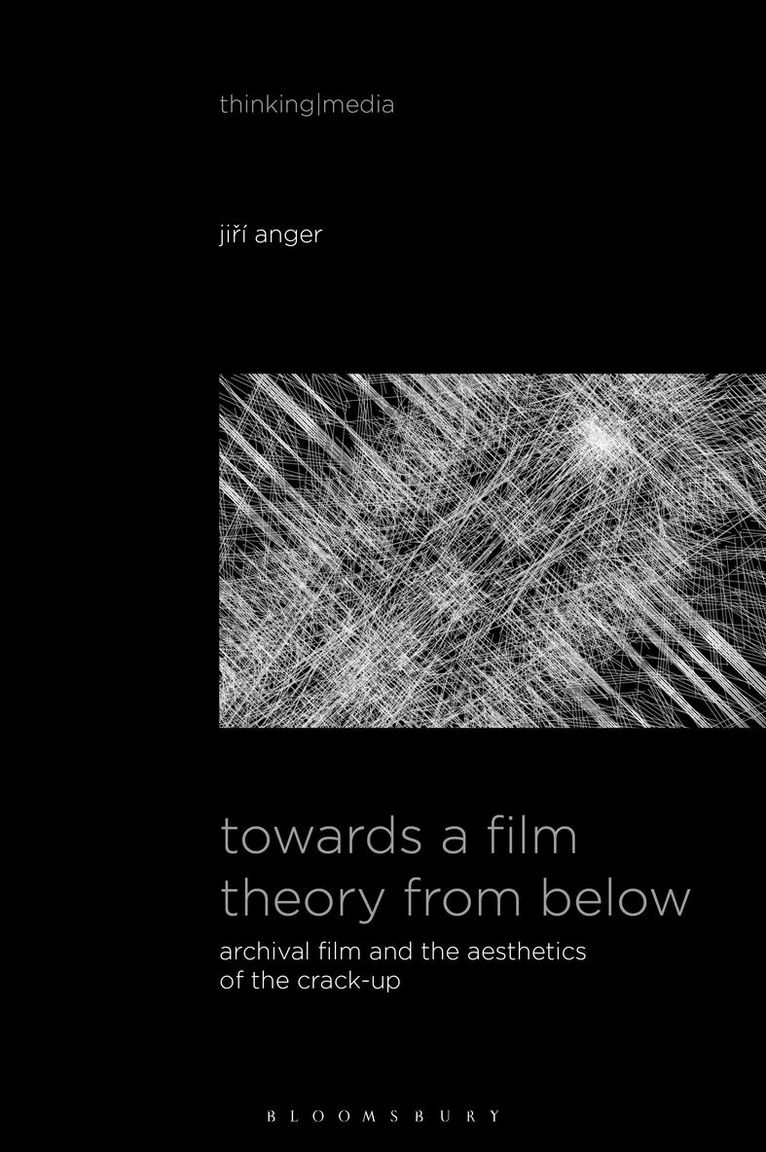
Operating between film theory, media philosophy, archival practice, and audiovisual research, Jiri Anger focuses on the relationship between figuration and materiality in early films, experimental found footage cinema, and video essays. Would it be possible to do film theory from below, through the perspective of moving-image objects, of their multifarious details and facets, however marginal, unintentional, or aleatory they might be? Could we treat scratches, stains, and shakes in archival footage as speculatively and aesthetically generative features? Do these material actors have the capacity to create “weird shapes” within the figurative image that decenter, distort, and transform the existing conceptual and methodological frameworks?Building on his theoretical as well as practical experience with the recently digitized corpus of the first Czech films, created by Jan Kríženecký between 1898 and 1911, the author demonstrates how technological defects and accidents in archival films shape their aesthetic function and our understanding of the materiality of film in the digital age. The specific clashes between the figurative and material spheres are understood through the concept of a “crack-up.” This term, developed by Francis Scott Fitzgerald and theoretically reimagined by Gilles Deleuze, allows us to capture the convoluted relationship between figuration and materiality as inherent to the medium of film, containing negativity and productivity, difference and simultaneity, contingency and fate, at the same time, even within the tiniest cinematic units.
Towards a Film Theory from Below
Archival Film and the Aesthetics of the Crack-Up
Häftad, Engelska, 2025
399 kr
Skickas inom 10-15 vardagar
Operating between film theory, media philosophy, archival practice, and audiovisual research, Jiri Anger focuses on the relationship between figuration and materiality in early films, experimental found footage cinema, and video essays. Would it be possible to do film theory from below, through the perspective of moving-image objects, of their multifarious details and facets, however marginal, unintentional, or aleatory they might be? Could we treat scratches, stains, and shakes in archival footage as speculatively and aesthetically generative features? Do these material actors have the capacity to create “weird shapes” within the figurative image that decenter, distort, and transform the existing conceptual and methodological frameworks?Building on his theoretical as well as practical experience with the recently digitized corpus of the first Czech films, created by Jan Kríženecký between 1898 and 1911, the author demonstrates how technological defects and accidents in archival films shape their aesthetic function and our understanding of the materiality of film in the digital age. The specific clashes between the figurative and material spheres are understood through the concept of a “crack-up.” This term, developed by Francis Scott Fitzgerald and theoretically reimagined by Gilles Deleuze, allows us to capture the convoluted relationship between figuration and materiality as inherent to the medium of film, containing negativity and productivity, difference and simultaneity, contingency and fate, at the same time, even within the tiniest cinematic units.