Jiyuan Yu – författare
Visar alla böcker från författaren Jiyuan Yu. Handla med fri frakt och snabb leverans.
15 produkter
Ethics of Confucius and Aristotle
Mirrors of Virtue
Av Jiyuan Yu
Häftad, 2009
791 kr
Lägg i varukorg
As a comparative study of the virtue ethics of Aristotle and Confucius, this book explores how they each reflect upon human good and virtue out of their respective cultural assumptions, conceptual frameworks, and philosophical perspectives. It does not simply take one side as a framework to …
Ethics of Confucius and Aristotle
Mirrors of Virtue
Av Jiyuan Yu
Inbunden, 2007
2736 kr
Lägg i varukorg
As a comparative study of the virtue ethics of Aristotle and Confucius, this book explores how they each reflect upon human good and virtue out of their respective cultural assumptions, conceptual frameworks, and philosophical perspectives. It does not simply take one side as a framework to …
Blackwell Dictionary of Western Philosophy
E-bok, 2008
2053 kr
Lägg i varukorg
The Blackwell Dictionary of Western Philosophy The Blackwell Dictionary of Western Philosophy ???The style is fresh and engaging, and it gives a broad and accurate picture of the western philosophical tradition. It is a pleasure to browse in, even if one is not looking for an answer to a particular …
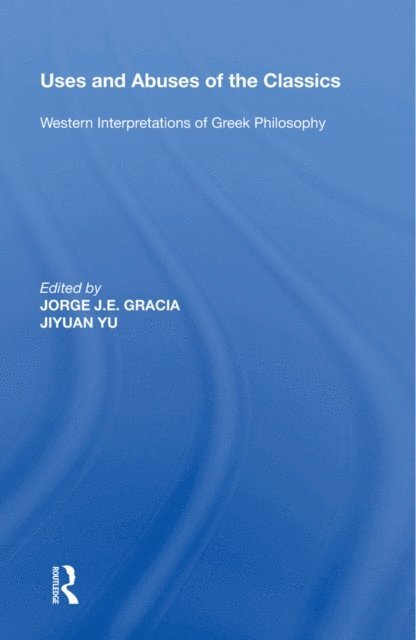
Uses and Abuses of the Classics
Western Interpretations of Greek Philosophy
Av Jorge J. E. Gracia, Jiyuan Yu
Inbunden, 2017
2504 kr
Lägg i varukorg
From very early on, Western philosophers have been obsessed with the understanding of a relatively few works of philosophy which have played a disproportionately large and fundamental role in developing the Western philosophical canon, dominating the curriculum in the past and in the present; there …
Ethics of Confucius and Aristotle
Mirrors of Virtue
Av Jiyuan Yu
E-bok, 2013
915 kr
Lägg i varukorg
As a comparative study of the virtue ethics of Aristotle and Confucius, this book explores how they each reflect upon human good and virtue out of their respective cultural assumptions, conceptual frameworks, and philosophical perspectives. It does not simply take one side as a framework to …
Ethics of Confucius and Aristotle
Mirrors of Virtue
Av Jiyuan Yu
E-bok, 2013
915 kr
Lägg i varukorg
As a comparative study of the virtue ethics of Aristotle and Confucius, this book explores how they each reflect upon human good and virtue out of their respective cultural assumptions, conceptual frameworks, and philosophical perspectives. It does not simply take one side as a framework to …
Uses and Abuses of the Classics
Western Interpretations of Greek Philosophy
Av Jorge J. E. Gracia, Jiyuan Yu
Häftad, 2022
530 kr
Lägg i varukorg
From very early on, Western philosophers have been obsessed with the understanding of a relatively few works of philosophy which have played a disproportionately large and fundamental role in developing the Western philosophical canon, dominating the curriculum in the past and in the present; there …
Uses and Abuses of the Classics
Western Interpretations of Greek Philosophy
Av Jiyuan Yu, Jorge J. E. Gracia
E-bok, 2017
624 kr
Lägg i varukorg
From very early on, Western philosophers have been obsessed with the understanding of a relatively few works of philosophy which have played a disproportionately large and fundamental role in developing the Western philosophical canon, dominating the curriculum in the past and in the present; there …
Uses and Abuses of the Classics
Western Interpretations of Greek Philosophy
Av Jiyuan Yu, Jorge J. E. Gracia
E-bok, 2017
624 kr
Lägg i varukorg
From very early on, Western philosophers have been obsessed with the understanding of a relatively few works of philosophy which have played a disproportionately large and fundamental role in developing the Western philosophical canon, dominating the curriculum in the past and in the present; there …
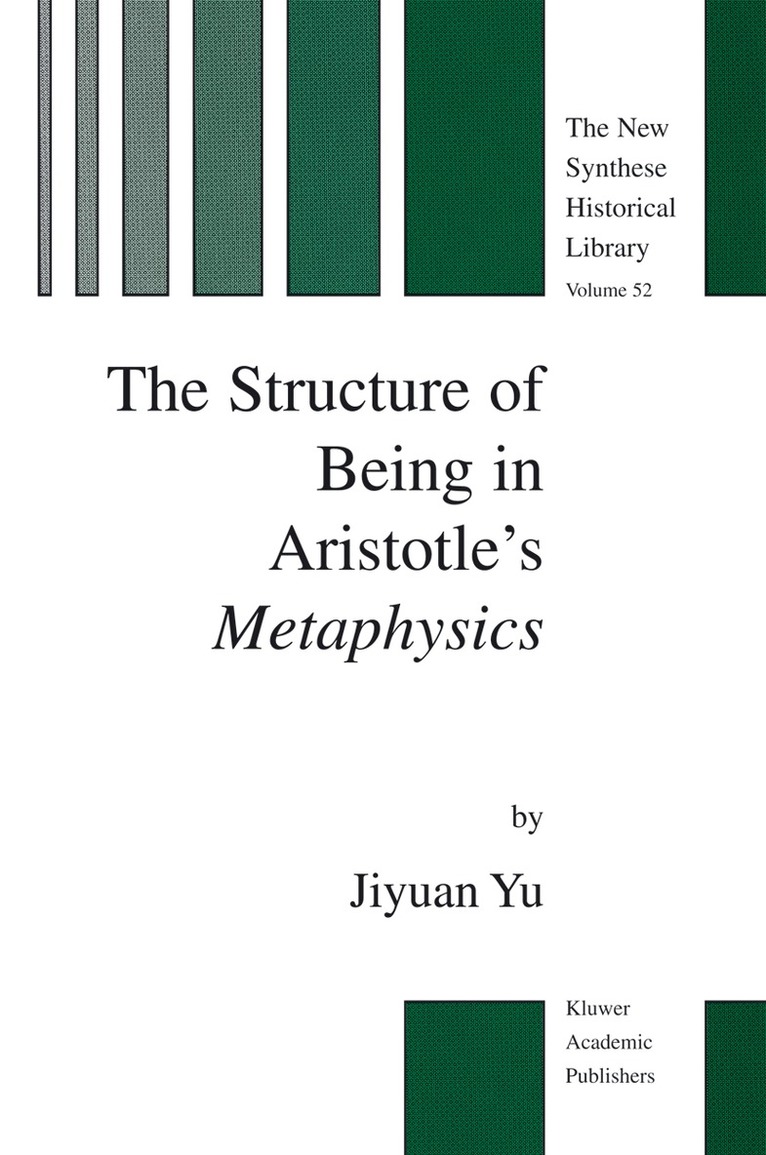
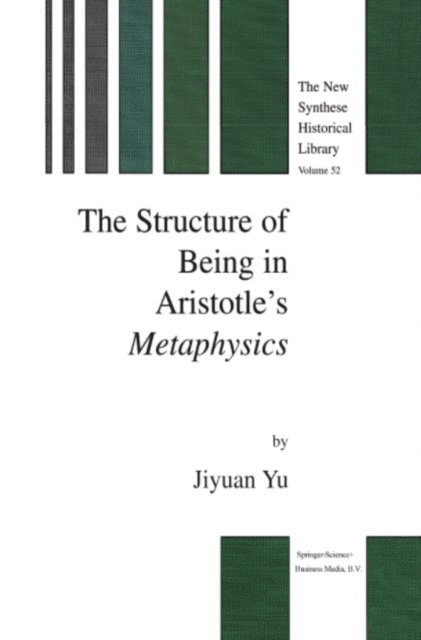
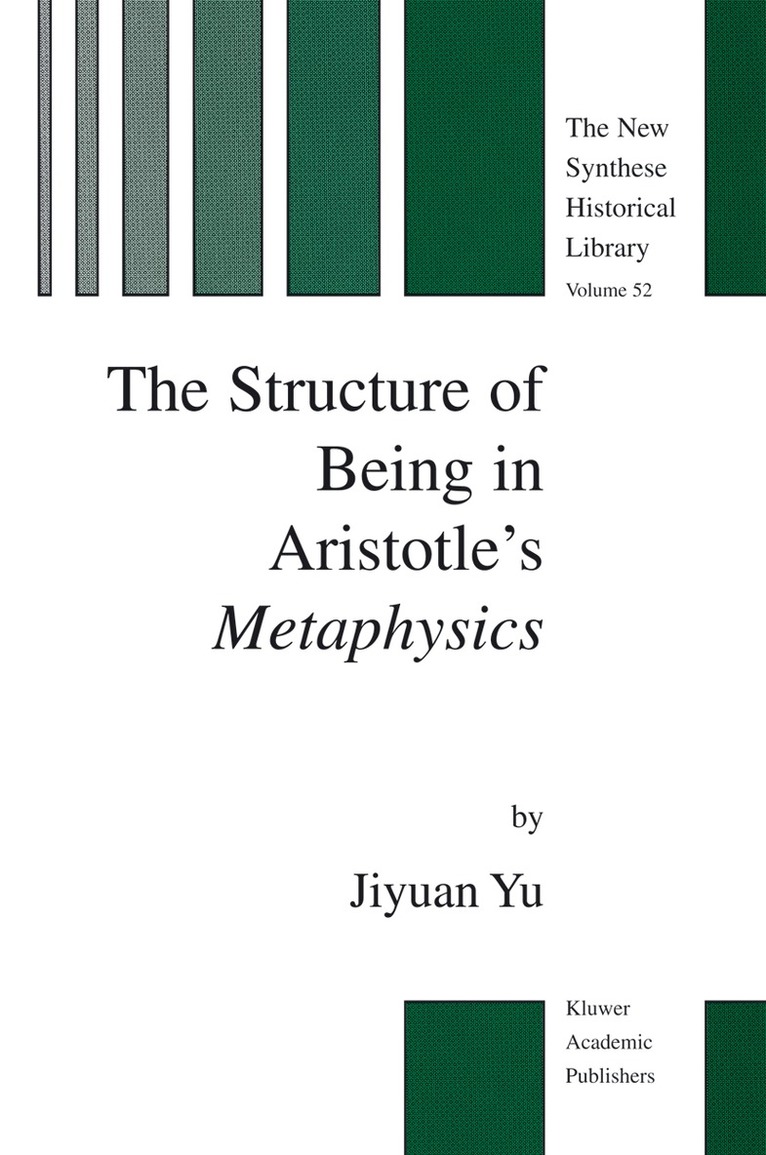
Structure of Being in Aristotle’s Metaphysics
Av Jiyuan Yu
Inbunden, 2003
1098 kr
Lägg i varukorg
In his Metaphysics, Aristotle claims that he is seeking to establish a science of being. Being, at the most general level, is divided by Aristotle into the following four types: 1. Accidental being 2. Being as truth 3. Potential/actual being l 4. Per se being Per se (kath hauto) being can also be …
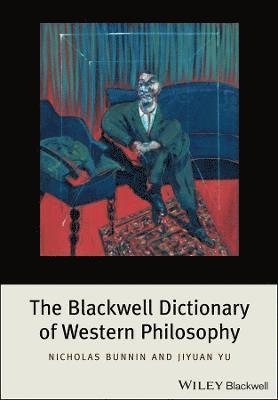
Blackwell Dictionary of Western Philosophy
Inbunden, 2004
1754 kr
Lägg i varukorg
The Blackwell Dictionary of Western Philosophy The Blackwell Dictionary of Western Philosophy ???The style is fresh and engaging, and it gives a broad and accurate picture of the western philosophical tradition. It is a pleasure to browse in, even if one is not looking for an answer to a particular …
Blackwell Dictionary of Western Philosophy
Häftad, 2009
411 kr
Lägg i varukorg
The Blackwell Dictionary of Western Philosophy The Blackwell Dictionary of Western Philosophy ???The style is fresh and engaging, and it gives a broad and accurate picture of the western philosophical tradition. It is a pleasure to browse in, even if one is not looking for an answer to a particular …
Structure of Being in Aristotle's Metaphysics
Av Jiyuan Yu
E-bok, 2012
1459 kr
Lägg i varukorg
In his Metaphysics, Aristotle claims that he is seeking to establish a science of being. Being, at the most general level, is divided by Aristotle into the following four types: 1. Accidental being 2. Being as truth 3. Potential/actual being l 4. Per se being Per se (kath hauto) being can also be …
Structure of Being in Aristotle’s Metaphysics
Av Jiyuan Yu
Häftad, 2012
1098 kr
Lägg i varukorg
In his Metaphysics, Aristotle claims that he is seeking to establish a science of being. Being, at the most general level, is divided by Aristotle into the following four types: 1. Accidental being 2. Being as truth 3. Potential/actual being l 4. Per se being Per se (kath hauto) being can also be …
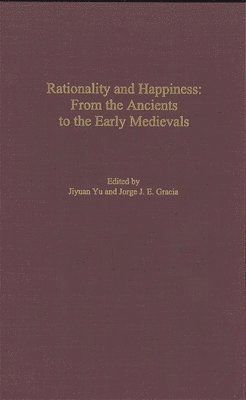
Rationality and Happiness: From the Ancients to the Early Medievals
Av Jiyuan Yu, Jorge J. E. Gracia
Inbunden
930 kr
Tillfälligt slut