J.J. Sijben - Böcker
Visar alla böcker från författaren J.J. Sijben. Handla med fri frakt och snabb leverans.
3 produkter
3 produkter
1 096 kr
Skickas inom 10-15 vardagar
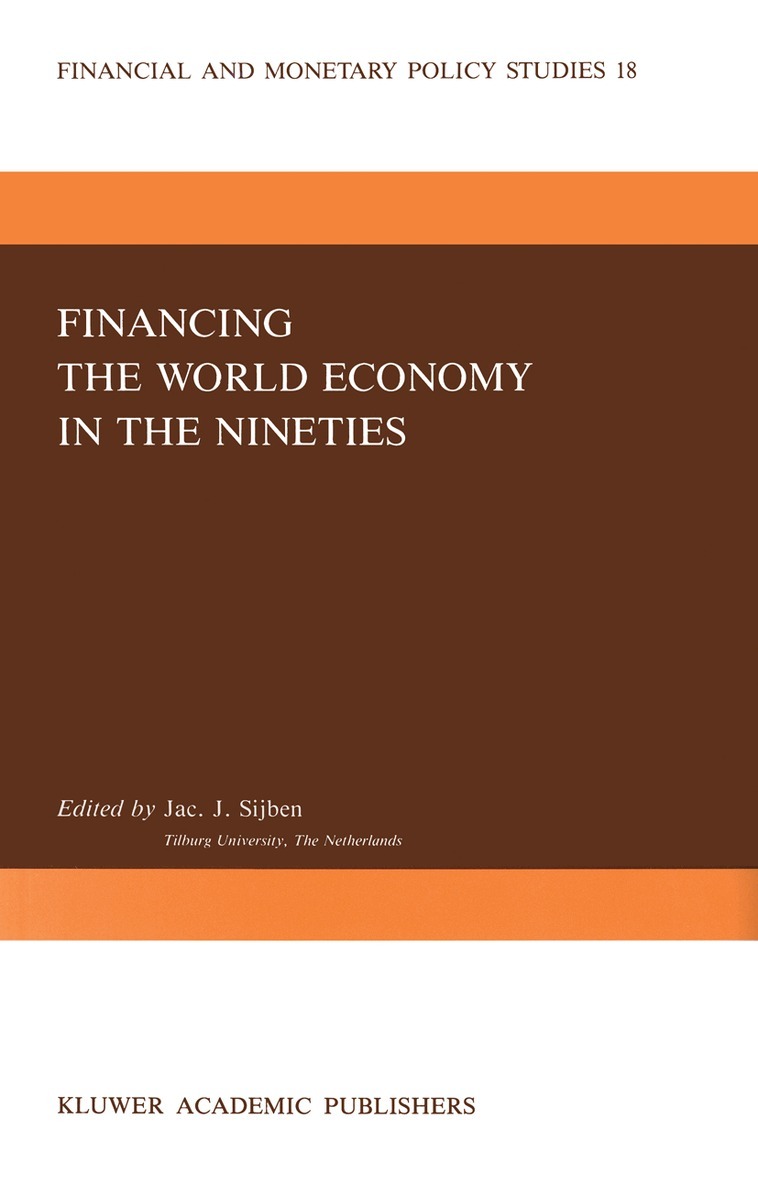
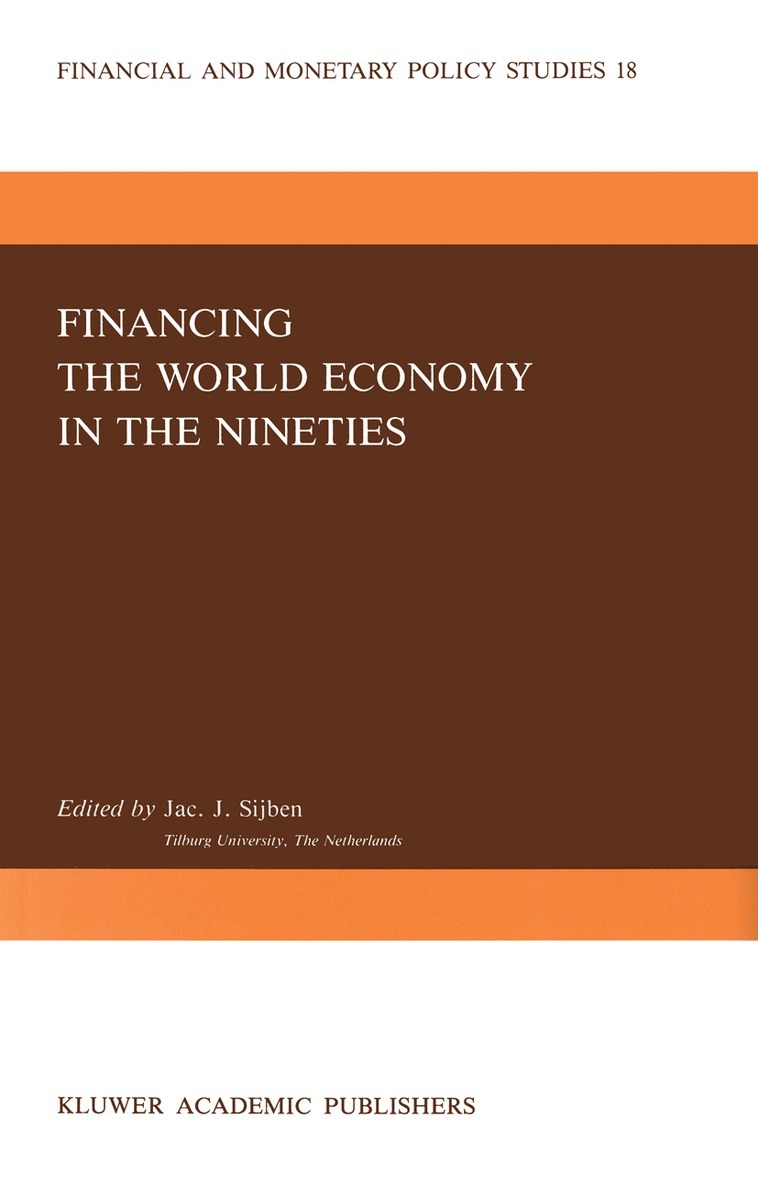
The present volume contains the texts of the papers and criti cal commentary presented at the one-day conference "Financing the world economy in the nineties" at Tilburg University (23 March 1988). This conference was organized by the Post-graduate School of Banking and Finance of "The Tilburg Institute of Advanced Studies" (T .I.A.S.) which is closely associated to Tilburg University. It should be borne in mind that all the chapters were written before March 1988. Although some were revised later, none of the authors has been asked to include develop ments which have occurred since. To achieve a better understanding of the current financial imbalances in the world economy and its consequences and to discuss the alternatives to correct these imbalances, this conference brought to gether outstanding authorities from the academic world, from the inter national supervisors, and from the industrial companies and the banks. After the editor's introduction about the external disequilib ria in the world economy and the burden of economic adjustment, Chapter 1 is the text of the opening address by Dr. Witteveen. He calls atten tion to the central issue, which financing needs that we can see now may persist into the nineties and how can they be met? In this context he mentions the U.S.-current account deficit, the need for stable exchange rates and the international debt problem.
552 kr
Skickas inom 10-15 vardagar
In monetary theory the paramount problem posed by many eco nomists was always whether monetary variables had a certain influence on the real variables in the economy, so that money would not be neutral but influence the economic process. In this way the outcome would differ from that of a barter economy. The outcome of this development was that money could no longer be regarded as an accommodating item like in many out-dated text-books but as an autonomous factor, the influence of which is explicitly ana lyzed. When, after the Second World War, the 'real' side of eco nomics developed into growth economics, it was quite natural that efforts were made to integrate both lines of thought so that the effect of the rate of increase of money on the rate of growth of real national income could be studied. Dr. Sijben gives the full and thorough story of these efforts in a way that enables economists to compare the different approaches more easily than was possible up to now. More specifically the various models are made comparable by the use of the same sym bols for the same variables allover the book. After the introductory chapter Tobin's outside-money model in a neo-classical framework is discussed. What is income in this respect? Tobin argues that real disposable income is real net national income plus the real value of the increase in monetary balances.
1 096 kr
Skickas inom 10-15 vardagar
The present volume contains the texts of the papers and criti cal commentary presented at the one-day conference "Financing the world economy in the nineties" at Tilburg University (23 March 1988). This conference was organized by the Post-graduate School of Banking and Finance of "The Tilburg Institute of Advanced Studies" (T .I.A.S.) which is closely associated to Tilburg University. It should be borne in mind that all the chapters were written before March 1988. Although some were revised later, none of the authors has been asked to include develop ments which have occurred since. To achieve a better understanding of the current financial imbalances in the world economy and its consequences and to discuss the alternatives to correct these imbalances, this conference brought to gether outstanding authorities from the academic world, from the inter national supervisors, and from the industrial companies and the banks. After the editor's introduction about the external disequilib ria in the world economy and the burden of economic adjustment, Chapter 1 is the text of the opening address by Dr. Witteveen. He calls atten tion to the central issue, which financing needs that we can see now may persist into the nineties and how can they be met? In this context he mentions the U.S.-current account deficit, the need for stable exchange rates and the international debt problem.