
JoA«lle Proust – författare
Visar alla böcker från författaren JoA«lle Proust. Handla med fri frakt och snabb leverans.
7 produkter
7 produkter

E-bok
Engelska, 2013481 kr
Läs direkt efter köp
Does metacognition, i.e. the capacity to form epistemic self-evaluations about one''s current cognitive performance, derive from a mindreading capacity, or does it rely, at least in part, on sui generis informational processes? In The Philosophy of Metacognition Joëlle Proust provides a powerful defense of the second position. Drawing on discussions of empirical evidence from comparative, developmental, and experimental psychology, as well as from neuroscience, and on conceptual analyses, she purports to show that, in contrast with analytic metacognition, procedural metacognition does not need to involve metarepresentations. Procedural metacognition seems to be available to some non-humans (some primates and rodents). Proust further claims that metacognition is essentially related to mental agency, i.e. cognitive control and monitoring. ''Self-probing'' is equivalent to a self-addressed question about the feasibility of a mental action (''Am I able to remember this word?''). ''Post-evaluating'' is a way of asking oneself whether a given mental action has been successfully completed (''Is this word the one I was looking for?''). Neither question need be articulated conceptually for a feeling of knowing or of being right to be generated, or to drive epistemic control. Various issues raised by the contrast of a procedural, experience-based metacognition, with an analytic, concept-based metacognition are explored, such as whether each is expressed in a different representational format, their sensitivity to different epistemic norms, and the existence of a variety of types of epistemic acceptance.

E-bok
PDF, Engelska, 20121 391 kr
Läs direkt efter köp
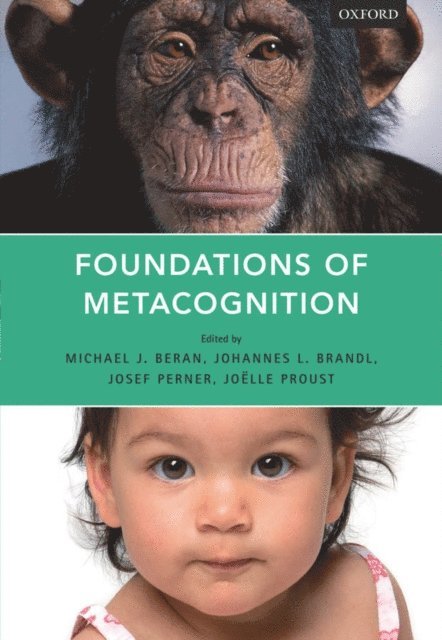
Metacognition refers to the awareness an individual has of their own mental processes (also referred to as '' thinking about thinking''). In the past thirty years metacognition research has become a rapidly growing field of interdisciplinary research within the cognitive sciences. Just recently, there have been major changes in this field, stimulated by the controversial issues of metacognition in nonhuman animals and in early infancy. Consequently the question whatdefines a metacognitive process has become a matter of debate: how should one distinguish between simple minds that are not yet capable of any metacognitive processing, and minds with a more advanced architecture that exhibit such a capacity? Do nonhuman animals process the ability to monitor theirown mental actions? If metacognition is unique to humans, then at what stage in development does it occur, and how can we distinguish between cognitive and metacognitive processes?The Foundations of Metacognition brings together leading cognitive scientists to consider these questions. It explores them from three different perspectives: from an evolutionary point of view the authors ask whether there is sufficient evidence that some non-human primates or other animals monitor their mental states and thereby exhibit a form of metacognition. From a developmental perspective the authors ask when children start to monitor, evaluate und control their own minds. Andfrom a philosophical point of view the main issue is how to draw the line between cognitive and metacognitive processes, and how to integrate the different functions in which metacognition is involved into a single coherent picture of the mind. The foundations of metacognition - whatever they will turn out tobe - have to be as complex as this pattern of connections we discover in its effects.Bringing together researchers from across the cognitive sciences, the book is valuable for philosophers of mind, developmental and comparative psychologists, and neuroscientists.
E-bok
Engelska, 20121 404 kr
Läs direkt efter köp
Metacognition refers to the awareness an individual has of their own mental processes (also referred to as '' thinking about thinking''). In the past thirty years metacognition research has become a rapidly growing field of interdisciplinary research within the cognitive sciences. Just recently, there have been major changes in this field, stimulated by the controversial issues of metacognition in nonhuman animals and in early infancy. Consequently the question whatdefines a metacognitive process has become a matter of debate: how should one distinguish between simple minds that are not yet capable of any metacognitive processing, and minds with a more advanced architecture that exhibit such a capacity? Do nonhuman animals process the ability to monitor theirown mental actions? If metacognition is unique to humans, then at what stage in development does it occur, and how can we distinguish between cognitive and metacognitive processes?The Foundations of Metacognition brings together leading cognitive scientists to consider these questions. It explores them from three different perspectives: from an evolutionary point of view the authors ask whether there is sufficient evidence that some non-human primates or other animals monitor their mental states and thereby exhibit a form of metacognition. From a developmental perspective the authors ask when children start to monitor, evaluate und control their own minds. Andfrom a philosophical point of view the main issue is how to draw the line between cognitive and metacognitive processes, and how to integrate the different functions in which metacognition is involved into a single coherent picture of the mind. The foundations of metacognition - whatever they will turn out tobe - have to be as complex as this pattern of connections we discover in its effects.Bringing together researchers from across the cognitive sciences, the book is valuable for philosophers of mind, developmental and comparative psychologists, and neuroscientists.

E-bok
PDF, Engelska, 2013481 kr
Läs direkt efter köp
Does metacognition, i.e. the capacity to form epistemic self-evaluations about one''s current cognitive performance, derive from a mindreading capacity, or does it rely, at least in part, on sui generis informational processes? In The Philosophy of Metacognition Joëlle Proust provides a powerful defense of the second position. Drawing on discussions of empirical evidence from comparative, developmental, and experimental psychology, as well as from neuroscience, and on conceptual analyses, she purports to show that, in contrast with analytic metacognition, procedural metacognition does not need to involve metarepresentations. Procedural metacognition seems to be available to some non-humans (some primates and rodents). Proust further claims that metacognition is essentially related to mental agency, i.e. cognitive control and monitoring. ''Self-probing'' is equivalent to a self-addressed question about the feasibility of a mental action (''Am I able to remember this word?''). ''Post-evaluating'' is a way of asking oneself whether a given mental action has been successfully completed (''Is this word the one I was looking for?''). Neither question need be articulated conceptually for a feeling of knowing or of being right to be generated, or to drive epistemic control. Various issues raised by the contrast of a procedural, experience-based metacognition, with an analytic, concept-based metacognition are explored, such as whether each is expressed in a different representational format, their sensitivity to different epistemic norms, and the existence of a variety of types of epistemic acceptance.
E-bok
PDF, Engelska, 20181 202 kr
Läs direkt efter köp
Metacognition refers to our awareness of our own mental processes, such as perceiving, remembering, learning, and problem solving. It is a fascinating area of research for psychologists, neuroscientists, anthropologists, sociologists and philosophers.This book explores the variability of metacognitive skills across cultures, since a person''s decision to allocate effort, motivation to learn, sense of being right or wrong in perceptions, memories, and other cognitive tasks depends on specific transmitted goals, norms, and values. Across nineteen chapters, a group of leading authors analyze the variable and universal features associated with these dimensions, drawing on cutting-edge evidence.Additionally, new domains of metacognitive variability are considered in this volume, including those generated by metacognition-oriented embodied practices (present in rituals and religious worship), and culture-specific lay theories about subjective uncertainty and knowledge regarding natural or supernatural entities. It also documents universal metacognitive features, such as children''s earlier sensitivity to their own ignorance than to that of others, people''s intuitive understanding ofwhat counts as knowledge, and speakers'' sensitivity to informational sources (independently of the way the information is linguistically expressed).The book is important reading for students and scholars in cognitive and cultural psychology, anthopology, developmental and social psychology, linguistics, and philosophy.
E-bok
Engelska, 20181 202 kr
Läs direkt efter köp
Metacognition refers to our awareness of our own mental processes, such as perceiving, remembering, learning, and problem solving. It is a fascinating area of research for psychologists, neuroscientists, anthropologists, sociologists and philosophers.This book explores the variability of metacognitive skills across cultures, since a person''s decision to allocate effort, motivation to learn, sense of being right or wrong in perceptions, memories, and other cognitive tasks depends on specific transmitted goals, norms, and values. Across nineteen chapters, a group of leading authors analyze the variable and universal features associated with these dimensions, drawing on cutting-edge evidence.Additionally, new domains of metacognitive variability are considered in this volume, including those generated by metacognition-oriented embodied practices (present in rituals and religious worship), and culture-specific lay theories about subjective uncertainty and knowledge regarding natural or supernatural entities. It also documents universal metacognitive features, such as children''s earlier sensitivity to their own ignorance than to that of others, people''s intuitive understanding ofwhat counts as knowledge, and speakers'' sensitivity to informational sources (independently of the way the information is linguistically expressed).The book is important reading for students and scholars in cognitive and cultural psychology, anthopology, developmental and social psychology, linguistics, and philosophy.
Inbunden, Engelska, 2018
1 372 kr
Skickas inom 5-8 vardagar
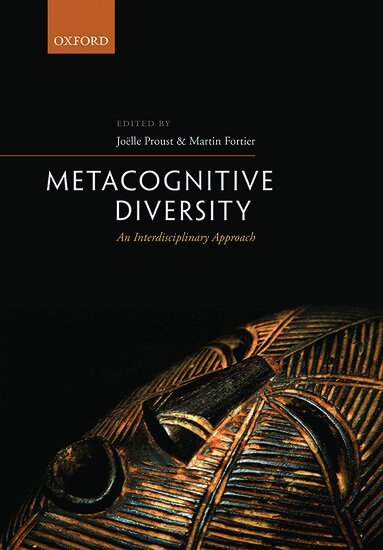
Metacognition refers to our awareness of our own mental processes, such as perceiving, remembering, learning, and problem solving. It is a fascinating area of research for psychologists, neuroscientists, anthropologists, sociologists and philosophers.This book explores the variability of metacognitive skills across cultures, since a person's decision to allocate effort, motivation to learn, sense of being right or wrong in perceptions, memories, and other cognitive tasks depends on specific transmitted goals, norms, and values. Across nineteen chapters, a group of leading authors analyze the variable and universal features associated with these dimensions, drawing on cutting-edge evidence.Additionally, new domains of metacognitive variability are considered in this volume, including those generated by metacognition-oriented embodied practices (present in rituals and religious worship), and culture-specific lay theories about subjective uncertainty and knowledge regarding natural or supernatural entities. It also documents universal metacognitive features, such as children's earlier sensitivity to their own ignorance than to that of others, people's intuitive understanding of what counts as knowledge, and speakers' sensitivity to informational sources (independently of the way the information is linguistically expressed).The book is important reading for students and scholars in cognitive and cultural psychology, anthopology, developmental and social psychology, linguistics, and philosophy.