Joan E. Cashin - Böcker
Visar alla böcker från författaren Joan E. Cashin. Handla med fri frakt och snabb leverans.
10 produkter
10 produkter
1 128 kr
Skickas inom 5-8 vardagar
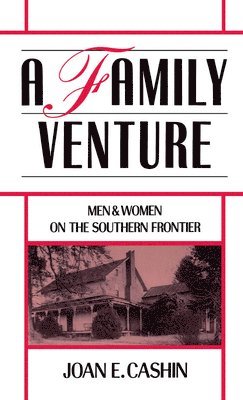
This book deals with the westward migration of the planter families of the seaboard South in the years before the Civil War. Cashin examines the decision of families to migrate, the effects migration had on the family life of the planters, and the way old ties were maintained and new ones formed. The emphasis is on child-rearing and women's lives in the Old Southwest (Alabama, Mississippi, Louisiana), and Cashin has drawn on rich archival sources to present moving portraits of individual women caught in the flux of change.
316 kr
Skickas inom 10-15 vardagar
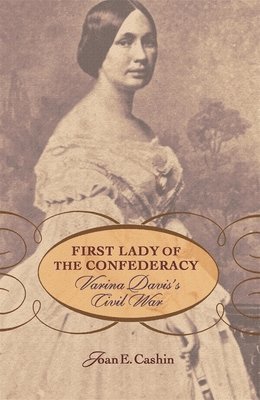
When Jefferson Davis became president of the Confederacy, his wife, Varina Howell Davis, reluctantly became the First Lady. For this highly intelligent, acutely observant woman, loyalty did not come easily: she spent long years struggling to reconcile her societal duties to her personal beliefs. Raised in Mississippi but educated in Philadelphia, and a long-time resident of Washington, D.C., Mrs. Davis never felt at ease in Richmond. During the war she nursed Union prisoners and secretly corresponded with friends in the North. Though she publicly supported the South, her term as First Lady was plagued by rumors of her disaffection. After the war, Varina Davis endured financial woes and the loss of several children, but following her husband's death in 1889, she moved to New York and began a career in journalism. Here she advocated reconciliation between the North and South and became friends with Julia Grant, the widow of Ulysses S. Grant. She shocked many by declaring in a newspaper that it was God's will that the North won the war. A century after Varina Davis's death in 1906, Joan E. Cashin has written a masterly work, the first definitive biography of this truly modern, but deeply conflicted, woman. Pro-slavery but also pro-Union, Varina Davis was inhibited by her role as Confederate First Lady and unable to reveal her true convictions. In this pathbreaking book, Cashin offers a splendid portrait of a fascinating woman who struggled with the constraints of her time and place.
455 kr
Skickas inom 7-10 vardagar
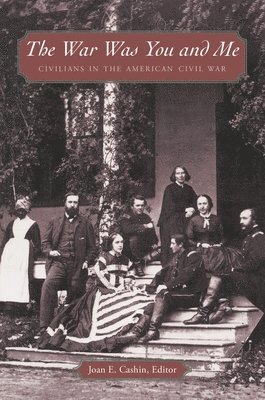
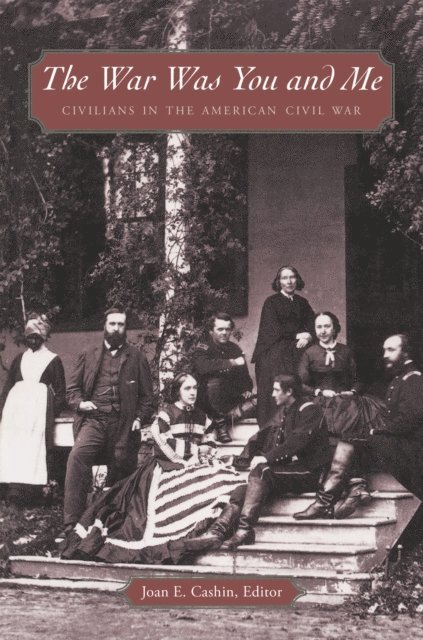
Though civilians constituted the majority of the nation's population and were intimately involved with almost every aspect of the war, we know little about the civilian experience of the Civil War. That experience was inherently dramatic. Southerners lived through the breakup of basic social and economic institutions, including, of course, slavery. Northerners witnessed the reorganization of society to fight the war. And citizens of the border regions grappled with elemental questions of loyalty that reached into the family itself. These original essays--all commissioned from established scholars, based on archival research, and written for a wide readership--recover the stories of civilians from Natchez to New England. They address the experiences of men, women, and children; of whites, slaves, and free blacks; and of civilians from numerous classes. Not least of these stories are the on-the-ground experiences of slaves seeking emancipation and the actions of white Northerners who resisted the draft. Many of the authors present brand new material, such as the war's effect on the sounds of daily life and on reading culture.Others examine the war's premiere events, including the battle of Gettysburg and the Lincoln assassination, from fresh perspectives. Several consider the passionate debate that broke out over how to remember the war, a debate that has persisted into our own time. In addition to the editor, the contributors are Peter W. Bardaglio, William Blair, W. Fitzhugh Brundage, Margaret S. Creighton, J. Matthew Gallman, Joseph T. Glatthaar, Anthony E. Kaye, Robert Kenzer, Elizabeth D. Leonard, Amy E. Murrell, George C. Rable, Nina Silber, Mark M. Smith, Mary Saracino Zboray, and Ronald J. Zboray. Together they describe the profound transformations in community relations, gender roles, race relations, and culture wrought by the central event in American history.

430 kr
Skickas inom 5-8 vardagar
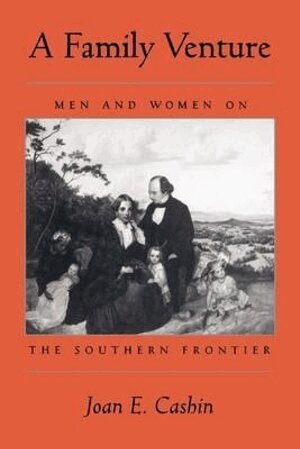
In this text, Joan Cashin explores the profoundly different ways that planter men and women experienced migration from the Southern seaboard to the antebellum Southern frontier. Migration was a family venture in the sense that both men and women took part. But they went to the frontier with competing agendas: many men tried to escape the intricate kinship networks of the seaboard, while women worked to preserve them if they could. Drawing on archival sources and using the perspectives of several disciplines, Cashin explores the effects of the migration experience on sex roles, the nature of slavery, race relations and a variety of other issues.
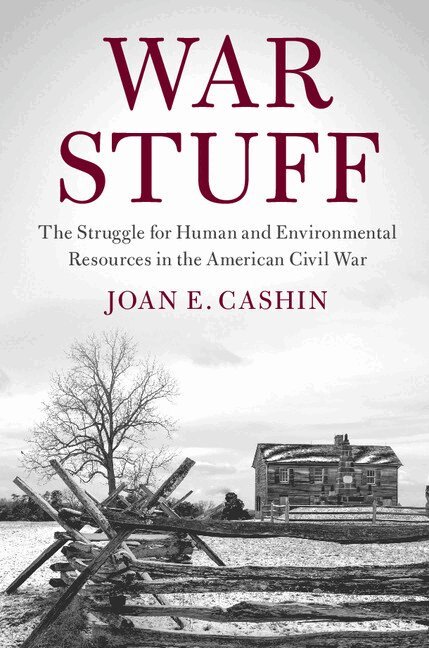
War Stuff
The Struggle for Human and Environmental Resources in the American Civil War
Häftad, Engelska, 2018
318 kr
Skickas inom 7-10 vardagar
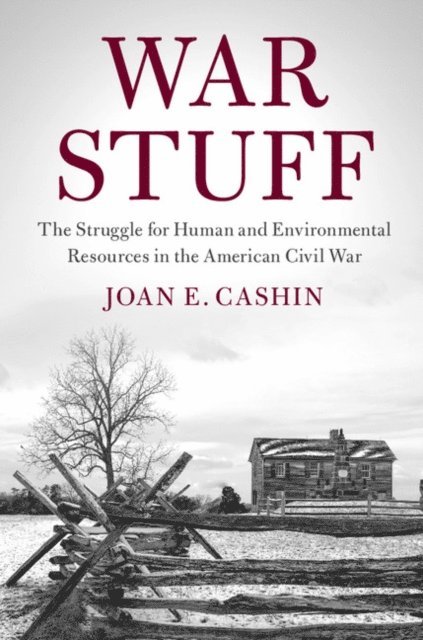
In this path-breaking work on the American Civil War, Joan E. Cashin explores the struggle between armies and civilians over the human and material resources necessary to wage war. This war 'stuff' included the skills of white Southern civilians, as well as such material resources as food, timber, and housing. At first, civilians were willing to help Confederate or Union forces, but the war took such a toll that all civilians, regardless of politics, began focusing on their own survival. Both armies took whatever they needed from human beings and the material world, which eventually destroyed the region's ability to wage war. In this fierce contest between civilians and armies, the civilian population lost. Cashin draws on a wide range of documents, as well as the perspectives of environmental history and material culture studies. This book provides an entirely new perspective on the war era.
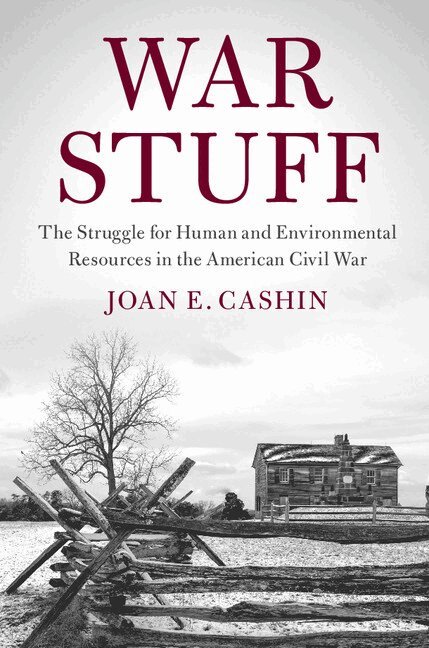
War Stuff
The Struggle for Human and Environmental Resources in the American Civil War
Inbunden, Engelska, 2018
1 065 kr
Skickas inom 7-10 vardagar
In this path-breaking work on the American Civil War, Joan E. Cashin explores the struggle between armies and civilians over the human and material resources necessary to wage war. This war 'stuff' included the skills of white Southern civilians, as well as such material resources as food, timber, and housing. At first, civilians were willing to help Confederate or Union forces, but the war took such a toll that all civilians, regardless of politics, began focusing on their own survival. Both armies took whatever they needed from human beings and the material world, which eventually destroyed the region's ability to wage war. In this fierce contest between civilians and armies, the civilian population lost. Cashin draws on a wide range of documents, as well as the perspectives of environmental history and material culture studies. This book provides an entirely new perspective on the war era.
1 095 kr
Skickas inom 10-15 vardagar
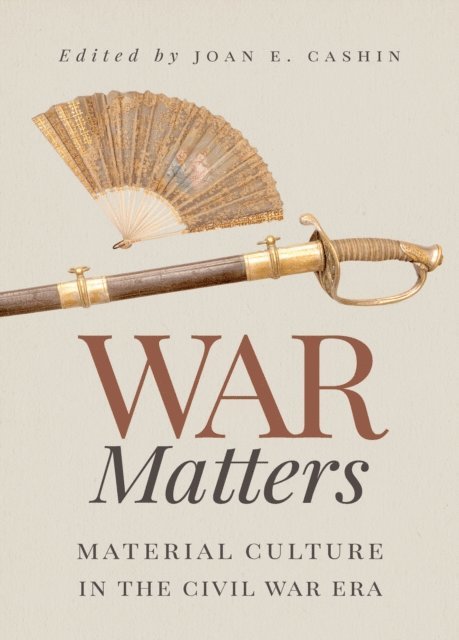
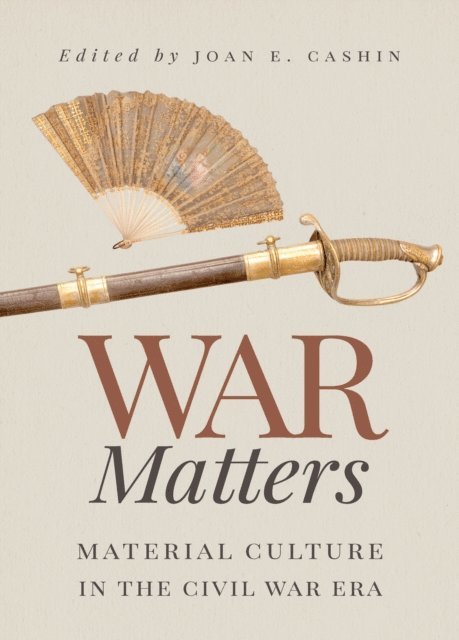
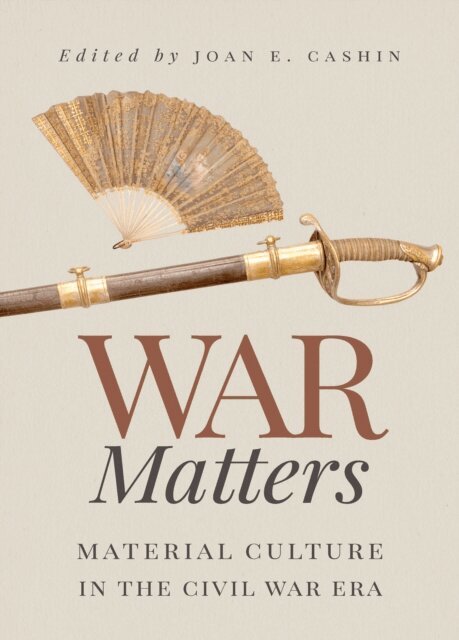
Material objects lie at the crux of understanding individual and social relationships in history, and the Civil War era is no exception. Before, during, and after the war, Americans from all walks of life created, used, revered, exploited, discarded, mocked, and destroyed objects for countless reasons. These objects had symbolic significance for millions of people. The essays in this volume consider a wide range of material objects, including weapons, Revolutionary artifacts, landscapes, books, vaccine matter, human bodies, houses, clothing, and documents. Together, the contributors argue that an examination of the meaning of material objects can shed new light on the social, economic, and cultural history of the conflict. This book will fundamentally reshape our understanding of the war.In addition to the editor, contributors include Lisa M. Brady, Peter S. Carmichael, Earl J. Hess, Robert Hicks, Victoria Ott, Jason Phillips, Timothy Silver, Yael Sternhell, Sarah Jones Weicksel, Mary Saracino Zboray, and Ronald J. Zboray.
379 kr
Skickas inom 10-15 vardagar
Material objects lie at the crux of understanding individual and social relationships in history, and the Civil War era is no exception. Before, during, and after the war, Americans from all walks of life created, used, revered, exploited, discarded, mocked, and destroyed objects for countless reasons. These objects had symbolic significance for millions of people. The essays in this volume consider a wide range of material objects, including weapons, Revolutionary artifacts, landscapes, books, vaccine matter, human bodies, houses, clothing, and documents. Together, the contributors argue that an examination of the meaning of material objects can shed new light on the social, economic, and cultural history of the conflict. This book will fundamentally reshape our understanding of the war.In addition to the editor, contributors include Lisa M. Brady, Peter S. Carmichael, Earl J. Hess, Robert Hicks, Victoria Ott, Jason Phillips, Timothy Silver, Yael Sternhell, Sarah Jones Weicksel, Mary Saracino Zboray, and Ronald J. Zboray.
2 430 kr
Skickas inom 10-15 vardagar
Originally published in 1853, Clotel is the first novel by an African American. William Wells Brown, a contemporary of Frederick Douglass, was well known for his abolitionist activities. In Clotel, the author focuses on the experiences of a slave woman: Brown treats the themes of gender, race, and slavery in distinctive ways, highlighting the mutability of identity as well as the absurdities and cruelties of slavery. The plot includes several mulatto characters, such as Clotel, who live on the margins of the black and white worlds, as well as a woman who dresses as a man to escape bondage; a white woman who is enslaved; and a famous white man who is mistaken for a mulatto. In her Introduction, scholar Joan E. Cashin highlights the most interesting features of this novel and its bold approach to gender and race relations. This volume, the latest in the American History Through Literature series, is suitable for a variety of undergraduate courses in American history, cultural history, women's studies, and slavery.
664 kr
Skickas inom 10-15 vardagar
Originally published in 1853, Clotel is the first novel by an African American. William Wells Brown, a contemporary of Frederick Douglass, was well known for his abolitionist activities. In Clotel, the author focuses on the experiences of a slave woman: Brown treats the themes of gender, race, and slavery in distinctive ways, highlighting the mutability of identity as well as the absurdities and cruelties of slavery. The plot includes several mulatto characters, such as Clotel, who live on the margins of the black and white worlds, as well as a woman who dresses as a man to escape bondage; a white woman who is enslaved; and a famous white man who is mistaken for a mulatto. In her Introduction, scholar Joan E. Cashin highlights the most interesting features of this novel and its bold approach to gender and race relations. This volume, the latest in the American History Through Literature series, is suitable for a variety of undergraduate courses in American history, cultural history, women's studies, and slavery.