Joan Kee - Böcker
Visar alla böcker från författaren Joan Kee. Handla med fri frakt och snabb leverans.
4 produkter
4 produkter
332 kr
Skickas inom 7-10 vardagar
Models of Integrity examines the relationship between contemporary art and the law through the lens of integrity. In the 1960s, artists began to engage conspicuously with legal ideas, rituals, and documents. The law—a primary institution subject to intense moral and political scrutiny—was a widely recognized source of authority to audiences inside the art world and out. Artists frequently engaged with the law in ways that signaled a recuperation of the integrity that they believed had been compromised by the very institutions entrusted with establishing standards of just conduct. These artists sought to convey the social purpose of an artwork without overstating its political impact and without losing sight of how aesthetic decisions compel audiences to see their everyday world differently. Addressing the role that law plays in enabling artworks to function as social and political forces, this important book fills a gap in the field of law and the humanities, and will serve as a practical “how-to” for contemporary artists.
290 kr
Skickas inom 7-10 vardagar
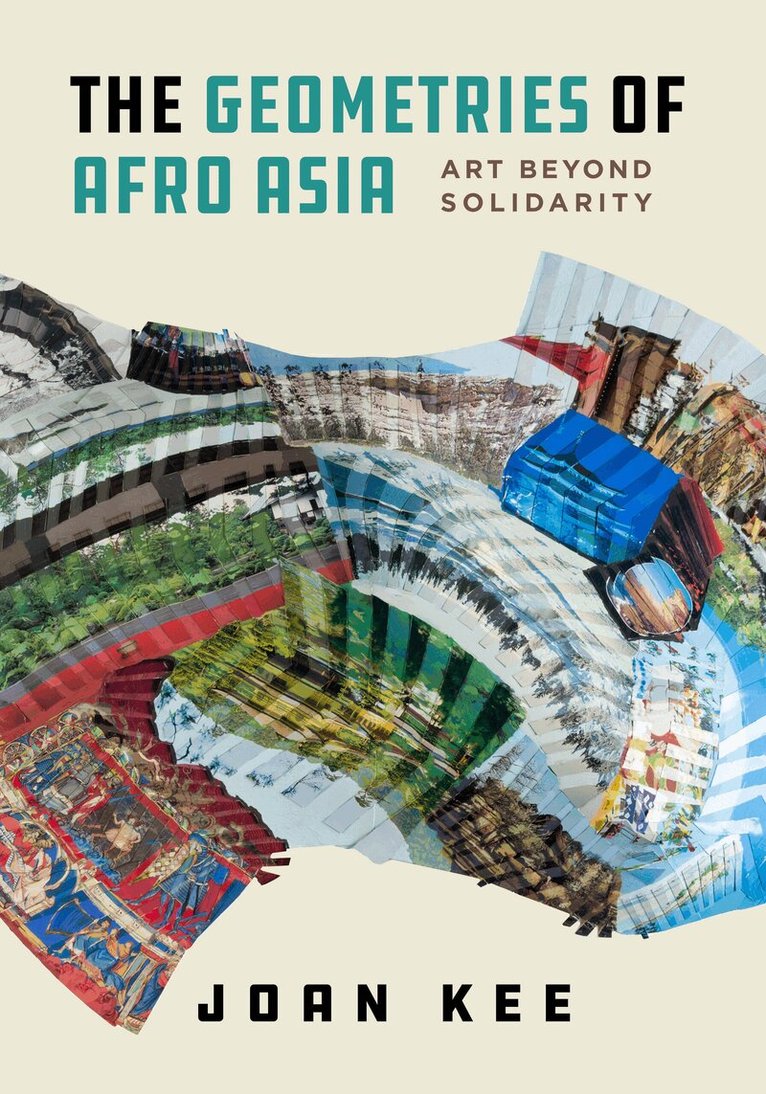
A groundbreaking method for writing art history, using the language of geometry. How do we embark on a history of art from the assumption of a global majority, outside of essentializing categories like race or hollow proclamations of solidarity? With this book, Joan Kee presents a framework for understanding the rich and surprisingly understudied relationship between Black and Asian artists and the worlds they initiate through their work. The Geometries of Afro Asia breaks down this relationship and chronology into points, angles, and trajectories. Spanning North America, Europe, Asia, and Africa, Kee looks at the relationships that formed between Black and Asian artists at critical historical junctures—from civil rights struggles in the United States and the development of South Korea amid US military occupation in the 1960s and 1970s to debates over multiculturalism and critiques of globalization in the 1990s and 2010s. Through geometry, a language of magnitudes and alignments, Kee opens up new ways of seeing how artworks shape our lives and politics by getting us to commit some of our most valuable resources—time and attention—to one another.
426 kr
Skickas inom 7-10 vardagar
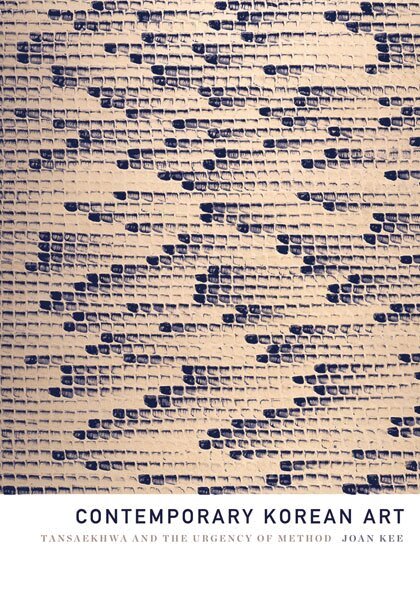
Starting in the mid-1960s, a group of Korean artists began to push paint, soak canvas, drag pencils, rip paper, and otherwise manipulate the materials of painting in ways that prompted critics to describe their actions as “methods” rather than artworks. A crucial artistic movement of twentieth-century Korea, Tansaekhwa (monochromatic painting) also became one of its most famous and successful. Promoted in Seoul, Tokyo, and Paris, Tansaekhwa grew to be the international face of contemporary Korean art and a cornerstone of contemporary Asian art. In this full-color, richly illustrated account-the first of its kind in English-Joan Kee provides a fresh interpretation of the movement’s emergence and meaning that sheds new light on the history of abstraction, twentieth-century Asian art, and contemporary art in general. Combining close readings, archival research, and interviews with leading Tansaekhwa artists, Kee focuses on an essential but often overlooked dimension of the movement: how artists made a case for abstraction as a way for viewers to engage productively with the world and its systems. As Kee shows, artists such as Lee Ufan, Park Seobo, Kwon Young-woo, Yun Hyongkeun, and Ha Chonghyun urgently stressed certain fundamentals, recognizing that overwhelming forces such as decolonization, authoritarianism, and the rise of a new postwar internationalism could be approached through highly individual experiences that challenged viewers to consider how they understood their world rather than why. Against the backdrop of the Cold War, decolonization, and the declaration of martial law in South Korea, these artists asked questions that continue to resonate today: In what ways can art matter to the world? How does art exert agency when its viewers live in times of explicit or implicit duress? How can specific social and political conditions inspire or influence methods and styles?
332 kr
Skickas inom 7-10 vardagar
This innovative new volume offers an in-depth exploration of scale, one of the most crucial elements in the creation and reception of art. Illustrates how scale has compelled audiences to rethink the significance and importance of specific works of artTakes a comparative art historical approach exploring issues of scale in an array of forms, from Islamic architecture to contemporary photographyA global consideration of scale, with examples of work from ancient Egypt, eighteenth-century Korea, and contemporary EuropeThe newest addition to the Art History Special Issue Book Series