Joanna Davis-McElligatt - Böcker
Visar alla böcker från författaren Joanna Davis-McElligatt. Handla med fri frakt och snabb leverans.
10 produkter
10 produkter
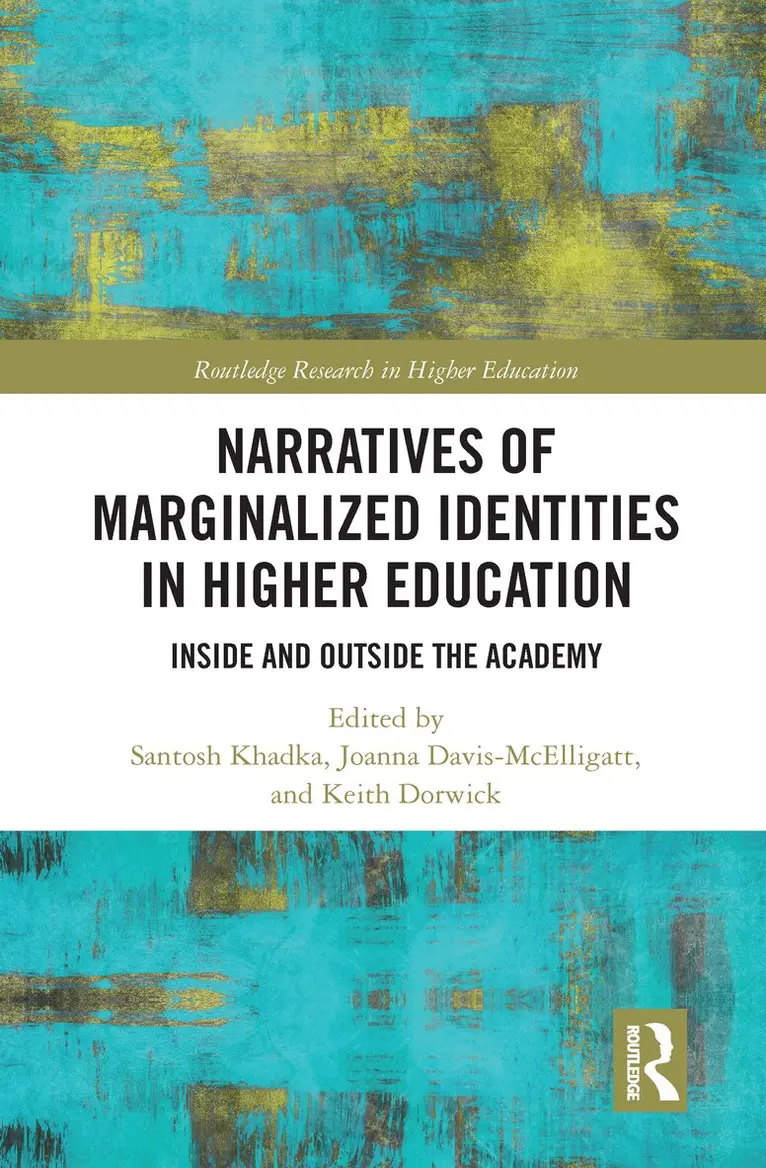
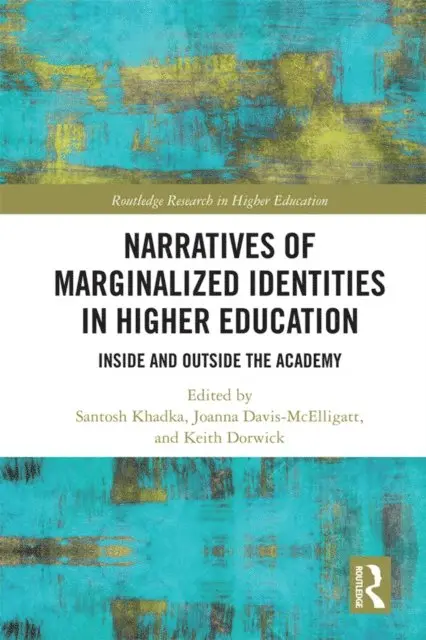
Narratives of Marginalized Identities in Higher Education
Inside and Outside the Academy
Häftad, Engelska, 2020
563 kr
Skickas inom 10-15 vardagar
This book features theorized narratives from academics who inhabit marginalized identity positions, including, among others, academics with non-normative genders, sexualities, and relationships; nontenured faculty; racial and ethnic minorities; scholars with HIV, depression and anxiety, and other disabilities; immigrants and international students; and poor and working-class faculty and students. The chapters in this volume explore the ways in which marginalized identities fundamentally shape and impact the academic experience; thus, the contributors in this collection demonstrate how academic outsiderism works both within the confines of their college or university systems, and a broader matrix of community, state, and international relations. With an emphasis on the inherent intersectionality of identity positions, this book addresses the broad matrix of ways academics navigate their particular locations as marginalized subjects.
2 277 kr
Skickas inom 3-6 vardagar
697 kr
Skickas inom 5-8 vardagar
Narratives of Marginalized Identities in Higher Education
Inside and Outside the Academy
Inbunden, Engelska, 2018
2 039 kr
Skickas inom 10-15 vardagar
This book features theorized narratives from academics who inhabit marginalized identity positions, including, among others, academics with non-normative genders, sexualities, and relationships; nontenured faculty; racial and ethnic minorities; scholars with HIV, depression and anxiety, and other disabilities; immigrants and international students; and poor and working-class faculty and students. The chapters in this volume explore the ways in which marginalized identities fundamentally shape and impact the academic experience; thus, the contributors in this collection demonstrate how academic outsiderism works both within the confines of their college or university systems, and a broader matrix of community, state, and international relations. With an emphasis on the inherent intersectionality of identity positions, this book addresses the broad matrix of ways academics navigate their particular locations as marginalized subjects.
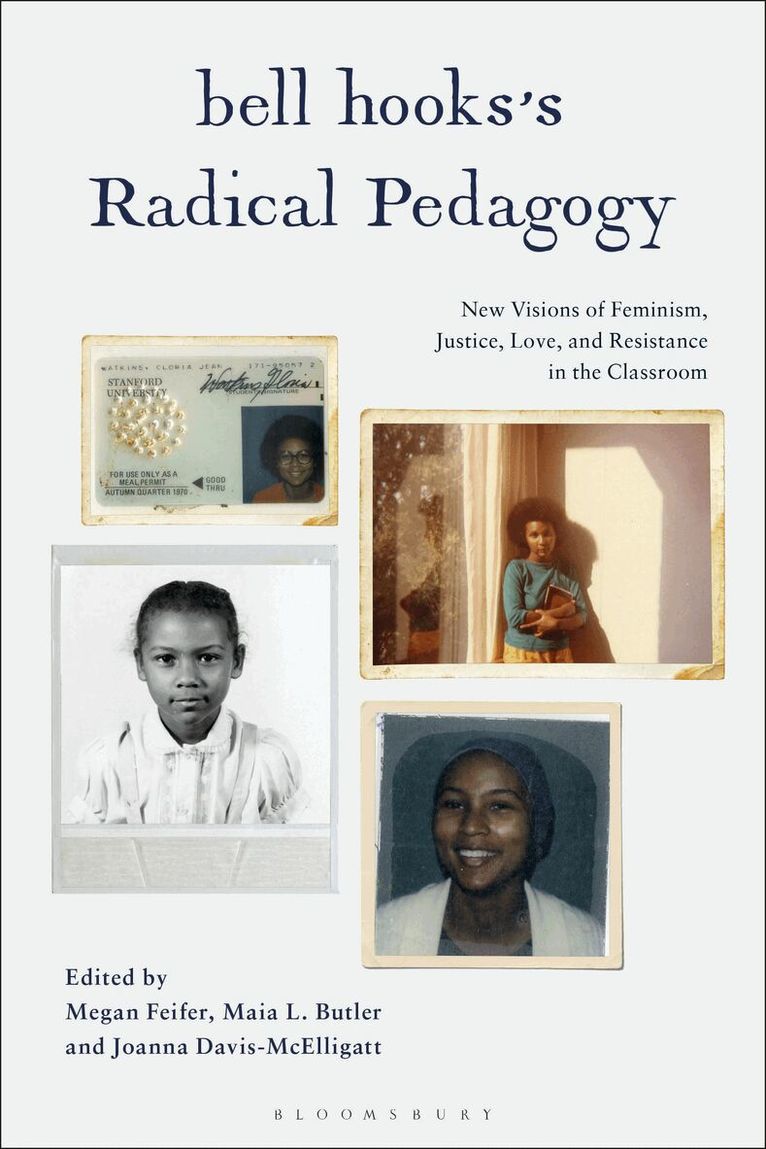
bell hooks’s Radical Pedagogy
New Visions of Feminism, Justice, Love, and Resistance in the Classroom
Inbunden, Engelska, 2025
851 kr
Skickas inom 10-15 vardagar
Throughout hooks' powerful life she envisioned, described, and enacted a radical, engaged pedagogy and praxis rooted in love, rather than power, while simultaneously modeling transgressive modes of being in the world. bell hooks’ Radical Pedagogy is the first sustained collection of teachings and reflections that address the full scope of bell hooks’ teaching trilogy. Organized into four parts covering: engaged pedagogies; pedagogies of hope and joy; pedagogies of the bodymindspirit; strategies of resistance and anticolonial frameworks, the book offers an accessible guide to hooks' work for students, teachers and researchers. The chapters examine how hooks’ pedagogical framework resists antiblack, imperialist, white supremacist, capitalist, abled, and cisheteronormative patriarchal pedagogical praxes, while simultaneously calling for a deep and sustained commitment to the work of “educat[ing] people to heal this world into what it might become.” The book brings together the work of educators who are making visionary interventions in their fields of study and in their local and regional communities. They include scholars and teachers affiliated with universities, schools across k-12 levels as well as community education cooperatives. The book includes a foreword by the feminist scholar Beverly Guy-Sheftall (Spellman College, USA).
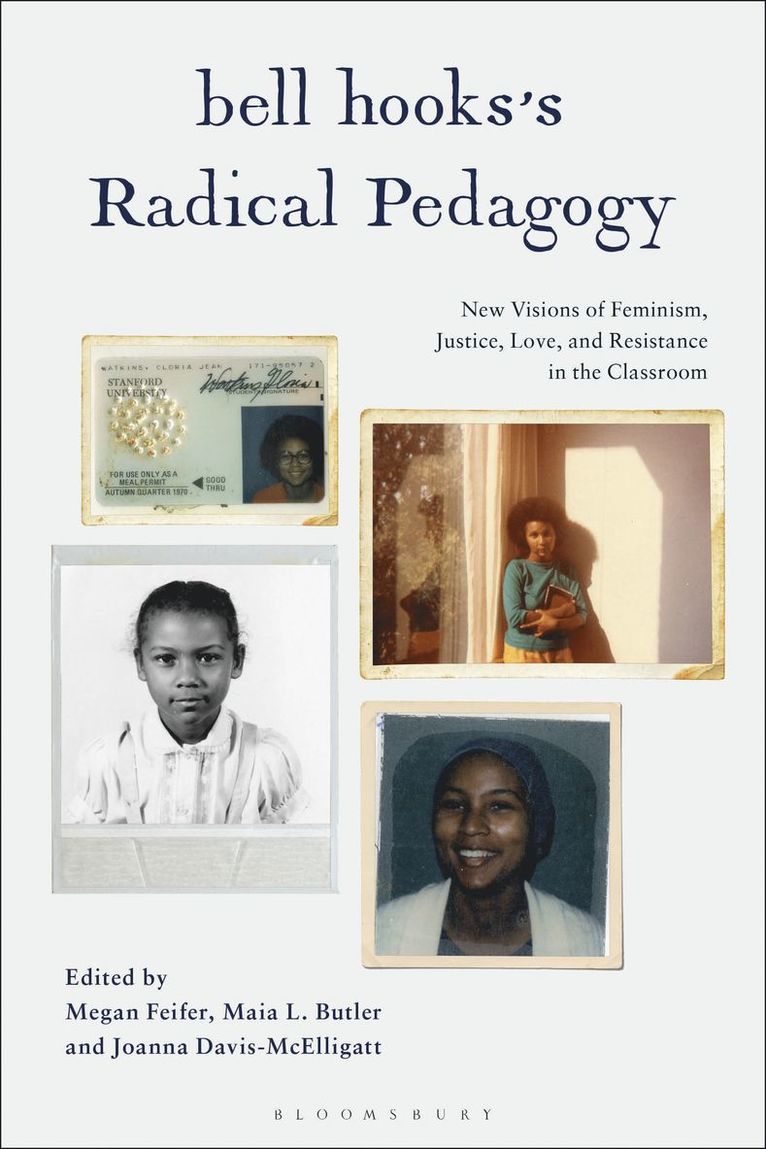
bell hooks’s Radical Pedagogy
New Visions of Feminism, Justice, Love, and Resistance in the Classroom
Häftad, Engelska, 2025
264 kr
Skickas inom 7-10 vardagar
Throughout hooks' powerful life she envisioned, described, and enacted a radical, engaged pedagogy and praxis rooted in love, rather than power, while simultaneously modeling transgressive modes of being in the world. bell hooks’ Radical Pedagogy is the first sustained collection of teachings and reflections that address the full scope of bell hooks’ teaching trilogy. Organized into four parts covering: engaged pedagogies; pedagogies of hope and joy; pedagogies of the bodymindspirit; strategies of resistance and anticolonial frameworks, the book offers an accessible guide to hooks' work for students, teachers and researchers. The chapters examine how hooks’ pedagogical framework resists antiblack, imperialist, white supremacist, capitalist, abled, and cisheteronormative patriarchal pedagogical praxes, while simultaneously calling for a deep and sustained commitment to the work of “educat[ing] people to heal this world into what it might become.” The book brings together the work of educators who are making visionary interventions in their fields of study and in their local and regional communities. They include scholars and teachers affiliated with universities, schools across k-12 levels as well as community education cooperatives. The book includes a foreword by the feminist scholar Beverly Guy-Sheftall (Spellman College, USA).
1 364 kr
Skickas inom 10-15 vardagar
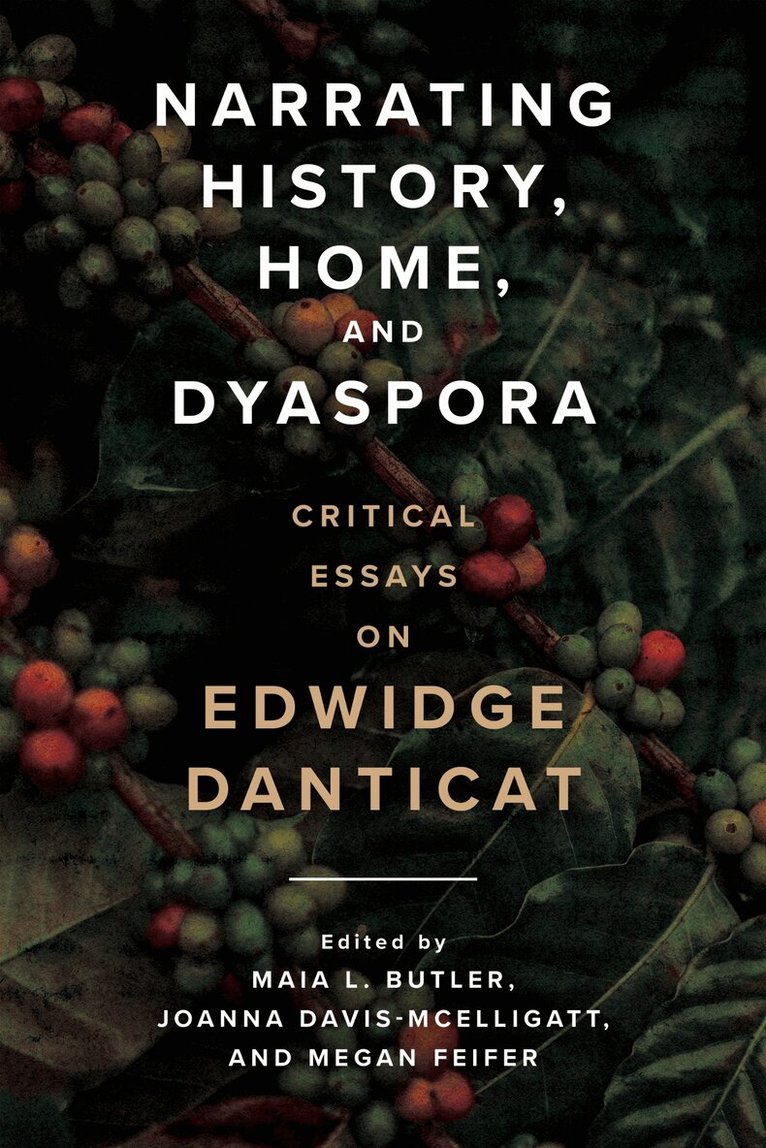
Contributions by Cècile Accilien, Maria Rice Bellamy, Gwen Bergner, Olga Blomgren, Maia L. Butler, Isabel Caldeira, Nadège T. Clitandre, Thadious Davis, Joanna Davis-McElligatt, Laura Dawkins, Megan Feifer, Delphine Gras, Akia Jackson, Tammie Jenkins, Shewonda Leger, Jennifer Lozano, Marion Rohrleitner, Thomás Rothe, Erika Serrato, Lucía Stecher, and Joyce WhiteNarrating History, Home, and Dyaspora: Critical Essays on Edwidge Danticat contains fifteen essays addressing how Edwidge Danticat’s writing, anthologizing, and storytelling trace, (re)construct, and develop alternate histories, narratives of nation building, and conceptions of home and belonging. The prolific Danticat is renowned for novels, collections of short fiction, nonfiction, and editorial writing. As her experimentation in form expands, so does her force as a public intellectual. Danticat’s literary representations, political commentary, and personal activism have proven vital to classroom and community work imagining radical futures. Among increasing anti-immigrant sentiment and containment and rampant ecological volatility, Danticat’s contributions to public discourse, art, and culture deserve sustained critical attention. These essays offer essential perspectives to scholars, public intellectuals, and students interested in African diasporic, Haitian, Caribbean, and transnational American literary studies. This collection frames Danticat’s work as an indictment of statelessness, racialized and gendered state violence, the persistence of political and economic margins, and the essential vitality of life in and as dyaspora.The first section of this volume, "The Other Side of the Water," engages with Danticat’s construction and negotiation of nation, both in Haiti and the United States; the broader dyaspora; and her own, her family’s, and her fictional characters’ places within them. The second section, "Welcoming Ghosts," delves into the ever-present specter of history and memory, prominent themes found throughout Danticat’s work. From origin stories to broader Haitian histories, this section addresses the underlying traumas involved when remembering the past and its relationship to the present. The third section, "I Speak Out," explores the imperative to speak, paying particular attention to the narrative form with which such telling occurs. The fourth and final section, "Create Dangerously," contends with Haitians’ activism, community building, and the political and ecological climate of Haiti and its dyaspora.
424 kr
Skickas inom 10-15 vardagar
Contributions by Cècile Accilien, Maria Rice Bellamy, Gwen Bergner, Olga Blomgren, Maia L. Butler, Isabel Caldeira, Nadège T. Clitandre, Thadious Davis, Joanna Davis-McElligatt, Laura Dawkins, Megan Feifer, Delphine Gras, Akia Jackson, Tammie Jenkins, Shewonda Leger, Jennifer Lozano, Marion Rohrleitner, Thomás Rothe, Erika Serrato, Lucía Stecher, and Joyce WhiteNarrating History, Home, and Dyaspora: Critical Essays on Edwidge Danticat contains fifteen essays addressing how Edwidge Danticat’s writing, anthologizing, and storytelling trace, (re)construct, and develop alternate histories, narratives of nation building, and conceptions of home and belonging. The prolific Danticat is renowned for novels, collections of short fiction, nonfiction, and editorial writing. As her experimentation in form expands, so does her force as a public intellectual. Danticat’s literary representations, political commentary, and personal activism have proven vital to classroom and community work imagining radical futures. Among increasing anti-immigrant sentiment and containment and rampant ecological volatility, Danticat’s contributions to public discourse, art, and culture deserve sustained critical attention. These essays offer essential perspectives to scholars, public intellectuals, and students interested in African diasporic, Haitian, Caribbean, and transnational American literary studies. This collection frames Danticat’s work as an indictment of statelessness, racialized and gendered state violence, the persistence of political and economic margins, and the essential vitality of life in and as dyaspora.The first section of this volume, "The Other Side of the Water," engages with Danticat’s construction and negotiation of nation, both in Haiti and the United States; the broader dyaspora; and her own, her family’s, and her fictional characters’ places within them. The second section, "Welcoming Ghosts," delves into the ever-present specter of history and memory, prominent themes found throughout Danticat’s work. From origin stories to broader Haitian histories, this section addresses the underlying traumas involved when remembering the past and its relationship to the present. The third section, "I Speak Out," explores the imperative to speak, paying particular attention to the narrative form with which such telling occurs. The fourth and final section, "Create Dangerously," contends with Haitians’ activism, community building, and the political and ecological climate of Haiti and its dyaspora.
1 345 kr
Skickas inom 7-10 vardagar
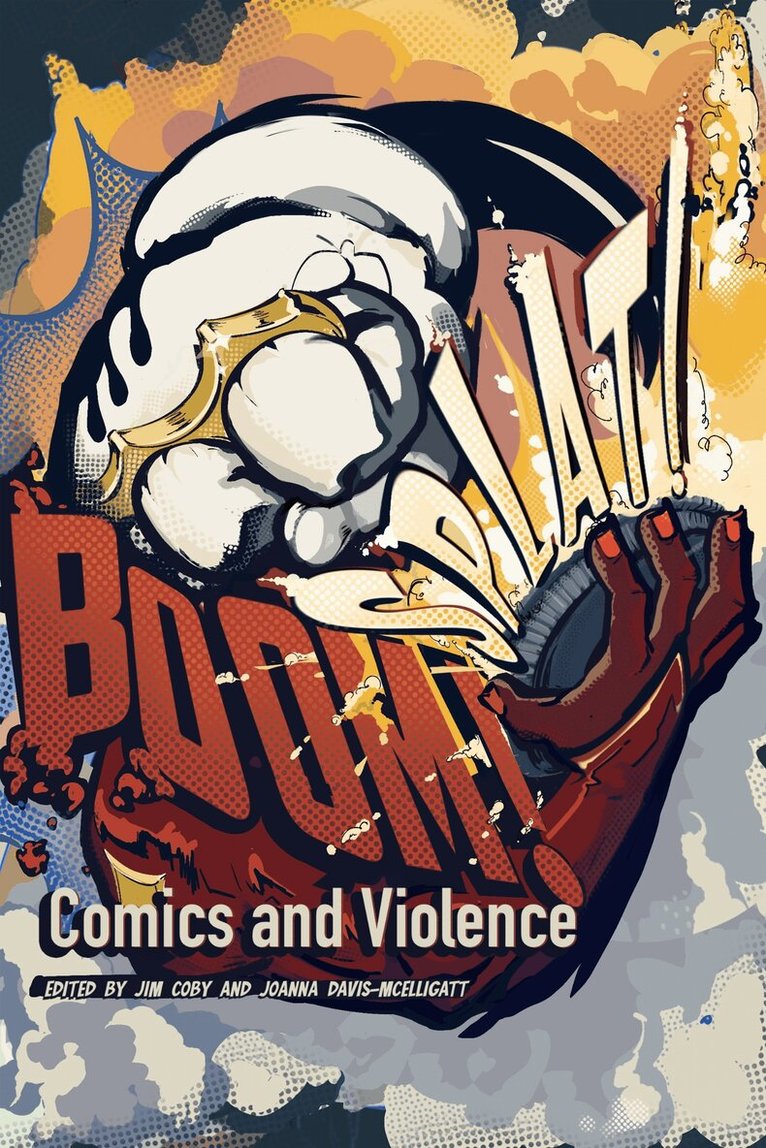
Contributions by Lawrence Abrams, Diana Álvarez Amell, Partha Bhattacharjee, Natalja Chestopalova, Jim Coby, Rita Costello, Sam Cowling, Joanna Davis-McElligatt, Elisabetta Di Minico, Kiera M. Gaswint, Vincent Haddad, Kaleb Knoblauch, Christina M. Knopf, Leah Milne, Jacob Murel, Priyanka Tripathi, and Steven S. VroomanIn 1954, the culture, distribution, and content of comics forever changed. Long a mainstay of America’s reading diet, comic books began to fall under the scrutiny of parent groups, church leaders, and politicians. The bright colors and cheaply printed pulp pages of comic books that had once provided an escape were suddenly presumed to house something lascivious, insidious, and morally corrosive. While anxieties about representations of violence in comics have largely fallen to the wayside since the moral panic of the 1950s, thematic and symbolic visual depictions of violence remain central to the comics form. BOOM! SPLAT! Comics and Violence examines violence in every iteration—physical violence enacted between people and their environments, formal and structural violence embedded in the comics language itself, representations of historical violence, and ways of reading and seeing violence.BOOM! SPLAT! is composed of fifteen essays from renowned comics scholars and is organized thematically into four sections, including an examination of histories of violence, forms of violence, modes and systems of violence, and political and social violence. Chapters focus on well-known comics and comics creators, such as Steve Ditko, Hulk, X-Men, and the Marvel universe, to newspaper cartoon strips, postwar graphic novels, revolution, civil rights, trauma, #blacklivesmatter, and more. BOOM! SPLAT! serves as a resource to scholars and comics enthusiasts who wish to contemplate and confront the permutations, forms, structures, and discourses of violence that have always animated cartoons.Through this interrogation, our understanding of violence moves beyond the immediately physical and interpersonal into modes of ephemeral, psychological, and ideological violence. Contributors fill critical gaps by offering sustained explorations of the function of manifold violences in the comics language—those seen, felt, and imagined. The essays in this collection are critically necessary for understanding the current and historical role that violence has played in comics and will help recognize how cartooning imbricates, resists, and expands our thinking about and experiences of violence.
418 kr
Skickas inom 7-10 vardagar
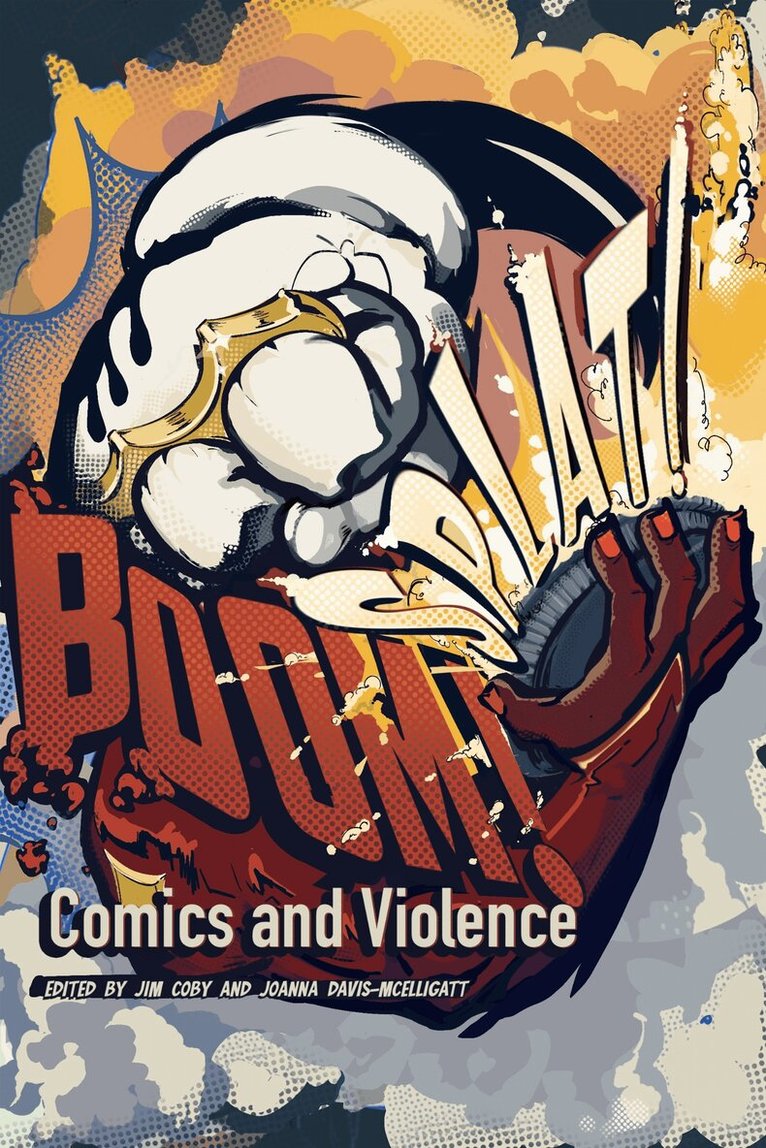
Contributions by Lawrence Abrams, Diana Álvarez Amell, Partha Bhattacharjee, Natalja Chestopalova, Jim Coby, Rita Costello, Sam Cowling, Joanna Davis-McElligatt, Elisabetta Di Minico, Kiera M. Gaswint, Vincent Haddad, Kaleb Knoblauch, Christina M. Knopf, Leah Milne, Jacob Murel, Priyanka Tripathi, and Steven S. VroomanIn 1954, the culture, distribution, and content of comics forever changed. Long a mainstay of America’s reading diet, comic books began to fall under the scrutiny of parent groups, church leaders, and politicians. The bright colors and cheaply printed pulp pages of comic books that had once provided an escape were suddenly presumed to house something lascivious, insidious, and morally corrosive. While anxieties about representations of violence in comics have largely fallen to the wayside since the moral panic of the 1950s, thematic and symbolic visual depictions of violence remain central to the comics form. BOOM! SPLAT! Comics and Violence examines violence in every iteration—physical violence enacted between people and their environments, formal and structural violence embedded in the comics language itself, representations of historical violence, and ways of reading and seeing violence.BOOM! SPLAT! is composed of fifteen essays from renowned comics scholars and is organized thematically into four sections, including an examination of histories of violence, forms of violence, modes and systems of violence, and political and social violence. Chapters focus on well-known comics and comics creators, such as Steve Ditko, Hulk, X-Men, and the Marvel universe, to newspaper cartoon strips, postwar graphic novels, revolution, civil rights, trauma, #blacklivesmatter, and more. BOOM! SPLAT! serves as a resource to scholars and comics enthusiasts who wish to contemplate and confront the permutations, forms, structures, and discourses of violence that have always animated cartoons.Through this interrogation, our understanding of violence moves beyond the immediately physical and interpersonal into modes of ephemeral, psychological, and ideological violence. Contributors fill critical gaps by offering sustained explorations of the function of manifold violences in the comics language—those seen, felt, and imagined. The essays in this collection are critically necessary for understanding the current and historical role that violence has played in comics and will help recognize how cartooning imbricates, resists, and expands our thinking about and experiences of violence.