Joanna S. Smith - Böcker
Visar alla böcker från författaren Joanna S. Smith. Handla med fri frakt och snabb leverans.
4 produkter
4 produkter
442 kr
Skickas inom 7-10 vardagar
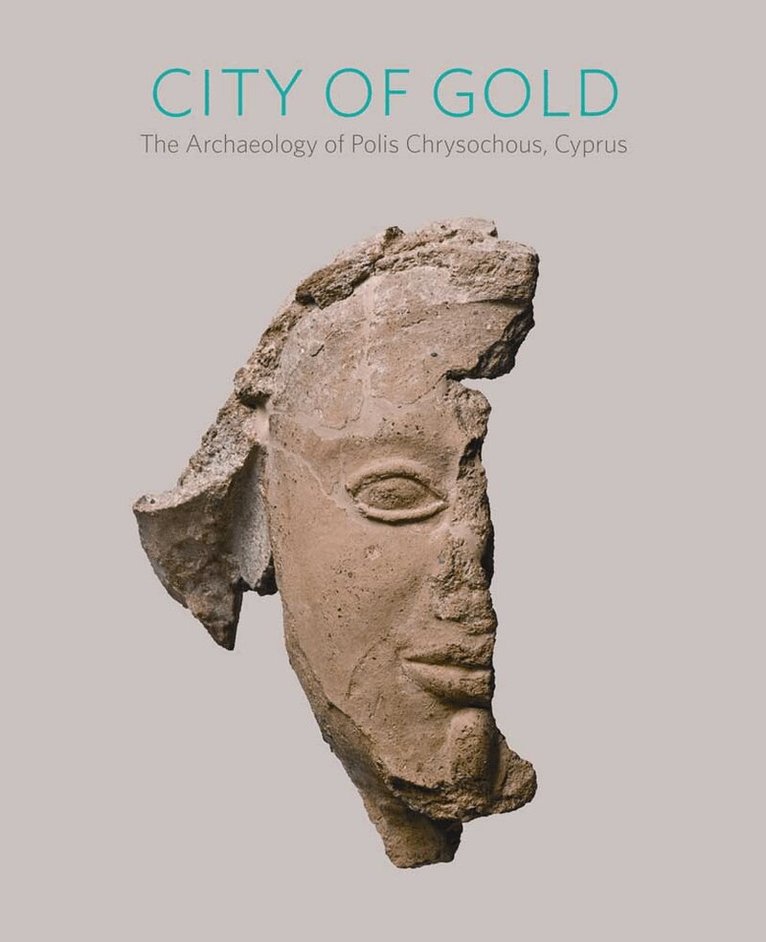
The modern Cypriot town of Polis Chrysochous—"City of Gold"—lies above the city of Arsinoe and the earlier city-kingdom of Marion. In 1885 excavators began exploring the extensive cemeteries of these cities. Since 1983 the Princeton Cyprus Expedition has focused on the remains of sanctuaries, public buildings, workshops, and private residences spanning the Geometric through Classical periods of Marion and the Hellenistic through Roman, early Christian, and medieval periods of Arsinoe.Combining archaeological investigation and historical analysis, City of Gold relates the discoveries establishing that these cities had close ties with Greece and with regions from Egypt to Anatolia, findings best represented by the painted vases and terracotta sculptures of Marion and the architecture of Arsinoe. Nearly half of the 110 artifacts included in the catalogue are previously unpublished, and another third are published in detail for the first time.Distributed for the Princeton University Art MuseumExhibition Schedule:Princeton University Art Museum(10/20/12–01/20/13)
1 485 kr
Skickas inom 7-10 vardagar
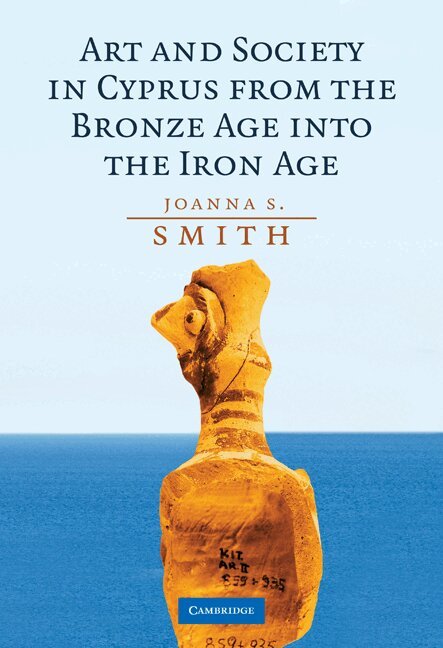
Dramatic social and political change marks the period from the end of the Late Bronze Age into the Iron Age (c.1300-700 BCE) across the Mediterranean. Inland palatial centers of bureaucratic power weakened or collapsed c.1200 BCE while entrepreneurial exchange by sea survived and even expanded, becoming the Mediterranean-wide network of Phoenician trade. At the heart of that system was Kition, one of the largest harbor cities of ancient Cyprus. Earlier research has suggested that Phoenician rule was established at Kition after the abandonment of part of its Bronze Age settlement. A re-examination of Kition's architecture, stratigraphy, inscriptions, sculpture, and ceramics demonstrates that it was not abandoned. This study emphasizes the placement and scale of images and how they reveal the development of economic and social control at Kition from its establishment in the thirteenth century BCE until the development of a centralized form of government by the Phoenicians, backed by the Assyrian king, in 707 BCE.
1 142 kr
Tillfälligt slut
Includes 76 b/w figures. Fieldwork in the village of Phlamoudhi, Cyprus from 1970-1973 by the Columbia University Expedition to Phlamoudhi recorded the only systematically excavated evidence for Middle to Late Bronze Age and Iron Age settlement north of the Kyrenia Mountains. Halted by the war of 1974 that divided the island, most of the discoveries in Phlamoudhi remained unpublished until 2000 when the Phlamoudhi Archaeological Project began the systematic study, analysis, and publication of the material. This book's chapters cover the two main excavated sites, the hilltop site of Vounari and the larger settlement at Melissa; the region's patterns of settlement in the Bronze and Iron Ages and the Hellenistic through Medieval periods; and the geology and palaeobotany of the region. Chapters with perspectives on the excavations by original team members, the history of work in the area, and an overview of archaeology on Cyprus before and after the war place the fieldwork in historical perspective. This volume derives from papers at a symposium that was held together with an exhibition of the finds from Phlamoudhi in 2005. It is the first in the final publication series.
577 kr
Skickas inom 7-10 vardagar
Dramatic social and political change marks the period from the end of the Late Bronze Age into the Iron Age (c.1300-700 BCE) across the Mediterranean. Inland palatial centers of bureaucratic power weakened or collapsed c.1200 BCE while entrepreneurial exchange by sea survived and even expanded, becoming the Mediterranean-wide network of Phoenician trade. At the heart of that system was Kition, one of the largest harbor cities of ancient Cyprus. Earlier research has suggested that Phoenician rule was established at Kition after the abandonment of part of its Bronze Age settlement. A re-examination of Kition's architecture, stratigraphy, inscriptions, sculpture, and ceramics demonstrates that it was not abandoned. This study emphasizes the placement and scale of images and how they reveal the development of economic and social control at Kition from its establishment in the thirteenth century BCE until the development of a centralized form of government by the Phoenicians, backed by the Assyrian king, in 707 BCE.