Joao H. Costa Vargas - Böcker
Visar alla böcker från författaren Joao H. Costa Vargas. Handla med fri frakt och snabb leverans.
12 produkter
12 produkter
1 873 kr
Skickas inom 5-8 vardagar
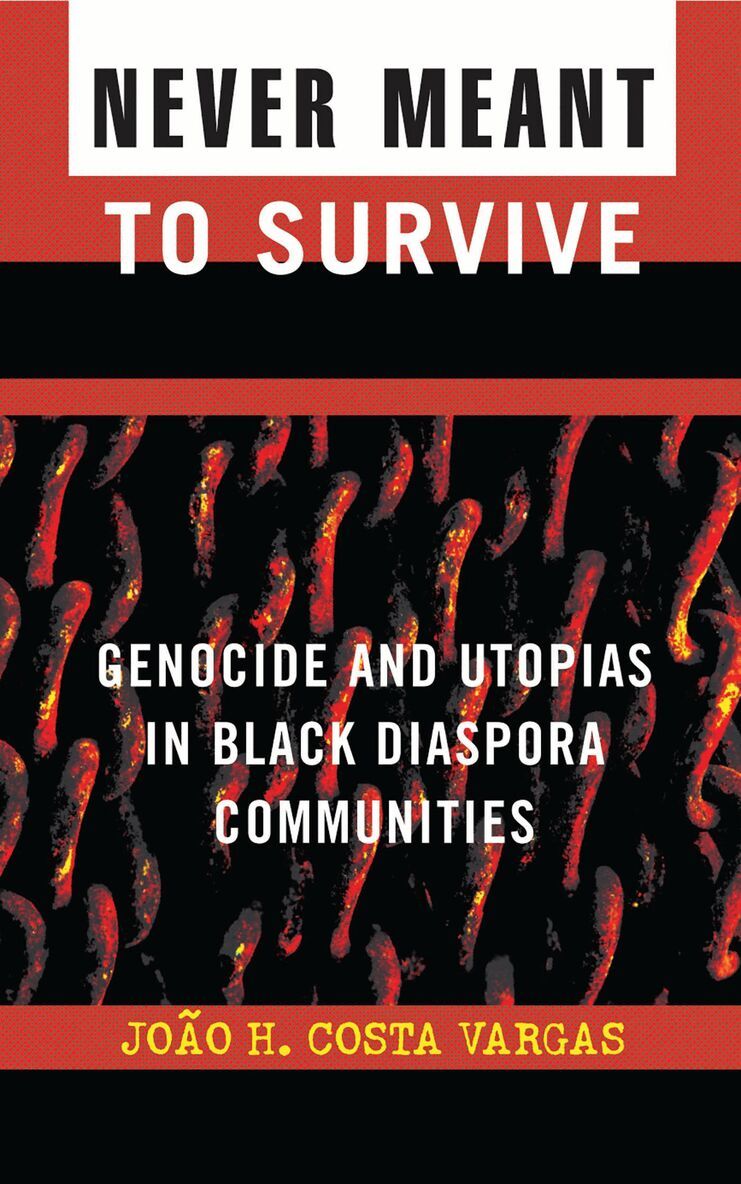
Never Meant to Survive presents a historical, political, and social assessment of anti-black genocide and liberatory struggles that arose to resist it. Based on fine-grained accounts of community life at the street level, Costa Vargas's work presents crucial examples of political resistance and community activism.By examining two cities linked by common experiences of Blackness, Los Angeles and Rio de Janeiro, this book identifies a prevailing genocidal force that organizes individuals and groups across society. The 1965 and 1992 riots in Los Angeles, the work of the Black Panther Party and favela activists in Brazil, and police brutality in struggles between black communities and the state in both L.A. and Rio de Janeiro all figure importantly in Costa Vargas's compelling account. What emerges from this analysis is a call for the destruction of the conditions that foster the marginalization of black communities and a halt to the internal conflicts between black social groups themselves.
603 kr
Skickas inom 5-8 vardagar
Never Meant to Survive presents a historical, political, and social assessment of anti-black genocide and liberatory struggles that arose to resist it. Based on fine-grained accounts of community life at the street level, Costa Vargas's work presents crucial examples of political resistance and community activism.By examining two cities linked by common experiences of Blackness, Los Angeles and Rio de Janeiro, this book identifies a prevailing genocidal force that organizes individuals and groups across society. The 1965 and 1992 riots in Los Angeles, the work of the Black Panther Party and favela activists in Brazil, and police brutality in struggles between black communities and the state in both L.A. and Rio de Janeiro all figure importantly in Costa Vargas's compelling account. What emerges from this analysis is a call for the destruction of the conditions that foster the marginalization of black communities and a halt to the internal conflicts between black social groups themselves.
1 176 kr
Skickas inom 10-15 vardagar
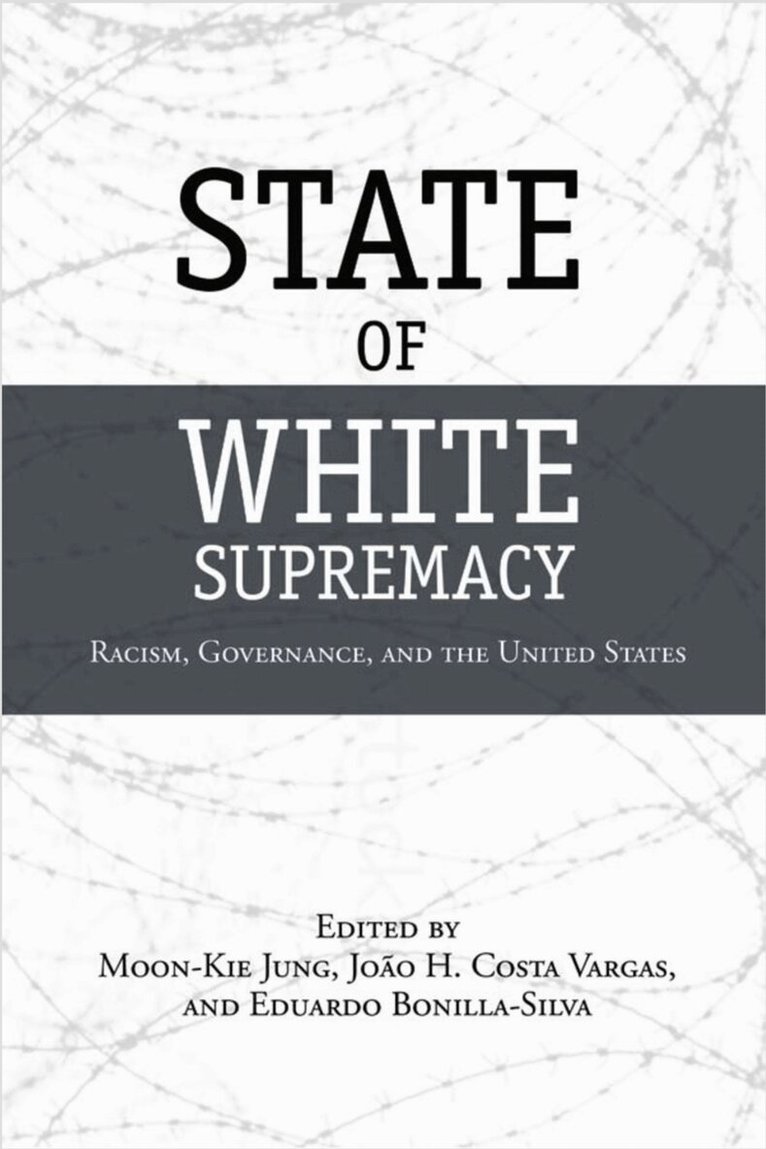
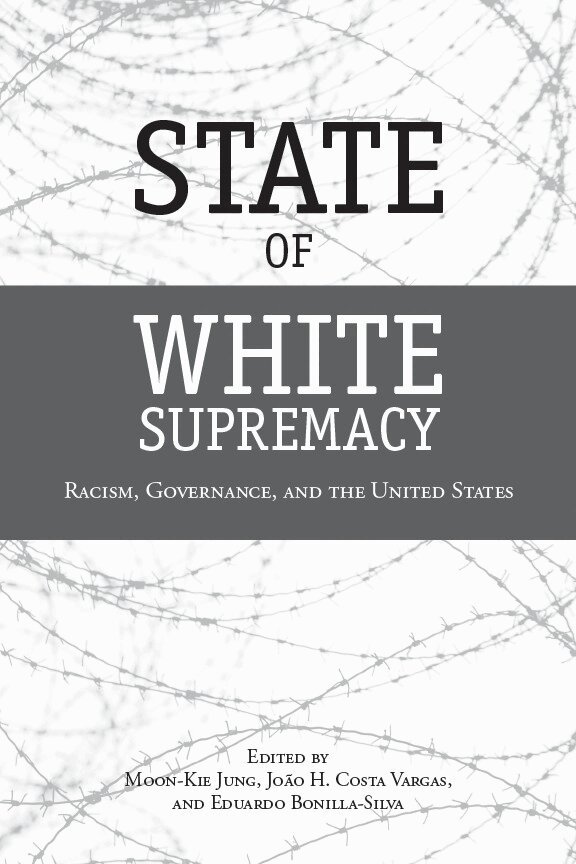
The deeply entrenched patterns of racial inequality in the United States simply do not square with the liberal notion of a nation-state of equal citizens. Uncovering the false promise of liberalism, State of White Supremacy reveals race to be a fundamental, if flexible, ruling logic that perpetually generates and legitimates racial hierarchy and privilege.Racial domination and violence in the United States are indelibly marked by its origin and ongoing development as an empire-state. The widespread misrecognition of the United States as a liberal nation-state hinges on the twin conditions of its approximation for the white majority and its impossibility for their racial others. The essays in this book incisively probe and critique the U.S. racial state through a broad range of topics, including citizenship, education, empire, gender, genocide, geography, incarceration, Islamophobia, migration and border enforcement, violence, and welfare.
282 kr
Skickas inom 7-10 vardagar
The deeply entrenched patterns of racial inequality in the United States simply do not square with the liberal notion of a nation-state of equal citizens. Uncovering the false promise of liberalism, State of White Supremacy reveals race to be a fundamental, if flexible, ruling logic that perpetually generates and legitimates racial hierarchy and privilege.Racial domination and violence in the United States are indelibly marked by its origin and ongoing development as an empire-state. The widespread misrecognition of the United States as a liberal nation-state hinges on the twin conditions of its approximation for the white majority and its impossibility for their racial others. The essays in this book incisively probe and critique the U.S. racial state through a broad range of topics, including citizenship, education, empire, gender, genocide, geography, incarceration, Islamophobia, migration and border enforcement, violence, and welfare.
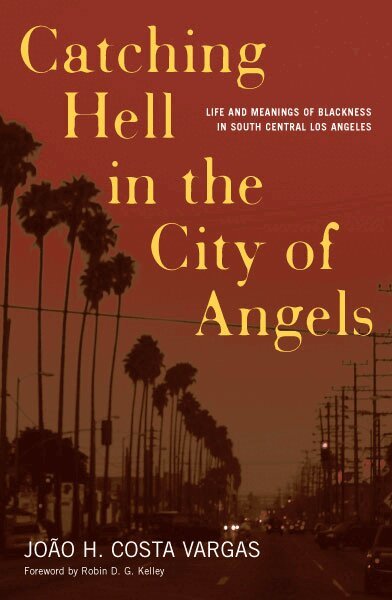
Catching Hell in the City of Angels
Life and Meanings of Blackness in South Central Los Angeles
Häftad, Engelska, 2006
212 kr
Skickas inom 10-15 vardagar
Since the 1980s, Los Angeles has become the most racially and economically divided city in the United States. In the poorest parts of South Central Los Angeles, buildings in disrepair-the legacy of racial unrest. Moving beyond stereotypes of South Central's predominantly African American residents, JoÃo H. Costa Vargas recounts his almost two years living in the district. Personal, critical, and disquieting, Catching Hell in the City of Angels examines the ways in which economic and social changes in the twentieth century have affected the black community, and powerfully conveys the experiences that bind and divide its people.Through compelling stories of South Central, including his own experience as an immigrant of color, Vargas presents portraits of four groups. He talks daily with women living in a low-income Watts apartment building; works with activists in a community organization against police brutality; interacts with former gang members trying to maintain a 1992 truce between the Bloods and the Crips; and listens to amateur jazz musicians who perform in a gentrified section of the neighborhood. In each case he describes the worldviews and the definitions of “blackness” these people use to cope with oppression. Vargas finds, in turn, that blackness is a form of racial solidarity, a vehicle for the renewal of African American culture, and a political expression of revolutionary black nationalism. Vargas reveals that the social fault lines in South Central reflect both contemporary disparities and long-term struggles. In doing so, he shows both the racialized power that makes “blackness” a prized term of identity and the terrible price that African Americans have paid for this emphasis. Ultimately, Catching Hell in the City of Angels tells the story of urban America through the lives of individuals from diverse, overlapping, and vibrant communities. JoÃo H. Costa Vargas is assistant professor in the Center for African and African American Studies and the department of anthropology at the University of Texas, Austin. Robin D. G. Kelley is the William B. Ransford Professor of Cultural and Historical Studies at Columbia University. He is the author of numerous books, including Yo Mama's Disfunktional: Fighting the Culture Wars in Urban America.
1 248 kr
Skickas inom 7-10 vardagar
Antiblackness investigates the ways in which the dehumanization of Black people has been foundational to the establishment of modernity. Drawing on Black feminism, Afropessimism, and critical race theory, the book's contributors trace forms of antiblackness across time and space, from nineteenth-century slavery to the categorization of Latinx in the 2020 census, from South Africa and Palestine to the Chickasaw homelands, from the White House to convict lease camps, prisons, and schools. Among other topics, they examine the centrality of antiblackness in the introduction of Carolina rice to colonial India, the presence of Black people and Native Americans in the public discourse of precolonial Korea, and the practices of denial that obscure antiblackness in contemporary France. Throughout, the contributors demonstrate that any analysis of white supremacy---indeed, of the world---that does not contend with antiblackness is incomplete.Contributors. Mohan Ambikaipaker, Jodi A. Byrd, Iyko Day, Anthony Paul Farley, Crystal Marie Fleming, Sarah Haley, Tanya KaterÍ HernÁndez, Sarah Ihmoud, Joy James, Moon-Kie Jung, Jae Kyun Kim, Charles W. Mills, Dylan RodrÍguez, Zach Sell, JoÃo H. Costa Vargas, Frank B. Wilderson III, Connie Wun
331 kr
Skickas inom 7-10 vardagar
Antiblackness investigates the ways in which the dehumanization of Black people has been foundational to the establishment of modernity. Drawing on Black feminism, Afropessimism, and critical race theory, the book's contributors trace forms of antiblackness across time and space, from nineteenth-century slavery to the categorization of Latinx in the 2020 census, from South Africa and Palestine to the Chickasaw homelands, from the White House to convict lease camps, prisons, and schools. Among other topics, they examine the centrality of antiblackness in the introduction of Carolina rice to colonial India, the presence of Black people and Native Americans in the public discourse of precolonial Korea, and the practices of denial that obscure antiblackness in contemporary France. Throughout, the contributors demonstrate that any analysis of white supremacy---indeed, of the world---that does not contend with antiblackness is incomplete.Contributors. Mohan Ambikaipaker, Jodi A. Byrd, Iyko Day, Anthony Paul Farley, Crystal Marie Fleming, Sarah Haley, Tanya KaterÍ HernÁndez, Sarah Ihmoud, Joy James, Moon-Kie Jung, Jae Kyun Kim, Charles W. Mills, Dylan RodrÍguez, Zach Sell, JoÃo H. Costa Vargas, Frank B. Wilderson III, Connie Wun
1 448 kr
Kommande
422 kr
Kommande
1 282 kr
Skickas inom 10-15 vardagar
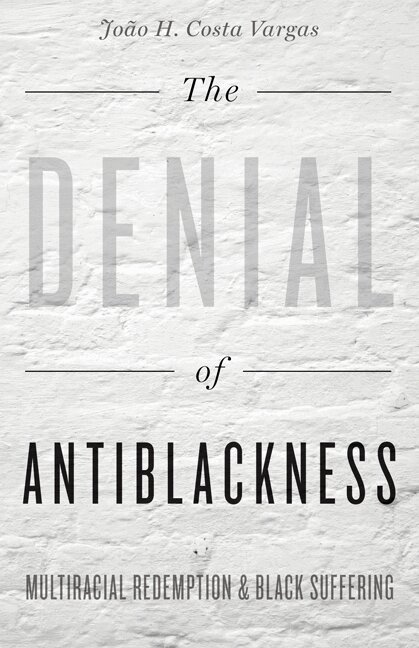
An incisive new look at the black diaspora, examining the true roots of antiblackness and its destructive effects on all of societyThanks to movements like Black Lives Matter, Western society’s chronic discrimination against black individuals has become front-page news. Yet, there is little awareness of the systemic factors that make such a distinct form of dehumanization possible. In both the United States and Brazil-two leading nations of the black diaspora-a very necessary acknowledgment of black suffering is nonetheless undercut by denial of the pervasive antiblackness that still exists throughout these societies.In The Denial of Antiblackness, JoÃo H. Costa Vargas examines how antiblackness affects society as a whole through analyses of recent protests against police killings of black individuals in both the United States and Brazil, as well as the everyday dynamics of incarceration, residential segregation, and poverty. With multisite ethnography ranging from a juvenile prison in Austin, Texas, to grassroots organizing in Los Angeles and Black social movements in Brazil, Vargas finds the common factors that have perpetuated antiblackness, regardless of context. Ultimately, he asks why the denial of antiblackness persists, whom this narrative serves, and what political realities it makes possible.
308 kr
Skickas inom 7-10 vardagar
An incisive new look at the black diaspora, examining the true roots of antiblackness and its destructive effects on all of societyThanks to movements like Black Lives Matter, Western society’s chronic discrimination against black individuals has become front-page news. Yet, there is little awareness of the systemic factors that make such a distinct form of dehumanization possible. In both the United States and Brazil-two leading nations of the black diaspora-a very necessary acknowledgment of black suffering is nonetheless undercut by denial of the pervasive antiblackness that still exists throughout these societies.In The Denial of Antiblackness, JoÃo H. Costa Vargas examines how antiblackness affects society as a whole through analyses of recent protests against police killings of black individuals in both the United States and Brazil, as well as the everyday dynamics of incarceration, residential segregation, and poverty. With multisite ethnography ranging from a juvenile prison in Austin, Texas, to grassroots organizing in Los Angeles and Black social movements in Brazil, Vargas finds the common factors that have perpetuated antiblackness, regardless of context. Ultimately, he asks why the denial of antiblackness persists, whom this narrative serves, and what political realities it makes possible.
180 kr
Skickas inom 5-8 vardagar
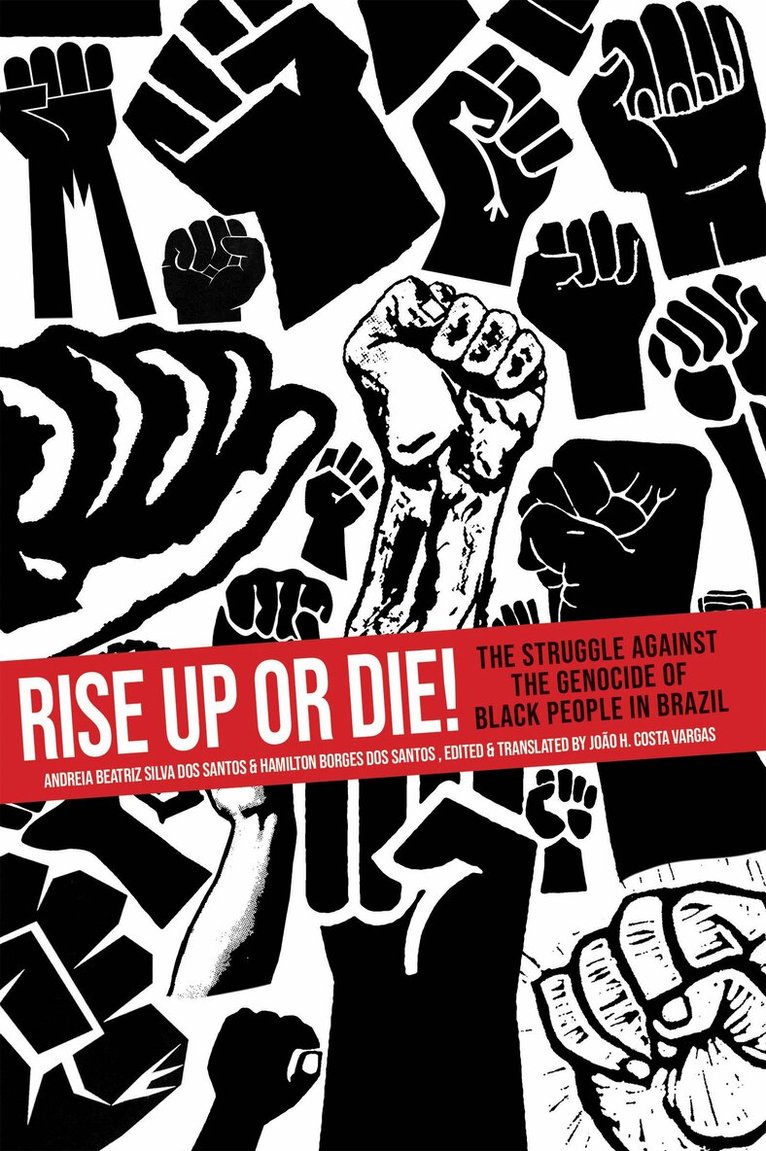
Call it “bad manners,” but the militants of Rise Up or Die!—Brazil's radical Black liberation movement—refuse to abide by the rules of a society that is killing Black people. Confronting centuries of hyper-exploitation and dehumanization of Black people in Brazil, Rise Up or Die! invented a new political vocabulary for Black self-determination, introduced sexual health and food justice initiatives, attracted militants and activists from the most marginalized spaces of one of the largest Black nations in the world, and founded an autonomous Pan-Africanist school as part of their broader struggle for collective liberation.As the activists of Rise Up or Die! say, “Creative hatred is what makes you build new things,” and indeed they have relentlessly pursued invention as the necessary alternative to the nation’s genocidal model of racial democracy. Known in Brazil as Reaja ou Será Morto/Reaja ou Será Morta, this is the story of their organization, in their own words, as they resist a culture that simply hates Black people.