Jochen A.G. Jess - Böcker
Visar alla böcker från författaren Jochen A.G. Jess. Handla med fri frakt och snabb leverans.
7 produkter
7 produkter
1 578 kr
Skickas inom 10-15 vardagar
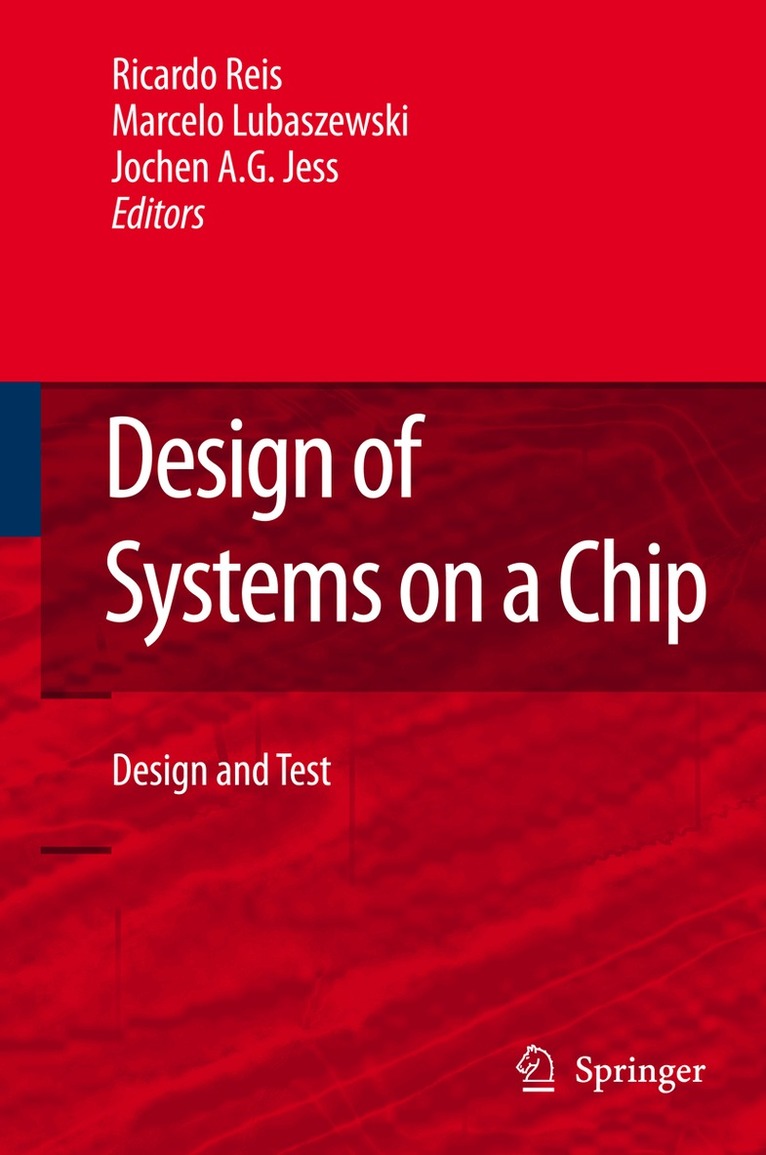
Design of Systems on a Chip: Design&Test is the second of two volumes addressing the design challenges associated with new generations of the semiconductor technology. The various chapters are the compilations of tutorials presented at workshops in the recent years by prominent authors from all over the world. Technology, productivity and quality are the main aspects under consideration to establish the major requirements for the design and test of upcoming systems on a chip. In particular this second book include contributions on three different, but complementary axes: core design, computer-aided design tools and test methods. A collection of chapters deal with the heterogeneity aspect of core designs, showing the diversity of parts that may share the same substrate in a state-of-the-art system on a chip. The second part of the book discusses CAD in three different levels of design abstraction, from system level to physical design. The third part deals with test methods. The topic is addressed from different viewpoints: in terms of chip complexity, test is discussed from the core and system prospective; in terms of signal heterogeneity, the digital, mixed-signal and microsystem prospective are considered.Fault-tolerance in integrated circuits is not an exclusive concern regarding space designers or highly-reliable application engineers. Rather, designers of next generation products must cope with reduced margin noises due to technological advances. The continuous evolution of the fabrication technology process of semiconductor components, in terms of transistor geometry shrinking, power supply, speed, and logic density, has significantly reduced the reliability of very deep submicron integrated circuits, in face of the various internal and external sources of noise. The very popular Field Programmable Gate Arrays, customizable by SRAM cells, are a consequence of the integrated circuit evolution with millions of memory cells to implement the logic, embedded memories, routing, and more recently with embedded microprocessors cores. These re-programmable systems-on-chip platforms must be fault-tolerant to cope with present days requirements. This book discusses fault-tolerance techniques for SRAM-based Field Programmable Gate Arrays (FPGAs). It starts by showing the model of the problem and the upset effects in the programmable architecture. In the sequence, it shows the main fault tolerance techniques used nowadays to protect integrated circuits against errors. A large set of methods for designing fault tolerance systems in SRAM-based FPGAs is described. Some presented techniques are based on developing a new fault-tolerant architecture with new robustness FPGA elements. Other techniques are based on protecting the high-level hardware description before the synthesis in the FPGA. The reader has the flexibility of choosing the most suitable fault-tolerance technique for its project and to compare a set of fault toleranttechniques for programmable logic applications.
1 625 kr
Skickas inom 10-15 vardagar
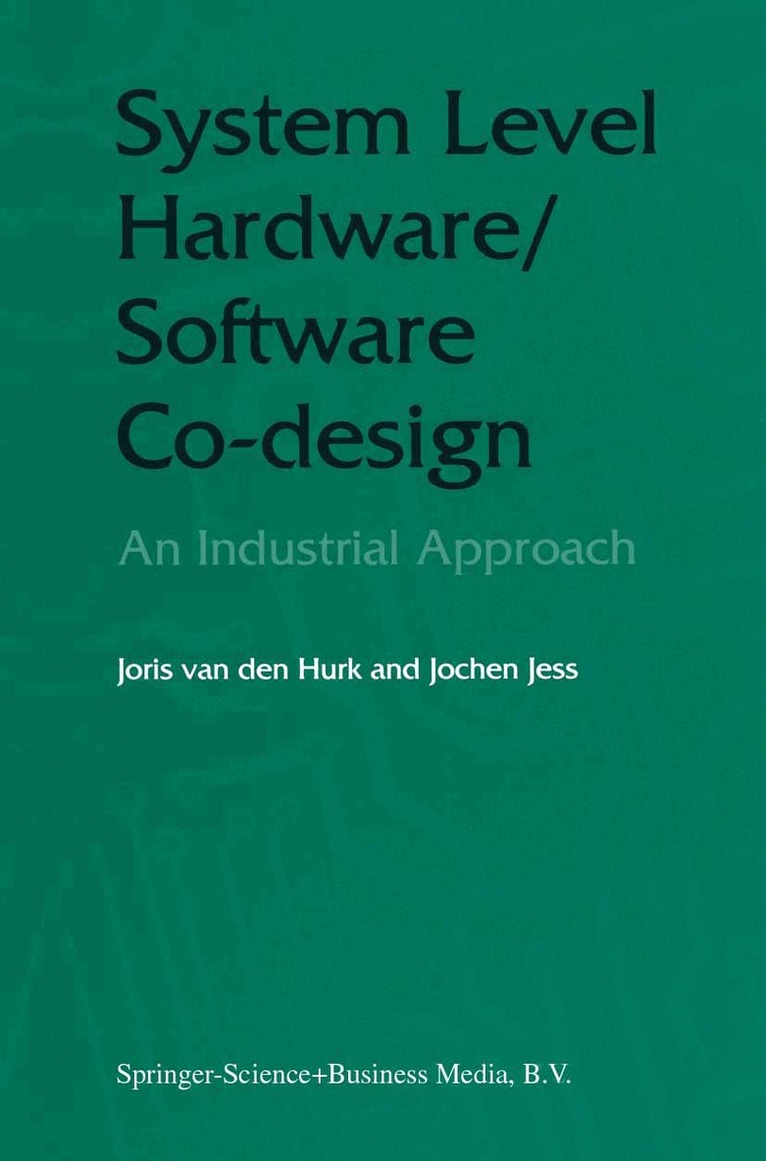
Hierarchical design methods were originally introduced for the design of digital ICs, and they appeared to provide for significant advances in design productivity, Time-to-Market, and first-time right design. These concepts have gained increasing importance in the semiconductor industry in the 1990s. In the course of time, the supportive quality of hierarchical methods and their advantages were confirmed. This text demonstrates the applicability of hierarchical methods to hardware/software co-design, and mixed analogue/digital design following a similar approach. Hierarchical design methods provide for high levels of design support, both in a qualitative and a quantitative sense. In the qualitative sense, the presented methods support all phases in the product life cycle of electronic products, ranging from requirements analysis to application support. Hierarchical methods furthermore allow for efficient digital hardware design, hardware/software codesign, and mixed analogue/digital design, on the basis of commercially available formalisms and design tools. In the quantitative sense, hierarchical methods have prompted a substantial increase in design productivity.The book reports on a six year study during which time the number of square millimeters of normalized complexity an individual designer contributed every week rose by more than a factor of five. Hierarchical methods therefore enabled designers to keep track of the ever-increasing design complexity, while effectively reducing the number of design iterations in the form of re-designs.
1 390 kr
Skickas inom 10-15 vardagar
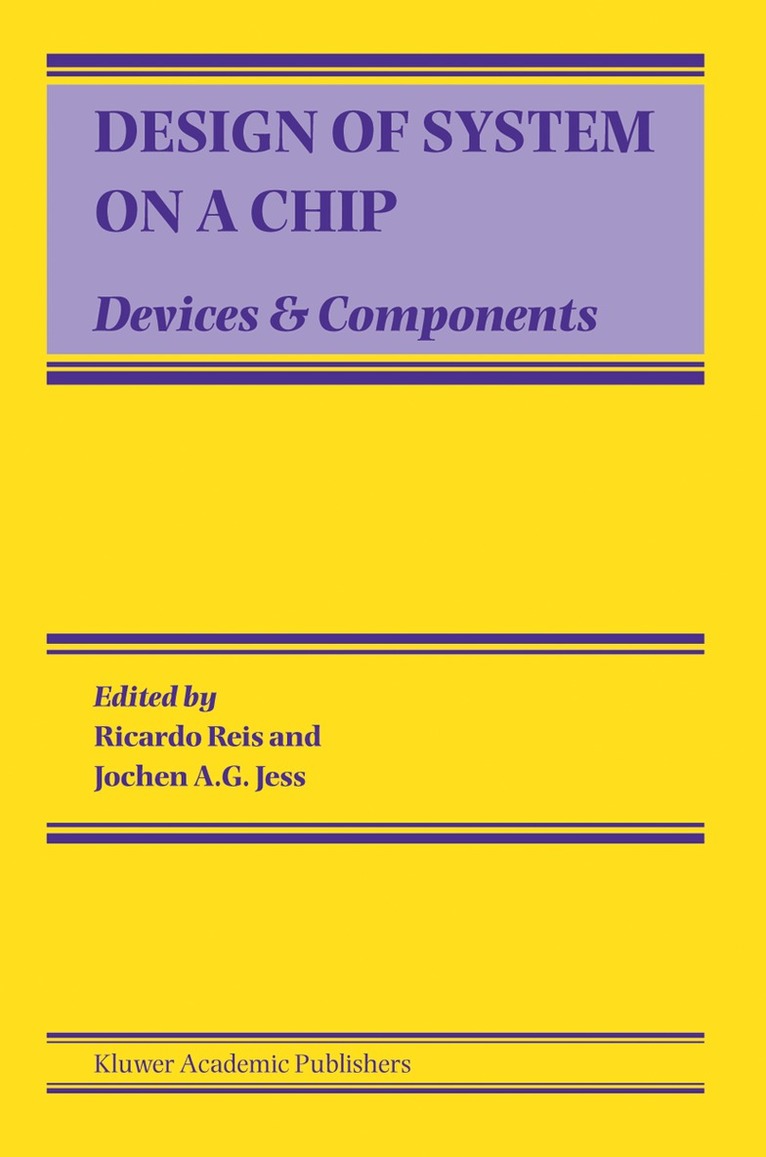
Design of System on a Chip is the first of two volumes addressing the design challenges associated with new generations of the semiconductor technology. The various chapters are the compilations of tutorials presented at workshops in Brazil in the recent years by prominent authors from all over the world. In particular the first book deals with components and circuits. Device models have to satisfy the conditions to be computationally economical in addition to be accurate and to scale over various generations of technology. In addition the book addresses issues of the parasitic behavior of deep sub-micron components, such as parameter variations and sub-threshold effects. Furthermore various authors deal with items like mixed signal components and memories. We wind up with an exposition of the technology problems to be solved if our community wants to maintain the pace of the "International Technology Roadmap for Semiconductors" (ITRS).
1 578 kr
Skickas inom 10-15 vardagar
Design of Systems on a Chip: Design&Test is the second of two volumes addressing the design challenges associated with new generations of the semiconductor technology. The various chapters are the compilations of tutorials presented at workshops in the recent years by prominent authors from all over the world. Technology, productivity and quality are the main aspects under consideration to establish the major requirements for the design and test of upcoming systems on a chip. In particular this second book include contributions on three different, but complementary axes: core design, computer-aided design tools and test methods. A collection of chapters deal with the heterogeneity aspect of core designs, showing the diversity of parts that may share the same substrate in a state-of-the-art system on a chip. The second part of the book discusses CAD in three different levels of design abstraction, from system level to physical design. The third part deals with test methods. The topic is addressed from different viewpoints: in terms of chip complexity, test is discussed from the core and system prospective; in terms of signal heterogeneity, the digital, mixed-signal and microsystem prospective are considered.Fault-tolerance in integrated circuits is not an exclusive concern regarding space designers or highly-reliable application engineers. Rather, designers of next generation products must cope with reduced margin noises due to technological advances. The continuous evolution of the fabrication technology process of semiconductor components, in terms of transistor geometry shrinking, power supply, speed, and logic density, has significantly reduced the reliability of very deep submicron integrated circuits, in face of the various internal and external sources of noise. The very popular Field Programmable Gate Arrays, customizable by SRAM cells, are a consequence of the integrated circuit evolution with millions of memory cells to implement the logic, embedded memories, routing, and more recently with embedded microprocessors cores. These re-programmable systems-on-chip platforms must be fault-tolerant to cope with present days requirements. This book discusses fault-tolerance techniques for SRAM-based Field Programmable Gate Arrays (FPGAs). It starts by showing the model of the problem and the upset effects in the programmable architecture. In the sequence, it shows the main fault tolerance techniques used nowadays to protect integrated circuits against errors. A large set of methods for designing fault tolerance systems in SRAM-based FPGAs is described. Some presented techniques are based on developing a new fault-tolerant architecture with new robustness FPGA elements. Other techniques are based on protecting the high-level hardware description before the synthesis in the FPGA. The reader has the flexibility of choosing the most suitable fault-tolerance technique for its project and to compare a set of fault toleranttechniques for programmable logic applications.
1 578 kr
Skickas inom 10-15 vardagar
Hierarchical design methods were originally introduced for the design of digital ICs, and they appeared to provide for significant advances in design productivity, Time-to-Market, and first-time right design. These concepts have gained increasing importance in the semiconductor industry in recent years. In the course of time, the supportive quality of hierarchical methods and their advantages were confirmed. System Level Hardware/Software Co-design: An Industrial Approach demonstrates the applicability of hierarchical methods to hardware / software codesign, and mixed analogue / digital design following a similar approach. Hierarchical design methods provide for high levels of design support, both in a qualitative and a quantitative sense. In the qualitative sense, the presented methods support all phases in the product life cycle of electronic products, ranging from requirements analysis to application support. Hierarchical methods furthermore allow for efficient digital hardware design, hardware / software codesign, and mixed analogue / digital design, on the basis of commercially available formalisms and design tools.In the quantitative sense, hierarchical methods have prompted a substantial increase in design productivity. System Level Hardware/Software Co-design: An Industrial Approach reports on a six year study during which time the number of square millimeters of normalized complexity an individual designer contributed every week rose by more than a factor of five. Hierarchical methods therefore enabled designers to keep track of the ever increasing design complexity, while effectively reducing the number of design iterations in the form of redesigns. System Level Hardware/Software Co-design: An Industrial Approach is the first book to provide a comprehensive, coherent system design methodology that has been proven to increase productivity in industrial practice. The book will be of interest to all managers, designers and researchers working in the semiconductor industry.
1 349 kr
Skickas inom 10-15 vardagar
Design of System on a Chip is the first of two volumes addressing the design challenges associated with new generations of the semiconductor technology. The various chapters are the compilations of tutorials presented at workshops in Brazil in the recent years by prominent authors from all over the world. In particular the first book deals with components and circuits. Device models have to satisfy the conditions to be computationally economical in addition to be accurate and to scale over various generations of technology. In addition the book addresses issues of the parasitic behavior of deep sub-micron components, such as parameter variations and sub-threshold effects. Furthermore various authors deal with items like mixed signal components and memories. We wind up with an exposition of the technology problems to be solved if our community wants to maintain the pace of the "International Technology Roadmap for Semiconductors" (ITRS).
634 kr
Skickas inom 5-8 vardagar