Jody Myers - Böcker
Visar alla böcker från författaren Jody Myers. Handla med fri frakt och snabb leverans.
6 produkter
6 produkter
675 kr
Skickas inom 10-15 vardagar
Dressing entirely in white is normal practice on a five-block stretch of Robertson Boulevard in West Los Angeles. Western men and women, garbed in white from their turbans to their Keds, traverse the busy streets surrounding the Sikh Temple. Further north, you have to wait until Friday afternoon to see white-clad young men in yarmulkes gathering outside the Kabbalah Learning Centre greeting each other with hugs, the spaces around them filled with women and children wearing multi-colored garments. Beyond this city street, one hears of the popularity of Kabbalah in the tabloids, as celebrities such as Madonna claim Kabbalah as their new religion. How have the obscure and offensive ideas of medieval Jewish mysticism, expressed in doctrines like the demonic power of women's menstrual blood or the soulless bodies of Gentiles, been made palatable for so many from all stripes of life?With KLCs in cities such as Boca Raton, New York, Los Angeles, Boston, Miami, Philadelphia, San Diego, Houston, and Las Vegas, the reach of this mystical tradition can be said to be nationwide. But how did its beliefs and practices become as fashionable as they are now? What do the KLCs teach so that adherents stay on? Is it a cult, a religion, or simply a system of universal wisdom as its leaders purport? Determined to uncover the secrets of this esoteric faith, the author embarked upon three 10-week Kabbalah classes among other learning opportunities, examined Kabbalah publications from the 1970s to the present, listened to KLC audio tapes, and interacted with adherents. This book presents her experiences and findings, and offers an overview of the history of the Kabbalah in this country, its beliefs and practices, its positions on health and healing of both the self and the world, its structure and outreach, and its views of men and women. She traces the origins of Kabbalah, offers a glimpse into its world, its relationships to Judaism, its place in American society, and its future.
Eating at God's Table
How Foodways Create and Sustain Orthodox Jewish Communities
Häftad, Engelska, 2023
375 kr
Skickas inom 7-10 vardagar
How do contemporary American Orthodox Jews use food to create boundaries, distinguishing and dividing groups from each other and from non-Orthodox communities? How does food symbolize beliefs, sustain and grow communities, and represent commitment to God? Eating at God's Table explores answers and examples from ten years of ethnographic research in the Orthodox enclave in the west Los Angeles Pico-Robertson neighborhood. Author Jody Myers explores the food-centeredness of Orthodox Jewish religious practice and the evolutionary development of today's demanding kosher laws. Opening with four scenarios based on real observations, Myers illustrates how many Orthodox residents' religious beliefs and practices around food are integrated into, even inseparable from, their daily activities. While the shared commitment to the kosher diet creates an overall sense of community, Orthodox sub-affiliations in the neighborhood use foodways to construct smaller, intimate communities, and individuals use food to fashion personal identities within the larger group. This rich exploration of kosher Orthodox foodways and their meanings demonstrates the inadequacy of limited or simple definitions of Orthodox Jewishness and offers insight into the religious diversity in American communities.
Eating at God's Table
How Foodways Create and Sustain Orthodox Jewish Communities
Inbunden, Engelska, 2023
1 021 kr
Skickas inom 10-15 vardagar
How do contemporary American Orthodox Jews use food to create boundaries, distinguishing and dividing groups from each other and from non-Orthodox communities? How does food symbolize beliefs, sustain and grow communities, and represent commitment to God? Eating at God's Table explores answers and examples from ten years of ethnographic research in the Orthodox enclave in the west Los Angeles Pico-Robertson neighborhood. Author Jody Myers explores the food-centeredness of Orthodox Jewish religious practice and the evolutionary development of today's demanding kosher laws. Opening with four scenarios based on real observations, Myers illustrates how many Orthodox residents' religious beliefs and practices around food are integrated into, even inseparable from, their daily activities. While the shared commitment to the kosher diet creates an overall sense of community, Orthodox sub-affiliations in the neighborhood use foodways to construct smaller, intimate communities, and individuals use food to fashion personal identities within the larger group. This rich exploration of kosher Orthodox foodways and their meanings demonstrates the inadequacy of limited or simple definitions of Orthodox Jewishness and offers insight into the religious diversity in American communities.
319 kr
Skickas inom 7-10 vardagar
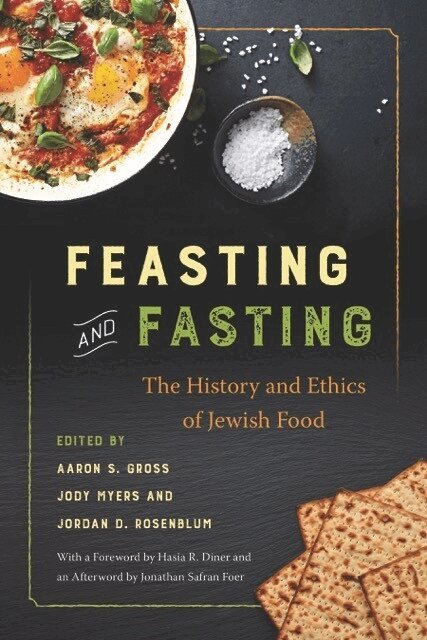
How Judaism and food are intertwined Judaism is a religion that is enthusiastic about food. Jewish holidays are inevitably celebrated through eating particular foods, or around fasting and then eating particular foods. Through fasting, feasting, dining, and noshing, food infuses the rich traditions of Judaism into daily life. What do the complicated laws of kosher food mean to Jews? How does food in Jewish bellies shape the hearts and minds of Jews? What does the Jewish relationship with food teach us about Christianity, Islam, and religion itself? Can food shape the future of Judaism? Feasting and Fasting explores questions like these to offer an expansive look at how Judaism and food have been intertwined, both historically and today. It also grapples with the charged ethical debates about how food choices reflect competing Jewish values about community, animals, the natural world and the very meaning of being human. Encompassing historical, ethnographic, and theoretical viewpoints, and including contributions dedicated to the religious dimensions of foods including garlic, Crisco, peanut oil, and wine, the volume advances the state of both Jewish studies and religious studies scholarship on food. Bookended with a foreword by the Jewish historian Hasia Diner and an epilogue by the novelist and food activist Jonathan Safran Foer, Feasting and Fasting provides a resource for anyone who hungers to understand how food and religion intersect.
1 037 kr
Skickas inom 10-15 vardagar
How Judaism and food are intertwined Judaism is a religion that is enthusiastic about food. Jewish holidays are inevitably celebrated through eating particular foods, or around fasting and then eating particular foods. Through fasting, feasting, dining, and noshing, food infuses the rich traditions of Judaism into daily life. What do the complicated laws of kosher food mean to Jews? How does food in Jewish bellies shape the hearts and minds of Jews? What does the Jewish relationship with food teach us about Christianity, Islam, and religion itself? Can food shape the future of Judaism? Feasting and Fasting explores questions like these to offer an expansive look at how Judaism and food have been intertwined, both historically and today. It also grapples with the charged ethical debates about how food choices reflect competing Jewish values about community, animals, the natural world and the very meaning of being human. Encompassing historical, ethnographic, and theoretical viewpoints, and including contributions dedicated to the religious dimensions of foods including garlic, Crisco, peanut oil, and wine, the volume advances the state of both Jewish studies and religious studies scholarship on food. Bookended with a foreword by the Jewish historian Hasia Diner and an epilogue by the novelist and food activist Jonathan Safran Foer, Feasting and Fasting provides a resource for anyone who hungers to understand how food and religion intersect.
Seeking Zion
Modernity and Messianic Activity in the Writings of Tsevi Hirsch Kalischer
Häftad, Engelska, 2011
277 kr
Skickas inom 5-8 vardagar
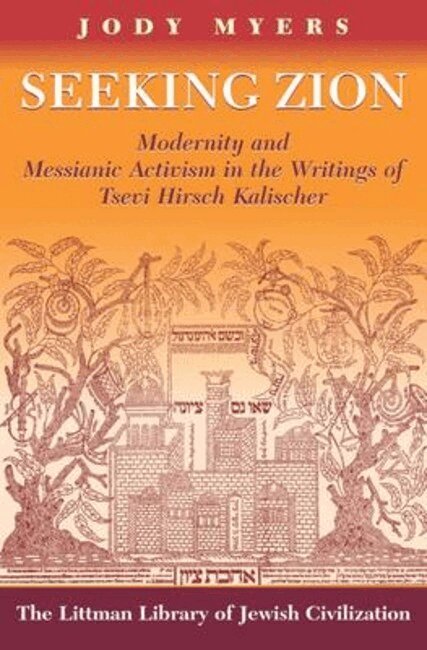
Tsevi Hirsch Kalischer (1795-1874) was one of the first Orthodox rabbis to advocate direct political action in order to radically transform Jewish life. Kalischer lived in a time when Jewish tradition was increasingly challenged by rational thought and social integration. Applying his knowledge of rabbinic literature to the unusual historical events unfolding around him, he became convinced that behind the rise of individual Jews to great power was a divine plan to prepare the way for messianic redemption. Kalischer anticipated that in his own lifetime he would see the ingathering of the Jews, the renewed cultivation of the land of Israel, and the restoration of sacrificial worship. This would be achieved not through supernatural agency but by the efforts of the Jews themselves, in the spirit of the time. The Jewish people was obligated by God to 'seek Zion'. Kalischer began his quest as early as 1836 when he approached the banker Amschel Mayer Rothschild with a plan to acquire Jerusalem and revive sacrificial worship. However, lacking Rothschild's co-operation and the approval of his rabbinic colleagues, Kalischer set aside his dream for almost twenty years.In 1862, spurred to action by the granting of equal rights to Jews and European assistance to the Jews of Palestine, he published his theories in Derishat tsiyon (Seeking Zion). From then until his death, Kalischer promoted and raised funds on behalf of the establishment of agricultural communes in Palestine. In this book Jody Myers explores for the first time the full range of Kalischer's writings-philosophical essays, correspondence, halakhic research, and biblical exegesis-presenting and critically analysing his groundbreaking formulation of modern messianic activism, which paved the way for later religious Zionism. She shows how Kalischer's approach marks a pivotal transition in the history of the messianic idea, and explains how he designed his arguments to appeal both to religious Jews and to the newly emancipated Jews of western Europe who, grateful for their own fortune, wanted to assist the impoverished Jews of the Middle East. At the same time, his proposals generated controversy and uncovered the growing schisms between Jews in modern times. Through Kalischer's eyes, the reader gains a fascinating perspective on what it means to be both religious and modern.