Joe Bamford - Böcker
Visar alla böcker från författaren Joe Bamford. Handla med fri frakt och snabb leverans.
3 produkter
3 produkter
165 kr
Tillfälligt slut
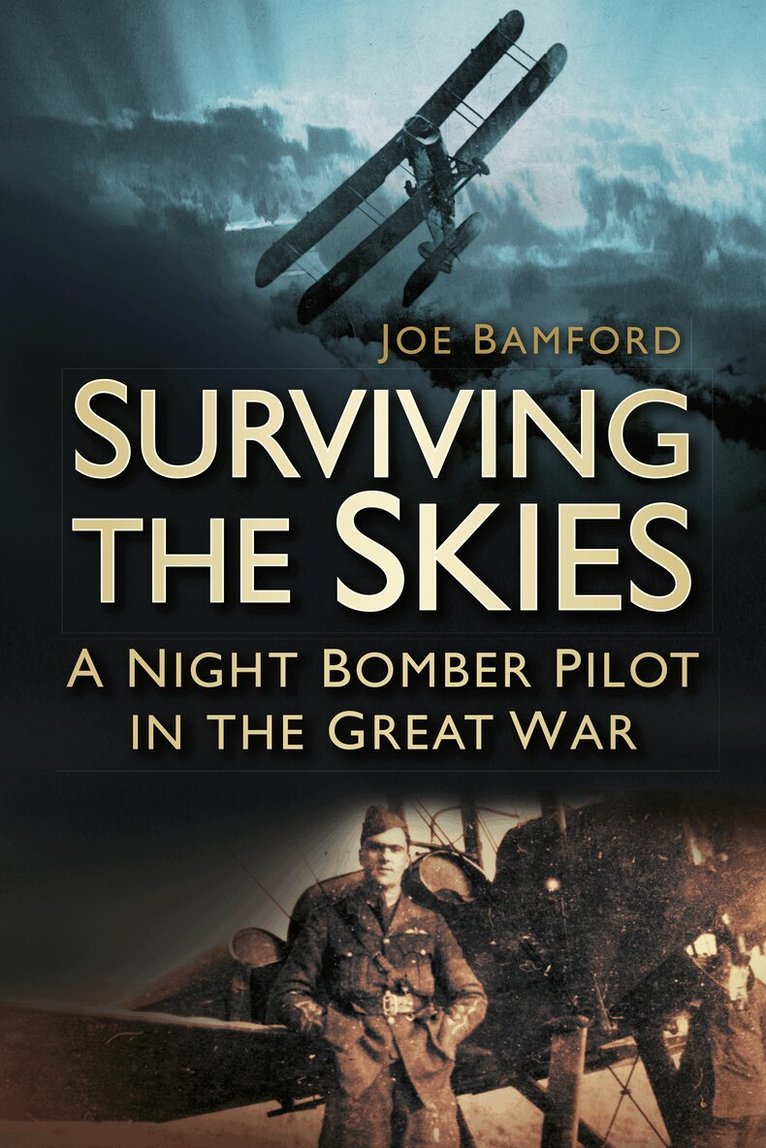
Captain Stephen Wynn Vickers joined the Cheshire Regiment in August 1914, but after being badly wounded he remustered to the RFC (Royal Flying Corps). While other young pilots were killed or injured almost as soon as they got their wings, Captain Vickers survived numerous crash and forced landings. He joined 101 Squadron in 1917 and completed seventy-three sorties over enemy territory before being repatriated in May 1918 and awarded the newly inaugurated DFC, as well as the MC. With the war drawing to a close, he became a flying instructor at an RAF station in Lincolnshire, but he did not live long enough to receive either his medals or the distinction that he deserved. Making use of an array of unpublished material, including original images and information collected directly from Vickers' family, former RAF air traffic controller Joe Bamford recounts on of the final original stories of the First World War night bombers.
204 kr
Skickas
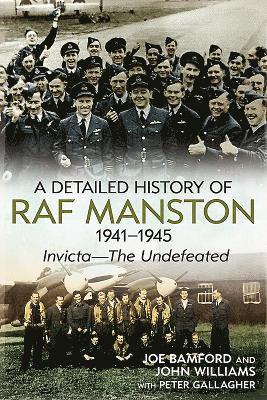
A Detailed History of RAF Manston 1941-1945 covers the station's history during the period that the RAF was on the offensive against the Luftwaffe. Having been badly damaged during the Battle of Britain and the only airfield to have been put out of action, Manston rose from the ashes to become a base for numerous fighter units that attacked Hitler's 'Fortress Europe'. From 1941 onwards, Manston was used by damaged aircraft returning from operations, especially those from Bomber Command. Consequently, a large runway was built and was one of three in the country that was equipped to deal with emergencies. In 1944, 501 Squadron was formed with the Hawker Tempest to destroy enemy armour, aircraft and the feared V1; Squadron Leader Joe Berry was credited to destroying sixty-one V1s. Another first was the arrival of the Meteor jet fighter in August 1944. After the war, Manston became a base for a number of civil airlines, but continued in its role as a major diversion airfield and an emergency landing ground.
335 kr
Tillfälligt slut
Having been classified by the Air Ministry as a ‘Master Diversion’ airfield, RAF Manston was for many years open twenty-four hours a day and available to both civil and military aircraft 365 days a year. It was also later equipped with the Pyrene foam system, which both civil and military aircraft could use when they had problems with their undercarriage: there is no doubt that the foam carpet saved many lives. The most spectacular occasion that it was used was on 20 April 1967 when a British Eagle Britannia made a complete wheels-up landing. It is claimed that Manston was the only station to serve in every command of the RAF and until its closure in 1999; it probably dealt with more diverse types of aircraft than any other station. During its eighty-three years as a Royal Naval/ RAF airfield, it played host to the Sopwith Camel, Spitfire, Bf 109, He 111, B-29, B-47, Tu-104, F-84 and Concorde, plus many other types that are too numerous to mention.