Joe Nasr - Böcker
Visar alla böcker från författaren Joe Nasr. Handla med fri frakt och snabb leverans.
2 produkter
2 produkter
736 kr
Skickas inom 7-10 vardagar
This book redresses the under-representation in existing English-language literature, of the global formation and development of global cities which have been informed by the diffusion of Western ideas and building principles beyond the Western world The modes of diffusion of ideas that shape planned environments, and the ways these ideas are realized, have been gaining prominence as subjects of study and discussion among planning historians and others. Recently, some researchers have begun to approach the relations between actors and stakeholders in the processes of planning diffusion in increasingly complex and ambiguous ways.The natives in developing countries, whether colonial or post-colonial, are now being recognized as full-fledged participants in the shaping of the built environment, with a variety of roles to play and means to play them, even if they frequently face many constraints to their actions. The specific traits of the indigenous are even in question: ultimately, who are the ‘locals’?The research presented here recognises the importance of both provider and recipient as essential and influential entities within this diffusion process.This book raises important conceptual questions as to the identities and roles of the actors involved and looks at the methodological implications for historians and the new challenges that arise from this questioning of a long-standing traditional view.
488 kr
Tillfälligt slut
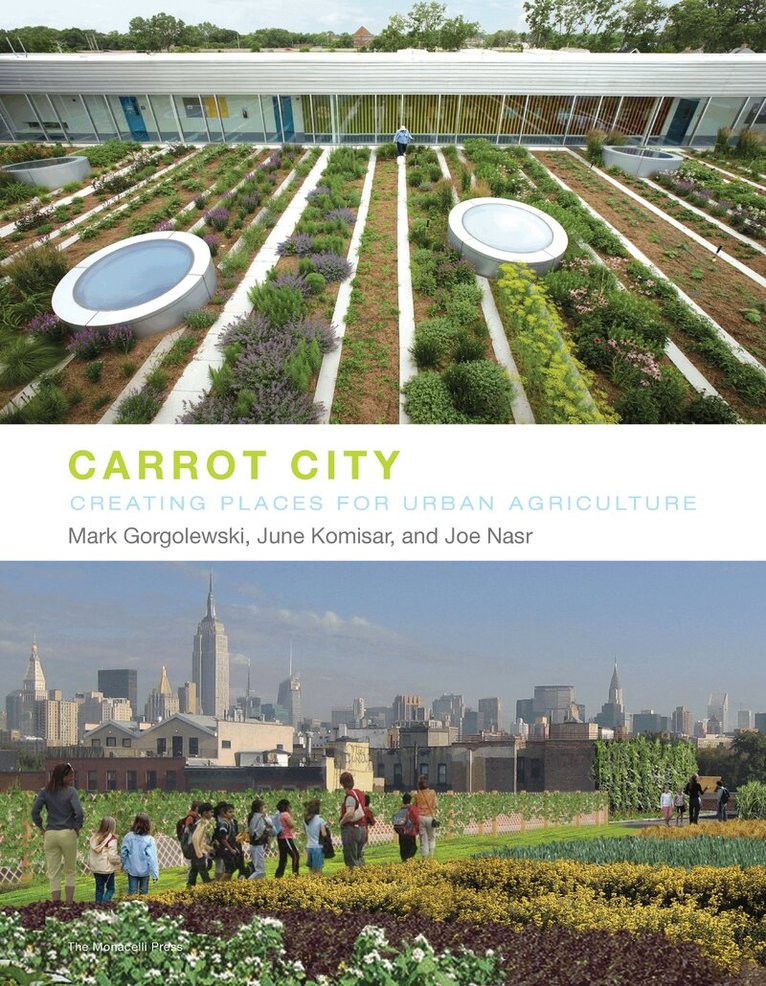
Carrot City is a collection of ideas, both conceptual and realized, that use design to enable sustainable food production, helping to reintroduce urban agriculture to our cities. Focusing on the need and desire to grow food within the city to supply food from local sources, the contributions of architecture, landscape design, and urban design are explored.Forty projects demonstrate how the production of food can lead to visually striking and artistically interesting solutions that create community and provide inhabitants with immediate access to fresh, healthful ingredients.The authors show how city planning and architecture that considers food production as a fundamental requirement of design result in more community gardens, greenhouses tucked under raised highways, edible landscapes in front yards in place of resource-devouring lawns, living walls that bring greenery into dense city blocks, and productive green roofs on schools and large apartment blocks that can be tended and harvested by students and residents alike.