Joel A. Carpenter – författare
Visar alla böcker från författaren Joel A. Carpenter. Handla med fri frakt och snabb leverans.
13 produkter
13 produkter
E-bok
Engelska, 1999222 kr
Läs direkt efter köp
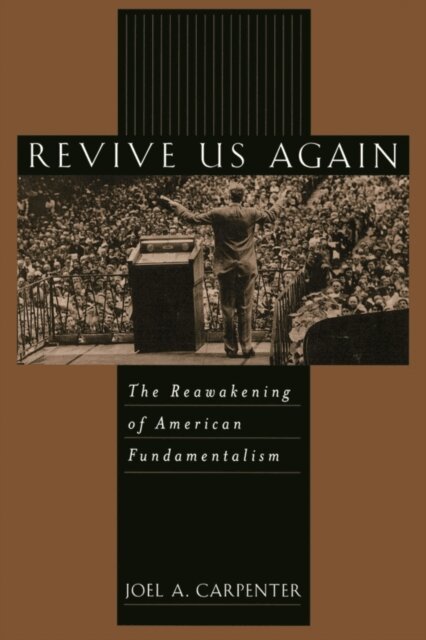
By the end of the 1920s, fundamentalism in America was intellectually bankrupt and publicly disgraced. Bitterly humiliated by the famous Scopes "e;monkey trial,"e; this once respected movement retreated from the public forum and seemed doomed to extinction. Yet fundamentalism not only survived, but in the 1940s it reemerged as a thriving and influential public movement. And today it is impossible to read a newspaper or watch cable TV without seeing the presence of fundamentalism in American society. In Revive Us Again, Joel A. Carpenter illuminates this remarkable transformation, exploring the history of American fundamentalism from 1925 to 1950, the years when, to non-fundamentalists, the movement seemed invisible. Skillfully blending painstaking research, telling anecdotes, and astute analysis, Carpenter--a scholar who has spent twenty years studying American evangelicalism--brings this era into focus for the first time. He reveals that, contrary to the popular opinion of the day, fundamentalism was alive and well in America in the late 1920s, and used its isolation over the next two decades to build new strength from within. The book describes how fundamentalists developed a pervasive network of organizations outside of the church setting and quietly strengthened the movement by creating their own schools and organizations, many of which are prominent today, including Fuller Theological Seminary and the publishing and radio enterprises of the Moody Bible Institute. Fundamentalists also used youth movements and missionary work and, perhaps most significantly, exploited the burgeoning mass media industry to spread their message, especially through the powerful new medium of radio. Indeed, starting locally and growing to national broadcasts, evangelical preachers reached millions of listeners over the airwaves, in much the same way evangelists preach through television today. All this activity received no publicity outside of fundamentalist channels until Billy Graham burst on the scene in 1949. Carpenter vividly recounts how the charismatic preacher began packing stadiums with tens of thousands of listeners daily, drawing fundamentalism firmly back into the American consciousness after twenty years of public indifference. Alongside this vibrant history, Carpenter also offers many insights into fundamentalism during this period, and he describes many of the heated internal debates over issues of scholarship, separatism, and the role of women in leadership. Perhaps most important, he shows that the movement has never been stagnant or purely reactionary. It is based on an evolving ideology subject to debate, and dissension: a theology that adapts to changing times. Revive Us Again is more than an enlightening history of fundamentalism. Through his reasoned, objective approach to a topic that is all too often reduced to caricature, Carpenter brings fresh insight into the continuing influence of the fundamentalist movement in modern America,and its role in shaping the popular evangelical movements of today.
E-bok
Engelska, 2005392 kr
Läs direkt efter köp
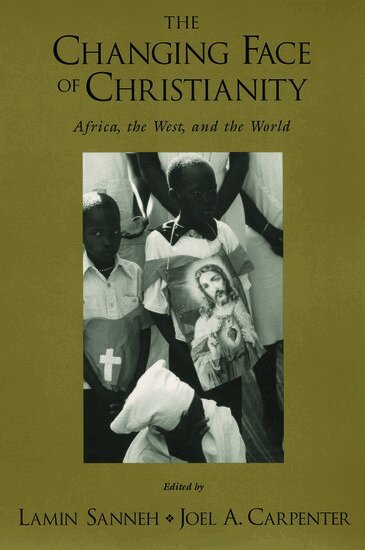
Over the past century, Christianity''s place and role in the world have changed dramatically. In 1900, 80 percent of the world''s Christians lived in Europe and North America. Today, more than 60 percent of the world''s Christians live outside of that region. This change calls for a reexamination of the way the story of Christianity is told, the methodological tools for its analysis, and its modes of expression. Perhaps most significant is the role of Africa as the new Christian heartland. The questions and answers about Christianity and its contemporary mission now being developed in the African churches will have enormous influence in the years to come. This volume offers nine new essays addressing this sea-change and its importance for the future of Christianity. Some contributions consider the development of "non-Western" forms of Christianity, others look at the impact of these new Christianities in the West. The authors cover a wide range of topics, from the integration of witchcraft and Christianity in Nigeria and the peacemaking role of churches in Mozambique to the American Baptist reception of Asian Christianity. The Changing Face of Christianity shows the striking cultural differences between the new world Christianity and its western counterpart. But with so many new immigrants in Europe and North America, the faith''s fault lines are not purely geographical. The new Christianity now thrives in American and European settings, and northerners need to know this faith better. At stake is their ability to be good neighbors-and perhaps to be good Christian citizens of the world.
Häftad, Engelska, 1999
252 kr
Skickas inom 5-8 vardagar
By the end of the 1920s, fundamentalism in America was intellectually bankrupt and publicly disgraced. Bitterly humiliated by the famous Scopes "monkey trial," this once respected movement retreated from the public forum and seemed doomed to extinction. Yet fundamentalism not only survived, but in the 1940s it reemerged as a thriving and influential public movement. And today it is impossible to read a newspaper or watch cable TV without seeing the presence of fundamentalism in American society. In Revive Us Again, Joel A. Carpenter illuminates this remarkable transformation, exploring the history of American fundamentalism from 1925 to 1950, the years when, to non-fundamentalists, the movement seemed invisible. Skillfully blending painstaking research, telling anecdotes, and astute analysis, Carpenter--a scholar who has spent twenty years studying American evangelicalism--brings this era into focus for the first time. He reveals that, contrary to the popular opinion of the day, fundamentalism was alive and well in America in the late 1920s, and used its isolation over the next two decades to build new strength from within. The book describes how fundamentalists developed a pervasive network of organizations outside of the church setting and quietly strengthened the movement by creating their own schools and organizations, many of which are prominent today, including Fuller Theological Seminary and the publishing and radio enterprises of the Moody Bible Institute. Fundamentalists also used youth movements and missionary work and, perhaps most significantly, exploited the burgeoning mass media industry to spread their message, especially through the powerful new medium of radio. Indeed, starting locally and growing to national broadcasts, evangelical preachers reached millions of listeners over the airwaves, in much the same way evangelists preach through television today. All this activity received no publicity outside of fundamentalist channels until Billy Graham burst on the scene in 1949. Carpenter vividly recounts how the charismatic preacher began packing stadiums with tens of thousands of listeners daily, drawing fundamentalism firmly back into the American consciousness after twenty years of public indifference.Alongside this vibrant history, Carpenter also offers many insights into fundamentalism during this period, and he describes many of the heated internal debates over issues of scholarship, separatism, and the role of women in leadership. Perhaps most important, he shows that the movement has never been stagnant or purely reactionary. It is based on an evolving ideology subject to debate, and dissension: a theology that adapts to changing times. Revive Us Again is more than an enlightening history of fundamentalism. Through his reasoned, objective approach to a topic that is all too often reduced to caricature, Carpenter brings fresh insight into the continuing influence of the fundamentalist movement in modern America,and its role in shaping the popular evangelical movements of today.
Häftad, Engelska, 2005
387 kr
Skickas inom 5-8 vardagar
Over the past century, Christianity's place and role in the world have changed dramatically. In 1900, 80 percent of the world's Christians lived in Europe and North America. Today, more than 60 percent of the world's Christians live outside of that region. This change calls for a reexamination of the way the story of Christianity is told, the methodological tools for its analysis, and its modes of expression. Perhaps most significant is the role of Africa as the new Christian heartland. The questions and answers about Christianity and its contemporary mission now being developed in the African churches will have enormous influence in the years to come. This volume offers nine new essays addressing this sea-change and its importance for the future of Christianity. Some contributions consider the development of "non-Western" forms of Christianity, others look at the impact of these new Christianities in the West. The authors cover a wide range of topics, from the integration of witchcraft and Christianity in Nigeria and the peacemaking role of churches in Mozambique to the American Baptist reception of Asian Christianity. The Changing Face of Christianity shows the striking cultural differences between the new world Christianity and its western counterpart. But with so many new immigrants in Europe and North America, the faith's fault lines are not purely geographical. The new Christianity now thrives in American and European settings, and northerners need to know this faith better. At stake is their ability to be good neighbors-and perhaps to be good Christian citizens of the world.
E-bok
PDF, Engelska, 2005392 kr
Läs direkt efter köp
Over the past century, Christianity''s place and role in the world have changed dramatically. In 1900, 80 percent of the world''s Christians lived in Europe and North America. Today, more than 60 percent of the world''s Christians live outside of that region. This change calls for a reexamination of the way the story of Christianity is told, the methodological tools for its analysis, and its modes of expression. Perhaps most significant is the role of Africa as the new Christian heartland. The questions and answers about Christianity and its contemporary mission now being developed in the African churches will have enormous influence in the years to come. This volume offers nine new essays addressing this sea-change and its importance for the future of Christianity. Some contributions consider the development of "non-Western" forms of Christianity, others look at the impact of these new Christianities in the West. The authors cover a wide range of topics, from the integration of witchcraft and Christianity in Nigeria and the peacemaking role of churches in Mozambique to the American Baptist reception of Asian Christianity. The Changing Face of Christianity shows the striking cultural differences between the new world Christianity and its western counterpart. But with so many new immigrants in Europe and North America, the faith''s fault lines are not purely geographical. The new Christianity now thrives in American and European settings, and northerners need to know this faith better. At stake is their ability to be good neighbors-and perhaps to be good Christian citizens of the world.
E-bok
PDF, Engelska, 1997265 kr
Läs direkt efter köp
By the end of the 1920s, fundamentalism in America was intellectually bankrupt and publicly disgraced. Bitterly humiliated by the famous Scopes "e;monkey trial,"e; this once respected movement retreated from the public forum and seemed doomed to extinction. Yet fundamentalism not only survived, but in the 1940s it reemerged as a thriving and influential public movement. And today it is impossible to read a newspaper or watch cable TV without seeing the presence of fundamentalism in American society. In Revive Us Again, Joel A. Carpenter illuminates this remarkable transformation, exploring the history of American fundamentalism from 1925 to 1950, the years when, to non-fundamentalists, the movement seemed invisible. Skillfully blending painstaking research, telling anecdotes, and astute analysis, Carpenter--a scholar who has spent twenty years studying American evangelicalism--brings this era into focus for the first time. He reveals that, contrary to the popular opinion of the day, fundamentalism was alive and well in America in the late 1920s, and used its isolation over the next two decades to build new strength from within. The book describes how fundamentalists developed a pervasive network of organizations outside of the church setting and quietly strengthened the movement by creating their own schools and organizations, many of which are prominent today, including Fuller Theological Seminary and the publishing and radio enterprises of the Moody Bible Institute. Fundamentalists also used youth movements and missionary work and, perhaps most significantly, exploited the burgeoning mass media industry to spread their message, especially through the powerful new medium of radio. Indeed, starting locally and growing to national broadcasts, evangelical preachers reached millions of listeners over the airwaves, in much the same way evangelists preach through television today. All this activity received no publicity outside of fundamentalist channels until Billy Graham burst on the scene in 1949. Carpenter vividly recounts how the charismatic preacher began packing stadiums with tens of thousands of listeners daily, drawing fundamentalism firmly back into the American consciousness after twenty years of public indifference. Alongside this vibrant history, Carpenter also offers many insights into fundamentalism during this period, and he describes many of the heated internal debates over issues of scholarship, separatism, and the role of women in leadership. Perhaps most important, he shows that the movement has never been stagnant or purely reactionary. It is based on an evolving ideology subject to debate, and dissension: a theology that adapts to changing times. Revive Us Again is more than an enlightening history of fundamentalism. Through his reasoned, objective approach to a topic that is all too often reduced to caricature, Carpenter brings fresh insight into the continuing influence of the fundamentalist movement in modern America,and its role in shaping the popular evangelical movements of today.
Inbunden, Engelska, 2022
572 kr
Skickas inom 5-8 vardagar
If there is one question that haunts Indian Christians, it is this: "What does it mean to be Indian and Christian?" This matter of identity presents a unique challenge, especially today, in the face of a Hindu nationalist challenge insisting that to be truly Indian, one must be Hindu. Christianity Remade, however, offers a unique path forward by studying the rise and character of Indian-initiated churches (IICs), Christian movements founded by Indians to address Indian issues, needs, and opportunities.IIC is not a common term in Indian church life or theology today. Only a few scholars have focused on Christian movements arising in India. Based on firsthand experience from research conducted through the Mylapore Institute for Indigenous Studies, Paul Joshua's groundbreaking work presents a truly striking discovery: IICs represent a pivotal, re-formative phase in the nearly twenty-century history of Indian Christianity. They result from critiques of the inherited structures and outlook of mission-founded Christianity. They respond to the deep needs of people on the lower rungs of Indian society, and they fashion their spiritual answers and modes of being from deeply Indian religious materials. Thus, they engage in a creative combination of Indian popular piety and the gospel of Jesus Christ as found in an Indian reading of the Bible.Joshua engages specific IIC movements to draw out singular contextual ingredients: the rise of Indian nationalism, the generative power of Christian revivalism, the movement for national independence, the bhakti tradition of popular Hindu devotional practice, the challenge of Hindu spiritual power, and the dynamism of contemporary urban culture. From these ingredients, and drawing on insights from postcolonial studies, Joshua reveals how a "subaltern" sensibility and vision from the margins of Indian society challenged both the colonial overlords and the mission-church hierarchs to create a Christianity made in India.
Häftad, Engelska, 2016
331 kr
Skickas inom 5-8 vardagar
Inbunden, Engelska, 2016
601 kr
Skickas inom 5-8 vardagar
Häftad, Engelska, 2019
364 kr
Skickas inom 5-8 vardagar
Inbunden, Engelska, 2019
545 kr
Skickas inom 5-8 vardagar
Häftad, Engelska, 2012
421 kr
Skickas inom 5-8 vardagar
E-bok
PDF, Engelska, 2012706 kr
Läs direkt efter köp
Contrary to popular impressions, the days of the missionary are far from over. North American churches send more missionaries than ever before, and 90 percent of them are evangelicals who are not affiliated with the "e;mainline"e; Protestant mission boards. The first major historical treatment of the distinctly evangelical wing of twentieth-century American missions, Earthen Vessels truly breaks new ground. Covering territory that missions histories have scarcely explored yet, the distinguished historians contributing to this volume portray the North American (including Canadian) evangelical missionary enterprise from the Student Volunteer Movement to the very recent past. The book traces the influences of premillennial eschatology, the fundamentalist-modernist controversies, the rise of independent missions and conservative denominational boards, the role of World War II and America's rise to world power, the recent development of a distinctly evangelical theology of missions, and the growing influence of the Two-Thirds World's evangelical leaders. While this volume certainly does not contain the last word on these subjects, in a number of areas it does offer very nearly the first look. With its fresh subject matter and new historical interpretations, Earthen Vessels will interest church history scholars and students, missionaries and ministers, and any others who wish to know more about American missions.