Joel Cutcher-Gershenfeld – författare
Visar alla böcker från författaren Joel Cutcher-Gershenfeld. Handla med fri frakt och snabb leverans.
8 produkter
8 produkter
Inbunden, Engelska, 1998
1 097 kr
Skickas inom 5-8 vardagar
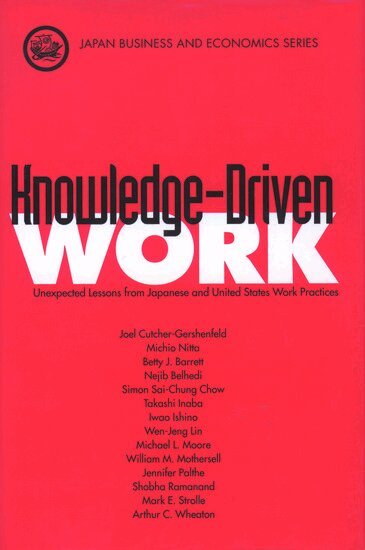
The daily work experiences of people in almost any part of the world are shaped by workplace innovations. Despite the vast diffusion of work practices, little is known about what it means for a company in the region to identify what it sees as the best practice and then introduce these practices in another culture which are less visible than the global exchange of products and services, but more significant. This book provides us with a closeup of eight Japanese affiliated manufacturing facilities operating in the United States and the beginnings of a reverse diffusion of innovation back to Japan. The key finding in this book is that massive global diffusion of work practices rests on something very fragile. This is the process by which individuals and groups of people come to new understandings that enable them to adopt new work practices. It is a process termed "virtual knowledge", which can be found at that critical time when understandings are still in formation. Also , the book reveals how some organizations have anticipated and channeled virtual knowledge that is constantly emerging from different groups in the organization. This turns out to be the core building block for continuous improvement in operations and is central to the process of diffusion. The process is part of a much larger process of global diffusion from Japan, the United States and other nations to all parts of the world.
E-bok
PDF, Engelska, 1998902 kr
Läs direkt efter köp
Knowledge-Driven Work is a pioneering study of the cross-cultural iffusion of ideas about the organization of work. These ideas, linked with the knowledge of the workforce, are rapidly becoming the primary source of competitive advantage in the world economy. The book provides an in-depth look at eight Japanese-affiliated manufacturing facilities operating in the United States, combined with examinations of their sister facilities in Japan. The authors offer their insights into the complex process by which elements of work systems in one country interact with those in another. They trace the flow of ideas from Japan to the US and other nations, and the beginnings of a reverse diffusion of innovation back to Japan. The authors organize their findings into six categories: the cross-cultural diffusion of work practices, team-based work systems, kaizen and employee involvement, employment security, human resource management, and labor-management relations. Their study of team-based work systems yields a taxonomy of teams and reveals some conflicts between the desire for self-management and the existence of interdependencies. Investigations into kaizen (ongoing incremental improvement) indicate that its emphasis on employee-driven, systematic problem solving makes it a strong counterpoint to the idea of top-down "re-engineering." Looking at employment security, the authors note that while most US managers believe that it restrains managerial flexibility, managers at the firms they observed see it as essential to the flexibility associated with teamwork and kaizen. The study of human resource management practices suggests competitive advantages in diverse, older, unionized, and urban work forces, and emphasizes the importance of wide-ranging training programs in a work system premised on a long-term perspective. The "wildcard" in the work places observed is labor-management relations, the area in which Japanese managers have been least likely to import their ideas. The authors report on several situations in which existing labor-management structures remained untouched, with mixed results: greater labor-management consultation, for example, but also increased ambiguity of roles. The thread running through all of these areas of work is "virtual knowledge," an ephemeral form of knowledge derived from a particular combination of people focused on a given issue. The authors point out that this powerful form of knowledge is only effectively harnessed in environments that are free of fear, that have established procedures for collective problem-solving, and that have some stability in group composition. They claim that too often companies allow virtual knowledge to dissipate, squandering opportunities to create more competitive workplaces. For those organizations that have succeeded in anticipating and channeling it, however, virtual knowledge leads to a knowledge-driven workplace and continuous improvement.
Häftad, Engelska, 2025
436 kr
Skickas inom 5-8 vardagar
Inbunden, Engelska, 2017
319 kr
Skickas inom 5-8 vardagar
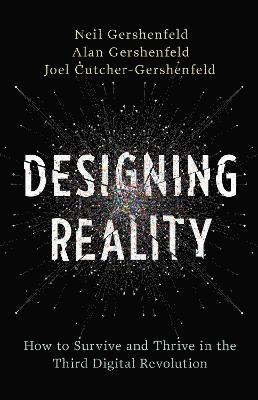
The 20th century witnessed two digital revolutions. Computing power has revolutionized every industry, from finance to agriculture to pharmaceuticals. We've got computers at work and at home, in our pockets and our bags, on our wrists, and even embedded in the architecture of our houses. At the same time a revolution in digital communication unfolded, which has forever altered our lives-work, social, and private-by enabling a world in which we're never impossible to reach and have nearly limitless power to express ourselves. But no one saw the downsides of these: powerful computers threaten to displace human labor from a range of jobs, both blue and white collar, and, after an election in which the Internet played such a pivotal role in spreading disinformation-not to mention the simple problem of never being able to escape our jobs if our email goes with us everywhere-the possible pitfalls of free communication become clearer.And now, as Neil Gershenfeld, Joel Cutcher-Gershenfeld, and Alan Gershenfeld make clear, we are in the early years of the third digital revolution: from computation and communication comes fabrication. Fabrication includes everything from 3D printing to laser cutters to machines that can assemble anything, including themselves, by precisely controlling the placement of individual atoms. We will soon be able to program matter the same way we can now program a computer. This may sound outlandish, but just as the smartphone is the logical conclusion of trends in computing that began in the 1960s, so is this fabrication technology of the future the extension of today's trends in manufacturing. Neil Gershenfeld, an MIT professor, is at the forefront of making it a reality, through his scientific work as well as his championing of Fab Labs, a sort of low-cost personal factory. In Designing Reality, he and his brothers Alan and Joel explore not just the promise but the perils of this revolution in fabrication. On one extreme, it promises self-sufficient cities, the end of work, and the ability for each of us to design and create anything we can imagine. On the other, it could lead to the concentration of wealth in very few hands. Neither guaranteeing utopia nor insisting that our worst nightmares are about to come true, the Gershenfelds are trying to anticipate the future and teach us how best to prepare for it, personally and as a society, across education, employment and more. The first two digital revolutions caught us flat-footed, and there has been a heavy price to pay. Let us prepare for the future, not simply react to it.
Inbunden, Engelska, 2022
331 kr
Skickas inom 5-8 vardagar
Häftad, Engelska, 2022
166 kr
Skickas inom 5-8 vardagar
Häftad, Engelska, 2024
328 kr
Skickas inom 5-8 vardagar
A pathbreaking collection of case studies that spotlights the corporate sector’s societal obligations. At a time of deep and pervasive global challenges, future CEOs and administrators need to apply management principles to social impact cases. Today, top business schools across the country are meeting the moment, teaching courses about socially responsible investing and debating ways companies can stem the effects of climate change. The case studies collected here are an invaluable resource for today’s students and tomorrow’s leaders. Chapters address an array of business sectors, including consumer goods, finance, health care, higher education, manufacturing, nongovernmental organizations, social services, and transportation. A teacher’s guide is available online to educators.
Inbunden, Engelska, 2015
304 kr
Tillfälligt slut