• Fri frakt över 249 kr
  • •
  • Snabba leveranser
  • •
  • Billiga böcker
Kundservice

Du är på sajten för privatpersoner.

Företag, bibliotek eller offentlig verksamhet?

Du handlar på classic.bokus.com, där alla dina funktioner finns intakta.
Till classic.bokus.com
Bokus logotyp. Gå till startsidan.
  • Erbjudanden
  • Student
  • Topplistor
  • Barn & ungdom
  • Bokus Play
  • E-böcker
  • Ljudböcker
  • Pocketböcker
  • Spel & pussel

Upp till 25% på utvalda nyheter →

Sidfot

Mina sidor

    Hjälp

    • Kundservice
    • Vanliga frågor och svar
    • Frakt och leverans
    • Retur vid ångerrätt
    • Reklamera vara
    • Betalning
    • Köpvillkor
    • Allmänna villkor
    • Information om webbplatsens tillgänglighet

    Om Bokus

    • Om oss
    • Pressrum
    • För studenter
    • För företag
    • För bibliotek och offentlig verksamhet
    • För leverantörer
    • Hållbarhet

    Populärt

    • Aktuella erbjudanden
    • Presentkort
    • Studentlitteratur
    • Nya böcker
    • Topplistor
    • Signerade böcker
    • Engelska böcker

    Inspiration

    • Boktips
    • BookTok
    • Populära bokserier
    • Barnbokskaraktärer
    • Populära författare
    Logotyp för Bokus
    Följ oss på Facebook (extern länk)Följ oss på Instagram (extern länk)Följ oss på YouTube (extern länk)Följ oss på TikTok (extern länk)
    bokus @ CookiesAnpassa cookiesIntegritetspolicyKöpvillkor
    Till Citymail hemsida (extern länk)Till Budbee hemsida (extern länk)Till Postnord hemsida (extern länk)Till Schenker hemsida (extern länk)Till Early Bird hemsida (extern länk)Till Walleys hemsida (extern länk)
    1. Naturvetenskap och teknik
    2. Teknik och industri
    3. Teknik: allmänt

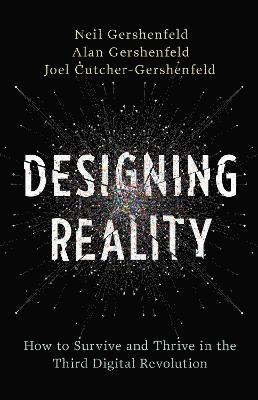
    Designing Reality

    How to Survive and Thrive in the Third Digital Revolution

    AvNeil Gershenfeld,Alan Gershenfeld

    Inbunden, Engelska, 2017

    Del i serien Basic Books

    349 kr

    Beställningsvara. Skickas inom 10-15 vardagar. Fri frakt över 249 kr.

    Beskrivning

    The 20th century witnessed two digital revolutions. Computing power has revolutionized every industry, from finance to agriculture to pharmaceuticals. We've got computers at work and at home, in our pockets and our bags, on our wrists, and even embedded in the architecture of our houses. At the same time a revolution in digital communication unfolded, which has forever altered our lives-work, social, and private-by enabling a world in which we're never impossible to reach and have nearly limitless power to express ourselves. But no one saw the downsides of these: powerful computers threaten to displace human labor from a range of jobs, both blue and white collar, and, after an election in which the Internet played such a pivotal role in spreading disinformation-not to mention the simple problem of never being able to escape our jobs if our email goes with us everywhere-the possible pitfalls of free communication become clearer.And now, as Neil Gershenfeld, Joel Cutcher-Gershenfeld, and Alan Gershenfeld make clear, we are in the early years of the third digital revolution: from computation and communication comes fabrication. Fabrication includes everything from 3D printing to laser cutters to machines that can assemble anything, including themselves, by precisely controlling the placement of individual atoms. We will soon be able to program matter the same way we can now program a computer. This may sound outlandish, but just as the smartphone is the logical conclusion of trends in computing that began in the 1960s, so is this fabrication technology of the future the extension of today's trends in manufacturing. Neil Gershenfeld, an MIT professor, is at the forefront of making it a reality, through his scientific work as well as his championing of Fab Labs, a sort of low-cost personal factory. In Designing Reality, he and his brothers Alan and Joel explore not just the promise but the perils of this revolution in fabrication. On one extreme, it promises self-sufficient cities, the end of work, and the ability for each of us to design and create anything we can imagine. On the other, it could lead to the concentration of wealth in very few hands. Neither guaranteeing utopia nor insisting that our worst nightmares are about to come true, the Gershenfelds are trying to anticipate the future and teach us how best to prepare for it, personally and as a society, across education, employment and more. The first two digital revolutions caught us flat-footed, and there has been a heavy price to pay. Let us prepare for the future, not simply react to it.

    Produktinformation

    • Utgivningsdatum:2017-11-30
    • Mått:154 x 243 x 26 mm
    • Vikt:502 g
    • Format:Inbunden
    • Språk:Engelska
    • Serie:Basic Books
    • Antal sidor:288
    • Förlag:Basic Books
    • ISBN:9780465093472

    Utforska kategorier

    • Teknik: allmänt inom Naturvetenskap och teknik
    • Tillverkningsindustri inom Ekonomi och Ledarskap
    • Media och underhållning inom Ekonomi och Ledarskap

    Mer om författaren

    Neil Gershenfeld has been called the intellectual father of the maker movement. He leads MIT's pioneering Center for Bits and Atoms and is the founder of the global network of community fab labs that's approaching 1,000 sites. His earlier books When Things Start to Think and Fab presented what became known as the Internet of Things and the maker movement long before those became familiar. He lives in Cambridge, Massachusetts.Alan Gershenfeld is a pioneer in harnessing the power of digital media for learning and social impact. As a former studio head at Activision, former chairman of Games for Change and cofounder/president of ELine Media, he has helped to bring the power of games and media to engage, educate, and empower millions of youth and young adults. Alan is currently working with the Center for Bits and Atoms and the Fab Foundation on an ambitious DARPA funded game to fire the imagination of a generation around the future of digital fabrication. He lives in Tempe, Arizona.Joel Cutcher-Gershenfeld is a world leader in workplace transformation and institutional change, with a client list ranging from Ford and UAW to the nation of Australia. He is professor in the Heller School for Social Policy and Management at Brandeis University and serves as editor of the Negotiation Journal, published by the Program on Negotiation at Harvard Law School. Joel led the first stakeholder alignment map across the US fab lab network and cofounded the Champaign Urbana Community Fab Lab. He lives in Waltham, Massachusetts.