• Fri frakt över 249 kr
  • •
  • Snabba leveranser
  • •
  • Billiga böcker
Kundservice

Du är på sajten för privatpersoner.

Företag, bibliotek eller offentlig verksamhet?

Du handlar på classic.bokus.com, där alla dina funktioner finns intakta.
Till classic.bokus.com
Bokus logotyp. Gå till startsidan.
  • Erbjudanden
  • Nyheter
  • Student
  • Topplistor
  • Barn & ungdom
  • Bokus Play
  • E-böcker
  • Pocketböcker
  • Spel & pussel

10% rabatt på allt med kod: NYSTART10 →

Sidfot

Mina sidor

    Hjälp

    • Kundservice
    • Vanliga frågor och svar
    • Frakt och leverans
    • Retur vid ångerrätt
    • Reklamera vara
    • Betalning
    • Köpvillkor
    • Allmänna villkor
    • Information om webbplatsens tillgänglighet

    Om Bokus

    • Om oss
    • Pressrum
    • För studenter
    • För företag
    • För bibliotek och offentlig verksamhet
    • För leverantörer
    • Hållbarhet

    Populärt

    • Aktuella erbjudanden
    • Presentkort
    • Studentlitteratur
    • Nya böcker
    • Topplistor
    • Signerade böcker
    • Engelska böcker

    Inspiration

    • Boktips
    • BookTok
    • Populära bokserier
    • Barnbokskaraktärer
    • Populära författare
    Logotyp för Bokus
    Följ oss på Facebook (extern länk)Följ oss på Instagram (extern länk)Följ oss på YouTube (extern länk)Följ oss på TikTok (extern länk)
    bokus @ CookiesAnpassa cookiesIntegritetspolicyKöpvillkor
    Till Citymail hemsida (extern länk)Till Budbee hemsida (extern länk)Till Postnord hemsida (extern länk)Till Schenker hemsida (extern länk)Till Early Bird hemsida (extern länk)Till Walleys hemsida (extern länk)
    1. Naturvetenskap och teknik
    2. Matematik och naturvetenskap
    3. Matematik
    4. Tillämpad matematik

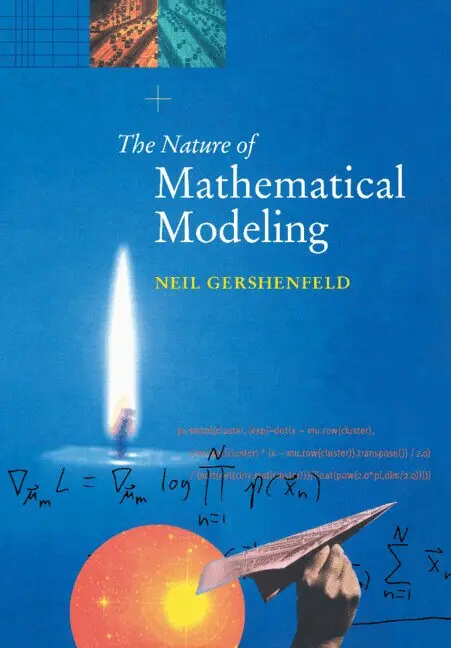
    The Nature of Mathematical Modeling

    AvNeil Gershenfeld

    Häftad, Engelska, 2011

    687 kr

    Beställningsvara. Skickas inom 10-15 vardagar. Fri frakt över 249 kr.

    Beskrivning

    This 1998 book, about the nature and techniques of mathematical modeling, is oriented towards simple efficient implementations on computers. The text is in three sections. The first covers exact and approximate analytical techniques; the second, numerical methods; the third, model inference based on observations; and the last, the special role of time in modeling. Each of the topics in the book would be the worthy subject of a dedicated text, but only by presenting the material in this way is it possible to make so much material accessible to so many people. Each chapter presents a concise summary of the core results in an area, providing an orientation to what they can (and cannot) do, enough background to use them to solve typical problems, and pointers to access the literature for particular applications. The text is complemented by extensive worked problems.

    Produktinformation

    • Utgivningsdatum:2011-06-23
    • Mått:170 x 244 x 19 mm
    • Vikt:570 g
    • Format:Häftad
    • Språk:Engelska
    • Antal sidor:358
    • Förlag:Cambridge University Press
    • ISBN:9780521210508

    Utforska kategorier

    • Tillämpad matematik inom Naturvetenskap och teknik
    • Fysik inom Naturvetenskap och teknik

    Recensioner i media

    Review of the hardback: 'Simulation and mathematical modelling will power the 21st century the way steam powered the 19th. Gershenfeld masterfully compresses two armloads of dense textbooks into a single clear volume, including both classic and avant garde methods, and with well-selected references for further study. Every student of computing needs this book as the entry ticket into a vital and rapidly-changing field.' William H. Press, Harvard University, author of Numerical Recipes

    Innehållsförteckning

    • Preface; 1. Introduction; Part I. Analytical Models: 2. Ordinary differential and difference equations; 3. Partial differential equations; 4. Variational principles; 5. Random systems; Part II. Numerical Models: 6. Finite differences: ordinary difference equations; 7. Finite differences: partial differential equations; 8. Finite elements; 9. Cellular automata and lattice gases; Part III. Observational Models: 10. Function fitting; 11. Transforms; 12. Architectures; 13. Optimization and search; 14. Clustering and density estimation; 15. Filtering and state estimation; 16. Linear and nonlinear time series; Appendix 1. Graphical and mathematical software; Appendix 2. Network programming; Appendix 3. Benchmarking; Appendix 4. Problem solutions; Bibliography.