Joel Dinerstein - Böcker
Visar alla böcker från författaren Joel Dinerstein. Handla med fri frakt och snabb leverans.
7 produkter
7 produkter
335 kr
Skickas inom 7-10 vardagar
685 kr
Tillfälligt slut
218 kr
Skickas inom 7-10 vardagar
Cool. It was a new word and a new way to be, and in a single generation, it became the supreme compliment of American culture. The Origins of Cool in Postwar America uncovers the hidden history of this concept and its new set of codes that came to define a global attitude and style. As Joel Dinerstein reveals in this dynamic book, cool began as a stylish defiance of racism, a challenge to suppressed sexuality, a philosophy of individual rebellion, and a youthful search for social change.Through eye-opening portraits of iconic figures, Dinerstein illuminates the cultural connections and artistic innovations among Lester Young, Humphrey Bogart, Robert Mitchum, Billie Holiday, Frank Sinatra, Jack Kerouac, Albert Camus, Marlon Brando, and James Dean, among others. We eavesdrop on conversations among Jean-Paul Sartre, Simone de Beauvoir, and Miles Davis, and on a forgotten debate between Lorraine Hansberry and Norman Mailer over the "white Negro" and black cool. We come to understand how the cool worlds of Beat writers and Method actors emerged from the intersections of film noir, jazz, and existentialism. Out of this mix, Dinerstein sketches nuanced definitions of cool that unite concepts from African-American and Euro-American culture: the stylish stoicism of the ethical rebel loner; the relaxed intensity of the improvising jazz musician; the effortless, physical grace of the Method actor. To be cool is not to be hip and to be hot is definitely not to be cool.This is the first work to trace the history of cool during the Cold War by exploring the intersections of film noir, jazz, existential literature, Method acting, blues, and rock and roll. Dinerstein reveals that they came together to create something completely new—and that something is cool.
Swinging the Machine
Modernity, Technology and African American Culture Between the World Wars
Häftad, Engelska, 2003
639 kr
Skickas inom 3-6 vardagar
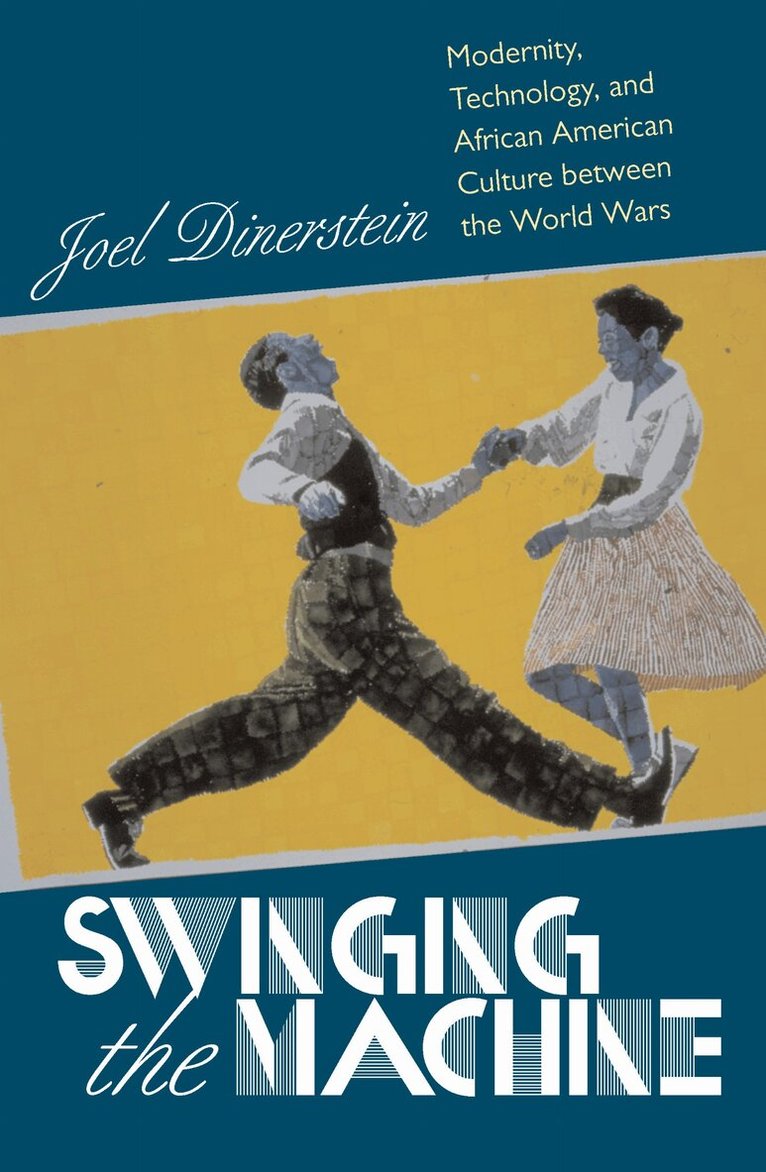
An innovative study of the influence of black popular culture on modern American life; In any age and any given society, cultural practices reflect the material circumstances of people's everyday lives. According to Joel Dinerstein, it was no different in America between the two World Wars - an era sometimes known as the ""machine age"" - when innovative forms of music and dance helped a newly urbanized population cope with the increased mechanization of modern life. Grand spectacles such as the Ziegfield Follies and the movies of Busby Berkeley captured the American ethos of mass production, with chorus girls as the cogs of these fast, flowing pleasure vehicles. Yet it was African American culture, Dinerstein argues, that ultimately provided the means of aesthetic adaptation to the accelerated tempo of modernity. Drawing on a legacy of engagement with and resistance to technological change, with deep roots in West African dance and music, black artists developed new cultural forms that sought to humanize machines. In ""The Ballad of John Henry,"" the epic toast ""Shine,"" and countless blues songs, African Americans first addressed the challenge of industrialization. Jazz musicians drew on the symbol of the train within this tradition to create a set of train-derived aural motifs and rhythms, harnessing mechanical power to cultural forms. Tap dance and the lindy hop brought machine aesthetics to the human body, while the new rhythm section of big band swing mimicked the industrial soundscape of northern cities. In Dinerstein's view, the capacity of these artistic innovations to replicate the inherent qualities of the machine - speed, power, repetition, flow, precision - helps explain both their enormous popularity and social function in American life.
307 kr
Skickas inom 3-6 vardagar
164 kr
Skickas inom 5-8 vardagar
355 kr
Kommande
A tragicomic memoir of a dysfunctional, working-class Brooklyn Jewish family.The Last of the Ellis Island Jews is a tragicomic memoir of a dysfunctional working-class Brooklyn family that illuminates both the vitality of urban life in the twentieth century and the social turmoil of white flight. As a child of immigrants born to older parents, Dinerstein has a unique perspective on four generations—from his grandparents escaping Russia's pogroms to his parents' embattled marriage to his older Boomer siblings (split between feminist and Republican politics) to his own hippie hopes. As a white teenager in majority Black public schools, Dinerstein's firsthand experience led to his academic career as a scholar of race and music. Yet his family fits no paradigm of Jewish success due to a father with rage and gambling problems, resulting in the four siblings escaping early to the Brooklyn streets. As a family growing up with a diasporic identity, the Dinersteins provide a primer of ethnic Jewish culture through iconic scenes: a selfish Seder, a chaotic Bar Mitzvah, a videotaped bris, an allergy attack at Dachau, a staring contest with the Rebbe. Most of all, The Last of the Ellis Island Jews is a chronicle of lost worlds.