Jörg H. Hacker - Böcker
Visar alla böcker från författaren Jörg H. Hacker. Handla med fri frakt och snabb leverans.
6 produkter
6 produkter
3 241 kr
Skickas inom 10-15 vardagar
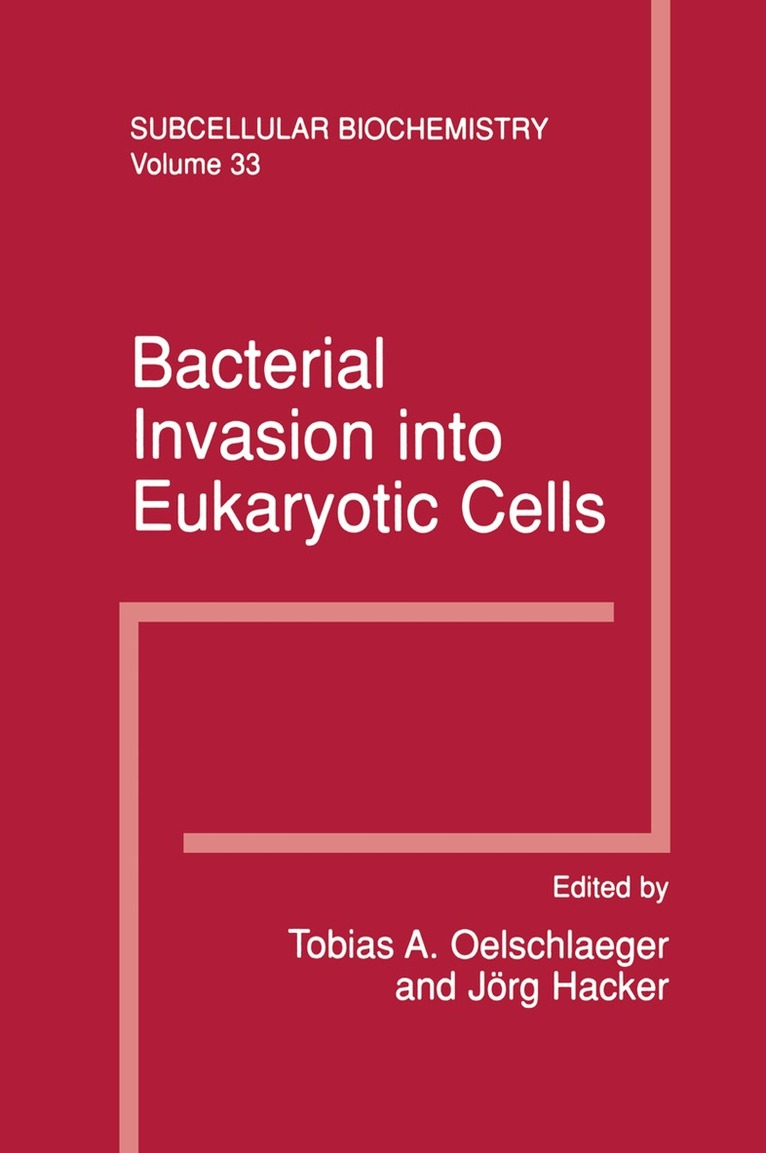
Strategies of Bacterial Interaction with Eukaryotic Cells *Tobias A. Oelschlaeger and Jorg Hacker 1. BENEFICIAL BACTERIAL-HOST INTERACTIONS Already during birth and soon thereafter mammals are colonized by bacte- ria belonging to the resident microbial flora. Cutaneous and mucosal sur- faces and the gastrointestinal tract are the areas which become colonized. These indigenous or autochthonous bacteria have a variety of beneficial effects on their hosts. They play a protective role by bacterial antagonism in fighting infections (Hoszowski and Truszczynski, 1997; Hentges, 1979). Pro- duction of vitamin K is another essential contribution of the resident microbial flora to the health of the host (Hill, 1997). Even more important, studies with germ-free animals demonstrated the involvement of the microbial flora on the development of the immune system. Such animals have underdeveloped and relatively undifferentiated lymphoid tissues and low concentrations of serum immune globulins ( Cebra et at., 1998). They TOBIAS A. OELSCHLAEGER and JORG HACKER Institut filr Molekulare lnfektionsbiologie, Universitiit Wiirzburg, 97070 Wiirzburg, Germany.*Corresponding author; Phone: (0)931-312150; FAX: (0)931-312578; E-mail: t.oelschlaeger@mail.uni-wuerzburg.de xxix Tobias A. Oelschlaeger and Jorg Hacker also show defects in specific immune responsiveness and in nonspecific resistance induced by endotoxin, which may account for their lowered resis- tance. A more typical example of symbiotic interaction of bacteria with a host are bacteria like Ruminococcus in the gut of ruminants, essential for degradation of cellulose (Hobson, 1988). The closest benefical bacterial-host interactions are those of intracellular symbiotic bacteria and their host cells.
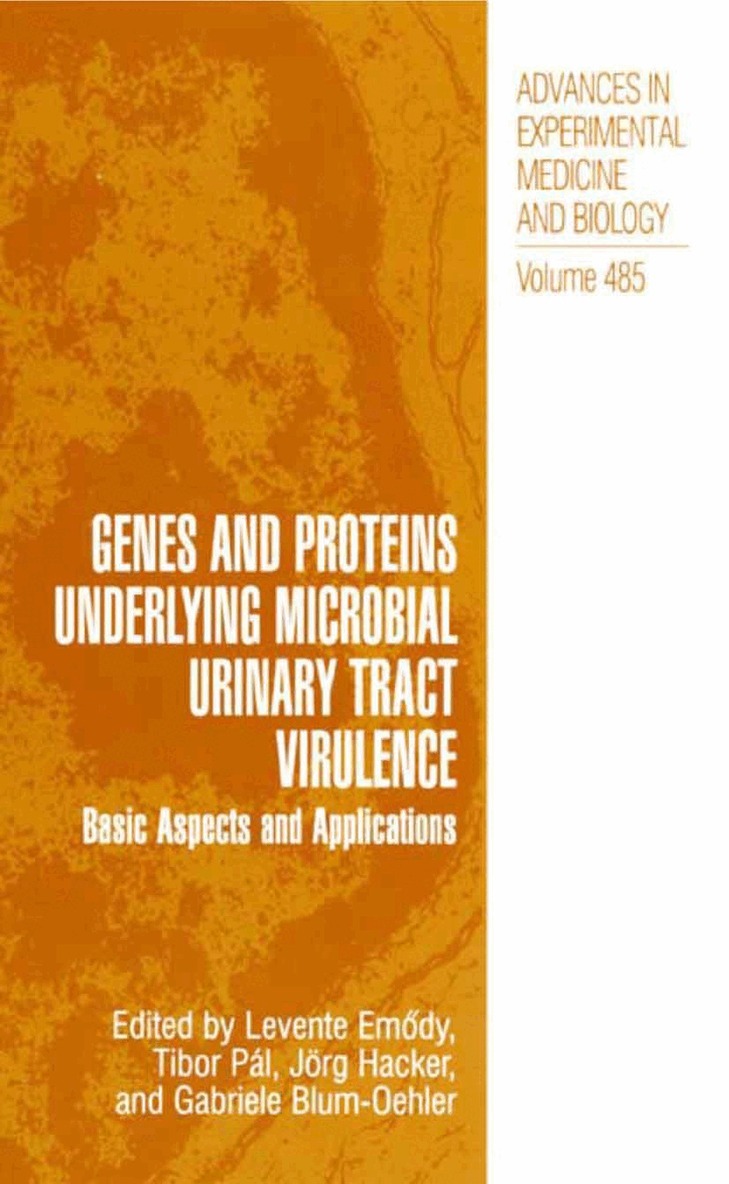
Genes and Proteins Underlying Microbial Urinary Tract Virulence
Basic Aspects and Applications
Inbunden, Engelska, 2000
1 624 kr
Skickas inom 10-15 vardagar
This text consists of the proceedings of the FEMS Symposium on Genes and Proteins Underlying Microbial Urinary Tract Virulence: Basic Aspects and Applications, held September 16-19, 1999, in Pecs, Hungary. Urinary tract infections are among the most frequent diseases caused by microbial pathogens. In this volume, researchers, clinical microbiologists and clinicians exchange ideas covering four major aspects of this important topic: genetic information, synthesis and assembly of virulence factors in urinary pathogens; regulation of genes involved in the phenotypic appearance of virulence; host-parasite interactions determining the process and outcome of the infection; and possible applications of the above aspects in diagnosis, therapy and prevention.
3 241 kr
Skickas inom 10-15 vardagar
Strategies of Bacterial Interaction with Eukaryotic Cells *Tobias A. Oelschlaeger and Jorg Hacker 1. BENEFICIAL BACTERIAL-HOST INTERACTIONS Already during birth and soon thereafter mammals are colonized by bacte- ria belonging to the resident microbial flora. Cutaneous and mucosal sur- faces and the gastrointestinal tract are the areas which become colonized. These indigenous or autochthonous bacteria have a variety of beneficial effects on their hosts. They play a protective role by bacterial antagonism in fighting infections (Hoszowski and Truszczynski, 1997; Hentges, 1979). Pro- duction of vitamin K is another essential contribution of the resident microbial flora to the health of the host (Hill, 1997). Even more important, studies with germ-free animals demonstrated the involvement of the microbial flora on the development of the immune system. Such animals have underdeveloped and relatively undifferentiated lymphoid tissues and low concentrations of serum immune globulins ( Cebra et at., 1998). They TOBIAS A. OELSCHLAEGER and JORG HACKER Institut filr Molekulare lnfektionsbiologie, Universitiit Wiirzburg, 97070 Wiirzburg, Germany.*Corresponding author; Phone: (0)931-312150; FAX: (0)931-312578; E-mail: t.oelschlaeger@mail.uni-wuerzburg.de xxix Tobias A. Oelschlaeger and Jorg Hacker also show defects in specific immune responsiveness and in nonspecific resistance induced by endotoxin, which may account for their lowered resis- tance. A more typical example of symbiotic interaction of bacteria with a host are bacteria like Ruminococcus in the gut of ruminants, essential for degradation of cellulose (Hobson, 1988). The closest benefical bacterial-host interactions are those of intracellular symbiotic bacteria and their host cells.
Genes and Proteins Underlying Microbial Urinary Tract Virulence
Basic Aspects and Applications
Häftad, Engelska, 2013
1 624 kr
Skickas inom 10-15 vardagar
Proceedings of the FEMS Symposium on Genes and Proteins Underlying Microbial Urinary Tract Virulence: Basic Aspects and Applications, held September 16-19, 1999, in Pécs, Hungary. Urinary tract infections are among the most frequent diseases caused by microbial pathogens. In this volume, researchers, clinical microbiologists and clinicians exchange the latest ideas covering four major aspects of this important topic: Genetic information, synthesis and assembly of virulence factors in urinary pathogens; Regulation of genes involved in the phenotypic appearance of virulence; Host-parasite interactions determining the process and outcome of the infection; Possible applications of the above aspects in diagnosis, therapy and prevention.
1 624 kr
Skickas inom 10-15 vardagar
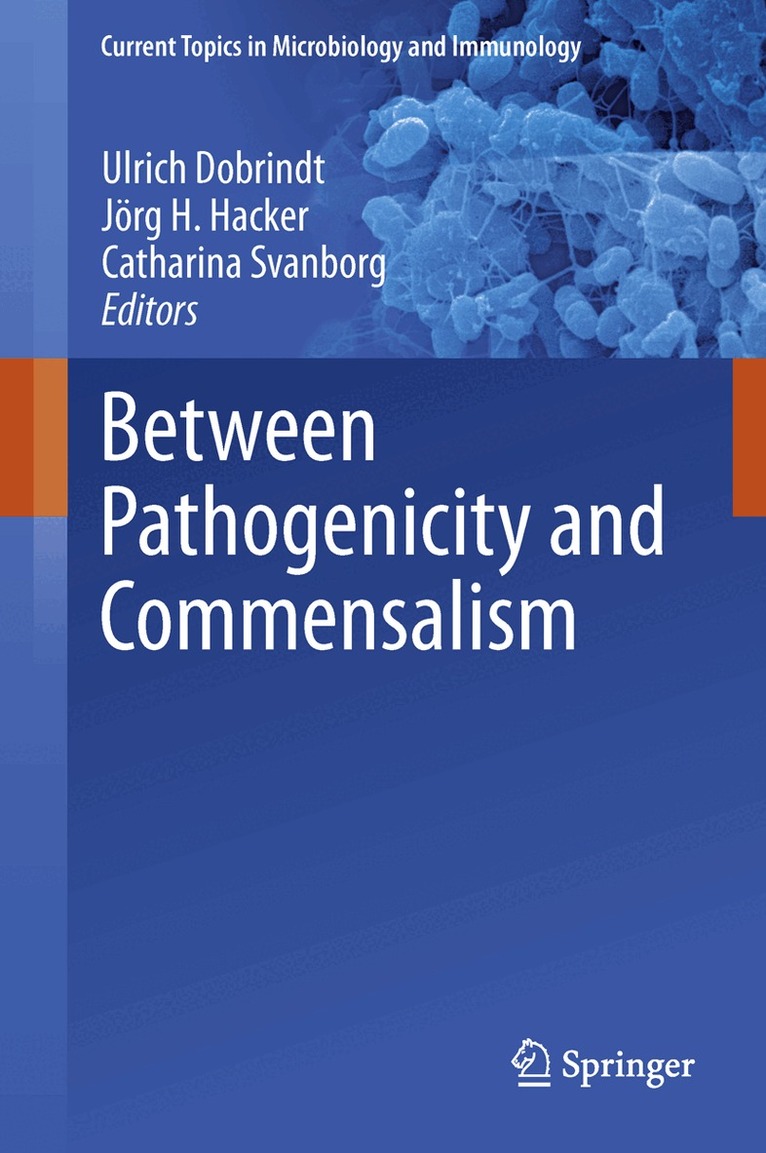
This comprehensive, interdisciplinary book covers different aspects of relevant human pathogens and commensals. The ongoing development of (meta-)genomic, transcriptomic, proteomic and bioinformatic analyses of pathogenic and commensal microorganisms and their host interaction provides a comprehensive introduction to the microbiological analysis of host-microbe interplay and its consequences for infection or commensalism.
1 624 kr
Skickas inom 10-15 vardagar
This comprehensive, interdisciplinary book covers different aspects of relevant human pathogens and commensals.