Johanne Døhlie Saltnes - Böcker
Visar alla böcker från författaren Johanne Døhlie Saltnes. Handla med fri frakt och snabb leverans.
4 produkter
4 produkter
2 113 kr
Skickas inom 10-15 vardagar
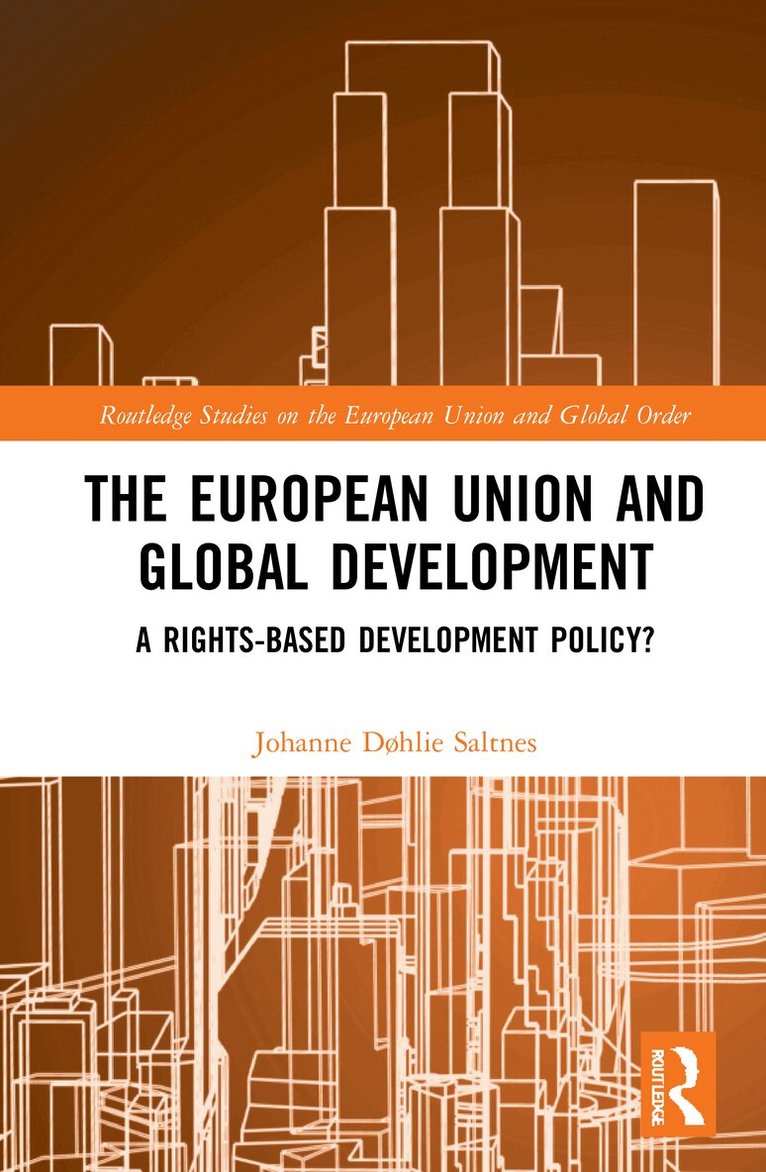
This book systematically analyses the EU’s commitment to a human rights-based approach to development through the lens of global justice theory. It identifies limits to the EU’s approach and discusses how standardised policies, particularly in the case of human rights sanctions, may be perceived as neo-colonially intrusive and can come at the cost of recognizing the experiences and interests of vulnerable groups and allowing for partner countries’ democratic ownership of their own development trajectory. Engaging with primary sources including official documents, reports, and 45 semi-structured interviews with EU and member state officials, the book also presents a novel explanation for why the EU, at times, steps out of its commitment to rights-based development and chooses differentiated foreign policy responses to similar situations. This book will be of key interest to scholars and students of EU foreign policy, EU development policy human rights, and international relations as well as policy practitioners working in the fields of development, human rights and democracy promotion.
618 kr
Skickas inom 10-15 vardagar
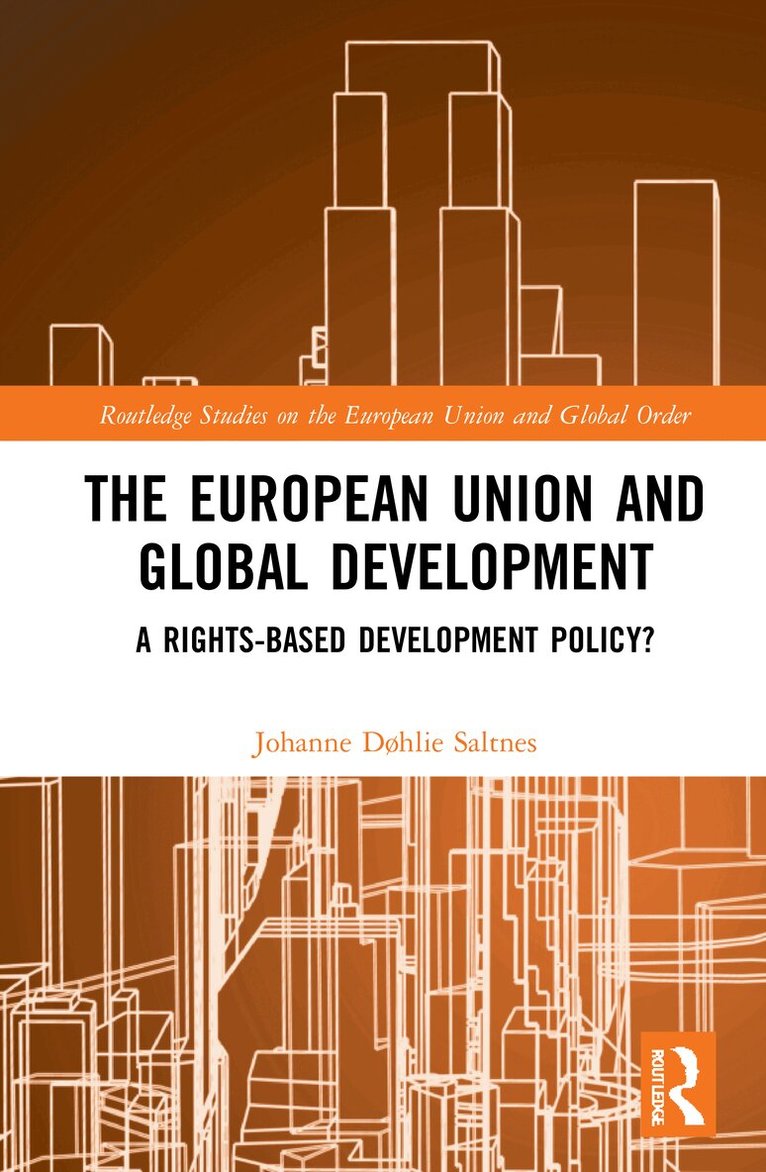
This book systematically analyses the EU’s commitment to a human rights-based approach to development through the lens of global justice theory. It identifies limits to the EU’s approach and discusses how standardised policies, particularly in the case of human rights sanctions, may be perceived as neo-colonially intrusive and can come at the cost of recognizing the experiences and interests of vulnerable groups and allowing for partner countries’ democratic ownership of their own development trajectory. Engaging with primary sources including official documents, reports, and 45 semi-structured interviews with EU and member state officials, the book also presents a novel explanation for why the EU, at times, steps out of its commitment to rights-based development and chooses differentiated foreign policy responses to similar situations. This book will be of key interest to scholars and students of EU foreign policy, EU development policy human rights, and international relations as well as policy practitioners working in the fields of development, human rights and democracy promotion.
2 113 kr
Skickas inom 10-15 vardagar
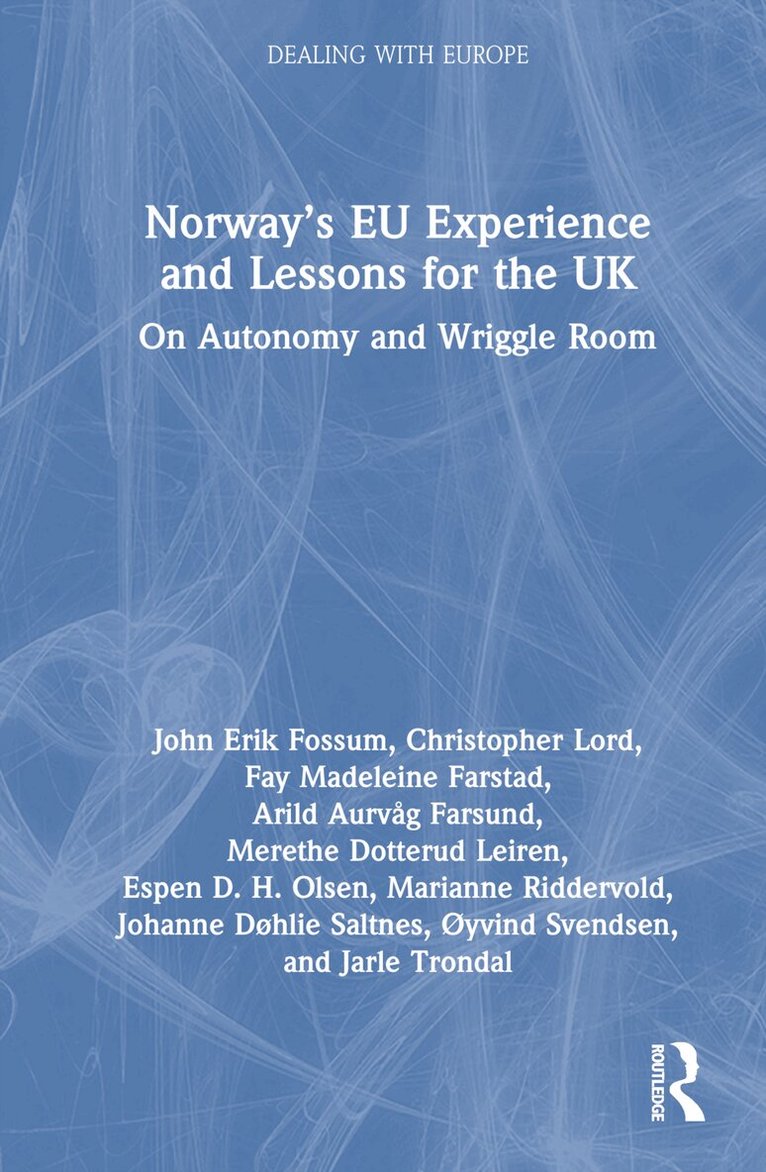
This book examines Norway’s affiliation to the EU and systematically assesses the potential suitability of this arrangement for the UK as a viable EU affiliation post-Brexit.Framing the book within the framework of the broader European context, the authors ask how much autonomy and room to manoeuvre tightly integrated non-member states have under this arrangement. They present an in-depth assessment of Norway’s close EU affiliation and provide insight into what this may reveal to us about the post-Brexit European political order. The book’s analytical framework centred on autonomy under complex interdependence has relevance well beyond the confines of the Norway case. This includes the UK, not least since the EU–UK Trade and Cooperation Agreement (TCA) leaves considerable uncertainty. It contains transitory elements; there will be implementation reviews, and there may be many more bilateral and multilateral agreements before the trade relationship is fully defined.This book will be of key interest to scholars and students of European Union politics, Norwegian politics, British politics, European integration, and, more broadly, to European studies and international relations.
578 kr
Skickas inom 10-15 vardagar
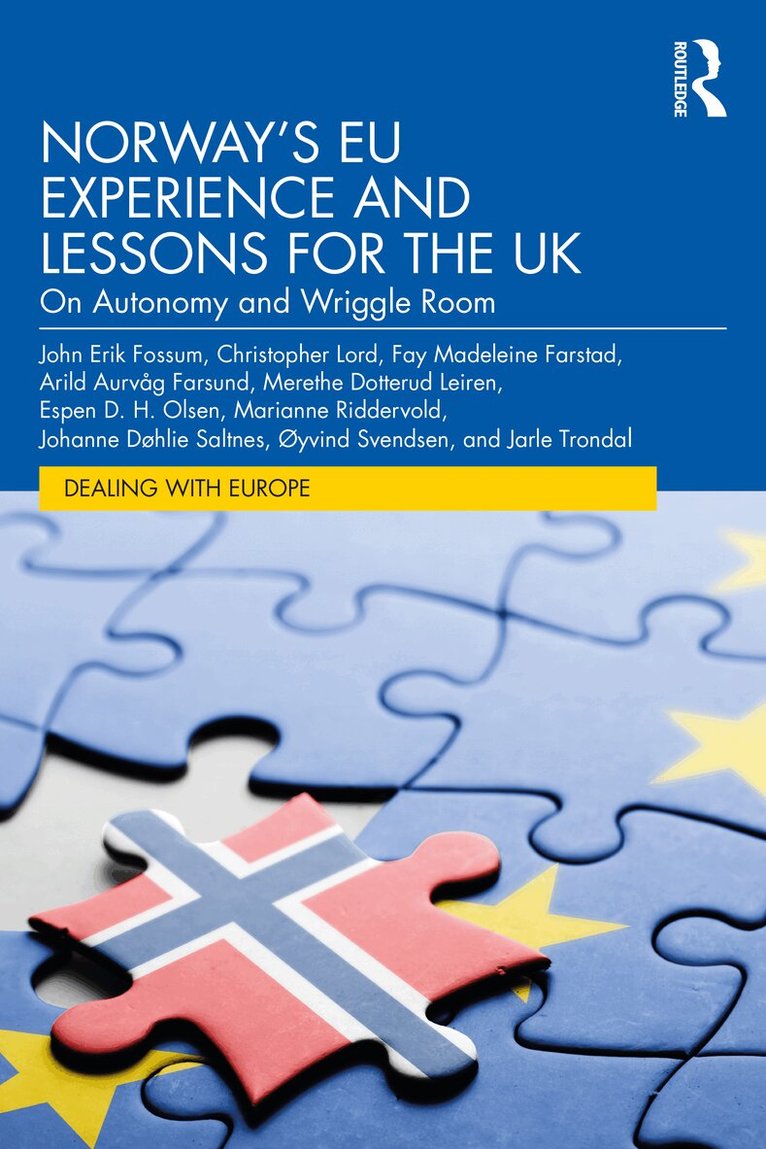
This book examines Norway’s affiliation to the EU and systematically assesses the potential suitability of this arrangement for the UK as a viable EU affiliation post-Brexit.Framing the book within the framework of the broader European context, the authors ask how much autonomy and room to manoeuvre tightly integrated non-member states have under this arrangement. They present an in-depth assessment of Norway’s close EU affiliation and provide insight into what this may reveal to us about the post-Brexit European political order. The book’s analytical framework centred on autonomy under complex interdependence has relevance well beyond the confines of the Norway case. This includes the UK, not least since the EU–UK Trade and Cooperation Agreement (TCA) leaves considerable uncertainty. It contains transitory elements; there will be implementation reviews, and there may be many more bilateral and multilateral agreements before the trade relationship is fully defined.This book will be of key interest to scholars and students of European Union politics, Norwegian politics, British politics, European integration, and, more broadly, to European studies and international relations.