Johannes Fabian - Böcker
Visar alla böcker från författaren Johannes Fabian. Handla med fri frakt och snabb leverans.
14 produkter
14 produkter
592 kr
Skickas inom 3-6 vardagar
Fabian's study is a classic in the field that changed the way anthropologists relate to their subjects and is of immense value not only to anthropologists but to all those concerned with the study of man. A new foreward by Matti Bunzl brings the influence of Fabian's study up to the present. Time and the Other is a critique of the notions that anthropologists are "here and now," their objects of study are "there and then," and that the "other" exists in a time not contemporary with our own.
1 108 kr
Skickas inom 7-10 vardagar
Time and the Other is a classic work that critically reexamined the relationship between anthropologists and their subjects and reoriented the approach literary critics, philosophers, and historians took to the study of humankind. Johannes Fabian challenges the assumption that anthropologists live in the "here and now," that their subjects live in the "there and then," and that the "other" exists in a time not contemporary with our own. He also pinpoints the emergence, transformation, and differentiation of a variety of uses of time in the history of anthropology that set specific parameters between power and inequality. In this edition, a new postscript by the author revisits popular conceptions of the "other" and the attempt to produce and represent knowledge of other(s).
282 kr
Skickas inom 7-10 vardagar
Time and the Other is a classic work that critically reexamined the relationship between anthropologists and their subjects and reoriented the approach literary critics, philosophers, and historians took to the study of humankind. Johannes Fabian challenges the assumption that anthropologists live in the "here and now," that their subjects live in the "there and then," and that the "other" exists in a time not contemporary with our own. He also pinpoints the emergence, transformation, and differentiation of a variety of uses of time in the history of anthropology that set specific parameters between power and inequality. In this edition, a new postscript by the author revisits popular conceptions of the "other" and the attempt to produce and represent knowledge of other(s).
Power and Performance
Ethnographic Explorations Through Proverbial Wisdom and Theater in Shaba, Zaire
Häftad, Engelska, 1990
268 kr
Skickas inom 10-15 vardagar
Power is eaten whole (""Le pouvoir se mange entier""). In 1985 the distinguished anthropologist Johannes Fabian, engaged in fieldwork in the Shaba province of Zaire, first encountered this saying about power. Its implications - for the charismatic religious movements Fabian was examining, for the highly charged political atomosphere of Zaire, and for the culture of the Lub peoples - continued to intrigue him, but its meaning remained elusive. On a later visit, he mentioned the saying to a company of popular actors, and triggered an ethnographic brainstorm. They decided it would be just the right topic for their next play. This book examines traditional proverbs about power. Above all, it relates how the performance of ""Le pouvoir se mange entier"" was created, rehearsed, and performed by the Troupe Mufwankolo. The play deals with the issue of power through a series of conflicts between villages and their chief. Both rehearsal and performance versions of the text of this drama are included, in Swahili and in English translation. Observation, to Fabian, is itself a social process so throughout, he and the actors worked together to enact, analyze, interpret, and concretely ""unpack"" the meanings of the saying. The result is a book containing reflections, asides, evocative descriptions of settings and events, yet with a continuing concern for the limitations of the ethnographer's perspective and of the power relations that are never absent from ethnographic works. Much of what ethnographers study as ""culture"" is performance, says Fabian, and his work is an attempt to redirect the anthropologist's work from ""informative"" to ""peformative"" ethnography. His discussions of collaborative strategy of ""performance"" vs ""text"" as goals, of translation, and of a host of other issues will enrich current theoretical debates about power, representation and the dialogues of ethnography that go well beyond the immediate African context.
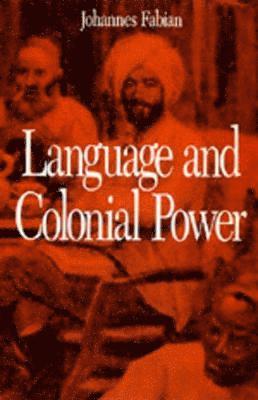
Language and Colonial Power
The Appropriation of Swahili in the Former Belgian Congo 1880-1938
Häftad, Engelska, 1991
549 kr
Skickas inom 3-6 vardagar
In this study, inquiry will be directed to the past, and it will, for many reasons, have to reach into a past which is rather remote from present-day Shaba Swahili. The author's principal concern remains with a contemporary situation, namely the role of Swahili in the context of work, industrial, artisanal, and artistic. When it was first formulated, the aim of my project was to describe what might be called the workers' culture of Shaba, through analyses of communicative (sociolinguistic) and cognitive (ethnosemantic) aspects of language use.
594 kr
Skickas inom 3-6 vardagar
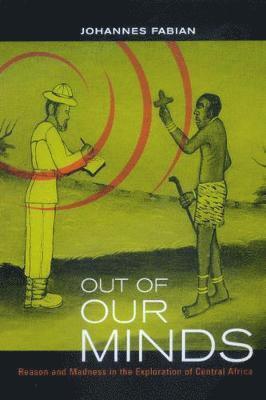
Explorers and ethnographers in Africa during the period of colonial expansion are usually assumed to have been guided by rational aims such as the desire for scientific knowledge, fame, or financial gain. This book, the culmination of many years of research on nineteenth-century exploration in Central Africa, provides a new view of those early European explorers and their encounters with Africans. "Out of Our Minds" shows explorers were far from rational - often meeting their hosts in extraordinary states influenced by opiates, alcohol, sex, fever, fatigue, and violence. Johannes Fabian presents fascinating and little-known source material, and points to its implications for our understanding of the beginnings of modern colonization. At the same time, he makes an important contribution to current debates about the intellectual origins and nature of anthropological inquiry.Drawing on travel accounts - most of them Belgian and German - published between 1878 and the start of World War I, Fabian describes encounters between European travelers and the Africans they met.He argues that the loss of control experienced by these early travelers actually served to enhance cross-cultural understanding, allowing the foreigners to make sense of strange facts and customs. Fabian's provocative findings contribute to a critique of narrowly scientific or rationalistic visions of ethnography, illuminating the relationship between travel and intercultural understanding, as well as between imperialism and ethnographic knowledge.
1 466 kr
Skickas inom 10-15 vardagar
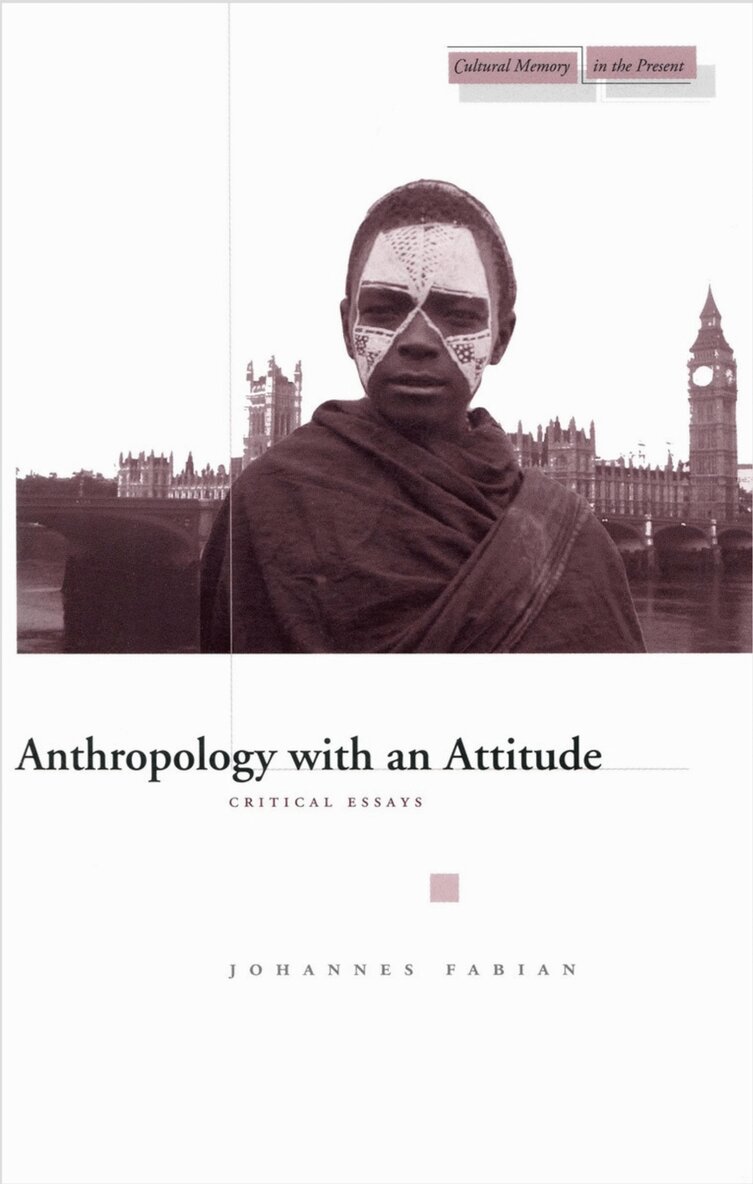
This book collects published and unpublished work over the last dozen years by one of today's most distinguished and provocative anthropologists. Johannes Fabian is widely known outside of his discipline because his work so often overcomes traditional scholarly boundaries to bring fresh insight to central topics in philosophy, history, and cultural studies.The first part of the book addresses questions of current critical concern: Does it still make sense to search for objectivity in ethnography? What do we gain when we invoke "context" in our interpretations? How does literacy change the work of the ethnographer, and what are the boundaries between ethnology and history? This part ends with a plea for recuperating negativity in our thinking about culture.The second part extends the work of critique into the past by examining the beginning of modern ethnography in the exploration of Central Africa during the late nineteenth century: the justification of a scientific attitude, the collecting of ethnographic objects, the presentation of knowledge in narration, and the role of recognition—given or denied—in encounters with Africans. A final essay examines how the Congolese have returned the "imperial gaze" of Belgium by the work of critical memory in popular history. The ten chapters are framed by two meditations on the relevance of theory and the irrelevance of the millennium.
362 kr
Skickas inom 7-10 vardagar
This book collects published and unpublished work over the last dozen years by one of today's most distinguished and provocative anthropologists. Johannes Fabian is widely known outside of his discipline because his work so often overcomes traditional scholarly boundaries to bring fresh insight to central topics in philosophy, history, and cultural studies.The first part of the book addresses questions of current critical concern: Does it still make sense to search for objectivity in ethnography? What do we gain when we invoke "context" in our interpretations? How does literacy change the work of the ethnographer, and what are the boundaries between ethnology and history? This part ends with a plea for recuperating negativity in our thinking about culture.The second part extends the work of critique into the past by examining the beginning of modern ethnography in the exploration of Central Africa during the late nineteenth century: the justification of a scientific attitude, the collecting of ethnographic objects, the presentation of knowledge in narration, and the role of recognition—given or denied—in encounters with Africans. A final essay examines how the Congolese have returned the "imperial gaze" of Belgium by the work of critical memory in popular history. The ten chapters are framed by two meditations on the relevance of theory and the irrelevance of the millennium.
354 kr
Skickas inom 10-15 vardagar
In this volume, the author reflects on anthropological uses of the concept of popular culture. He retraces how his explorations of popular culture in the Shaba region of Zaire, now the Congo, showed that classical culture theory did not account for large aspects of contemporary African life.
1 164 kr
Skickas inom 7-10 vardagar
In Memory against Culture, the renowned anthropologist Johannes Fabian assesses the contemporary practice of anthropology and its emerging shape as a global discipline. In twelve essays ranging from theoretical reflections to re-examinations of past ethnographic work, Fabian addresses central theoretical debates within the discipline and throughout the social sciences-about language and time, history and memory, and ethnography and recognition. Together the essays illuminate Fabian’s pluralist vision of an anthropology that always makes the other present by opening itself to conversational and transnational practices, refusing epistemological claims that privilege any one voice, language, or point of view.Fabian returns to his landmark book Time and the Other to consider how the role of the other in anthropological inquiry has been transformed over the past two decades. He explores the place of linguistics in contemporary language-centered anthropology, and he ponders how studies of material culture imbue objects with “otherness.” Meditating on the place of memory and forgetting in ethnography, he draws from his own ethnographic work in the Congo to ask why Africa, the site of so much early anthropological study, continues to be forgotten in the wake of colonization. Arguing for the importance of remembering Africa, Fabian focuses on the relationship between thought and memory in the Swahili language. In so doing, he suggests new methods for investigating memory practices across cultures. Turning to the practice of ethnography, he examines the role of the Internet and the place of field notes and other memoranda in ethnographic writing. At once wide-ranging and incisive, Memory against Culture is a significant reflection on the state of the field by one of its most thoughtful and engaged practitioners.
322 kr
Skickas inom 7-10 vardagar
In Memory against Culture, the renowned anthropologist Johannes Fabian assesses the contemporary practice of anthropology and its emerging shape as a global discipline. In twelve essays ranging from theoretical reflections to re-examinations of past ethnographic work, Fabian addresses central theoretical debates within the discipline and throughout the social sciences-about language and time, history and memory, and ethnography and recognition. Together the essays illuminate Fabian’s pluralist vision of an anthropology that always makes the other present by opening itself to conversational and transnational practices, refusing epistemological claims that privilege any one voice, language, or point of view.Fabian returns to his landmark book Time and the Other to consider how the role of the other in anthropological inquiry has been transformed over the past two decades. He explores the place of linguistics in contemporary language-centered anthropology, and he ponders how studies of material culture imbue objects with “otherness.” Meditating on the place of memory and forgetting in ethnography, he draws from his own ethnographic work in the Congo to ask why Africa, the site of so much early anthropological study, continues to be forgotten in the wake of colonization. Arguing for the importance of remembering Africa, Fabian focuses on the relationship between thought and memory in the Swahili language. In so doing, he suggests new methods for investigating memory practices across cultures. Turning to the practice of ethnography, he examines the role of the Internet and the place of field notes and other memoranda in ethnographic writing. At once wide-ranging and incisive, Memory against Culture is a significant reflection on the state of the field by one of its most thoughtful and engaged practitioners.
309 kr
Skickas inom 7-10 vardagar
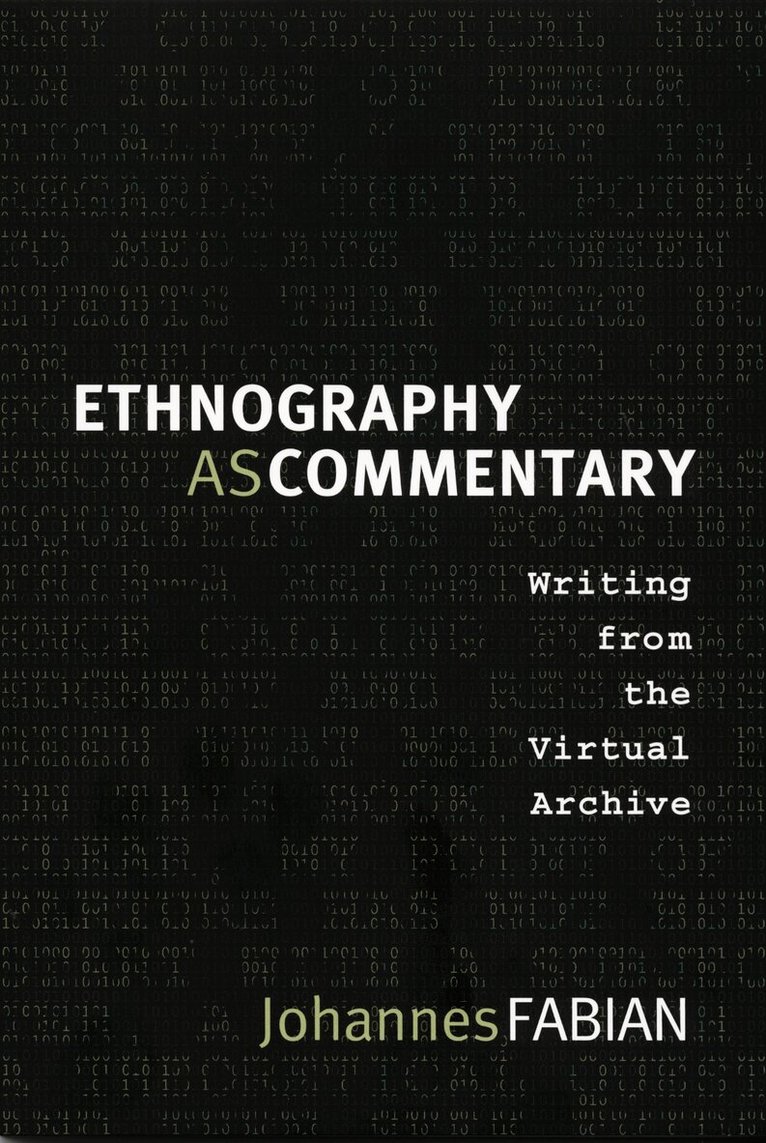
The Internet allows ethnographers to deposit the textual materials on which they base their writing in virtual archives. Electronically archived fieldwork documents can be accessed at any time by the writer, his or her readers, and the people studied. Johannes Fabian, a leading theorist of anthropological practice, argues that virtual archives have the potential to shift the emphasis in ethnographic writing from the monograph to commentary. In this insightful study, he returns to the recording of a conversation he had with a ritual healer in the Congolese town of Lubumbashi more than three decades ago. Fabian’s transcript and translation of the exchange have been deposited on a website (Language and Popular Culture in Africa), and in Ethnography as Commentary he provides a model of writing in the presence of a virtual archive.In his commentary, Fabian reconstructs his meeting with the healer Kahenga Mukonkwa Michel, in which the two discussed the ritual that Kahenga performed to protect Fabian’s home from burglary. Fabian reflects on the expectations and terminology that shape his description of Kahenga’s ritual and meditates on how ethnographic texts are made, considering the settings, the participants, the technologies, and the linguistic medium that influence the transcription and translation of a recording and thus fashion ethnographic knowledge. Turning more directly to Kahenga-as a practitioner, a person, and an ethnographic subject-and to the questions posed to him, Fabian reconsiders questions of ethnic identity, politics, and religion. While Fabian hopes that emerging anthropologists will share their fieldwork through virtual archives, he does not suggest that traditional ethnography will disappear. It will become part of a broader project facilitated by new media.
536 kr
Skickas inom 10-15 vardagar
Talk about Prayer is an experiment in writing ethnography, a commentary on a conversation with Mama Régine Tshitanda, the leader of a Charismatic prayer group (groupe de prière) in Lubumbashi (Katanga, Democratic Republic of the Congo) and members of her family in 1986.
124 kr
Skickas inom 3-6 vardagar