Johannes Loubser – författare
Visar alla böcker från författaren Johannes Loubser. Handla med fri frakt och snabb leverans.
5 produkter
5 produkter
Inbunden, Engelska, 2021
571 kr
Skickas inom 5-8 vardagar
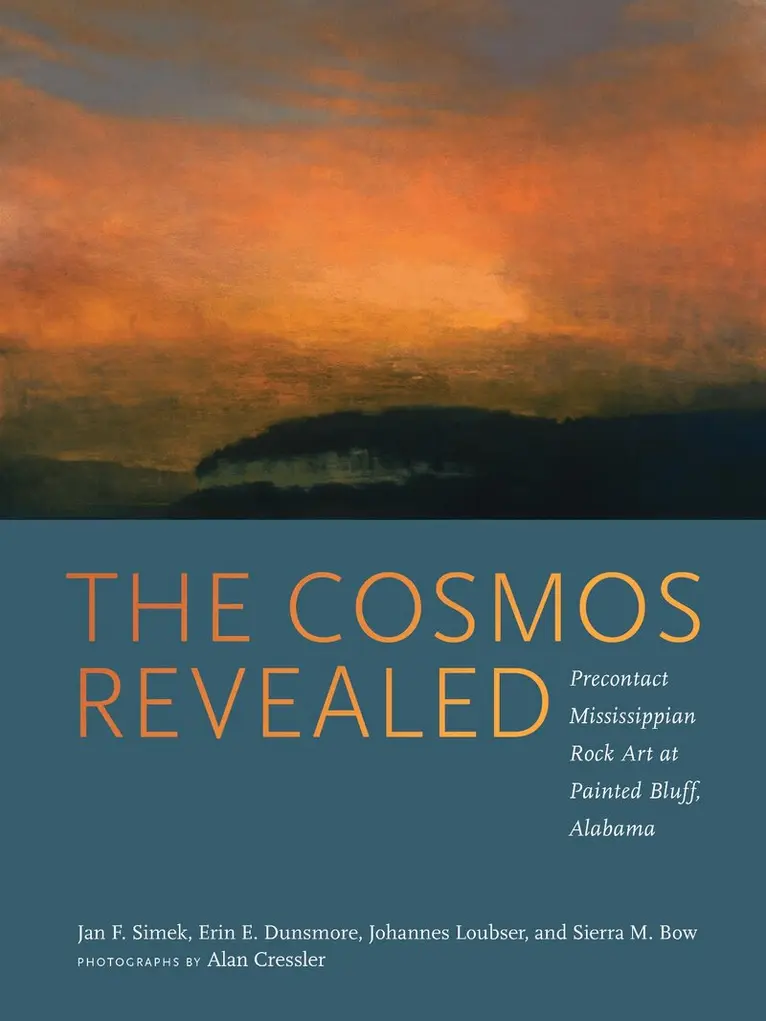
The definitive rock art book on Painted Bluff, AlabamaContaining more than 130 paintings and engravings, Painted Bluff is perhaps the most elaborate prehistoric pictograph site east of the Mississippi River. Positioned at several levels on a dramatic sandstone cliff along the Tennessee River in northern Alabama, the spectacular paintings and engravings depict mythical creatures, dancing humans, and mystical portals. The Cosmos Revealed: Precontact Mississippian Rock Art at Painted Bluff, Alabama is the first complete description and interpretation of one of the most important archaeological sites in eastern North America. Using art, the site materializes a model or 'cosmogram' of the Mississippian Native American view of the universe and provided connections between the visible and invisible worlds for Native spiritual leaders and other visitors to engage.Discovered in the early 1800s, the site became known as 'Painted Bluff' because of its pictographs, but inexplicably it has only recently been subjected to the intensive archaeological study it deserves. Under the auspices of the Tennessee Valley Authority, the authors of this volume have documented and assessed the site since 2005, and efforts have been made to reverse some of the vandalism that has occurred over many decades and to stabilize natural degradation of the cliff and the artwork it contains.In the course of this documentation, more than one hundred remarkable prehistoric paintings have been recorded, mapped, and photographed on the cliff face. This book synthesizes the research done on the site to date and covers the entire site. Richly illustrated chapters cover the historical background, geology and archaeology, documentation methods, types of rock art, stratigraphy, paint recipes, TVA management, graffiti removal, and a summary that broadly synthesizes the meaning, timeframe, artistry, organization, conceptual boundaries, and the cosmos revealed. The book features numerous color photographs and a complete catalog of the pictographs and petroglyphs at the site.
Häftad, Engelska, 2021
701 kr
Skickas inom 10-15 vardagar
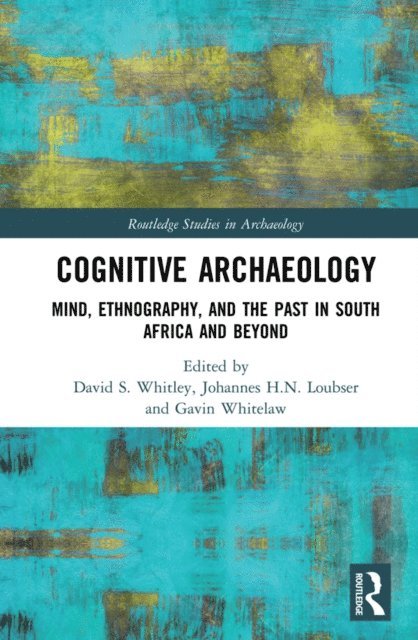
Cognitive Archaeology: Mind, Ethnography, and the Past in South Africa and Beyond aims to interpret the social and cultural lives of the past, in part by using ethnography to build informed models of past cultural and social systems and partly by using natural models to understand symbolism and belief.How does an archaeologist interpret the past? Which theories are relevant, what kinds of data must be acquired, and how can interpretations be derived? One interpretive approach, developed in southern Africa in the 1980s, has been particularly successful even if still not widely known globally. With an expressed commitment to scientific method, it has resulted in deeper, well-tested understandings of belief, ritual, settlement patterns and social systems. This volume brings together a series of papers that demonstrate and illustrate this approach to archaeological interpretation, including contributions from North America, Western Europe and sub-Saharan Africa, in the process highlighting innovative methodological and substantive research that improves our understanding of the human past.Professional archaeological researchers would be the primary audience of this book. Because of its theoretical and methodological emphasis, it will also be relevant to method and theory courses and postgraduate students.
Inbunden, Engelska, 2019
2 494 kr
Skickas inom 10-15 vardagar
Cognitive Archaeology: Mind, Ethnography, and the Past in South Africa and Beyond aims to interpret the social and cultural lives of the past, in part by using ethnography to build informed models of past cultural and social systems and partly by using natural models to understand symbolism and belief.How does an archaeologist interpret the past? Which theories are relevant, what kinds of data must be acquired, and how can interpretations be derived? One interpretive approach, developed in southern Africa in the 1980s, has been particularly successful even if still not widely known globally. With an expressed commitment to scientific method, it has resulted in deeper, well-tested understandings of belief, ritual, settlement patterns and social systems. This volume brings together a series of papers that demonstrate and illustrate this approach to archaeological interpretation, including contributions from North America, Western Europe and sub-Saharan Africa, in the process highlighting innovative methodological and substantive research that improves our understanding of the human past.Professional archaeological researchers would be the primary audience of this book. Because of its theoretical and methodological emphasis, it will also be relevant to method and theory courses and postgraduate students.
E-bok
PDF, Engelska, 2010459 kr
Läs direkt efter köp
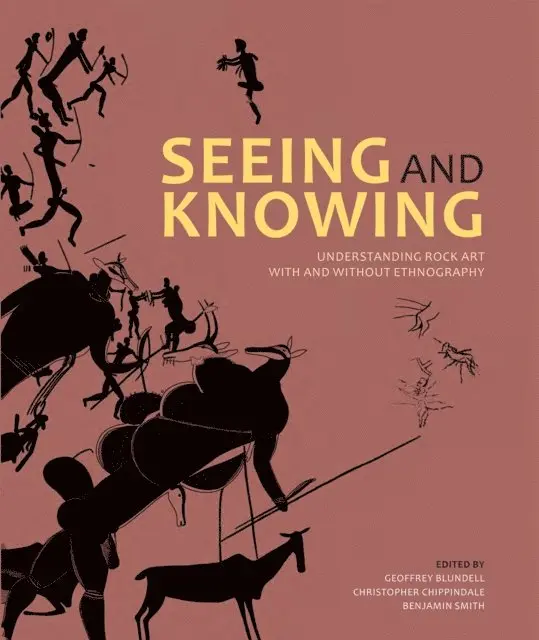
It is largely through the work of David Lewis-Williams that San rock art has come to be understood so well, as a complex symbolic and metaphoric representation of San religious beliefs and practices. The purpose of this volume is to demonstrate the depth and wide geographical impact of Lewis-Williams’ contribution, with particular emphasis on the use of theory and methodology drawn from ethnography that he has used with inspirational effect in understanding the meaning and context of rock art in various parts of the world. Seeing and Knowing explores how to understand and learn from rock art with and without ethnography. Because many of the chapters are based on solid fieldwork and ethnographic research, they offer a new body of work that provides the evidence for differentiation between knowing and simply seeing. This volume is unique in that it focuses exclusively on rock art and ethnography, and covers such a wide geographic range of examples on this topic, from southern Africa, to Scandinavia, to the United States. Many of the chapters explore studies in rock art regions of the world where variation and constancy can be observed and explored across distances both in space and in time. The editors have entitled the book Seeing and Knowing to echo Lewis-Williams’ Believing and Seeing published almost thirty years ago; they say ‘seeing’ again because looking at rock art is and will always be central, and then what is seen when human eyes and minds look; they say ‘knowing’ in recognition that, by his work and by his example, archaeologists now know a little more than they knew before. Even so, as Lewis-Williams will be the first to say, we still know only a fraction.
E-bok
Engelska, 2010459 kr
Läs direkt efter köp
It is largely through the work of David Lewis-Williams that San rock art has come to be understood so well, as a complex symbolic and metaphoric representation of San religious beliefs and practices. The purpose of this volume is to demonstrate the depth and wide geographical impact of Lewis-Williams’ contribution, with particular emphasis on the use of theory and methodology drawn from ethnography that he has used with inspirational effect in understanding the meaning and context of rock art in various parts of the world. Seeing and Knowing explores how to understand and learn from rock art with and without ethnography. Because many of the chapters are based on solid fieldwork and ethnographic research, they offer a new body of work that provides the evidence for differentiation between knowing and simply seeing. This volume is unique in that it focuses exclusively on rock art and ethnography, and covers such a wide geographic range of examples on this topic, from southern Africa, to Scandinavia, to the United States. Many of the chapters explore studies in rock art regions of the world where variation and constancy can be observed and explored across distances both in space and in time. The editors have entitled the book Seeing and Knowing to echo Lewis-Williams’ Believing and Seeing published almost thirty years ago; they say ‘seeing’ again because looking at rock art is and will always be central, and then what is seen when human eyes and minds look; they say ‘knowing’ in recognition that, by his work and by his example, archaeologists now know a little more than they knew before. Even so, as Lewis-Williams will be the first to say, we still know only a fraction.