Johannes Riquet - Böcker
Visar alla böcker från författaren Johannes Riquet. Handla med fri frakt och snabb leverans.
9 produkter
9 produkter
1 690 kr
Skickas inom 3-6 vardagar
Oxford Textual Perspectives is a series of informative and provocative studies focused upon literary texts (conceived of in the broadest sense of that term) and the technologies, cultures, and communities that produce, inform, and receive them. It provides fresh interpretations of fundamental works and of the vital and challenging issues emerging in English literary studies. By engaging with the materiality of the literary text, its production, and reception history, and frequently testing and exploring the boundaries of the notion of text itself, the volumes in the series question familiar frameworks and provide innovative interpretations of both canonical and less well-known works.The Aesthetics of Island Space discusses islands as central figures in the modern experience of space. It examines the spatial poetics of islands in literary texts, from Shakespeare's The Tempest to Ghosh's The Hungry Tide, in the journals of explorers and scientists such as James Cook and Charles Darwin, and in Hollywood cinema. It traces the ways in which literary and cinematic islands have functioned as malleable spatial figures that offer vivid perceptual experiences as well as a geopoetic oscillation between the material energies of words and images and the energies of the physical world. The chapters focus on America's island gateways (Roanoke and Ellis Island), visions of tropical islands (Tahiti and imagined South Sea islands), the islands of the US-Canadian border region in the Pacific Northwest, and the imaginative appeal of mutable islands. It argues that modern voyages of discovery posed considerable perceptual and cognitive challenges to the experience of space, and that these challenges were negotiated in complex and contradictory ways via poetic engagement with islands. Discussions of island narratives in postcolonial theory have broadened understanding of how islands have been imagined as geometrical abstractions, bounded spaces easily subjected to the colonial gaze. There is, however, a second story of islands in the Western imagination which runs parallel to this colonial story. In this alternative account, the modern experience of islands in the age of discovery went hand in hand with a disintegration of received models of understanding global space. Drawing on and rethinking (post-)phenomenological, geocritical, and geopoetic theories, The Aesthetics of Island Space argues that the modern experience of islands as mobile and shifting territories implied a dispersal, fragmentation, and diversification of spatial experience, and it explores how this disruption is registered and negotiated by both non-fictional and fictional responses.
418 kr
Skickas inom 5-8 vardagar
Oxford Textual Perspectives is a series of informative and provocative studies focused upon literary texts (conceived of in the broadest sense of that term) and the technologies, cultures, and communities that produce, inform, and receive them. It provides fresh interpretations of fundamental works and of the vital and challenging issues emerging in English literary studies. By engaging with the materiality of the literary text, its production, and reception history, and frequently testing and exploring the boundaries of the notion of text itself, the volumes in the series question familiar frameworks and provide innovative interpretations of both canonical and less well-known works.The Aesthetics of Island Space discusses islands as central figures in the modern experience of space. It examines the spatial poetics of islands in literary texts, from Shakespeare's The Tempest to Ghosh's The Hungry Tide, in the journals of explorers and scientists such as James Cook and Charles Darwin, and in Hollywood cinema. It traces the ways in which literary and cinematic islands have functioned as malleable spatial figures that offer vivid perceptual experiences as well as a geopoetic oscillation between the material energies of words and images and the energies of the physical world. The chapters focus on America's island gateways (Roanoke and Ellis Island), visions of tropical islands (Tahiti and imagined South Sea islands), the islands of the US-Canadian border region in the Pacific Northwest, and the imaginative appeal of mutable islands. It argues that modern voyages of discovery posed considerable perceptual and cognitive challenges to the experience of space, and that these challenges were negotiated in complex and contradictory ways via poetic engagement with islands. Discussions of island narratives in postcolonial theory have broadened understanding of how islands have been imagined as geometrical abstractions, bounded spaces easily subjected to the colonial gaze. There is, however, a second story of islands in the Western imagination which runs parallel to this colonial story. In this alternative account, the modern experience of islands in the age of discovery went hand in hand with a disintegration of received models of understanding global space. Drawing on and rethinking (post-)phenomenological, geocritical, and geopoetic theories, The Aesthetics of Island Space argues that the modern experience of islands as mobile and shifting territories implied a dispersal, fragmentation, and diversification of spatial experience, and it explores how this disruption is registered and negotiated by both non-fictional and fictional responses.
753 kr
Skickas inom 10-15 vardagar
This collection of essays offers a series of reflections on the specific literary and cultural forms that can be seen as the product of modernity’s spatial transformations, which have taken on new urgency in today’s world of ever increasing mobility and global networks. The book offers a broad perspective on the narrative and poetic dimensions of the modern discourses and imaginaries that have shaped our current geographical sensibilities. In the early twenty-first century, we are still grappling with the spatial effects of ‘early’ and ‘high’ modern developments, and the contemporary crises revolving around political boundaries and geopolitical orders in many parts of the world have intensified spatial anxieties. They call for a sustained analysis of individual perceptions, cultural constructions and political implications of spatial processes, movements and relations. The contributors of this book focus both on the spatial orders of modernity and on the various dynamic processes that have shaped our engagement with modern space. They creatively engage in a dialogue between literature, cinema, art history, geography, architecture, cultural semiotics and political science, and they transform twentieth- and twenty-first-century theory and philosophy to examine the textual forms of different spatial modernities. The chapters do not only engage with the cartographies, crossings and displacements represented within different texts and media, but are also attentive to the ways in which the latter produce space and perform mobility. Tracing an arc from Thomas More’s Utopia to the digital spatiality of contemporary autobiographical film, they treat texts as active cultural forces that crystallize, reinforce, interrogate or complicate the spatial imaginaries of modernity through their own narrative and poetic form.
341 kr
Skickas
Creative visions of Arctic geography from Indigenous perspectives_x000D__x000D_Grounded in the spatiality of Indigenous existence, Circumpolar Connections: Creative Indigenous Geographies of the Arctic is an innovatively foundational book about experiences and conceptions of geography in the circumpolar world. The book centers Arctic writers and artists as creators of space and disseminators of geographical knowledge emerging from Indigenous epistemologies. It collects newly commissioned poems, short stories, and essays that are accompanied by responses in the form of visual art – including paintings, photographs, and mixed media artworks – as well as brief academic reflections. Containing multiple languages - from English and Russian to North Sámi, Kalaallisut, and Sakha – as well as translations, the book is grounded in dialogues and conversations between creative practitioners from across the circumpolar North. Among others, they include Alutiiq, Eyak, Gwich'in, Innu, Inupiaq, Inuvialuk, Lingit, and Yup'ik writers and visual artists, alongside Indigenous and non-Indigenous scholars. Extending "geo-" beyond earth and "-graphy" beyond writing, the creative geographies of Circumpolar Connections powerfully expand the Arctic into manifold spaces imagined by a multiplicity of Indigenous stories and aesthetic forms. In doing so, they offer circumpolar conversations that speak to Arctic communities while reaching out to global audiences._x000D__x000D_[Sample Text]_x000D__x000D_English language assimilation as a bite of sashimi_x000D__x000D_it is like I am eating my own tongue_x000D_cut precisely, a flesh triangle_x000D_cool red bloodless_x000D_and placed in my mouth_x000D_I cannot speak_x000D_it tastes like my own tongue_x000D_salt and flesh_x000D_I am eating my own tongue_x000D_the weight of it
2 414 kr
Skickas inom 10-15 vardagar
This collection of essays offers a series of reflections on the specific literary and cultural forms that can be seen as the product of modernity’s spatial transformations, which have taken on new urgency in today’s world of ever increasing mobility and global networks. The book offers a broad perspective on the narrative and poetic dimensions of the modern discourses and imaginaries that have shaped our current geographical sensibilities. In the early twenty-first century, we are still grappling with the spatial effects of ‘early’ and ‘high’ modern developments, and the contemporary crises revolving around political boundaries and geopolitical orders in many parts of the world have intensified spatial anxieties. They call for a sustained analysis of individual perceptions, cultural constructions and political implications of spatial processes, movements and relations. The contributors of this book focus both on the spatial orders of modernity and on the various dynamic processes that have shaped our engagement with modern space. They creatively engage in a dialogue between literature, cinema, art history, geography, architecture, cultural semiotics and political science, and they transform twentieth- and twenty-first-century theory and philosophy to examine the textual forms of different spatial modernities. The chapters do not only engage with the cartographies, crossings and displacements represented within different texts and media, but are also attentive to the ways in which the latter produce space and perform mobility. Tracing an arc from Thomas More’s Utopia to the digital spatiality of contemporary autobiographical film, they treat texts as active cultural forces that crystallize, reinforce, interrogate or complicate the spatial imaginaries of modernity through their own narrative and poetic form.
1 411 kr
Skickas
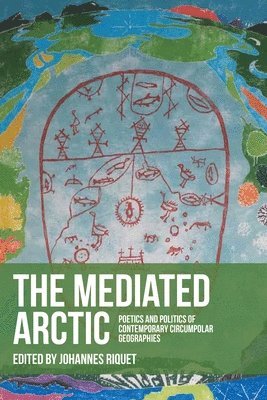
The mediated Arctic analyses the multiple relations between geography and cultural production that have long shaped – and are currently transforming – the circumpolar world. It explores how twenty-first-century cultural practitioners imagine and poeticise various elements of Arctic geography, and in doing so negotiate pressing environmental, (geo)political, and social concerns. From the plasmatic force of ice in Disney’s Frozen films to the spatial vocabulary of circumpolar Indigenous hip hop, it addresses Arctic geographical imaginaries in a wide range of media, including literature, cinema, comic books, music videos, and cartographic art. The book brings together a plurality of voices from within and outside the circumpolar North, both in terms of the works analysed and in its own collaborative scholarly practice. The book bridges Indigenous and Southern mediations of the Arctic and combines different epistemologies to do justice to these imaginaries in their diversity.
476 kr
Kommande
The mediated Arctic analyses the multiple relations between geography and cultural production that have long shaped – and are currently transforming – the circumpolar world. It explores how twenty-first-century cultural practitioners imagine and poeticise various elements of Arctic geography, and in doing so negotiate pressing environmental, (geo)political, and social concerns. From the plasmatic force of ice in Disney’s Frozen films to the spatial vocabulary of circumpolar Indigenous hip hop, it addresses Arctic geographical imaginaries in a wide range of media, including literature, cinema, comic books, music videos, and cartographic art. The book brings together a plurality of voices from within and outside the circumpolar North, both in terms of the works analysed and in its own collaborative scholarly practice. The book bridges Indigenous and Southern mediations of the Arctic and combines different epistemologies to do justice to these imaginaries in their diversity.
1 092 kr
Skickas inom 10-15 vardagar
They are attentive to how the medialities and (im)materialities of modern image culture inflect our conceptions of identity, examining the cultural and political force of literature, films, online video messages, rap songs, selfies, digital algorithms, social media, computer-generated images, photojournalism and branding, among others.
1 092 kr
Skickas inom 10-15 vardagar
They are attentive to how the medialities and (im)materialities of modern image culture inflect our conceptions of identity, examining the cultural and political force of literature, films, online video messages, rap songs, selfies, digital algorithms, social media, computer-generated images, photojournalism and branding, among others.