John A. Raven - Böcker
Visar alla böcker från författaren John A. Raven. Handla med fri frakt och snabb leverans.
8 produkter
8 produkter
929 kr
Skickas inom 7-10 vardagar
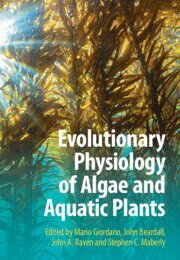
Photosynthetic organisms have an enormous influence on our environment through their effects on the development of other life on Earth and the way they alter the planet's geology and geochemistry. This book takes a unique approach by examining the evolutionary history of the major groups of aquatic photoautotrophs in the context of the ecophysiological characteristics that have allowed them to adapt to the challenges of life in water and thrive under past and present environmental conditions. The important role played by aquatic photoautotrophs on a planet undergoing unprecedented anthropogenic-induced change is also highlighted, in chapters on their critical function in mitigating environmental change through their physiological processes, and on the role of algae in biotechnology. This invaluable resource will be appreciated by researchers and advanced students interested in the biodiversity and evolutionary physiology of the full range of aquatic photoautotrophs, and their interaction with the environment.
832 kr
Skickas inom 7-10 vardagar
Aquatic Photosynthesis is a comprehensive guide to understanding the evolution and ecology of photosynthesis in aquatic environments. This second edition, thoroughly revised to bring it up to date, describes how one of the most fundamental metabolic processes evolved and transformed the surface chemistry of the Earth. The book focuses on recent biochemical and biophysical advances and the molecular biological techniques that have made them possible. In ten chapters that are self-contained but that build upon information presented earlier, the book starts with a reductionist, biophysical description of the photosynthetic reactions. It then moves through biochemical and molecular biological patterns in aquatic photoautotrophs, physiological and ecological principles, and global biogeochemical cycles. The book considers applications to ecology, and refers to historical developments. It can be used as a primary text in a lecture course, or as a supplemental text in a survey course such as biological oceanography, limnology, or biogeochemistry.
3 178 kr
Skickas inom 10-15 vardagar
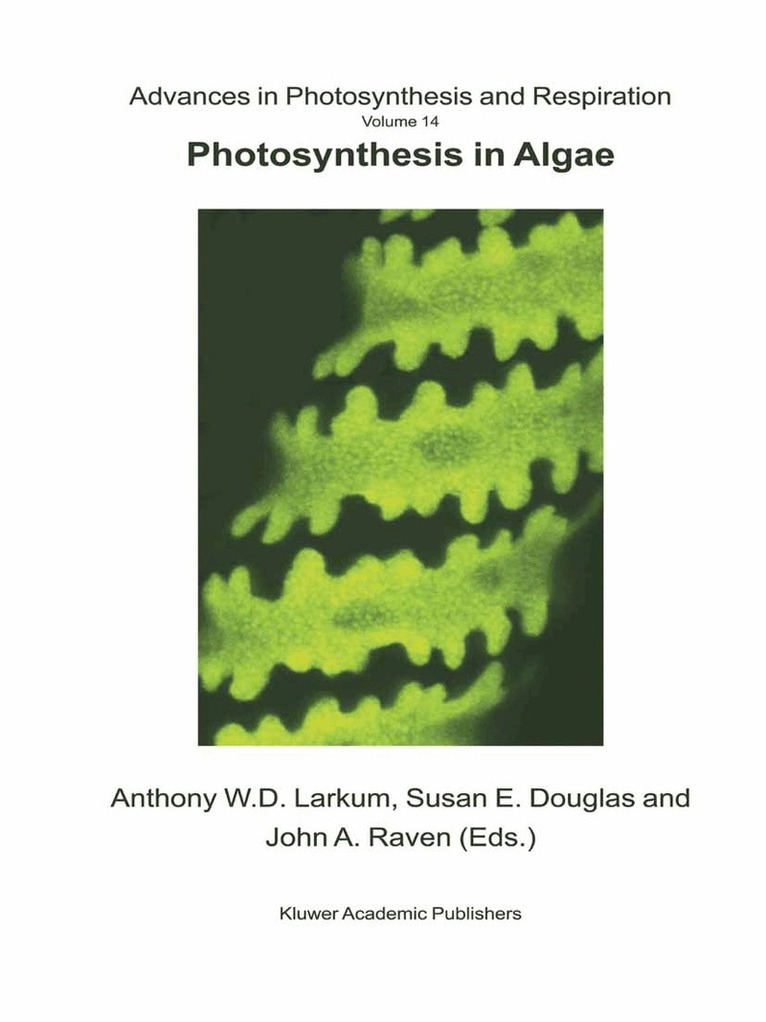
II. Algal Symbiotic Associations 439 III. The Host-Algal Interface 439 IV. Carbon Acquisition, Fixation and Secretion 440 V. Photoacclimation and Photoadaptation 446 447 VI. Coral Bleaching and Photoinhibition References 450 Index 457 xv xvii xviii xix xx Color Plates - Color Plate I . A. Colonies ofthe green volvocalean alga Volvox. Scale bar, 30 Jlffi. B. A thallus ofthe red alga La urencia intrica ta. Scale bar, I em. C. Part of a thallus of the brown alga Sargassum, Scale bar, I cm. D. The cryptomonad Cryptomonas sp. under the light microscope. The several plastids in each cell are readily seen. The two equal Ilagella are not so easily seen under the light microscope. Scale bar, 2Jlffi. Photography by M Ricketts. See Chapter I, p. 4. Anthony W. Larkum, Susan E. Douglas and John A. Raven (eds): Photosynth esis in Algae, pp.CP1- CP.J. (c) 2003 Kluwer Academic Publishers. Printed in The Netherlands. Color Plates Color Plate 2. Confoc al images of chlorophyll fluorescence in various ehlorophytes. A. Oedogonium (species unknown, local collection); x3,300 . B. Cladophora (specie s unknown, local collect ion); x2,800. C. Spirogyra (species unknown , local collection) x31O. C.(Inset) Spirogyra as in C. at x 3000. D. Klebsormidium fla ccidum (UTEX #LB2017) X2,300. E Nitella translucens (Wasteneys collection) X24000. All scale bars Slim except low magnification ofSpirogyra which is 100 J.1m.Micrographs kindly provided by Brian Gunnin g: for further details and descriptions, see Gunning and Schwartz, 1999. See Chapter 2, p. 17 .
2 333 kr
Skickas inom 10-15 vardagar
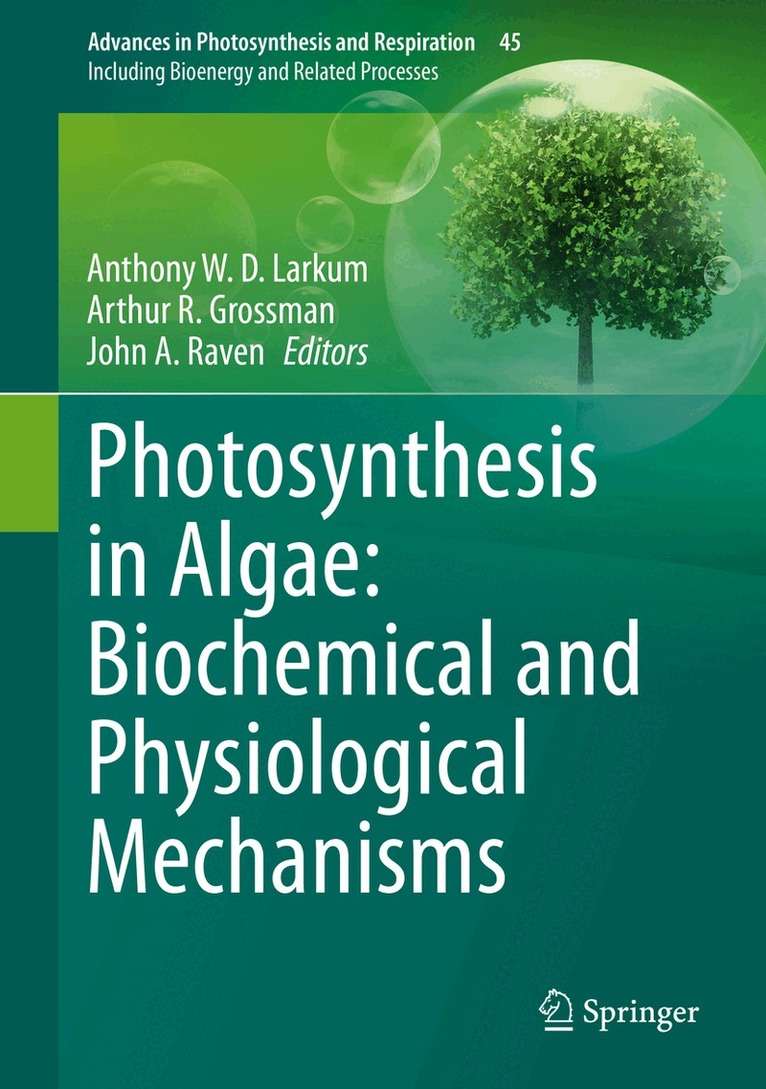
Other chapters chart the ways in which this carbon capture occurs or how there are a multiplicity of ways in which algae intercept sun light and deploy this energy for carbon capture.
2 333 kr
Skickas inom 10-15 vardagar
Other chapters chart the ways in which this carbon capture occurs or how there are a multiplicity of ways in which algae intercept sun light and deploy this energy for carbon capture.
3 496 kr
Skickas inom 10-15 vardagar
This book covers the state-of-the-art of microalgae physiology and biochemistry (and the several –omics). It serves as a key reference work for those working with microalgae, whether in the lab, the field, or for commercial applications. Research on microalgae has expanded enormously since then, as has the commercial exploitation of microalgae.
3 496 kr
Skickas inom 10-15 vardagar
This book covers the state-of-the-art of microalgae physiology and biochemistry (and the several –omics). It serves as a key reference work for those working with microalgae, whether in the lab, the field, or for commercial applications. Research on microalgae has expanded enormously since then, as has the commercial exploitation of microalgae.
3 178 kr
Skickas inom 10-15 vardagar
II. Algal Symbiotic Associations 439 III. The Host-Algal Interface 439 IV. Carbon Acquisition, Fixation and Secretion 440 V. Photoacclimation and Photoadaptation 446 447 VI. Coral Bleaching and Photoinhibition References 450 Index 457 xv xvii xviii xix xx Color Plates - Color Plate I . A. Colonies ofthe green volvocalean alga Volvox. Scale bar, 30 Jlffi. B. A thallus ofthe red alga La urencia intrica ta. Scale bar, I em. C. Part of a thallus of the brown alga Sargassum, Scale bar, I cm. D. The cryptomonad Cryptomonas sp. under the light microscope. The several plastids in each cell are readily seen. The two equal Ilagella are not so easily seen under the light microscope. Scale bar, 2Jlffi. Photography by M Ricketts. See Chapter I, p. 4. Anthony W. Larkum, Susan E. Douglas and John A. Raven (eds): Photosynth esis in Algae, pp.CP1- CP.J. (c) 2003 Kluwer Academic Publishers. Printed in The Netherlands. Color Plates Color Plate 2. Confoc al images of chlorophyll fluorescence in various ehlorophytes. A. Oedogonium (species unknown, local collection); x3,300 . B. Cladophora (specie s unknown, local collect ion); x2,800. C. Spirogyra (species unknown , local collection) x31O. C.(Inset) Spirogyra as in C. at x 3000. D. Klebsormidium fla ccidum (UTEX #LB2017) X2,300. E Nitella translucens (Wasteneys collection) X24000. All scale bars Slim except low magnification ofSpirogyra which is 100 J.1m.Micrographs kindly provided by Brian Gunnin g: for further details and descriptions, see Gunning and Schwartz, 1999. See Chapter 2, p. 17 .