John Charles Smith – författare
Visar alla böcker från författaren John Charles Smith. Handla med fri frakt och snabb leverans.
11 produkter
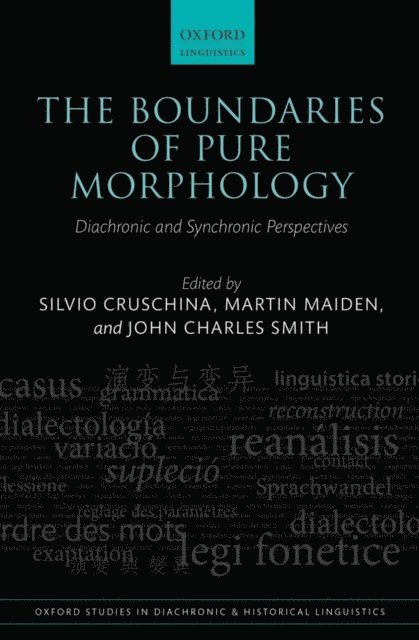
Boundaries of Pure Morphology
Diachronic and Synchronic Perspectives
Av John Charles Smith, Martin Maiden m. fl.
E-bok, 2013
1945 kr
Lägg i varukorg
This book brings together leading international scholars to consider whether in some languages there are phenomena which are unique to morphology, determined neither by phonology or syntax. Central to these phenomena is the notion of the ''morphome'', conceived by Mark Aronoff in 1994 as a …
Periphrasis and Inflexion in Diachrony
A View from Romance
Av Nigel Vincent, John Charles Smith m. fl.
E-bok, 2022
1641 kr
Lägg i varukorg
This volume brings together contributions from leading specialists in syntax and morphology to explore the complex relation between periphrasis and inflexion from both a synchronic and diachronic perspective. The chapters draw on data from across the Romance language family, including standard and …
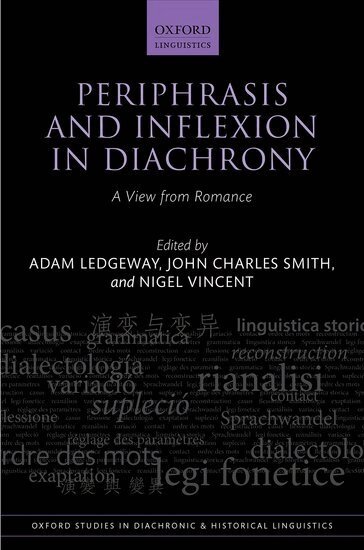
Periphrasis and Inflexion in Diachrony
A View from Romance
Av Adam Ledgeway, John Charles Smith m. fl.
Inbunden, 2022
1990 kr
Lägg i varukorg
This volume brings together contributions from leading specialists in syntax and morphology to explore the complex relation between periphrasis and inflexion from both a synchronic and diachronic perspective. The chapters draw on data from across the Romance language family, including standard and …
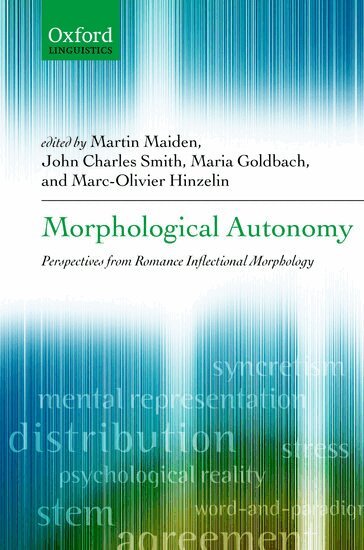
Morphological Autonomy
Perspectives From Romance Inflectional Morphology
Av Martin Maiden, Martin Maiden m. fl.
Inbunden, 2011
2886 kr
Lägg i varukorg
This book is about the nature of morphology and its place in the structure of grammar. Drawing on a wide range of aspects of Romance inflectional morphology, leading scholars present detailed arguments for the autonomy of morphology, ie morphology has phenomena and mechanisms of its own that are …
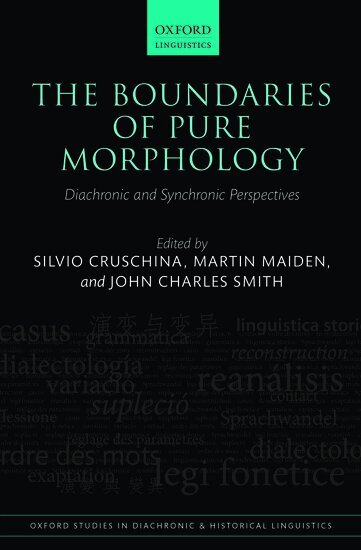
The Boundaries of Pure Morphology
Diachronic and Synchronic Perspectives
Av Silvio Cruschina, Martin Maiden m. fl.
Inbunden, 2013
2357 kr
Lägg i varukorg
This book brings together leading international scholars to consider whether in some languages there are phenomena which are unique to morphology, determined neither by phonology or syntax. Central to these phenomena is the notion of the 'morphome', conceived by Mark Aronoff in 1994 as a function, …
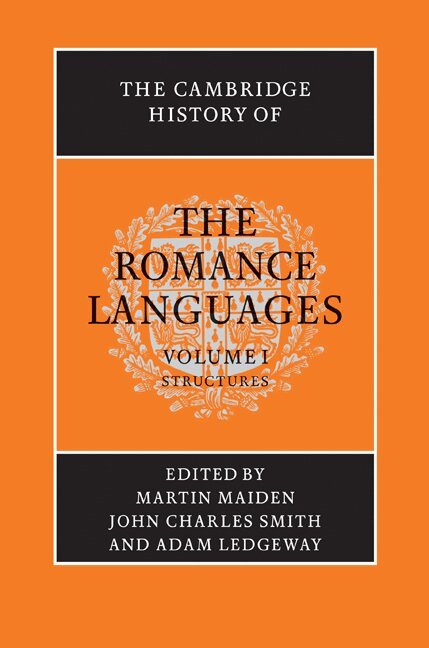
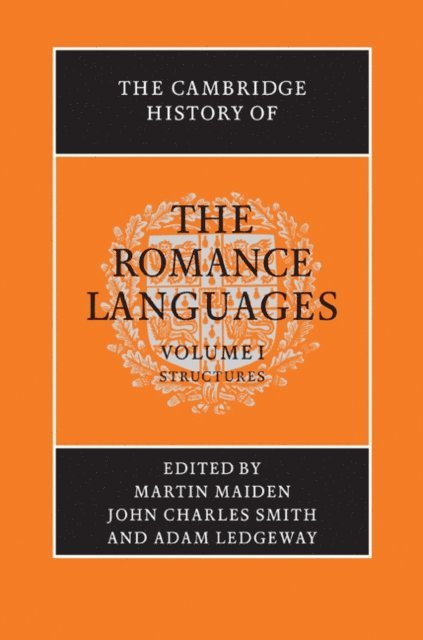
The Cambridge History of the Romance Languages: Volume 1, Structures
Av Adam Ledgeway, Martin Maiden m. fl.
Inbunden, 2010
3674 kr
Lägg i varukorg
This Cambridge History is the most comprehensive survey of the history of the Romance languages ever published in English. It engages with new and original topics that reflect wider-ranging comparative concerns, such as the relation between diachrony and synchrony, morphosyntactic typology, …
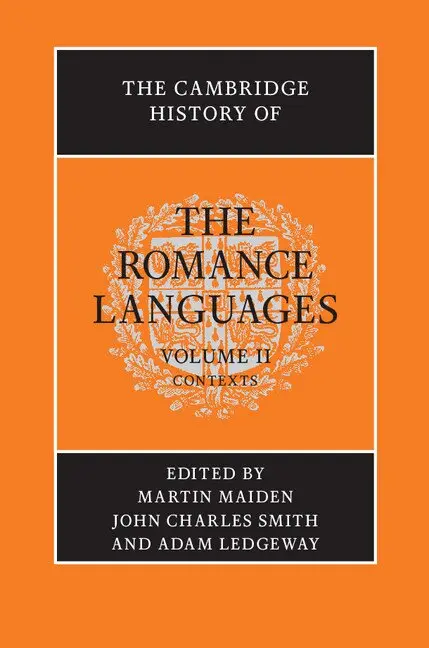
Cambridge History of the Romance Languages: Volume 2, Contexts
Av Adam Ledgeway, John Charles Smith m. fl.
E-bok, 2013
537 kr
Lägg i varukorg
What is the origin of the Romance languages and how did they evolve? When and how did they become different from Latin, and from each other? Volume 2 of The Cambridge History of the Romance Languages offers fresh and original reflections on the principal questions and issues in the comparative …
Cambridge History of the Romance Languages: Volume 2, Contexts
Av Adam Ledgeway, John Charles Smith m. fl.
E-bok, 2013
537 kr
Lägg i varukorg
What is the origin of the Romance languages and how did they evolve? When and how did they become different from Latin, and from each other? Volume 2 of The Cambridge History of the Romance Languages offers fresh and original reflections on the principal questions and issues in the comparative …
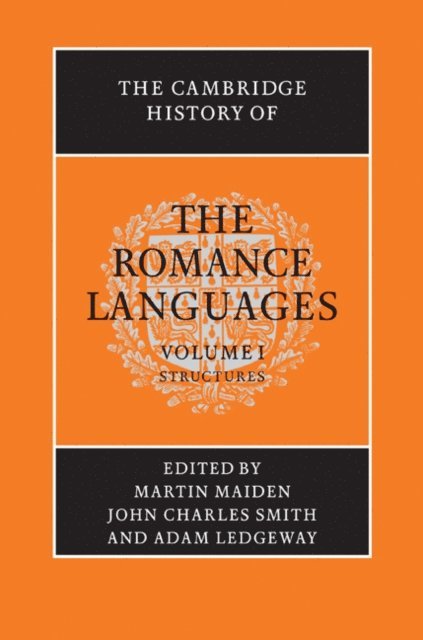
Cambridge History of the Romance Languages: Volume 1, Structures
Av Adam Ledgeway, John Charles Smith m. fl.
E-bok, 2010
526 kr
Lägg i varukorg
This Cambridge History is the most comprehensive survey of the history of the Romance languages ever published in English. It engages with new and original topics that reflect wider-ranging comparative concerns, such as the relation between diachrony and synchrony, morphosyntactic typology, …
Cambridge History of the Romance Languages: Volume 1, Structures
Av Adam Ledgeway, John Charles Smith m. fl.
E-bok, 2010
537 kr
Lägg i varukorg
This Cambridge History is the most comprehensive survey of the history of the Romance languages ever published in English. It engages with new and original topics that reflect wider-ranging comparative concerns, such as the relation between diachrony and synchrony, morphosyntactic typology, …
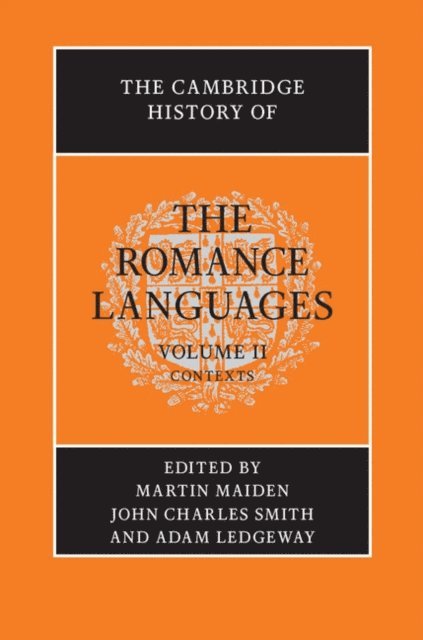
The Cambridge History of the Romance Languages: Volume 2, Contexts
Av Martin Maiden, John Charles Smith m. fl.
Inbunden, 2013
2457 kr
Tillfälligt slut
What is the origin of the Romance languages and how did they evolve? When and how did they become different from Latin, and from each other? Volume 2 of The Cambridge History of the Romance Languages offers fresh and original reflections on the principal questions and issues in the comparative …