John Cyril Barton - Böcker
Visar alla böcker från författaren John Cyril Barton. Handla med fri frakt och snabb leverans.
3 produkter
3 produkter
877 kr
Skickas inom 10-15 vardagar
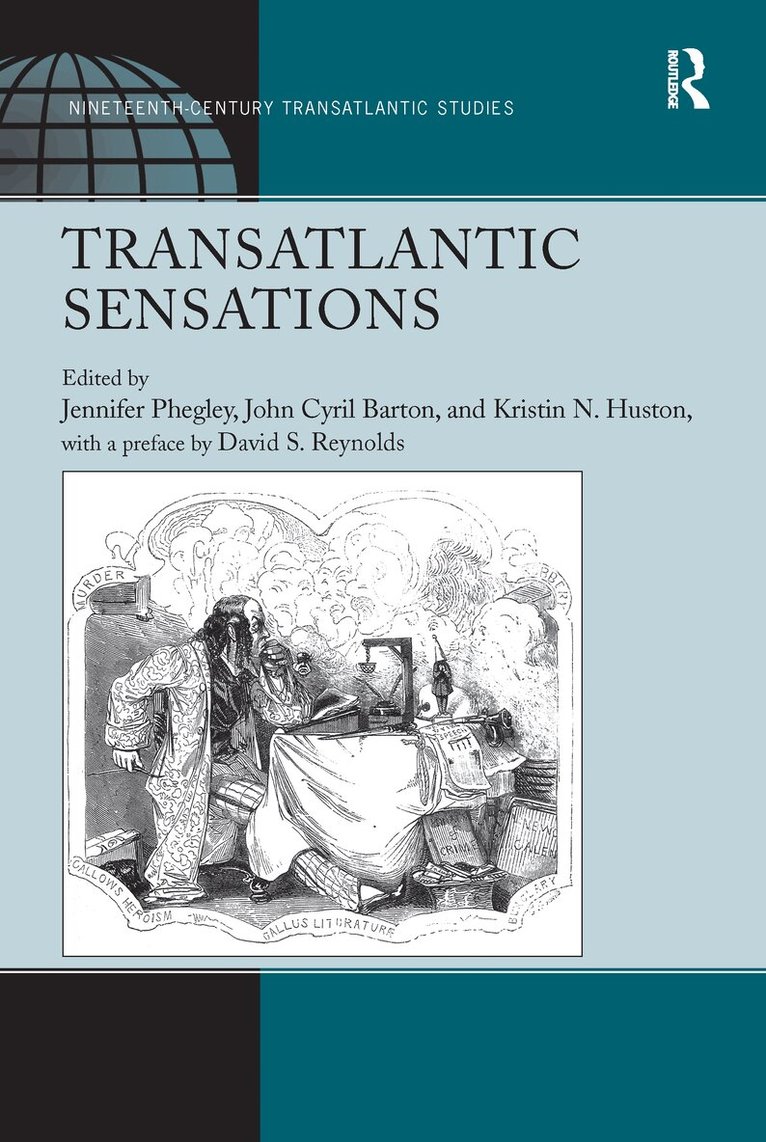
Bringing together sensation writing and transatlantic studies, this collection makes a convincing case for the symbiotic relationship between literary works on both sides of the Atlantic. Transatlantic Sensations begins with the 'prehistories' of the genre, looking at the dialogue and debate generated by the publication of sentimental and gothic fiction by William Godwin, Susanna Rowson, and Charles Brockden Brown.Thus establishing a context for the treatment of works by Louisa May Alcott, Mary Elizabeth Braddon, Dion Boucicault, Wilkie Collins, Charles Dickens, George Lippard, Charles Reade, Harriet Beecher Stowe and George Thompson, the volumetakes up a wide range of sensational topics including sexuality, slavery, criminal punishment, literary piracy, mesmerism, and the metaphors of foreign literary invasion and diseased reading. Concluding essays offer a reassessment of the realist and domestic fiction of George Eliot, Charlotte Yonge, and Thomas Hardy in the context of transatlantic sensationalism, emphasizing the evolution of the genre throughout the century and mapping a new transatlantic lineage for this immensely popular literary form. The book's final essay examines an international kidnapping case that was a journalistic sensation at the turn of the twentieth century.
2 492 kr
Skickas inom 10-15 vardagar
Bringing together sensation writing and transatlantic studies, this collection makes a convincing case for the symbiotic relationship between literary works on both sides of the Atlantic. Transatlantic Sensations begins with the 'prehistories' of the genre, looking at the dialogue and debate generated by the publication of sentimental and gothic fiction by William Godwin, Susanna Rowson, and Charles Brockden Brown.Thus establishing a context for the treatment of works by Louisa May Alcott, Mary Elizabeth Braddon, Dion Boucicault, Wilkie Collins, Charles Dickens, George Lippard, Charles Reade, Harriet Beecher Stowe and George Thompson, the volumetakes up a wide range of sensational topics including sexuality, slavery, criminal punishment, literary piracy, mesmerism, and the metaphors of foreign literary invasion and diseased reading. Concluding essays offer a reassessment of the realist and domestic fiction of George Eliot, Charlotte Yonge, and Thomas Hardy in the context of transatlantic sensationalism, emphasizing the evolution of the genre throughout the century and mapping a new transatlantic lineage for this immensely popular literary form. The book's final essay examines an international kidnapping case that was a journalistic sensation at the turn of the twentieth century.
562 kr
Tillfälligt slut
Drawing from legal and extralegal discourse but focusing on imaginative literature, Literary Executions examines representations of, responses to, and arguments for and against the death penalty in the United States over the long nineteenth century. John Cyril Barton creates a generative dialogue between artistic relics and legal history. He looks to novels, short stories, poems, and creative nonfiction as well as legislative reports, trial transcripts, legal documents, newspaper and journal articles, treatises, and popular books (like The Record of Crimes, A Defence of Capital Punishment, and The Gallows, the Prison, and the Poor House), all of which were part of the debate over the death penalty. Barton focuses on several canonical figures-James Fenimore Cooper, Nathaniel Hawthorne, Lydia Maria Child, Walt Whitman, Herman Melville, and Theodore Dreiser - and offers new readings of their work in light of the death penalty controversy.Barton also gives close attention to a host of then-popular-but-now-forgotten writers - particularly John Neal, Slidell MacKenzie, William Gilmore Simms, Sylvester Judd, and George Lippard - whose work helped shape or was shaped by the influential anti-gallows movement. Analyzing the tension between sovereignty and social responsibility in a democratic republic, Barton argues that the high stakes of capital punishment dramatize the confrontation between the citizen-subject and sovereign authority in its starkest terms. In bringing together the social and the aesthetic, Barton shows how legal forms informed literary forms and traces the emergence of the modern State in terms of the administration of lawful death. By engaging the politics and poetics of capital punishment, Literary Executions contends that the movement to abolish the death penalty in the United States should be seen as an important part of the context that brought about the flowering of the American Renaissance during the antebellum period and that influenced literature later in the nineteenth and early twentieth centuries.