John Dugard - Böcker
Visar alla böcker från författaren John Dugard. Handla med fri frakt och snabb leverans.
7 produkter
7 produkter
1 132 kr
Skickas inom 7-10 vardagar
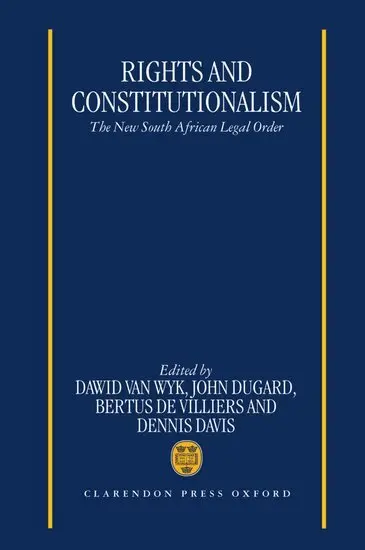
This major work written by prominent South African academics is an introduction to the new constitutional order in South Africa. It places fundamental rights as affirmed in Chapter 3 of the South African Constitution in a comparative and international context. The authors draw heavily on the constitutional experience of countries such as Canada, India, Germany, and the United States, which greatly influenced the drafting of Chapter 3 of the Constitution. The study is shaped by principles that form the foundation of the new order: the supremacy of the Constitution, the notion of a democratic constitutional state, and the judicial protection of fundamental rights.The book is divided into four parts. The first deals with constitutionalism, democracy, and constitutional interpretation. The second part provides an examination of the historical background of the 1993 Constitution and a description of the principal features of the Constitution. The third part contains an analysis of the key fundamental rights which constitutes the main purpose of the study. Detailed treatment is given to civil and political rights, social and economic rights, the concepts of equality and administrative justice, and the circumstances in which limitations may be imposed on rights. A separate chapter is devoted to the international protection of human rights as directed by Section 35(1) of the Constitution. The final part comprises a bibliography of the works cited in the text following the sequence of the chapters.This is a book which will be of interest to all constitutional law specialists and to many political scientists, particularly those with an interest in constitutionalism and constitutional litigation.
2 138 kr
Skickas inom 5-8 vardagar
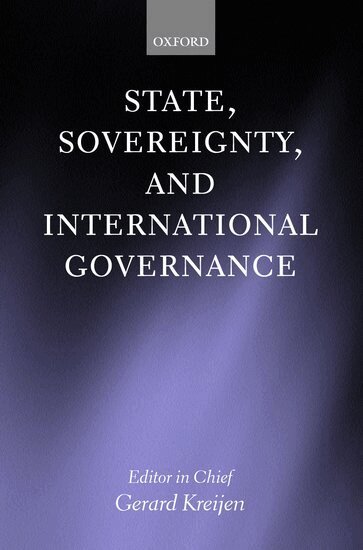
How can the international community respond to states that fail to respect fundamental rules of international law? Does a state that collapses into anarchy lose its sovereignty? Does the increasingly important role of non-state actors at the international level diminish the role of sovereign states in international law? Is it possible to design more speedy and effective decision-making procedures to deal with global problems?Finding answers to these questions requires a reconsideration of what constitutes the core of present-day international law. State sovereignty has always been regarded as the backbone of international law but is its importance now diminishing? In order to shed some light on these issues, the editors have brought together a number of leading authorities and up-and-coming young scholars to reflect on these questions, and in particular on the question of the role of state sovereignty in present-day international law. Although the contributors have chosen quite different approaches to these issues, none of them regards the sovereignty of the State as something of the past. However they do conclude that sovereignty can no longer be defined independently of the basic needs and values of the international community as a whole. A new balance has to be found between the power of the sovereign State and the powers of the international community in creating a stable and just international order.
669 kr
Skickas inom 7-10 vardagar
As an Advocate of the Supreme Court, John Dugard observes the South African legal order daily in operation. In this book he provides a thorough description and probing analysis of the workings of the system. He places South Africa's legal order in a comparative context, examining the climate of legal opinion, crucial judicial decisions, and their significance in relation to contemporary thought and practice in England, America, and elsewhere. He also considers South Africa's laws in the light of its history, politics, and culture. Originally published in 1978. The Princeton Legacy Library uses the latest print-on-demand technology to again make available previously out-of-print books from the distinguished backlist of Princeton University Press. These editions preserve the original texts of these important books while presenting them in durable paperback and hardcover editions. The goal of the Princeton Legacy Library is to vastly increase access to the rich scholarly heritage found in the thousands of books published by Princeton University Press since its founding in 1905.
2 962 kr
Skickas inom 3-6 vardagar
As an Advocate of the Supreme Court, John Dugard observes the South African legal order daily in operation. In this book he provides a thorough description and probing analysis of the workings of the system. He places South Africa's legal order in a comparative context, examining the climate of legal opinion, crucial judicial decisions, and their significance in relation to contemporary thought and practice in England, America, and elsewhere. He also considers South Africa's laws in the light of its history, politics, and culture. Originally published in 1978. The Princeton Legacy Library uses the latest print-on-demand technology to again make available previously out-of-print books from the distinguished backlist of Princeton University Press. These editions preserve the original texts of these important books while presenting them in durable paperback and hardcover editions. The goal of the Princeton Legacy Library is to vastly increase access to the rich scholarly heritage found in the thousands of books published by Princeton University Press since its founding in 1905.
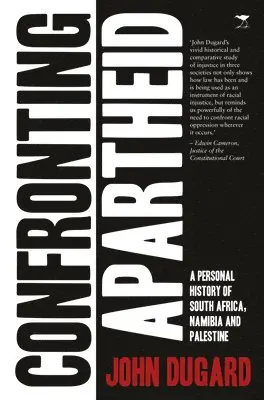
Confronting apartheid
A personal history of South Africa, Namibia and Palestine
Häftad, Engelska, 2018
246 kr
Tillfälligt slut
Most personal histories of apartheid in Southern Africa tell the story of the armed struggle. This book is about opposition to apartheid within the law and through the law. South Africa achieved notoriety for its apartheid policies and practices both in the country and in Namibia. Today Israel stands accused of applying apartheid in the Palestinian territories it has occupied since 1967. Confronting Apartheid examines the regimes of these three societies from the perspective of the author's experiences as a human rights lawyer in South Africa and Namibia and as a UN human rights envoy in occupied Palestine. John Dugard describes the work he undertook in defense of human rights in South West Africa/Namibia, South Africa, and more recently in occupied Palestine.
658 kr
Skickas inom 5-8 vardagar
This fifth edition of International Law: A South African Perspective is now titled Dugard's International Law: A South African Perspective, in recognition of the fact that this work is a continuation of the earlier editions written by John Dugard. The substance of the work has undergone major changes to take account of new developments both on the international legal scene and in South Africa. Dugard's International Law: A South African Perspective presents a South African perspective of international law. The basic principles of international law are described and examined with reference to the principal sources of international law. This examination, however, takes place within the context of South African law. South African state practice, judicial decisions and legislation on international law receive equal trea tment with international law as it is practised and taught abroad.
1 463 kr
Skickas inom 10-15 vardagar
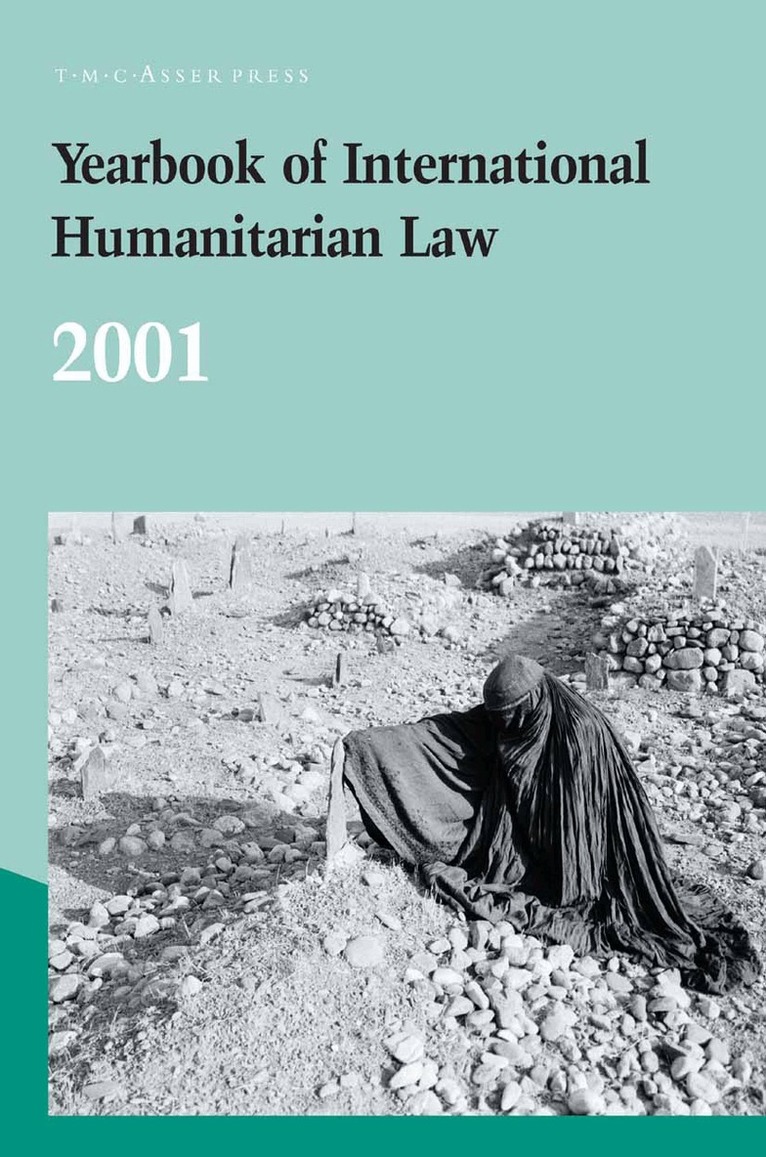
The defining moments of 2001, the terrorist attacks of September 11 against the UnitedStatesofAmerica,markedaturningpointininternational lawandrelations. Bytheirscaleandaudaciousness, overnighttheyhelpedtopropeltheissueofint- national terrorism to the top of the international security agenda and particularly that of the USA, with consequences for many branches of international law, including the jus ad bellum, the jus in bello, international law relating to terrorism, international human rights law and international criminal law, that were just beginning to be felt as the year closed. The September 11 attacks were immediately characterised by the United States 3 as an act of war,an armed attack on such ascale asto constitute an armed conflict. Its immediate response was to declare a so-called 'Global War on Terrorism'. Avowedly acting in self-defense, on 7 October the US launched armed attacks against Afghanistan, notbecause Afghanistan wasconsidered tobelegally resp- sible for the September 11 attacks but for harbouring and refusing to surrender members of Al Qaeda, including its leader, Osama Bin Laden, and refusing to dismantle terrorist training camps.Although the main target of the attacks was Al Qaeda, the armed conflict that ensued was an international armed conflict between the US and its allies and the state of Afghanistan, notwithstanding that the US never recognised the Taleban as the government of Afghanistan.