John Dupré – författare
Visar alla böcker från författaren John Dupré. Handla med fri frakt och snabb leverans.
18 produkter
18 produkter
Inbunden, Engelska, 2007
760 kr
Skickas inom 5-8 vardagar
It has long been thought that science is our best hope for realizing objective knowledge, but that, to deliver on this promise, it must be value free. Things are not so simple, however, as recent work in science studies makes clear. The contributors to this volume investigate where and how values are involved in science, and examine the implications of this involvement for ideals of objectivity.
Häftad, Engelska, 2014
412 kr
Skickas inom 5-8 vardagar
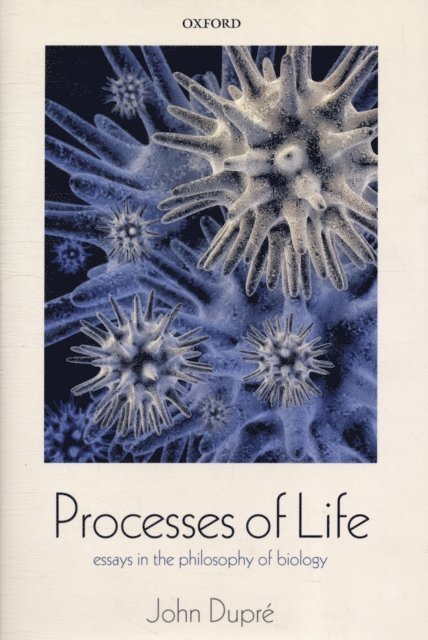
John Dupré explores recent revolutionary developments in biology and considers their relevance for our understanding of human nature and human society. Epigenetics and related areas of molecular biology have eroded the exceptional status of the gene and presented the genome as fully interactive with the rest of the cell. Developmental systems theory provides a space for a vision of evolution that takes full account of the fundamental importance of developmental processes. Dupré shows the importance of microbiology for a proper understanding of the living world, and reveals how it subverts such basic biological assumptions as the organisation of biological kinds on a branching tree of life, and the simple traditional conception of the biological organism. These topics are considered in the context of a view of science as realistically grounded in the natural order, but at the same time as pluralistic and inextricably integrated within a social and normative context. The volume includes a section that recapitulates and expands some of the author's general views on science; a section addressing a range of topics in biology, including the significance of genomics, the nature of the organism and the current status of evolutionary theory; and a section exploring some implications of contemporary biology for humans, for example on the reality or unreality of human races, and the plasticity of human nature.
Inbunden, Engelska, 2018
1 286 kr
Skickas inom 5-8 vardagar
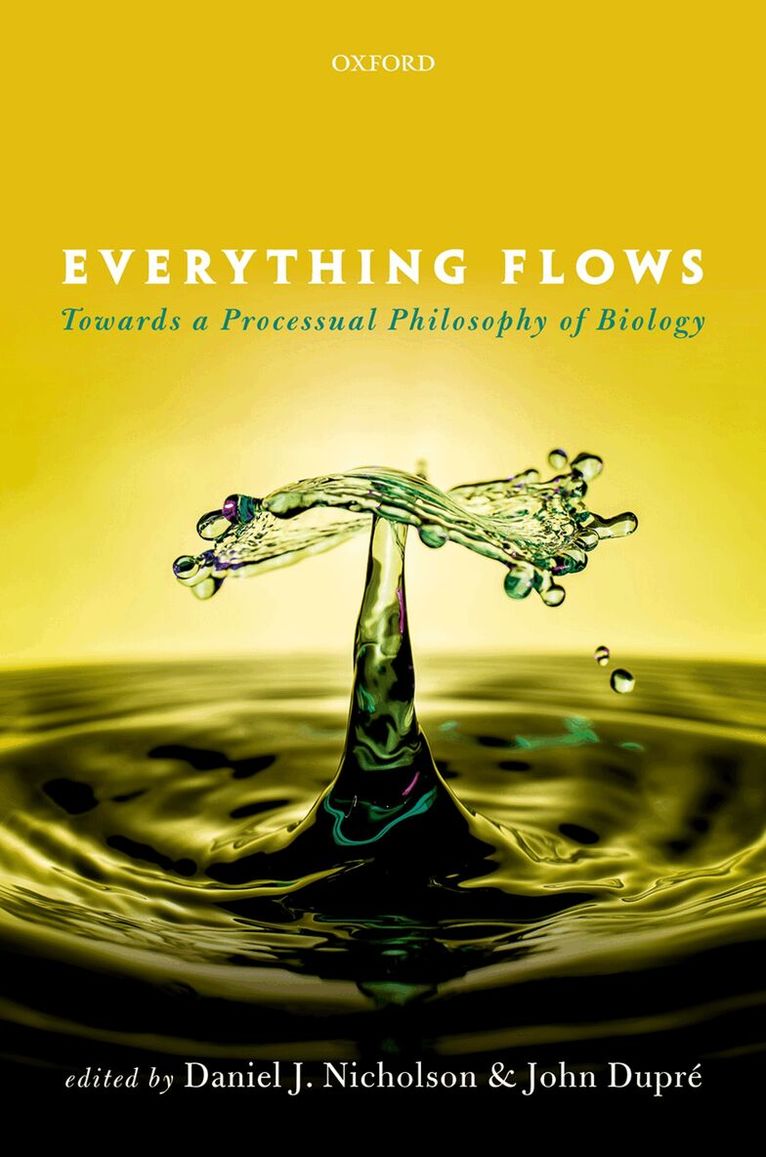
This is an open access title available under the terms of a CC BY-NC-ND 4.0 International licence. It is free to read at Oxford Scholarship Online and offered as a free PDF download from OUP and selected open access locations. Everything Flows explores the metaphysical thesis that the living world is not made up of substantial particles or things, as has often been supposed, but is rather constituted by processes. The biological domain is organised as an interdependent hierarchy of processes, which are stabilized and actively maintained at different timescales. Even entities that intuitively appear to be paradigms of things, such as organisms, are actually better understood as processes. Unlike previous attempts to articulate processual views of biology, which have tended to use Alfred North Whitehead's panpsychist metaphysics as a foundation, this book takes a naturalistic approach to metaphysics. It submits that the main motivations for replacing an ontology of substances with one of processes are to be found in the empirical findings of science. Biology provides compelling reasons for thinking that the living realm is fundamentally dynamic, and that the existence of things is always conditional on the existence of processes. The phenomenon of life cries out for theories that prioritise processes over things, and it suggests that the central explanandum of biology is not change but rather stability, or more precisely, stability attained through constant change. This edited volume brings together philosophers of science and metaphysicians interested in exploring the prospects of a processual philosophy of biology. The contributors draw on an extremely wide range of biological case studies, and employ a process perspective to cast new light on a number of traditional philosophical problems, such as identity, persistence, and individuality.
Inbunden, Engelska, 2025
999 kr
Skickas inom 5-8 vardagar
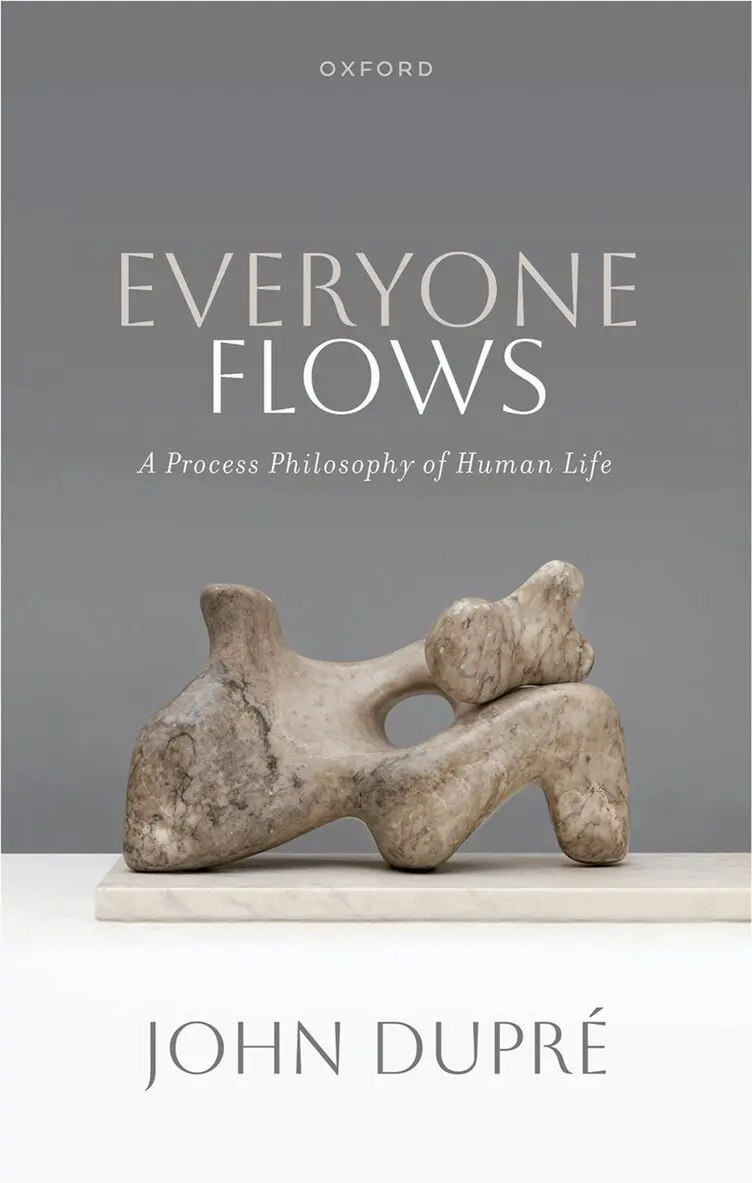
Everyone Flows starts with an ancient and fundamental philosophical question: whether we live in a world of things, stable, autonomous, and with sharp boundaries, or a world of processes in flux, in which stabilities are only transient and processes are inextricably intertwined with one another. The first three chapters of the book make a forceful argument for the latter view, especially as applied to living beings. Special attention is given to organisms and lineages as processes, the latter being the processes in which evolution occurs. Lineages generate organisms, but organisms compose lineages, illustrating the deep hierarchical interconnections of the world of process. The interconnectedness of life is amplified with an extended consideration of the omnipresence of symbiosis, and some reflections on the processual character of the pregnant mammal.The final three chapters of the book apply the processual view of nature to problems more specific to the human. A starting point here is the uniqueness of the human lineage, in respect of its sociality and behavioural plasticity, which together enable a unique division of labour, and also in respect of the extent and complexity of the niche that humans have constructed for their occupation. It is shown that the processual perspective on the human organism and lineage offers surprising and radical insights into topics including the nature of personal identity, the possibility of indefinite life extension, human nature, human classifications (including those provided by race and gender), and freedom of the will.
Häftad, Engelska, 2025
252 kr
Skickas inom 7-10 vardagar
Everyone Flows starts with an ancient and fundamental philosophical question: whether we live in a world of things, stable, autonomous, and with sharp boundaries, or a world of processes in flux, in which stabilities are only transient and processes are inextricably intertwined with one another. The first three chapters of the book make a forceful argument for the latter view, especially as applied to living beings. Special attention is given to organisms and lineages as processes, the latter being the processes in which evolution occurs. Lineages generate organisms, but organisms compose lineages, illustrating the deep hierarchical interconnections of the world of process. The interconnectedness of life is amplified with an extended consideration of the omnipresence of symbiosis, and some reflections on the processual character of the pregnant mammal.The final three chapters of the book apply the processual view of nature to problems more specific to the human. A starting point here is the uniqueness of the human lineage, in respect of its sociality and behavioural plasticity, which together enable a unique division of labour, and also in respect of the extent and complexity of the niche that humans have constructed for their occupation. It is shown that the processual perspective on the human organism and lineage offers surprising and radical insights into topics including the nature of personal identity, the possibility of indefinite life extension, human nature, human classifications (including those provided by race and gender), and freedom of the will.
Inbunden, Engelska, 2001
1 453 kr
Skickas inom 5-8 vardagar
John Dupré warns that our understanding of human nature is being distorted by two faulty and harmful forms of pseudo-scientific thinking. Not just in the academic world but increasingly in everyday life, we find one set of experts seeking to explain the ends at which humans aim in terms of evolutionary theory, and another set of experts using economic models to give rules of how we act to achieve those ends. Dupré charges this unholy alliance of evolutionary psychologists and rational-choice theorists with scientific imperialism: they use methods and ideas developed for one domain of inquiry in others where they are inappropriate. He demonstrates that these theorists' explanations do not work, and furthermore that if taken seriously their theories tend to have dangerous social and political consequences. For these reasons, it is important to resist scientism - an exaggerated conception of what science can be expected to do for us. To say this is in no way to be against science - just against bad science. Dupré restores sanity to the study of human nature by pointing the way to a proper understanding of humans in the societies that are our natural and necessary environments. He shows how our distinctively human capacities are shaped by the social contexts in which we are embedded. And he concludes with a bold challenge to one of the intellectual touchstones of modern science: the idea of the universe as causally complete and deterministic. In an impressive rehabilitation of the idea of free human agency, he argues that far from being helpless cogs in a mechanistic universe, humans are rare concentrations of causal power in a largely indeterministic world. Human Nature and the Limits of Science is a provocative, witty, and persuasive corrective to scientism. In its place, Dupré commends a pluralistic approach to science, as the appropriate way to investigate a universe that is not unified in form. Anyone interested in science and human nature will enjoy this book, unless they are its targets.
Häftad, Engelska, 2003
633 kr
Skickas inom 5-8 vardagar
John Dupré warns that our understanding of human nature is being distorted by two faulty and harmful forms of pseudo-scientific thinking. Not just in the academic world but increasingly in everyday life, we find one set of experts seeking to explain the ends at which humans aim in terms of evolutionary theory, and another set of experts using economic models to give rules of how we act to achieve those ends. Dupré charges this unholy alliance of evolutionary psychologists and rational-choice theorists with scientific imperialism: they use methods and ideas developed for one domain of inquiry in others where they are inappropriate. He demonstrates that these theorists' explanations do not work, and furthermore that if taken seriously their theories tend to have dangerous social and political consequences. For these reasons, it is important to resist scientism - an exaggerated conception of what science can be expected to do for us. To say this is in no way to be against science - just against bad science. Dupré restores sanity to the study of human nature by pointing the way to a proper understanding of humans in the societies that are our natural and necessary environments. He shows how our distinctively human capacities are shaped by the social contexts in which we are embedded. And he concludes with a bold challenge to one of the intellectual touchstones of modern science: the idea of the universe as causally complete and deterministic. In an impressive rehabilitation of the idea of free human agency, he argues that far from being helpless cogs in a mechanistic universe, humans are rare concentrations of causal power in a largely indeterministic world. Human Nature and the Limits of Science is a provocative, witty, and persuasive corrective to scientism. In its place, Dupré commends a pluralistic approach to science, as the appropriate way to investigate a universe that is not unified in form. Anyone interested in science and human nature will enjoy this book, unless they are its targets.
Häftad, Engelska, 2005
310 kr
Skickas inom 3-6 vardagar
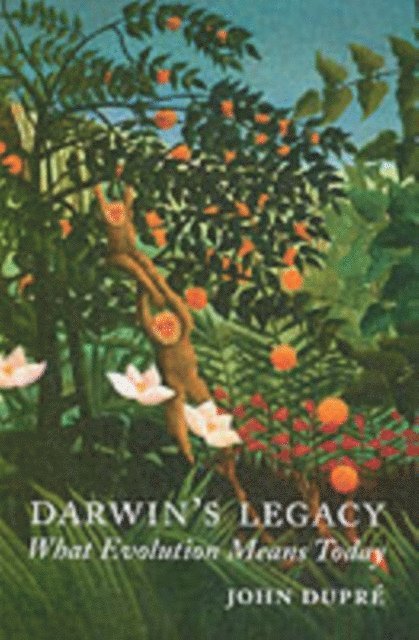
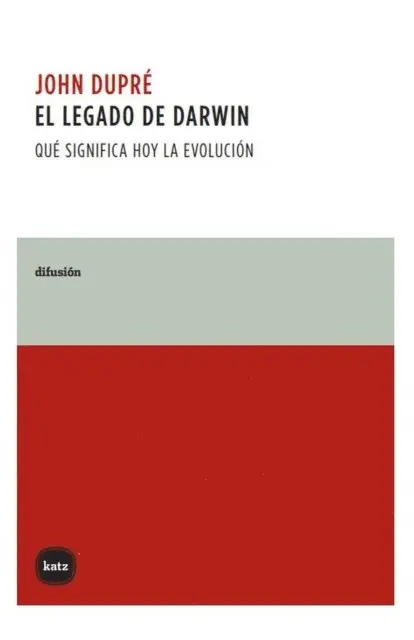
Charles Darwin transformed our understanding of the universe and our place in it with his development of the theory of evolution. 150 years later, we are still puzzling over the implications. John Dupré presents a lucid, witty introduction to evolution and what it means for our view of humanity, the natural world, and religion. He explains the right and the wrong ways to understand evolution: in the latter category fall most of the claims of evolutionary psychology, of which Dupré gives a withering critique. He shows why the theory of evolution is one of the most important scientific ideas of all time, but makes clear that it can't explain everything - contrary to widespread popular belief, it has very little to tell us about the details of human nature and human behaviour, such as language, culture, and sexuality.Darwin's Legacy clears a path through the confusion and controversy surrounding evolution; anyone who is interested in understanding what the theory of evolution can and can't do will find this a compelling and enjoyable introduction.
Inbunden, Engelska, 2012
1 028 kr
Skickas inom 5-8 vardagar
John Dupré explores recent revolutionary developments in biology and considers their relevance for our understanding of human nature and human society. Epigenetics and related areas of molecular biology have eroded the exceptional status of the gene and presented the genome as fully interactive with the rest of the cell. Developmental systems theory provides a space for a vision of evolution that takes full account of the fundamental importance of developmental processes. Dupré shows the importance of microbiology for a proper understanding of the living world, and reveals how it subverts such basic biological assumptions as the organisation of biological kinds on a branching tree of life, and the simple traditional conception of the biological organism. These topics are considered in the context of a view of science as realistically grounded in the natural order, but at the same time as pluralistic and inextricably integrated within a social and normative context. The volume includes a section that recapitulates and expands some of the author's general views on science; a section addressing a range of topics in biology, including the significance of genomics, the nature of the organism and the current status of evolutionary theory; and a section exploring some implications of contemporary biology for humans, for example on the reality or unreality of human races, and the plasticity of human nature.
Häftad, Engelska, 2013
155 kr
Skickas inom 5-8 vardagar
In 2003 the Human Genome Project announced that it had achieved a stunning scientific breakthrough: the full map of the human genome, and with it our first complete picture of the basic building block of human life. Since then, boasts about the benefits - and warnings of the dangers - of genomics have remained front-page news. For the nonscientist, the claims and counterclaims are dizzying - what does it really mean to understand the genome? Barry Barnes and John Dupre offer an answer to that question and many more in "Genomes and What to Make of Them", a clear and lively account of the genomic revolution and its promise. The book opens with a brief history of the science of genetics and genomics, from Mendel to Watson and Crick and all the way up to Craig Venter; from there the authors delve into the use of genomics in determining evolutionary paths. Barnes and Dupre then consider both the power and risks of genetics, from the economic potential of plant genomes to overblown claims that certain human genes can be directly tied to such traits as intelligence or homosexuality.Ultimately, the authors argue, we are now living with a new knowledge as powerful in its way as nuclear physics, and the stark choices that face us - between biological warfare and gene therapy, a new eugenics or a new agricultural revolution - will demand the full engagement of both scientists and citizens.
Inbunden, Engelska, 2008
229 kr
Skickas inom 5-8 vardagar
The announcement in 2003 that the Human Genome Project had completed its map of the entire human genome was heralded as a stunning scientific breakthrough: our first full picture of the basic building blocks of human life. Since then, boasts about the benefits - and warnings of the dangers - of genomics have remained front-page news, with everyone agreeing that genomics has the potential to radically alter life as we know it.For the nonscientist, the claims and counterclaims are dizzying - what does it really mean to understand the genome? Barry Barnes and John Dupre offer an answer to that question and much more in "Genomes and What to Make of Them", a clear and lively account of the genomic revolution and its promise. The book opens with a brief history of the science of genetics and genomics, from Mendel to Watson and Crick and all the way up to Craig Venter; from there the authors delve into the use of genomics in determining evolutionary paths - and what it can tell us, for example, about how far we really have come from our ape ancestors.Barnes and Dupre then consider both the power and risks of genetics, from the economic potential of plant genomes to overblown claims that certain human genes can be directly tied to such traits as intelligence or homosexuality.Ultimately, the authors argue, we are now living with a new knowledge as powerful in its way as nuclear physics, and the stark choices that face us - between biological warfare and gene therapy, a new eugenics or a new agricultural revolution - will demand the full engagement of both scientists and citizens.Written in straightforward language but without denying the complexity of the issues, "Genomes and What to Make of Them" is an up-to-date primer and a blueprint for the future.
Häftad, Engelska, 2022
629 kr
Skickas inom 10-15 vardagar
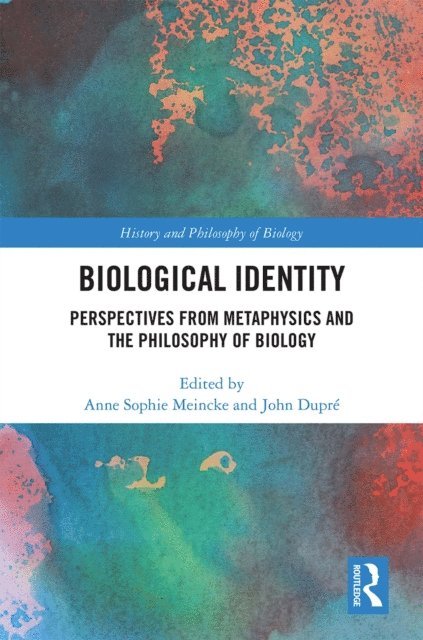
Analytic metaphysics has recently discovered biology as a means of grounding metaphysical theories. This has resulted in long-standing metaphysical puzzles, such as the problems of personal identity and material constitution, being increasingly addressed by appeal to a biological understanding of identity. This development within metaphysics is in significant tension with the growing tendency amongst philosophers of biology to regard biological identity as a deep puzzle in its own right, especially following recent advances in our understanding of symbiosis, the evolution of multi-cellular organisms and the inherently dynamical character of living systems. Moreover, and building on these biological insights, the broadly substance ontological framework of metaphysical theories of biological identity appears problematic to a growing number of philosophers of biology who invoke process ontology instead.This volume addresses this tension, exploring to what extent it can be dissolved. For this purpose, the volume presents the first selection of essays exclusively focused on biological identity and written by experts in metaphysics, the philosophy of biology and biology. The resulting cross-disciplinary dialogue paves the way for a convincing account of biological identity that is both metaphysically constructive and scientifically informed, and will be of interest to metaphysicians, philosophers of biology and theoretical biologists.
Häftad, Engelska, 1995
393 kr
Skickas inom 5-8 vardagar
The great dream of philosophers and scientists for millennia has been to give us a complete account of the order of things. A powerful articulation of such a dream in this century has been found in the idea of a unity of science. With this manifesto, John Dupré systematically attacks the ideal of scientific unity by showing how its underlying assumptions are at odds with the central conclusions of science itself. In its stead, the author gives us a metaphysics much more in keeping with what science tells us about the world. Elegantly written and compellingly argued, this provocative book will be important reading for all philosophers and scholars of science.
Inbunden, Engelska, 2020
2 151 kr
Skickas inom 10-15 vardagar
Analytic metaphysics has recently discovered biology as a means of grounding metaphysical theories. This has resulted in long-standing metaphysical puzzles, such as the problems of personal identity and material constitution, being increasingly addressed by appeal to a biological understanding of identity. This development within metaphysics is in significant tension with the growing tendency amongst philosophers of biology to regard biological identity as a deep puzzle in its own right, especially following recent advances in our understanding of symbiosis, the evolution of multi-cellular organisms and the inherently dynamical character of living systems. Moreover, and building on these biological insights, the broadly substance ontological framework of metaphysical theories of biological identity appears problematic to a growing number of philosophers of biology who invoke process ontology instead.This volume addresses this tension, exploring to what extent it can be dissolved. For this purpose, the volume presents the first selection of essays exclusively focused on biological identity and written by experts in metaphysics, the philosophy of biology and biology. The resulting cross-disciplinary dialogue paves the way for a convincing account of biological identity that is both metaphysically constructive and scientifically informed, and will be of interest to metaphysicians, philosophers of biology and theoretical biologists.
Häftad, Engelska, 2010
255 kr
Skickas inom 5-8 vardagar
Inbunden, Engelska, 2018
375 kr
Skickas inom 5-8 vardagar
Inbunden, Engelska, 2023
1 759 kr
Skickas inom 5-8 vardagar
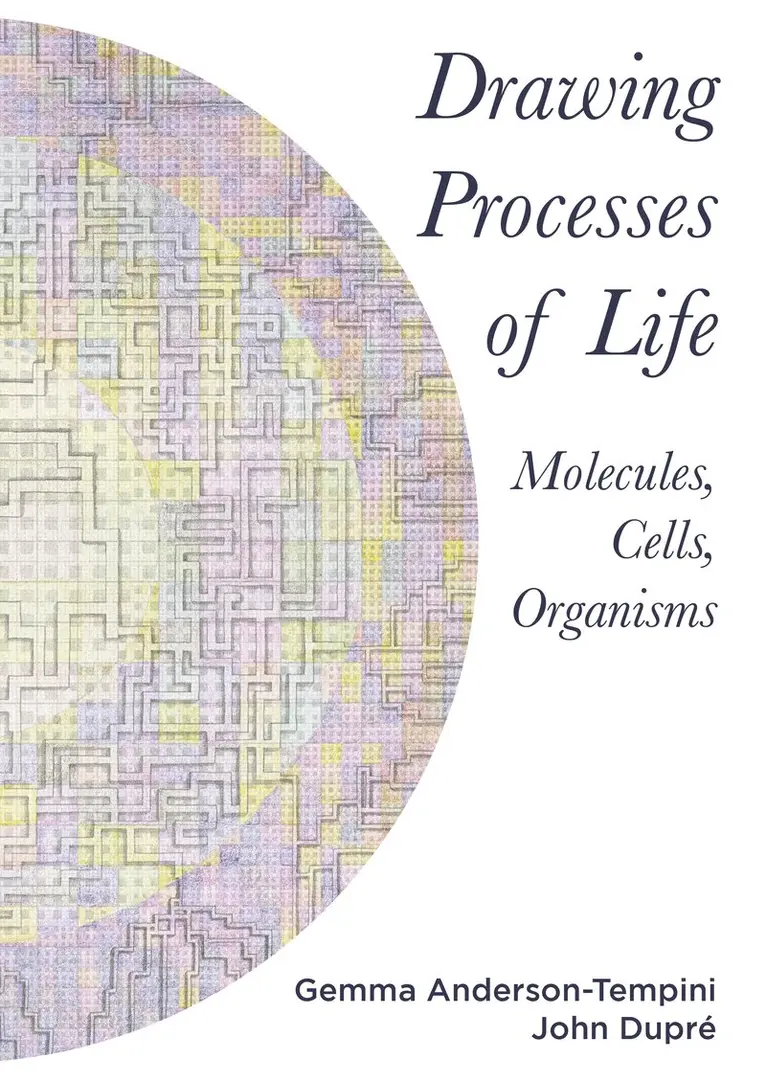
Drawing Processes of Life is the product of biologists, philosophers, and artists working together to formulate new ways of representing our new approach to life. It is a mutualistic symbiosis, where identities are transformed, information and nutritive substances shared, and where new organisms emerge. Originating from an AHRC-funded interdisciplinary project, it derives from Gemma Andersons’ work on the methodological and epistemological value of drawing as a technique in biological research and from her collaborative work on visualising living – biological – processes through artistic processes. It also draws on John Dupré’s recent work on biology as process, and the need to develop representations of biological systems that more adequately capture their processual nature. Hence the book has intertwined aims: to show how better to represent biological process through drawing and to demonstrate the scientific value of drawing as a method.The book presents this work and locates it in a broader historical and contemporary perspective on the relations between art and science. The project outcomes are interwoven with the work of leading scholars in the field. Many of these contributions also stress the problems presented by the processual nature of biological phenomena, a central focus of Anderson and Dupré’s own work.Contributors include Chiara Ambrosio, Heather Barnett, Alessio Corti, Katharina Lee Chichester, Johannes Jaeger, Wahida Khandker, Jonathan Phillips, Berta Verd, James Wakefield and Janina Wellmann. Foreword from Scott F. Gilbert, and Afterword from Sarah Gilbert and Scott F. Gilbert.The perspectives presented here constitute a powerfully integrated and vital set of themes of interest to artists, scientists, philosophers, students and post-doctoral researchers.
Häftad, Engelska, 2023
486 kr
Skickas inom 5-8 vardagar
Drawing Processes of Life is the product of biologists, philosophers, and artists working together to formulate new ways of representing our new approach to life. It is a mutualistic symbiosis, where identities are transformed, information and nutritive substances shared, and where new organisms emerge. Originating from an AHRC-funded interdisciplinary project, it derives from Gemma Andersons’ work on the methodological and epistemological value of drawing as a technique in biological research and from her collaborative work on visualising living – biological – processes through artistic processes. It also draws on John Dupré’s recent work on biology as process, and the need to develop representations of biological systems that more adequately capture their processual nature. Hence the book has intertwined aims: to show how better to represent biological process through drawing and to demonstrate the scientific value of drawing as a method.The book presents this work and locates it in a broader historical and contemporary perspective on the relations between art and science. The project outcomes are interwoven with the work of leading scholars in the field. Many of these contributions also stress the problems presented by the processual nature of biological phenomena, a central focus of Anderson and Dupré’s own work.Contributors include Chiara Ambrosio, Heather Barnett, Alessio Corti, Katharina Lee Chichester, Johannes Jaeger, Wahida Khandker, Jonathan Phillips, Berta Verd, James Wakefield and Janina Wellmann. Foreword from Scott F. Gilbert, and Afterword from Sarah Gilbert and Scott F. Gilbert.The perspectives presented here constitute a powerfully integrated and vital set of themes of interest to artists, scientists, philosophers, students and post-doctoral researchers.