John E. Drabinski - Böcker
Visar alla böcker från författaren John E. Drabinski. Handla med fri frakt och snabb leverans.
16 produkter
16 produkter
552 kr
Skickas inom 3-6 vardagar
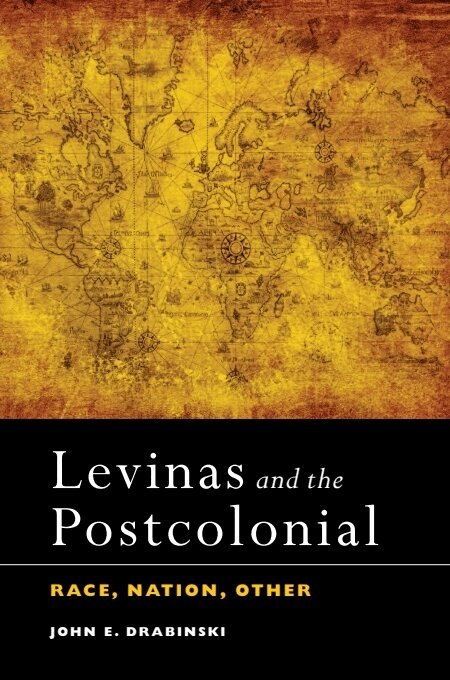
The idea of the Other is central to both Levinas' philosophy and to postcolonialism, but they both apply the concept in different ways. Now, John Drabinski asks what we can learn from reading Levinas alongside postcolonial theories of difference. Drawing on the works of Gayatri Spivak, Homi Bhabha, Edouard Glissant and Subcommandante Marcos, he rethinks ideas of difference, language, subjectivity, ethics and politics.
1 057 kr
Tillfälligt slut
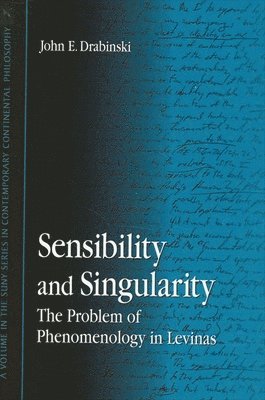
Establishes the importance of Husserl's phenomenology for Levinas's ethics.Is Emmanuel Levinas a dismissive critic of Husserlian phenomenology, or an important member of its movement? The standard account of Levinas's work assumes his distance from Husserl. In opposition to this account, Sensibility and Singularity contends that Husserl was a vital, living resource for Levinas throughout his philosophical career. The singularity of the Other is the centerpiece of Levinas's thought. The philosophical significance of this singularity, however, cannot be fully appreciated without attending to Levinas's transformation of the Husserlian themes of time, materiality, intentionality, and sense. This book documents those transformations and establishes their centrality to Levinas's notion of ethics. What emerges from this reading is a thorough account of Levinas's constant and productive debate with the Husserlian tradition of phenomenology.
382 kr
Tillfälligt slut
Establishes the importance of Husserl's phenomenology for Levinas's ethics.Is Emmanuel Levinas a dismissive critic of Husserlian phenomenology, or an important member of its movement? The standard account of Levinas's work assumes his distance from Husserl. In opposition to this account, Sensibility and Singularity contends that Husserl was a vital, living resource for Levinas throughout his philosophical career. The singularity of the Other is the centerpiece of Levinas's thought. The philosophical significance of this singularity, however, cannot be fully appreciated without attending to Levinas's transformation of the Husserlian themes of time, materiality, intentionality, and sense. This book documents those transformations and establishes their centrality to Levinas's notion of ethics. What emerges from this reading is a thorough account of Levinas's constant and productive debate with the Husserlian tradition of phenomenology.
419 kr
Skickas inom 7-10 vardagar
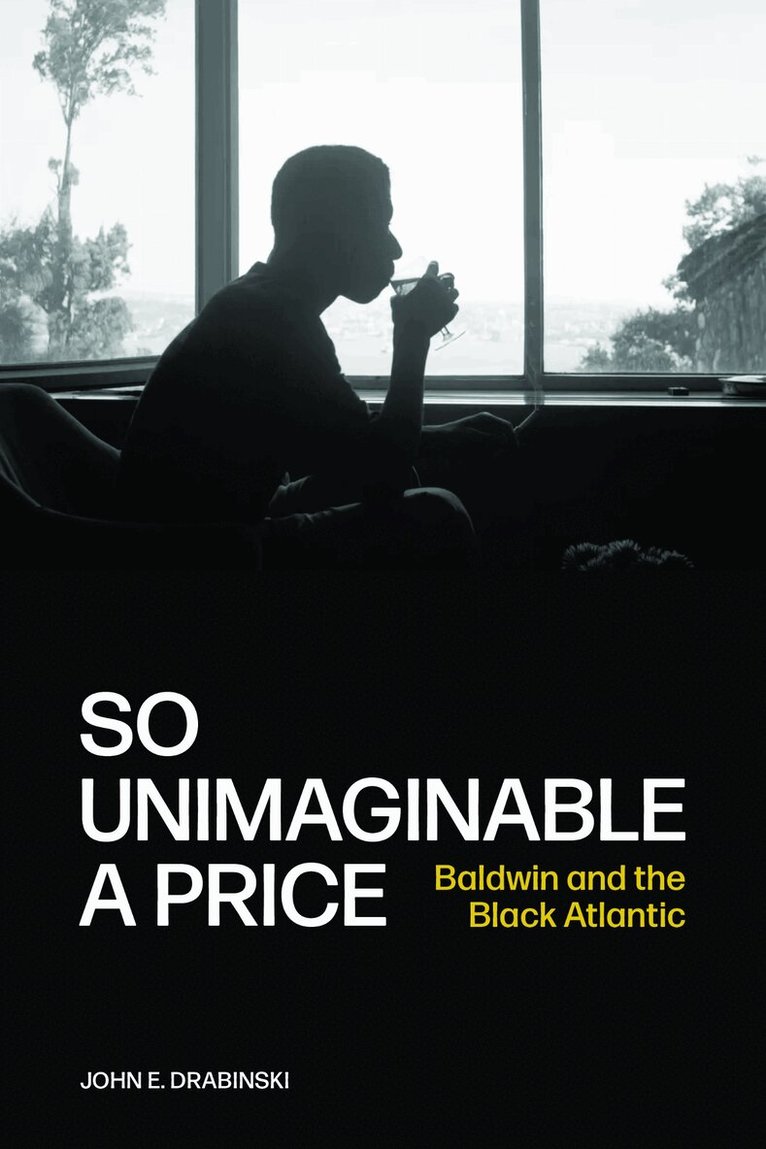
Rereading Baldwin’s nonfiction in the context of midcentury Black Atlantic thought James Baldwin’s nonfiction offers some of the most important and challenging thinking on the experience of race, history, and memory in the Black Atlantic world. Yet much of the scholarly literature on Baldwin’s writing reads his work from inside the sociocultural context of the United States, alongside key interlocutors like Richard Wright, Ralph Ellison, and Lorraine Hansberry. So Unimaginable a Price: Baldwin and the Black Atlantic shifts the critical frame, examining Baldwin’s work as part of a midcentury moment across the wider Atlantic world and tying his reflections to those of thinkers in the Caribbean and Africa to underscore the widening sense, as well as the particularity, of his critical claims. Who is Baldwin to the Atlantic world? And who, then, is Baldwin to the United States? John E. Drabinski recasts Baldwin as a Black Atlantic writer whose unique qualities as a thinker are enhanced by their similarities and differences with fellow writers of liberation in the global Black world.
1 470 kr
Skickas inom 7-10 vardagar
Rereading Baldwin’s nonfiction in the context of midcentury Black Atlantic thought James Baldwin’s nonfiction offers some of the most important and challenging thinking on the experience of race, history, and memory in the Black Atlantic world. Yet much of the scholarly literature on Baldwin’s writing reads his work from inside the sociocultural context of the United States, alongside key interlocutors like Richard Wright, Ralph Ellison, and Lorraine Hansberry. So Unimaginable a Price: Baldwin and the Black Atlantic shifts the critical frame, examining Baldwin’s work as part of a midcentury moment across the wider Atlantic world and tying his reflections to those of thinkers in the Caribbean and Africa to underscore the widening sense, as well as the particularity, of his critical claims. Who is Baldwin to the Atlantic world? And who, then, is Baldwin to the United States? John E. Drabinski recasts Baldwin as a Black Atlantic writer whose unique qualities as a thinker are enhanced by their similarities and differences with fellow writers of liberation in the global Black world.
1 833 kr
Skickas inom 10-15 vardagar
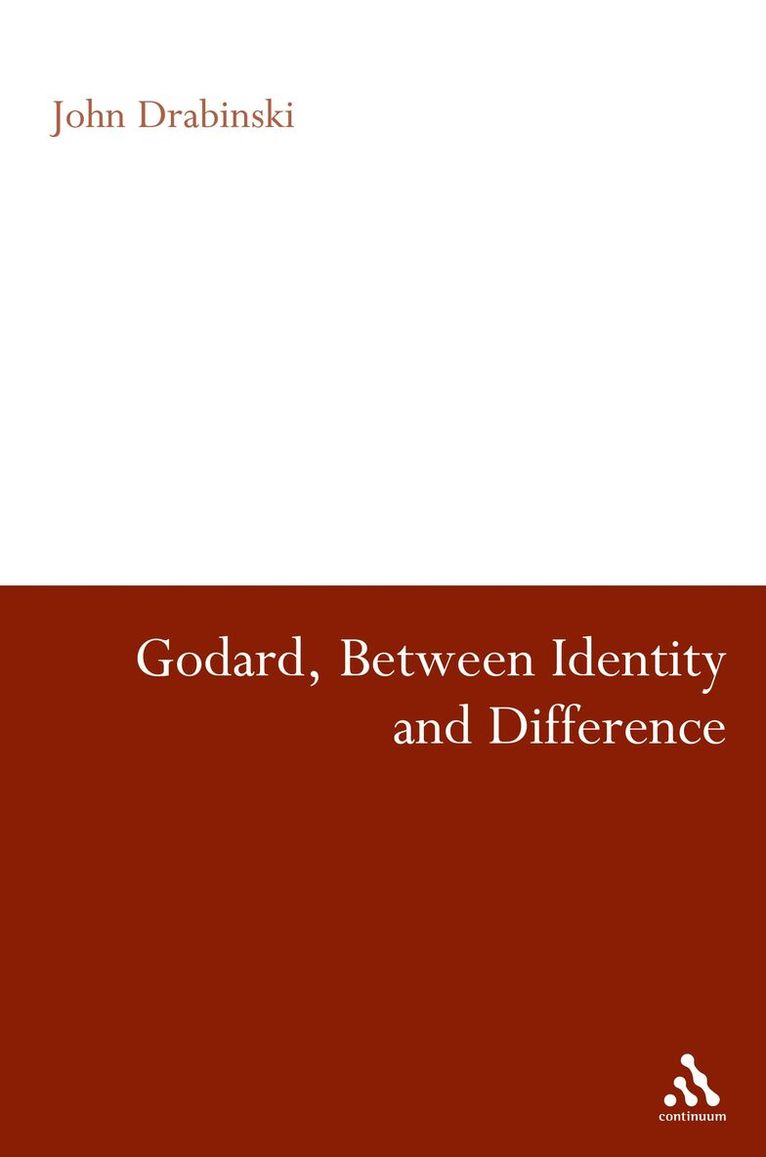
The overarching argument of the book is that Godard's conception and practice of cinematic language opens new, important possibilities for thinking about radical alterity. This book reads a series of Godard films as interventions in contemporary debate about the language of difference. Godard has something he wants both to preserve (singularity) and destroy (visual and aural totalitarianism). How is it possible to speak about the Other? How is it possible for the Other to speak? Does all speaking about or by the Other render that speaking common, thereby rendering what is different identical? These questions gather together a number of issues that cross and intersect disciplinary boundaries: signification, representation, ethics, politics.The problematics with which Drabinski is concerned begin in the debate between Levinas and Derrida, then later in dialogue with Blanchot and Irigaray. To this extent, Godard is particularly well-suited as an interlocutor. Godard's work, especially in the 1970s, is itself a self-conscious form of philosophy.His films theorize themselves, produce a reflexive sound-image language, and so in many ways match the very essence of philosophy: thought thinking thought.Still, the medium of sound and image complicates any rendering of Godard's work as philosophy. Godard produces a philosophically significant cinematic language rather than simply narrating or representing philosophical ideas in the medium of film. And this language must be taken seriously in the context of the problem of difference. For, if difference is concerned with signification as such, then the visual and aural retain equal rights with writing (and all questions obtaining therein).The nature of the debate in this project - how the language of alterity is possible or impossible - immediately breaks disciplinary borders between philosophy, literary theory, film studies and cultural studies. What it means to engage with film in this context, however, is complicated. To wit, there are two standard treatments of film in philosophy. Film is typically either an example of a philosophical position or philosophy is used to interpret motifs, characters, plot lines, etc.In neither case is film engaged as a form of philosophizing itself,that is, as a language engaged with philosophical problems. The aim of the project is to read Godard's work as primary texts, with all the attention due the idiosyncratic language of those texts. Framed by the debate about difference and signification, these primary texts register and resonate as transformative interventions.
1 111 kr
Skickas
This largely new collection of essays explores how the history of empire has impacted the intellectual life of the Atlantic world through treatments of key figures in Atlantic theory, including Emmanuel Levinas, Frantz Fanon, Richard Wright, James Baldwin, Angela Davis, Leopold Senghor and Edouard Glissant. Out of these critical and comparative readings emerges a portrait of Atlantic theory as a distinct orientation toward complex relations of colonial power, memory of atrocity, negotiation of the aftermath of empire, and the creativity of the oppressed living under impossible conditions of violence.
1 057 kr
Tillfälligt slut
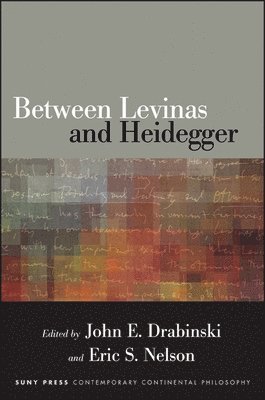
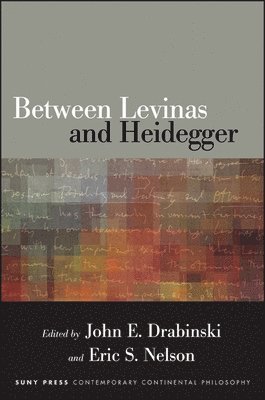
Investigates the philosophical relationship between Levinas and Heidegger in a nonpolemical context, engaging some of philosophy's most pressing issues.Although both Levinas and Heidegger drew inspiration from Edmund Husserl's phenomenological method and helped pave the way toward the post-structuralist movement of the late twentieth century, very little scholarly attention has been paid to the relation of these two thinkers. There are plenty of simple-and accurate-oppositions and juxtapositions: French and German, ethics and ontology, and so on. But there is also a critical intersection between Levinas and Heidegger on some of the most fundamental philosophical questions: What does it mean to be, to think, and to act in late modern life and culture? How do our conceptions of subjectivity, time, and history both reflect the condition of this historical moment and open up possibilities for critique, resistance, and transformation? The contributors to this volume take up these questions by engaging the ideas of Levinas and Heidegger relating to issues of power, violence, secularization, history, language, time, death, sacrifice, responsibility, memory, and the boundary between the human and humanism.
410 kr
Skickas inom 5-8 vardagar
Investigates the philosophical relationship between Levinas and Heidegger in a nonpolemical context, engaging some of philosophy's most pressing issues.Although both Levinas and Heidegger drew inspiration from Edmund Husserl's phenomenological method and helped pave the way toward the post-structuralist movement of the late twentieth century, very little scholarly attention has been paid to the relation of these two thinkers. There are plenty of simple-and accurate-oppositions and juxtapositions: French and German, ethics and ontology, and so on. But there is also a critical intersection between Levinas and Heidegger on some of the most fundamental philosophical questions: What does it mean to be, to think, and to act in late modern life and culture? How do our conceptions of subjectivity, time, and history both reflect the condition of this historical moment and open up possibilities for critique, resistance, and transformation? The contributors to this volume take up these questions by engaging the ideas of Levinas and Heidegger relating to issues of power, violence, secularization, history, language, time, death, sacrifice, responsibility, memory, and the boundary between the human and humanism.
528 kr
Skickas inom 10-15 vardagar
This book reads a series of Godard films as interventions in contemporary debate about the language of difference. Godard has something he wants both to preserve (singularity) and destroy (visual and aural totalitarianism). How is it possible to speak about the Other? How is it possible for the Other to speak? Does all speaking about or by the Other render that speaking common, thereby rendering what is different identical? These questions gather together a number of issues that cross and intersect disciplinary boundaries: signification, representation, ethics, politics, and so on. The problematics with which Drabinski is concerned begin in the debate between Levinas and Derrida, then later in dialogue with Blanchot and Irigaray. To this extent, Godard is particularly well-suited as an interlocutor. Godard's work, especially in the 1970s, is itself a self-conscious form of philosophy. His films theorize themselves, produce a reflexive sound-image language, and so in many ways match the very essence of philosophy: thought thinking thought. Still, the medium of sound and image complicates any rendering of Godard's work as philosophy.Godard produces a philosophically significant cinematic language, rather than simply narrating or representing philosophical ideas in the medium of film. And this language must be taken seriously in the context of the problem of difference. For, if difference is concerned with signification as such, then the visual and aural retain equal rights with writing (and all questions obtaining therein). Indeed, if part of the problem of speaking about or by the Other is how such speaking traffics in inscription, then cinematic language is certainly an important - and authentically complex - intervention in that problem. The nature of the debate in this project - how the language of alterity is possible or impossible - immediately breaks disciplinary borders between philosophy, literary theory, film studies, and cultural studies. What it means to engage with film in this context, however, is complicated. To wit, there are two standard treatments of film in philosophy. Film is typically either an example of a philosophical position or philosophy is used to interpret motifs, characters, plot lines, etc.In neither case is film engaged as a form of philosophizing itself, that is, as a language engaged with philosophical problematics. It is articulating exactly this engagement that this book takes as its primary task. The aim of the project is to read Godard's work as primary texts, with all the attention due the idiosyncratic language of those texts. Framed by the debate about difference and signification, these primary texts register and resonate as transformative interventions. The overarching argument of the book is that Godard's conception and practice of cinematic language opens new, important possibilities for thinking about radical alterity.
1 350 kr
Skickas inom 10-15 vardagar
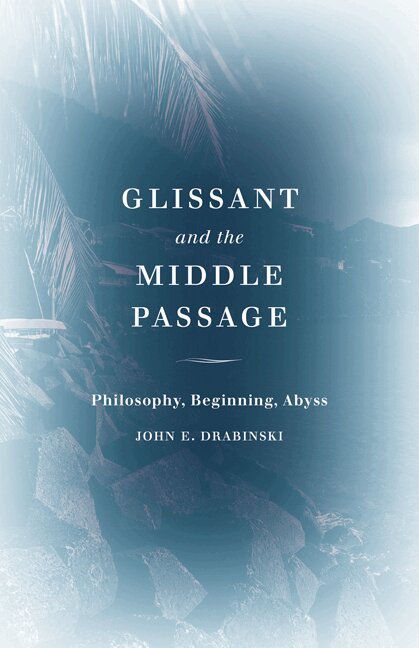
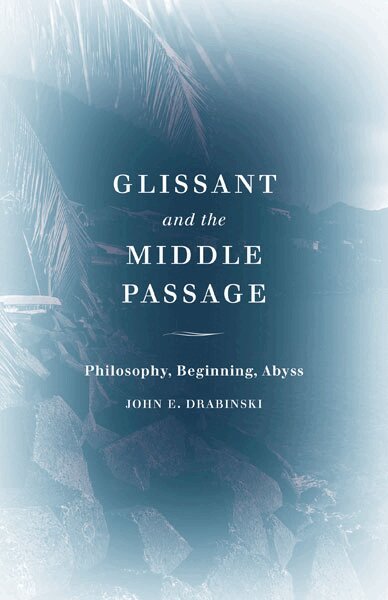
A reevaluation of Édouard Glissant that centers on the catastrophe of the Middle Passage and creates deep, original theories of trauma and Caribbeanness While philosophy has undertaken the work of accounting for Europe’s traumatic history, the field has not shown the same attention to the catastrophe known as the Middle Passage. It is a history that requires its own ideas that emerge organically from the societies that experienced the Middle Passage and its consequences firsthand. Glissant and the Middle Passage offers a new, important approach to this neglected calamity by examining the thought of Édouard Glissant, particularly his development of Caribbeanness as a critical concept rooted in the experience of the slave trade and its aftermath in colonialism.In dialogue with key theorists of catastrophe and trauma-including AimÉ CÉsaire, Frantz Fanon, George Lamming, Gilles Deleuze, FÉlix Guattari, Derek Walcott, as well as key figures in Holocaust studies-Glissant and the Middle Passage hones a sharp sense of the specifically Caribbean varieties of loss, developing them into a transformative philosophical idea. Using the Plantation as a critical concept, John E. Drabinski creolizes notions of rhizome and nomad, examining what kinds of aesthetics grow from these roots and offering reconsiderations of what constitutes intellectual work and cultural production.Glissant and the Middle Passage establishes Glissant’s proper place as a key theorist of ruin, catastrophe, abyss, and memory. Identifying his insistence on memories and histories tied to place as the crucial geography at the heart of his work, this book imparts an innovative new response to the specific historical experiences of the Middle Passage.
332 kr
Skickas inom 10-15 vardagar
A reevaluation of Édouard Glissant that centers on the catastrophe of the Middle Passage and creates deep, original theories of trauma and Caribbeanness While philosophy has undertaken the work of accounting for Europe’s traumatic history, the field has not shown the same attention to the catastrophe known as the Middle Passage. It is a history that requires its own ideas that emerge organically from the societies that experienced the Middle Passage and its consequences firsthand. Glissant and the Middle Passage offers a new, important approach to this neglected calamity by examining the thought of Édouard Glissant, particularly his development of Caribbeanness as a critical concept rooted in the experience of the slave trade and its aftermath in colonialism.In dialogue with key theorists of catastrophe and trauma-including AimÉ CÉsaire, Frantz Fanon, George Lamming, Gilles Deleuze, FÉlix Guattari, Derek Walcott, as well as key figures in Holocaust studies-Glissant and the Middle Passage hones a sharp sense of the specifically Caribbean varieties of loss, developing them into a transformative philosophical idea. Using the Plantation as a critical concept, John E. Drabinski creolizes notions of rhizome and nomad, examining what kinds of aesthetics grow from these roots and offering reconsiderations of what constitutes intellectual work and cultural production.Glissant and the Middle Passage establishes Glissant’s proper place as a key theorist of ruin, catastrophe, abyss, and memory. Identifying his insistence on memories and histories tied to place as the crucial geography at the heart of his work, this book imparts an innovative new response to the specific historical experiences of the Middle Passage.
1 304 kr
Skickas inom 10-15 vardagar
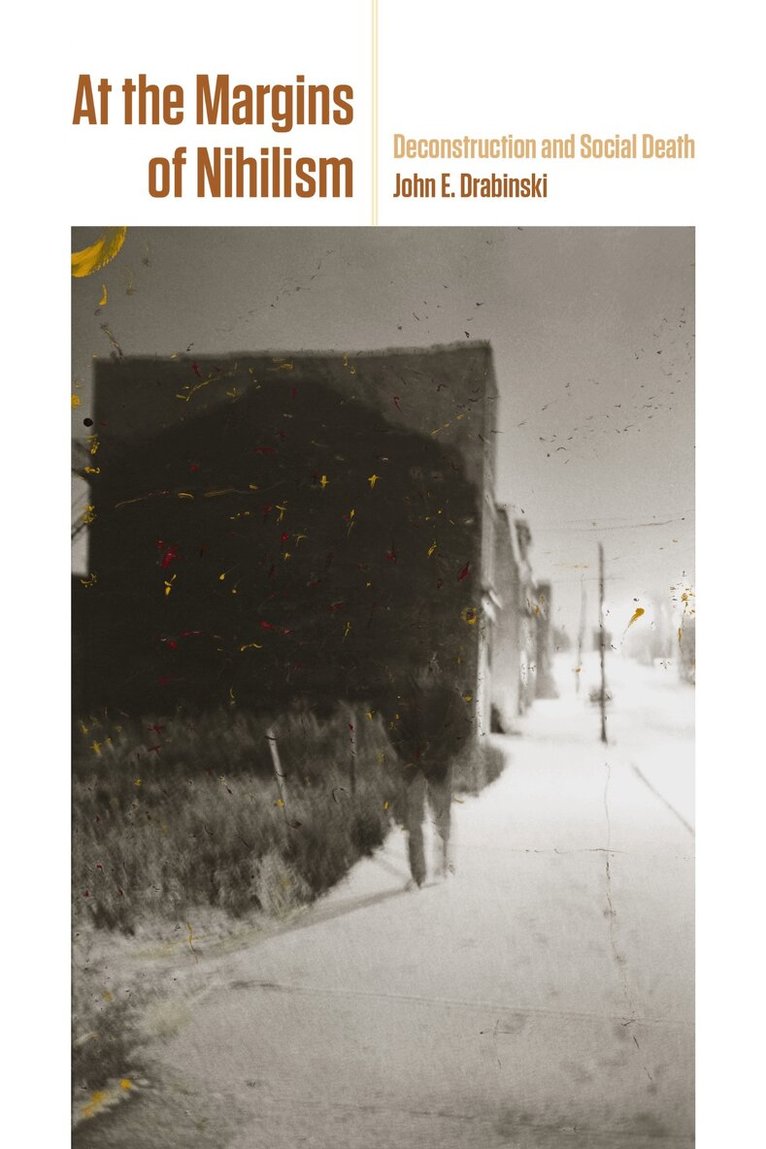
The multi-century event of enslavement and colonialism changed the cultural and political imagination of the Atlantic world. We still live and work in the horizon of that event. It was an event that placed a violent Manichean structure of antiblackness at the foundation of our shared world. What kinds of life are possible in nihilistic, antiblack worlds of social death? Is it possible to imagine life outside the reach of those worlds? What decolonial methods help us understand that form of life in relation to expressive cultures of resistance and refusal?At the Margins of Nihilism develops a theoretical frame through a comparative reading of Jacques Derrida and Orlando Patterson. Reading between deconstruction and social death, Drabinski describes a notion of life as interstitial, situated outside the play of life and death in systems of antiblackness. This notion of life has broad epistemological, existential, and ontological implications.Drawing from a diverse set of sources including Zora Neale Hurston, Ralph Ellison, Gloria Anzaldúa, and others, At the Margins of Nihilism shows how the nihilisms of Richard Wright, Frantz Fanon, James Baldwin, and contemporary afropessimism operate as a closed system. Each system is opened by vernacular forms of life and practices of refusal. Those forms and practices speak to the power and significance of life that persists across centuries of antiblack culture, social life, and political hegemony.
355 kr
Skickas
The multi-century event of enslavement and colonialism changed the cultural and political imagination of the Atlantic world. We still live and work in the horizon of that event. It was an event that placed a violent Manichean structure of antiblackness at the foundation of our shared world. What kinds of life are possible in nihilistic, antiblack worlds of social death? Is it possible to imagine life outside the reach of those worlds? What decolonial methods help us understand that form of life in relation to expressive cultures of resistance and refusal?At the Margins of Nihilism develops a theoretical frame through a comparative reading of Jacques Derrida and Orlando Patterson. Reading between deconstruction and social death, Drabinski describes a notion of life as interstitial, situated outside the play of life and death in systems of antiblackness. This notion of life has broad epistemological, existential, and ontological implications.Drawing from a diverse set of sources including Zora Neale Hurston, Ralph Ellison, Gloria Anzaldúa, and others, At the Margins of Nihilism shows how the nihilisms of Richard Wright, Frantz Fanon, James Baldwin, and contemporary afropessimism operate as a closed system. Each system is opened by vernacular forms of life and practices of refusal. Those forms and practices speak to the power and significance of life that persists across centuries of antiblack culture, social life, and political hegemony.
2 108 kr
Skickas inom 10-15 vardagar
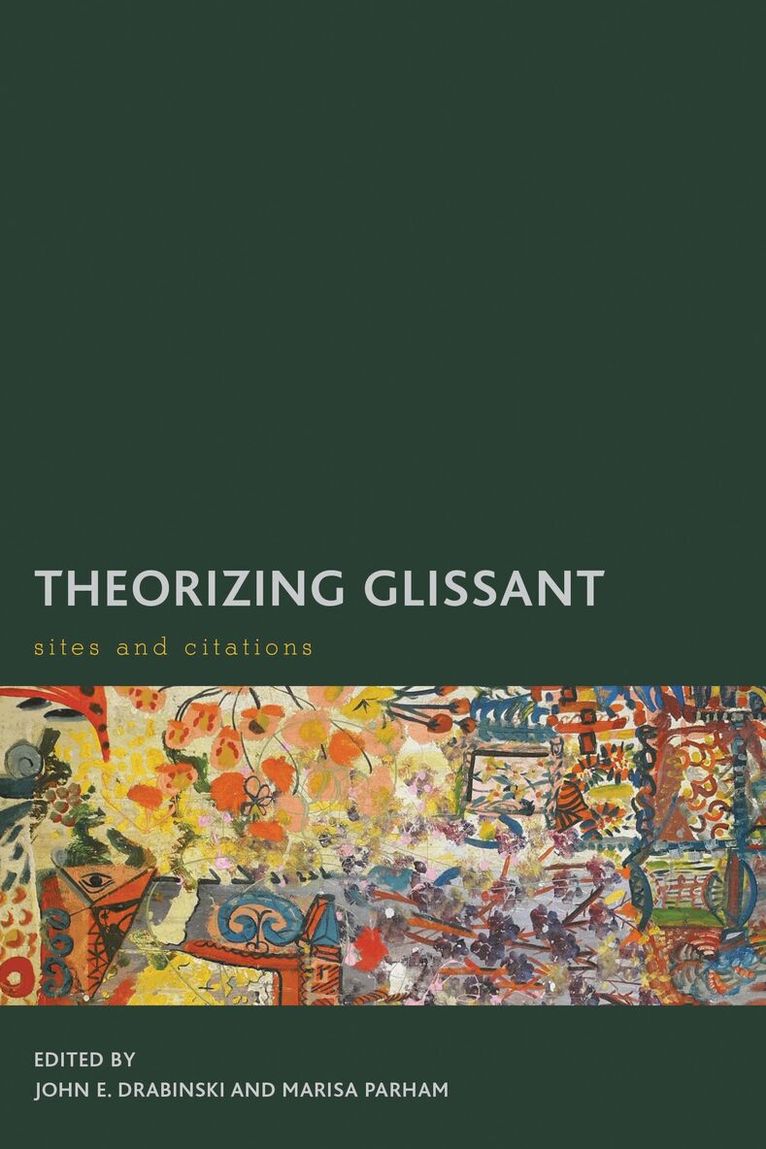
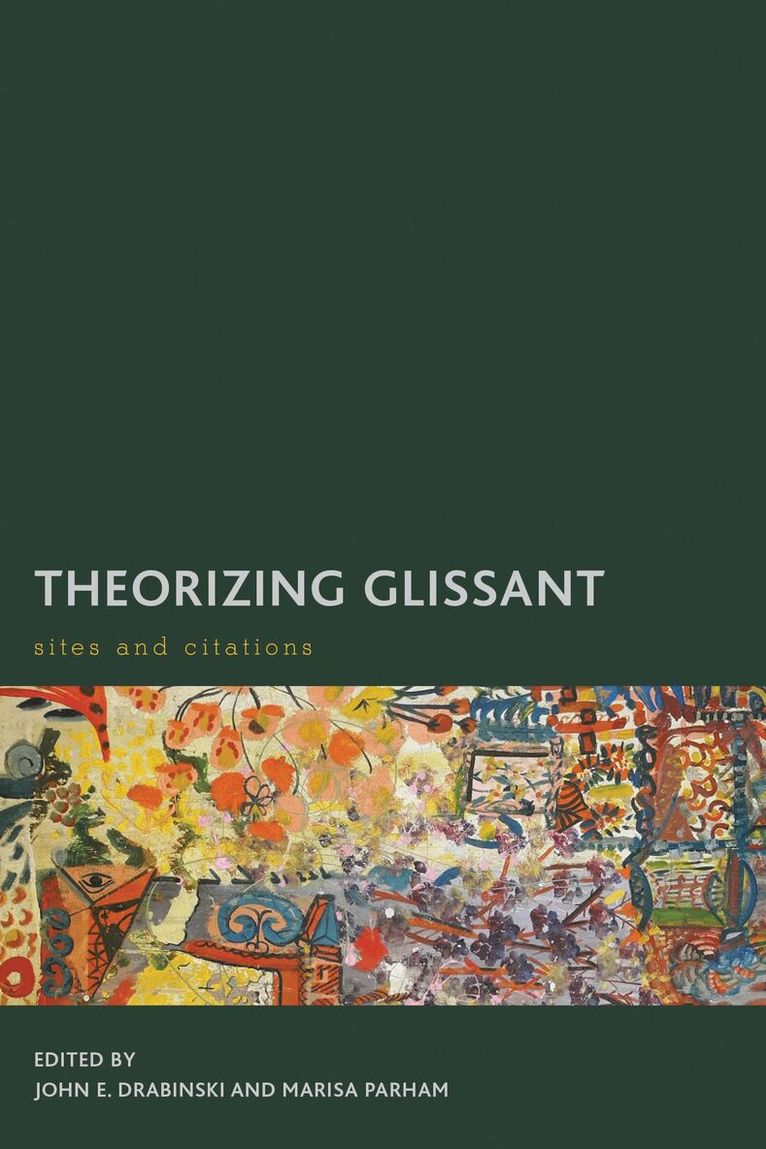
Édouard Glissant’s work has begun to make a significant impact on francophone studies and some corners of postcolonial theory. His literary works and criticism are increasingly central to the study of Caribbean literature and cultural studies.This collection focuses on the particularly philosophical register of Glissant’s thought.Each of the authors in this collection takes up a different aspect of Glissant’s work and extends it in different directions. twentieth-century French philosophy (Bergson, Badiou, Meillassoux), the cannon of Caribbean literature, North American literature and cultural theory, and contemporary cultural politics in Glissant’s home country of Martinique all receive close, critical treatment. What emerges from this collection is a vision of Glissant as a deeply philosophical thinker, whose philosophical character draws from the deep resources of Caribbean memory and history. Glissant’s central notions of rhizome, chaos, opacity, and creolization are given a deeper and wider appreciation through accounts of those resources in detailed conceptual studies.
776 kr
Skickas inom 10-15 vardagar
Édouard Glissant’s work has begun to make a significant impact on francophone studies and some corners of postcolonial theory. His literary works and criticism are increasingly central to the study of Caribbean literature and cultural studies.This collection focuses on the particularly philosophical register of Glissant’s thought.Each of the authors in this collection takes up a different aspect of Glissant’s work and extends it in different directions. twentieth-century French philosophy (Bergson, Badiou, Meillassoux), the cannon of Caribbean literature, North American literature and cultural theory, and contemporary cultural politics in Glissant’s home country of Martinique all receive close, critical treatment. What emerges from this collection is a vision of Glissant as a deeply philosophical thinker, whose philosophical character draws from the deep resources of Caribbean memory and history. Glissant’s central notions of rhizome, chaos, opacity, and creolization are given a deeper and wider appreciation through accounts of those resources in detailed conceptual studies.