John Etienne Beckman - Böcker
Visar alla böcker från författaren John Etienne Beckman. Handla med fri frakt och snabb leverans.
3 produkter
3 produkter
421 kr
Skickas inom 5-8 vardagar
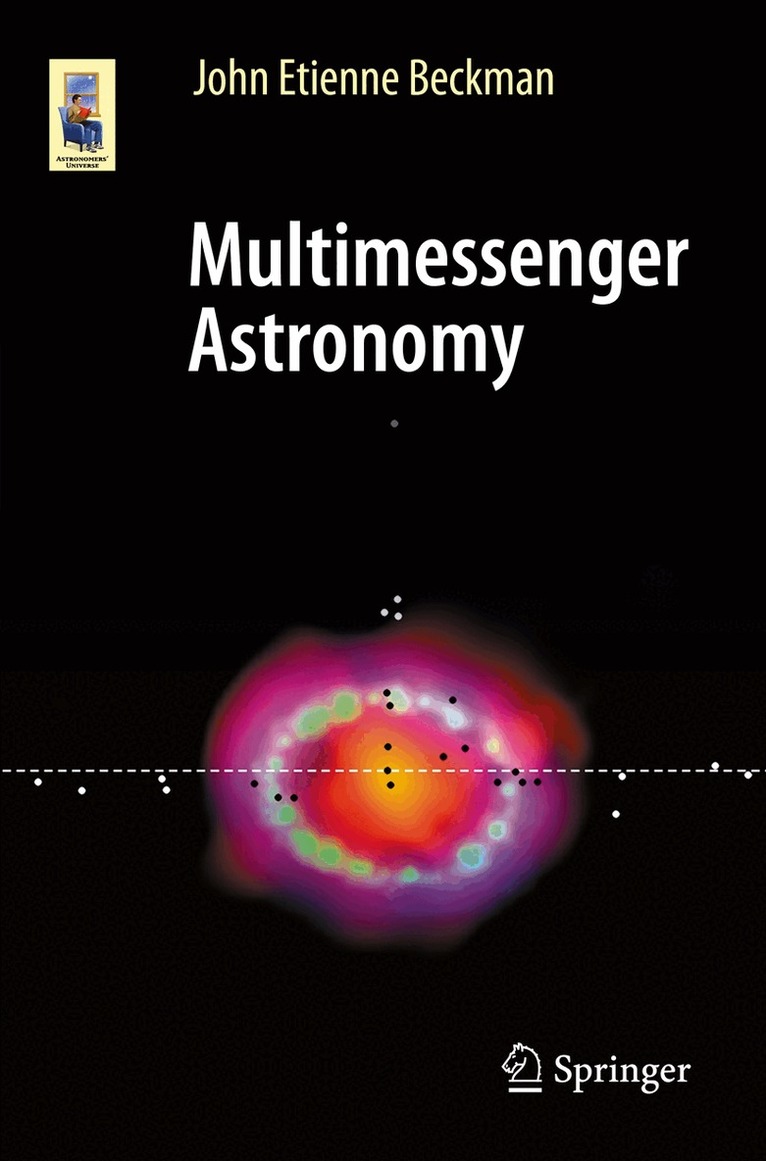
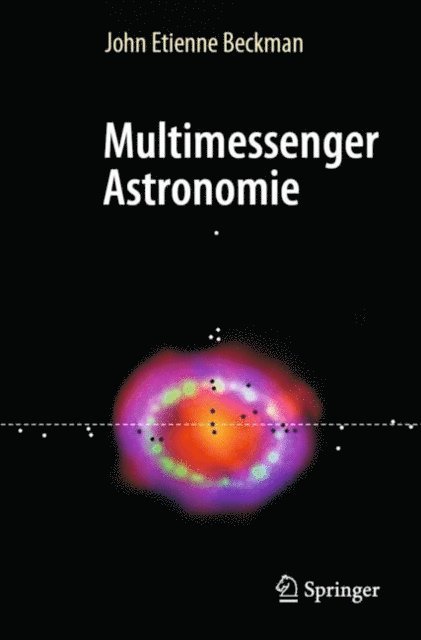
Written by a professional astronomer who has worked on a wide spectrum of topics throughout his career, this book gives a popular science level description of what has become known as multimessenger astronomy. It links the new with the traditional, showing how astronomy has advanced at increasing pace in the modern era.In the second decade of the twenty-first century astronomy has seen the beginnings of a revolution. After centuries when all our information about the Universe has come via electromagnetic waves, now several entirely new ways of exploring it have emerged. The most spectacular has been the detection of gravitational waves in 2015, but astronomy also uses neutrinos and cosmic ray particles to probe processes in the centres of stars and galaxies. The book is strongly oriented towards measurement and technique. Widely illustrated with colourful pictures of instruments, their creators and astronomical objects, it is backed with descriptions of theunderlying theories and concepts, linking predictions, observations and experiments. The thread is largely historical, although obviously it cannot be encyclopaedic. Its point of departure is the beginning of the twentieth century and it aims at being as complete as possible for the date of completion at the end of 2020.The book addresses a wide public whose interest in science is served by magazines like Scientific American: lively, intelligent readers but without university studies in physics.
352 kr
Skickas inom 10-15 vardagar
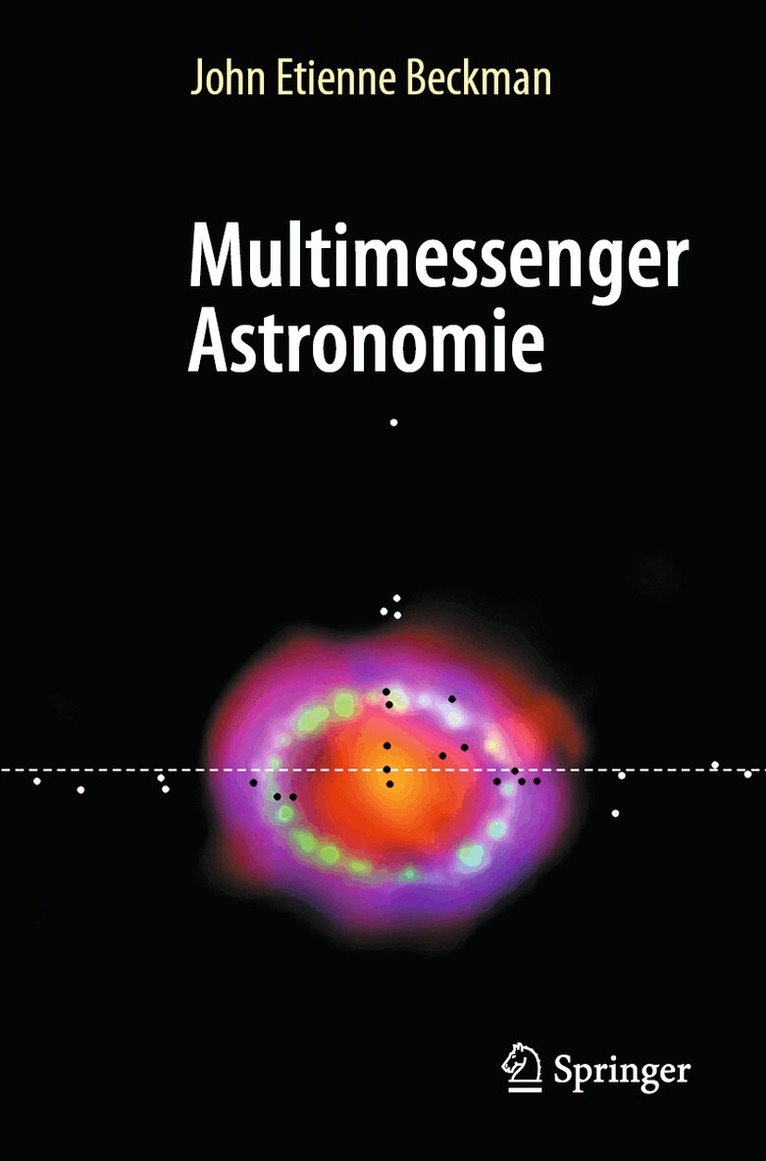
Dieses Buch wurde von einem professionellen Astronomen geschrieben, der im Laufe seiner Karriere an einem breiten Spektrum von Themen gearbeitet hat, und bietet eine populärwissenschaftliche Beschreibung dessen, was als Multimessenger-Astronomie bekannt geworden ist. Es verbindet das Neue mit dem Traditionellen und zeigt, wie sich die Astronomie in der modernen Ära immer schneller weiterentwickelt hat.Im zweiten Jahrzehnt des einundzwanzigsten Jahrhunderts hat die Astronomie den Beginn einer Revolution erlebt. Nachdem wir jahrhundertelang alle Informationen über das Universum mittels elektromagnetischer Wellen erhalten haben, gibt es nun mehrere völlig neue Möglichkeiten, es zu erforschen. Am spektakulärsten war der Nachweis von Gravitationswellen im Jahr 2015, aber die Astronomie nutzt auch Neutrinos und Teilchen der kosmischen Strahlung, um die Vorgänge in den Zentren von Sternen und Galaxien zu untersuchen.Das Buch ist stark auf Messungen und Beobachtungstechnik ausgerichtet. Es ist reichlich mit farbigen Bildern von Instrumenten, ihren Entwicklern und astronomischen Objekten illustriert und wird durch Beschreibungen der zugrunde liegenden Theorien und Konzepte ergänzt, die Vorhersagen, Beobachtungen und Experimente miteinander verbinden. Der rote Faden ist weitgehend historisch, obwohl er natürlich nicht enzyklopädisch sein kann. Es deckt die Entwicklungen der Astronomie des zwanzigsten Jahrhunderts bis Ende 2020 so vollständig wie möglich ab.Das Buch richtet sich an ein breites interessiertes Publikum und Leser populär-wissenschaftlicher Magazine. Ein tieferes Verständnis von Physik ist nicht erforderlich. Die Übersetzung des englischen Originals wurde mit Hilfe von künstlicher Intelligenz durchgeführt. Eine anschließende menschliche Überarbeitung erfolgte vor allem in Bezug auf den Inhalt.
396 kr
Tillfälligt slut
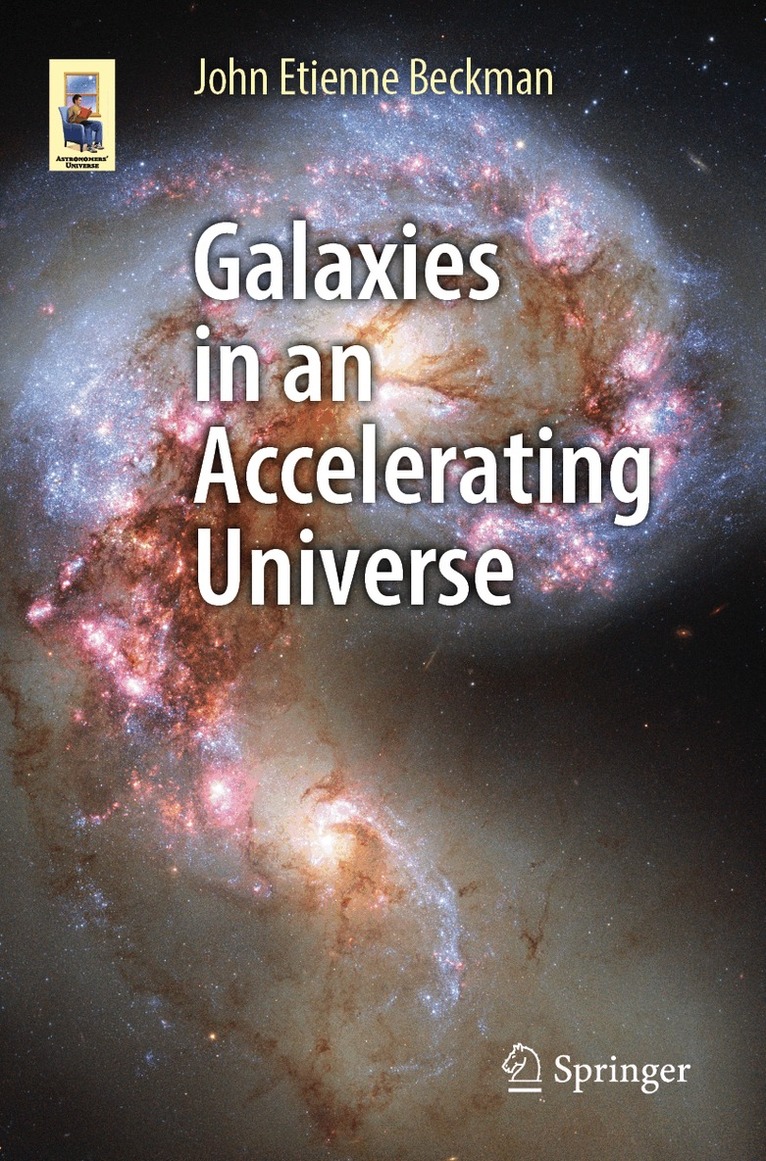
This book is aimed at the general reader who has an interest in knowing how modern astronomy is moving towards a steadily increasing understanding of galaxies. It is written from the point of view of the observational astrophysicist, stressing how observations have consistently led the way in opening new horizons.We first take a brief historical look at how the Milky Way was seen until the development of large telescopes, showing how recently we have come to realize that our Galaxy is not the whole Universe but is just one of billions of similar systems. You will learn how we now measure the size of our Galaxy, and what its structure is: disc, bulge, bar, halo, streams of infalling stars as our Galaxy swallows its smaller neighbours, and the supermassive black hole at the centre.The author then zooms out to describe our local group of galaxies, including the Milky Way, the Magellanic Clouds, the Andromeda galaxy, and the cloud of local dwarf galaxies.The next zoom takes you to nearby galaxy clusters, such as the Virgo cluster, and we see how galaxies are classified by their shape and structure: spirals, ellipticals, and irregulars. We discover the populations of stars which make up the galaxies, and an interesting sidelight shows how local galaxies can help us understand the history of the whole Universe, an exciting research branch called "near field cosmology".Zooming out beyond local galaxy clusters the reader will be shown how astronomers map the structure of the Universe as picked out by the large-scale distribution of the galaxies - sheets, filaments and voids. We are given a view of the evolution of galaxies based on the current standard cosmological model including present doubts and uncertainties. We see how the model can be tested by the observations. In the penultimate chapter the author gives us a view of astronomical techniques and instruments available over the full range of wavelengths from radio to gamma-rays, from the ground and space, showing how the information in the previous chapters is obtained. The journey ends with a look at the exciting instrumental developments which will enhance our knowledge of galaxies throughout the Universe in the coming decade."What I love about this book is that it gives physical pictures of what’s really happening to galaxies. ... a lot of images and stories. ... So if you want to understand how the Big Bang led to people, you might just want to read this book."John C. MatherNobel Laureate in Physics, 2006.