John F. Cherry – författare
Visar alla böcker från författaren John F. Cherry. Handla med fri frakt och snabb leverans.
5 produkter
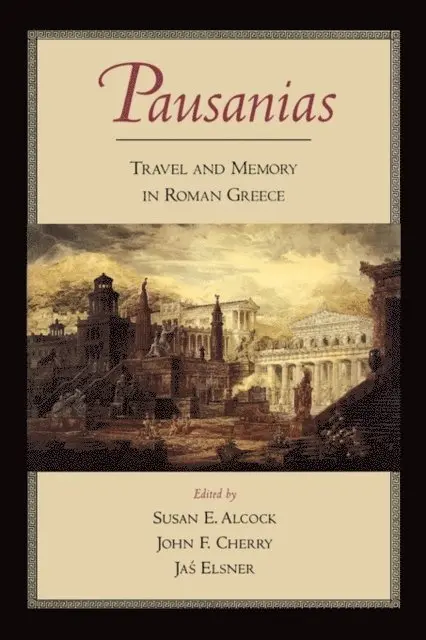
Pausanias
Travel and Memory in Roman Greece
Av Pausanias, JaS Elsner m. fl.
E-bok, 2003
717 kr
Lägg i varukorg
Pausanias, the Greek historian and traveler, lived and wrote around the second century AD, during the period when Greece had fallen peacefully to the Roman Empire. While fragments from this period abound, Pausanias'' Periegesis ("description") of Greece is the only fully preserved text of travel …
Peer Polity Interaction and Socio-political Change
Av Colin Renfrew, John F. Cherry m. fl.
Häftad, 2009
574 kr
Lägg i varukorg
Thirteen leading archaeologists have contributed to this innovative study of the socio-political processes - notably imitation, competition, warfare, and the exchange of material goods and information - that can be observed within early complex societies, particularly those just emerging into …
Sampling in Contemporary British Archaeology
Av John F Cherry, Clive Gamble m. fl.
Häftad, 1978
1156 kr
Lägg i varukorg
Human Dispersal, Human Evolution, and the Sea
The Palaeolithic Seafaring Debate
Av John F Cherry, Thomas P Leppard
Inbunden, 2025
811 kr
Tillfälligt slut
New Directions in Caribbean Archaeology
Av John F. Cherry, Miriam A.W. Rothenberg
Häftad, 2026
992 kr
Tillfälligt slut
This volume expands on an online lecture series at Brown University that was organized to help fill the gap, created by the Covid-19 pandemic, of in-person Caribbean archaeology lectures and conferences. From an initial group of six presentations, the present volume has been expanded to include 11 …