John F. Richards - Böcker
Visar alla böcker från författaren John F. Richards. Handla med fri frakt och snabb leverans.
7 produkter
7 produkter
Del 1 - California World History Library
Unending Frontier
An Environmental History of the Early Modern World
Häftad, Engelska, 2006
332 kr
Skickas inom 7-10 vardagar
It was the age of exploration, the age of empire and conquest, and human beings were extending their reach - and their numbers - as never before. In the process, they were intervening in the world's natural environment in equally unprecedented and dramatic ways. A sweeping work of environmental history, "The Unending Frontier" offers a truly global perspective on the profound impact of humanity on the natural world in the early modern period. John F. Richards identifies four broadly shared historical processes that speeded environmental change from roughly 1500 to 1800 c.e.: intensified human land use along settlement frontiers; biological invasions; commercial hunting of wildlife; and problems of energy scarcity. "The Unending Frontier" considers each of these trends in a series of case studies, sometimes of a particular place, such as Tokugawa Japan and early modern England and China, sometimes of a particular activity, such as the fur trade in North America and Russia, cod fishing in the North Atlantic, and whaling in the Arctic.Throughout, Richards shows how humans - whether clearing forests or draining wetlands, transporting bacteria, insects, and livestock; hunting species to extinction, or reshaping landscapes - altered the material well-being of the natural world along with their own.
210 kr
Skickas inom 7-10 vardagar
The World Hunt focuses on the commercial hunting of wildlife and its profound global impact on the environment and world economy. A comprehensive digest of the massive expansion of the European quest for animal products, this book explores the fur trade in North America and Russia, cod fishing in the North Atlantic, and whaling in the Arctic.
1 553 kr
Skickas inom 7-10 vardagar
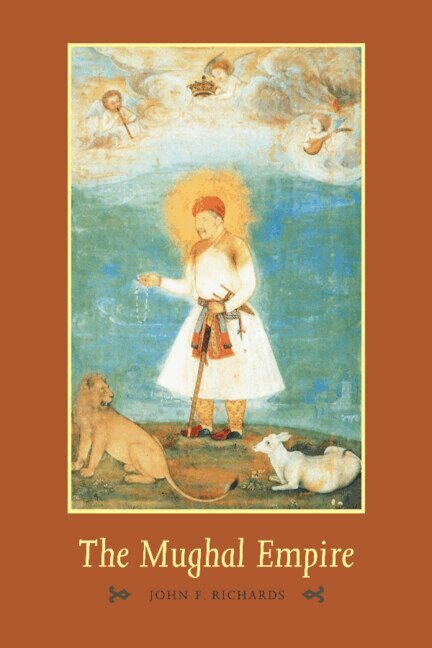
The Mughal empire was one of the largest centralised states in pre-modern world history. It was founded in the early 1500s and by the end of the following century the Mughal emperor ruled almost the entire Indian subcontinent with a population of between 100 and 150 millions. The Mughal emperors displayed immense wealth and the ceremonies, music, poetry, and exquisitely executed paintings and objects of the imperial court created a distinctive aristocratic high culture. In this volume, Professor John Richards traces the history of this magnificent empire from its creation in 1526 to its breakup in 1720. He stresses the dynamic quality of Mughal territorial expansion, their institutional innovation in land revenue, coinage and military organisation, ideological change and the relationship between the emperors and Islam. Professor Richards also analyses institutions particular to the Mughal empire, such as the jagir system, and explores Mughal India's links with the early modern world.
The Earth as Transformed by Human Action
Global and Regional Changes in the Biosphere over the Past 300 Years
Häftad, Engelska, 1993
810 kr
Skickas inom 7-10 vardagar
The Earth as Transformed by Human Action is the culmination of a mammoth undertaking involving the examination of the toll our continual strides forward, technical and social, take on our world. The purpose of such a study is to document the changes in the biosphere that have taken place over the last 300 years, to contrast global patterns of change to those appearing on a regional level, and to explain the major human forces that have driven these changes. The first section deals strictly with the major human forces of the past 300 years and the second is a detailed account of the transformations of the global environment wrought by human action. The final section examines a range of perspectives and theories that purport to explain human actions with regard to the biosphere.
357 kr
Skickas inom 7-10 vardagar
The Mughal empire was one of the largest centralised states in pre-modern world history. It was founded in the early 1500s and by the end of the following century the Mughal emperor ruled almost the entire Indian subcontinent with a population of between 100 and 150 millions. The Mughal emperors displayed immense wealth and the ceremonies, music, poetry, and exquisitely executed paintings and objects of the imperial court created a distinctive aristocratic high culture. In this volume, Professor John Richards traces the history of this magnificent empire from its creation in 1526 to its breakup in 1720. He stresses the dynamic quality of Mughal territorial expansion, their institutional innovation in land revenue, coinage and military organisation, ideological change and the relationship between the emperors and Islam. Professor Richards also analyses institutions particular to the Mughal empire, such as the jagir system, and explores Mughal India's links with the early modern world.
1 241 kr
Skickas inom 10-15 vardagar
From the mid-16th to the early 18th centuries the Mughal empire was the dominant power in the Indian subcontinent. Contrary to what is sometimes suggested, John Richards argues that this centralised state was dynamic and skillfully run. The studies here consider its links with the wider early modern world, and focus on three related aspects of its history. The first concerns the nature of imperial authority, in terms both of the dynastic ideology created by Akbar and his successors, and the extent to which this authority could be enforced in the countryside. The second aspect is that of fiscal and monetary policy and administration: how did the Mughals collect, track and expend their vast revenues, and what effects did this have? Finally, the author asks why the system could not cope with the changes it had helped engender, and what were the weaknesses and pressures that led to the breakup of the empire in the first decades of the 18th century. De la moitié du 16e siècle au début du 18e, l’empire moghol était le pouvoir dominant du sous-continent indien. Contrairement à ce qui peut parfois être suggéré, John Richards soutient que cet état centralisé était dynamique et adroitement mené. Les études examinent ses liens avec le reste du monde moderne et se concentrent sur trois aspects de son histoire. Le premier concerne la nature de l’autorité impériale, en termes d’idéologie dynastique, telle qu’elle avait été créée par Akbar et ses successeurs et du point jusqu’auquel cette autorité pouvait être imposée dans les milieux ruraux. Le second aspect est celui de l’administration et de la politique fiscale et monétaire: comment les Moghols faisaient-ils pour collecter, retrouver et dépenser leurs vastes revenus et quel était l’effet d’une telle politique? Enfin, l’auteur cherche à savoir pourquoi ce système n’arrivait pas à faire face aux changements qu’il avait contribué à engendrer et quelles avaient été
1 010 kr
Skickas inom 11-20 vardagar
Professor Richard's work is based on part of a manuscript in the British Library concerned with the revenues and administration of the later Mughal Empire, and datable to the reign of the Emperor Bahadur Shah I (AD 1708-1712). The section covered consists of 65 specimen forms for types of documents, the majority orders of appointment, the remainder concerned with a variety of financial and other transactions. The appointments envisaged range from that of Subadar, or Governor of a major province, to those of minor officials of ports, mints and sub-districts. The work belongs in the tradition of administrative manuals that may be traced back to the reign of Akbar and earlier. The specimen documents, originally intended to guide the aspiring Mughal scribe in his work, contain a mass of detail of interest to the modern student of the history of the Mughal India, and that of the eventual heir to the Mughal tradition, the British Raj. This is the first work of its type to appear in English translation. An introduction sets the work in context and the original text is given in facsimile. John F. Richards is Professor of History at Duke University