John Fleck – Författare
Visar alla böcker från författaren John Fleck. Handla med fri frakt och snabb leverans.
3 produkter
3 produkter
231 kr
Skickas inom 7-10 vardagar
Science Be Dammed is an alarming reminder of the high stakes in the management—and perils in the mismanagement—of water in the western United States. It seems deceptively simple: even when clear evidence was available that the Colorado River could not sustain ambitious dreaming and planning by decision-makers throughout the twentieth century, river planners and political operatives irresponsibly made the least sustainable and most dangerous long-term decisions.Arguing that the science of the early twentieth century can shed new light on the mistakes at the heart of the over-allocation of the Colorado River, authors Eric Kuhn and John Fleck delve into rarely reported early studies, showing that scientists warned as early as the 1920s that there was not enough water for the farms and cities boosters wanted to build. Contrary to a common myth that the authors of the Colorado River Compact did the best they could with limited information, Kuhn and Fleck show that development boosters selectively chose the information needed to support their dreams, ignoring inconvenient science that suggested a more cautious approach.Today water managers are struggling to come to terms with the mistakes of the past. Focused on both science and policy, Kuhn and Fleck unravel the tangled web that has constructed the current crisis. With key decisions being made now, including negotiations for rules governing how the Colorado River water will be used after 2026, Science Be Dammed offers a clear-eyed path forward by looking back.Understanding how mistakes were made is crucial to understanding our contemporary problems. Science Be Dammed offers important lessons in the age of climate change about the necessity of seeking out the best science to support the decisions we make.
254 kr
Kommande
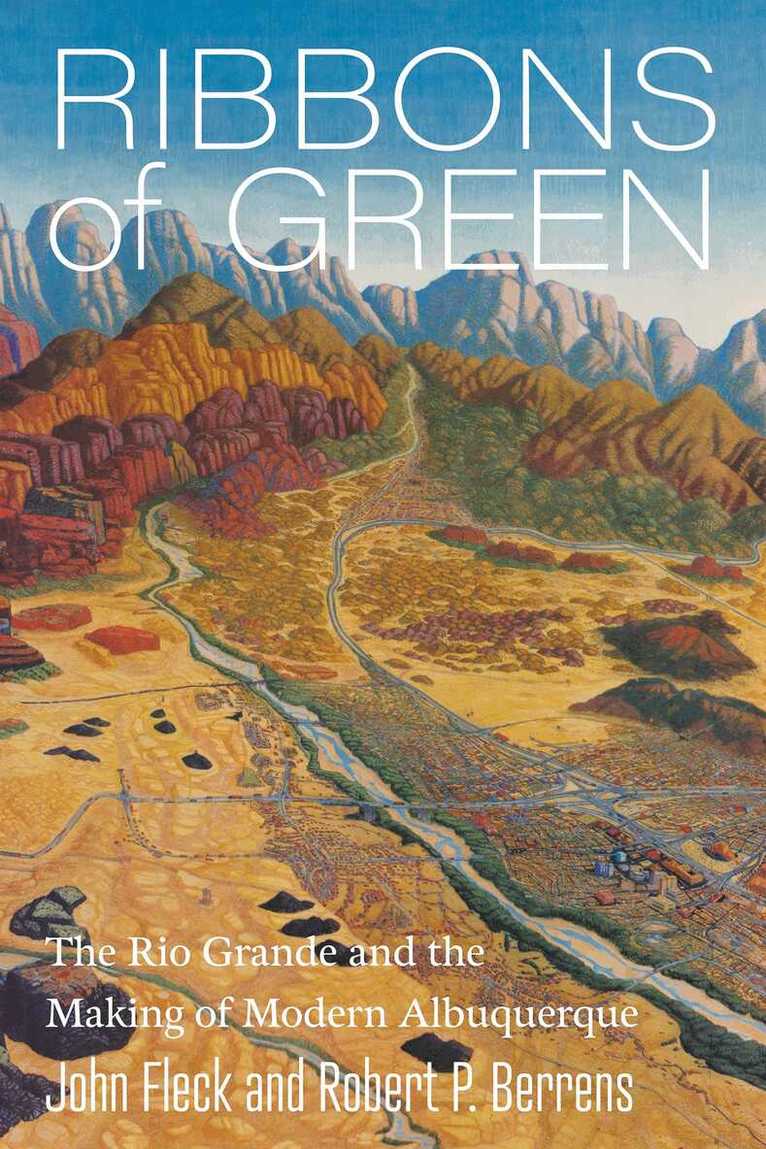
The first combined social and ecological look at how institutions in New Mexico intentionally built the Rio Grande Valley through the heart of Albuquerque to create “natural” corridors of green spaces in a modern American city. Dry one year, overflowing the next, the Rio Grande has sustained its arid valley for millennia. In Ribbons of Green, John Fleck and Robert P. Berrens seek to understand twenty-first-century Albuquerque’s relationship with the Rio Grande by exploring the social and ecological interactions that describe how this high-desert city developed astride a capricious river. In every phase of the Duke City’s history, living with the Rio Grande posed problems that required collective action by its stakeholders to irrigate, build river crossings, drain the valley’s floor, and protect residents from flooding. These collective decisions ultimately changed the course of the river, resulting in intentionally designed “ribbons of green” that dominate today’s cityscape. The Rio Grande in turn altered the collective psyche of Albuquerque. For many residents, the city’s bosque is their only interaction with nature, but these green corridors are very much a human creation. Ribbons of Green explores how Albuquerque built its environment to create a valley floor that its residents have come to adore and how, in a climate-altered world, we might keep it.
343 kr
Skickas inom 3-6 vardagar
"Illuminating." --New York Times WIRED's Required Science Reading 2016 When we think of water in the West, we think of conflict and crisis. In recent years, newspaper headlines have screamed, "Scarce water and the death of California farms," "The Dust Bowl returns," "A 'megadrought' will grip U.S. in the coming decades." Yet similar stories have been appearing for decades and the taps continue to flow. John Fleck argues that the talk of impending doom is not only untrue, but dangerous. When people get scared, they fight for the last drop of water; but when they actually have less, they use less. Having covered environmental issues in the West for a quarter century, Fleck would be the last writer to discount the serious problems posed by a dwindling Colorado River. But in that time, Fleck has also seen people in the Colorado River Basin come together, conserve, and share the water that is available. Western communities, whether farmers and city-dwellers or US environmentalists and Mexican water managers, have a promising record of cooperation, a record often obscured by the crisis narrative. In this fresh take on western water, Fleck brings to light the true history of collaboration and examines the bonds currently being forged to solve the Basin's most dire threats. Rather than perpetuate the myth "Whiskey's for drinkin', water's for fightin' over," Fleck urges readers to embrace a new, more optimistic narrative--a future where the Colorado continues to flow.