John G. Gager – författare
Visar alla böcker från författaren John G. Gager. Handla med fri frakt och snabb leverans.
10 produkter
10 produkter
E-bok
Engelska, 1985443 kr
Läs direkt efter köp
This revisionist reading of early anti-Judaism offers a richer and more varied picture of the Jews and Christians of antiquity.
E-bok
Engelska, 2002211 kr
Läs direkt efter köp
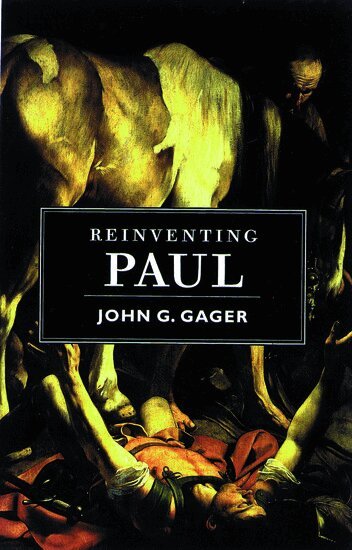
Throughout the Christian era, Paul has stood at the center of controversy, accused of being the father of Christian anti-Semitism. But have we misunderstood the man and his teachings for nearly 2,000 years? In this highly accessible book, John Gager challenges this entrenched view of Paul, arguing persuasively that Paul''s words have been taken out of their original context, distorted, and generally misconstrued. Gager takes us in search of the "real" Paul--using Paul''s own writings. Through an exhaustive analysis of Paul''s letters to the Galatians and the Romans, he provides illuminating answers to the key questions: Did Paul repudiate the Law of Moses? Did he believe that Jews had been rejected by God and replaced as His chosen people by Gentiles? Did he consider circumcision to be necessary for salvation? And did he expect Jews to find salvation through Jesus? To all these questions, John Gager answers no. First, he puts Paul''s proselytizing in context. Paul was an apostle to the Gentiles, not the Jews. His most vehement arguments were directed not against Judaism but against competing apostles in the Jesus movement who demanded that Gentiles be circumcised and conform to Jewish law in order to be saved. Moreover, Paul relied on rhetorical devices that were familiar to his intended audience but opaque to later readers of the letters. As a result, his message has been misunderstood by all succeeding generations. Reinventing Paul brilliantly sets forth a controversial interpretation of Paul''s teaching. This thought-provoking portrait is essential reading for theologians and lay people, historians and philosophers, Christians and Jews.
Häftad, Engelska, 1985
434 kr
Skickas inom 5-8 vardagar
A revisionist reading of early anti-Judaism, in which the author challenges the prevailing opinion and offers a richer picture than ever before of the Jews and Christians of antiquity.'A very important contribution to the clarifying of the complexity of the relaionships between Jews, Christians, and pagans in Greco-Roman culture.' Rosemary Radford Ruether, Garrett-Evangelical Theological Seminary
Häftad, Engelska, 2002
234 kr
Skickas inom 5-8 vardagar
Throughout the Christian era, Paul has stood at the center of controversy, accused of being the father of Christian anti-Semitism. In this highly accessible book, John Gager challenges this entrenched view of Paul, arguing persuasively that Paul's words have been taken out of their original context, distorted, and generally misconstrued.Using Paul's own writings, Gager brilliantly sets forth a controversial interpretation of the apostle's teaching as he takes us in search of the "real" Paul. Through an exhaustive analysis of Paul's letters to the Galatians and the Romans, he provides illuminating answers to the key questions: Did Paul repudiate the Law of Moses? Did he believe that Jews had been rejected by God and replaced as His chosen people by Gentiles? Did he consider circumcision to be necessary for salvation? And did he expect Jews to find salvation through Jesus? Gager tells us that Paul was an apostle to the Gentiles, not the Jews. His most vehement arguments were directed not against Judaism but against competing apostles in the Jesus movement who demanded that Gentiles be circumcised and conform to Jewish law in order to be saved. Moreover, Paul relied on rhetorical devices that were familiar to his intended audience but opaque to later readers of the letters. As a result, his message has been misunderstood by succeeding generations.
E-bok
PDF, Engelska, 1999725 kr
Läs direkt efter köp
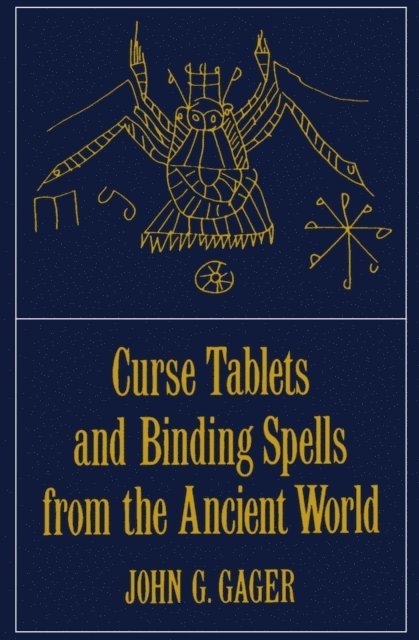
In the ancient Greco-Roman world, it was common practice to curse or bind an enemy or rival by writing an incantation on a tablet and dedicating it to a god or spirit. These curses or binding spells, commonly called defixiones were intended to bring other people under the power and control of those who commissioned them. More than a thousand such texts, written between the 5th Century B.C.E. and the 5th Century C.E., have been discovered from North Africa to England, and from Syria to Spain. Extending into every aspect of ancient life--athletic and theatrical competitions, judicial proceedings, love affairs, business rivalries, and the recovery of stolen property--they shed light on a new dimension of classical study previously inaccessible. Here, for the first time, these texts have been translated into English with a substantial translator''s introduction revealing the cultural, social, and historical context for the texts. This book will interest historians, classicists, scholars of religion, and those concerned with ancient magic.
E-bok
PDF, Engelska, 1985499 kr
Läs direkt efter köp
This revisionist reading of early anti-Judaism offers a richer and more varied picture of the Jews and Christians of antiquity.
E-bok
PDF, Engelska, 2002164 kr
Läs direkt efter köp
Throughout the Christian era, Paul has stood at the center of controversy, accused of being the father of Christian anti-Semitism. But have we misunderstood the man and his teachings for nearly 2,000 years? In this highly accessible book, John Gager challenges this entrenched view of Paul, arguing persuasively that Paul''s words have been taken out of their original context, distorted, and generally misconstrued. Gager takes us in search of the "real" Paul--using Paul''s own writings. Through an exhaustive analysis of Paul''s letters to the Galatians and the Romans, he provides illuminating answers to the key questions: Did Paul repudiate the Law of Moses? Did he believe that Jews had been rejected by God and replaced as His chosen people by Gentiles? Did he consider circumcision to be necessary for salvation? And did he expect Jews to find salvation through Jesus? To all these questions, John Gager answers no. First, he puts Paul''s proselytizing in context. Paul was an apostle to the Gentiles, not the Jews. His most vehement arguments were directed not against Judaism but against competing apostles in the Jesus movement who demanded that Gentiles be circumcised and conform to Jewish law in order to be saved. Moreover, Paul relied on rhetorical devices that were familiar to his intended audience but opaque to later readers of the letters. As a result, his message has been misunderstood by all succeeding generations. Reinventing Paul brilliantly sets forth a controversial interpretation of Paul''s teaching. This thought-provoking portrait is essential reading for theologians and lay people, historians and philosophers, Christians and Jews.
E-bok
Engelska, 1999752 kr
Läs direkt efter köp
In the ancient Greco-Roman world, it was common practice to curse or bind an enemy or rival by writing an incantation on a tablet and dedicating it to a god or spirit. These curses or binding spells, commonly called defixiones were intended to bring other people under the power and control of those who commissioned them. More than a thousand such texts, written between the 5th Century B.C.E. and the 5th Century C.E., have been discovered from North Africa to England, and from Syria to Spain. Extending into every aspect of ancient life--athletic and theatrical competitions, judicial proceedings, love affairs, business rivalries, and the recovery of stolen property--they shed light on a new dimension of classical study previously inaccessible. Here, for the first time, these texts have been translated into English with a substantial translator''s introduction revealing the cultural, social, and historical context for the texts. This book will interest historians, classicists, scholars of religion, and those concerned with ancient magic.
Inbunden, Engelska, 2015
833 kr
Skickas inom 5-8 vardagar
In this historical and theological study, John G. Gager undermines the myth of the Apostle Paul's rejection of Judaism, conversion to Christianity, and founding of Christian anti-Judaism. He finds that the rise of Christianity occurred well after Paul's death and attributes the distortion of the Apostle's views to early and later Christians. Though Christian clerical elites ascribed a rejection-replacement theology to Paul's legend, Gager shows that the Apostle was considered a loyal Jew by many of his Jesus-believing contemporaries and that later Jewish and Muslim thinkers held the same view. He holds that one of the earliest misinterpretations of Paul was to name him the founder of Christianity, and in recent times numerous Jewish and Christian readers of Paul have moved beyond this understanding. Gager also finds that Judaism did not fade away after Paul's death but continued to appeal to both Christians and pagans for centuries. Jewish synagogues remained important religious and social institutions throughout the Mediterranean world.Making use of all possible literary and archaeological sources, including Muslim texts, Gager helps recover the long pre-history of a Jewish Paul, obscured by recent, negative portrayals of the Apostle, and recognizes the enduring bond between Jews and Christians that has influenced all aspects of Christianity.
Häftad, Engelska, 2017
451 kr
Skickas inom 3-6 vardagar
In this historical and theological study, John G. Gager undermines the myth of the Apostle Paul's rejection of Judaism, conversion to Christianity, and founding of Christian anti-Judaism. He finds that the rise of Christianity occurred well after Paul's death and attributes the distortion of the Apostle's views to early and later Christians. Though Christian clerical elites ascribed a rejection-replacement theology to Paul's legend, Gager shows that the Apostle was considered a loyal Jew by many of his Jesus-believing contemporaries and that later Jewish and Muslim thinkers held the same view. He holds that one of the earliest misinterpretations of Paul was to name him the founder of Christianity, and in recent times numerous Jewish and Christian readers of Paul have moved beyond this understanding. Gager also finds that Judaism did not fade away after Paul's death but continued to appeal to both Christians and pagans for centuries. Jewish synagogues remained important religious and social institutions throughout the Mediterranean world.Making use of all possible literary and archaeological sources, including Muslim texts, Gager helps recover the long pre-history of a Jewish Paul, obscured by recent, negative portrayals of the Apostle, and recognizes the enduring bond between Jews and Christians that has influenced all aspects of Christianity.