John Grumley – författare
Visar alla böcker från författaren John Grumley. Handla med fri frakt och snabb leverans.
10 produkter
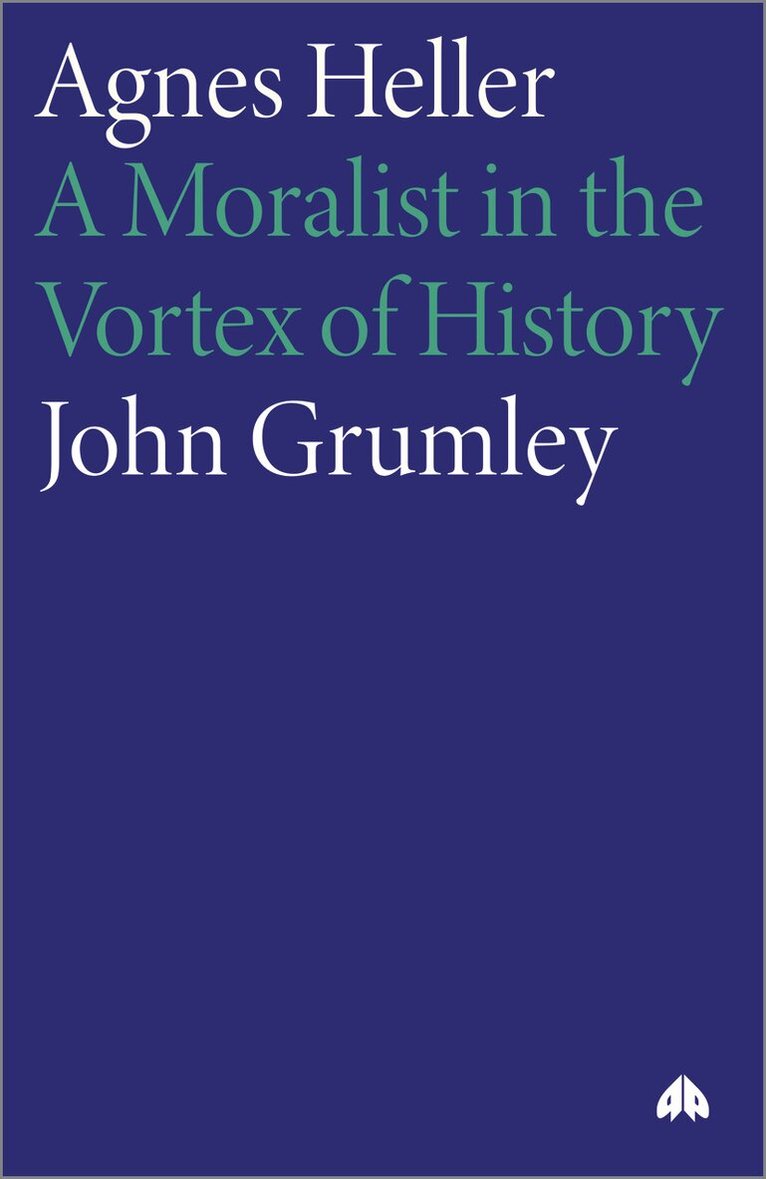
Agnes Heller
A Moralist in the Vortex of History
Av John Grumley
Häftad, 2004
326 kr
Lägg i varukorg
Agnes Heller is one of the leading thinkers to come out of the tradition of critical theory. Her awesome intellectual range and output includes ethics, philosophical anthropology, political philosophy and a theory of modernity and its culture.Hungarian by birth, she was one of the best known …
Agnes Heller
A Moralist in the Vortex of History
Av John Grumley
Inbunden, 2004
947 kr
Lägg i varukorg
Agnes Heller is one of the leading thinkers to come out of the tradition of critical theory. Her awesome intellectual range and output includes ethics, philosophical anthropology, political philosophy and a theory of modernity and its culture.Hungarian by birth, she was one of the best known …
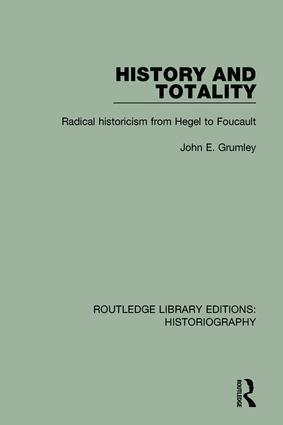
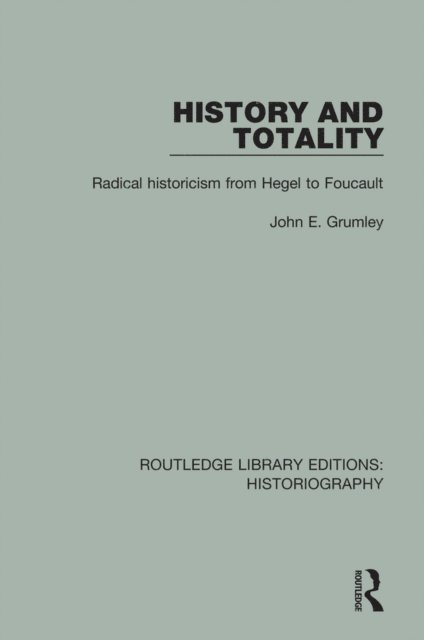
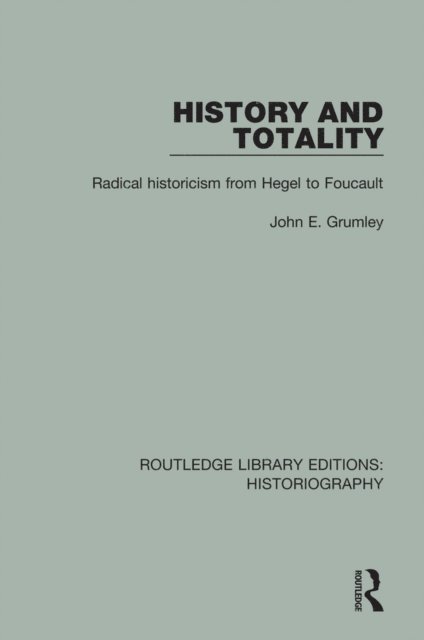
History and Totality
Radical Historicism From Hegel to Foucault
Av John Grumley
Inbunden, 2016
2512 kr
Lägg i varukorg
In this work, originally published in 1989, the author establishes a tradition of radical historicism from Hegel to the Budapenst School. He charts both its continuous evolution from the early 19th century to the late 20thh, and its transformation in the context of European social, economic and …
History and Totality
Radical Historicism From Hegel to Foucault
Av John Grumley
Häftad, 2018
742 kr
Lägg i varukorg
In this work, originally published in 1989, the author establishes a tradition of radical historicism from Hegel to the Budapenst School. He charts both its continuous evolution from the early 19th century to the late 20thh, and its transformation in the context of European social, economic and …
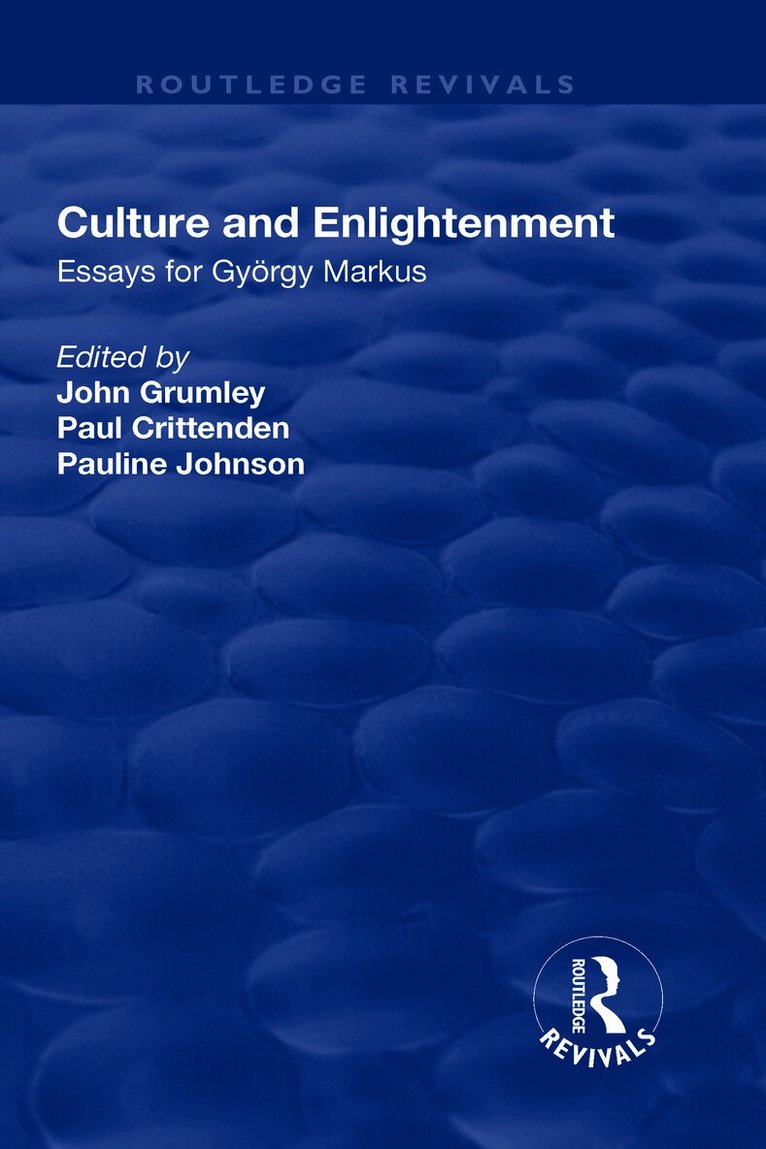
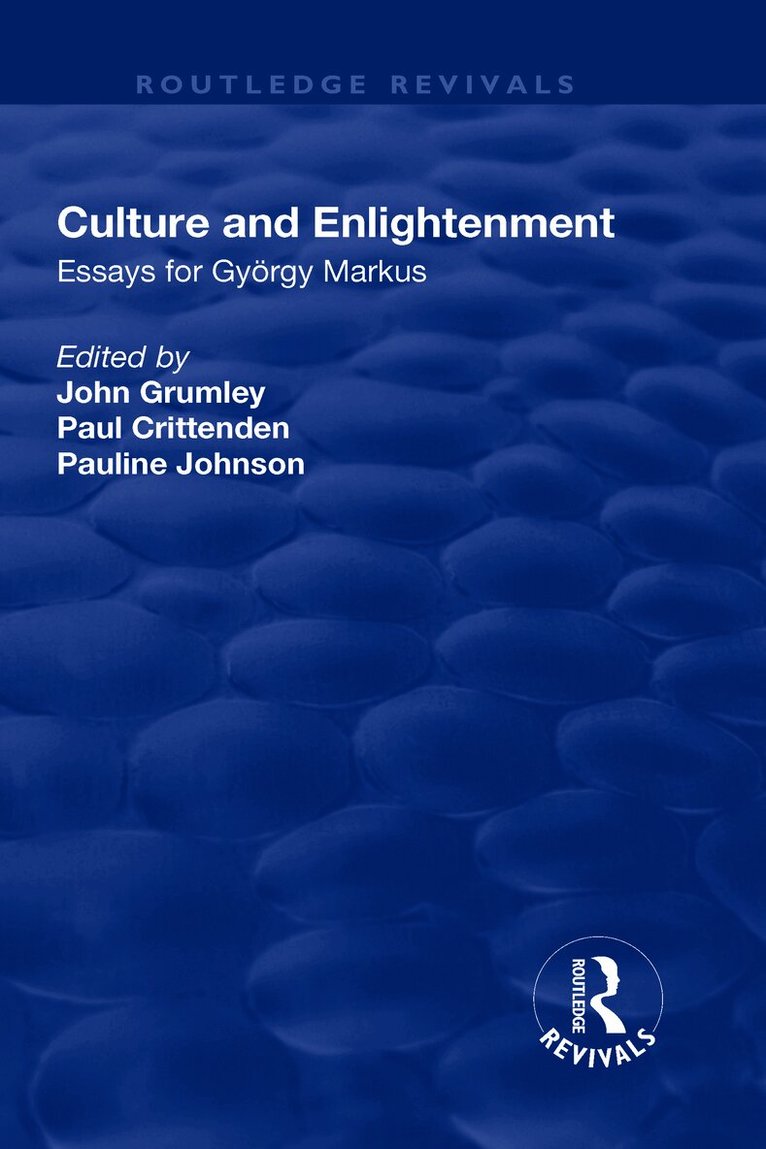
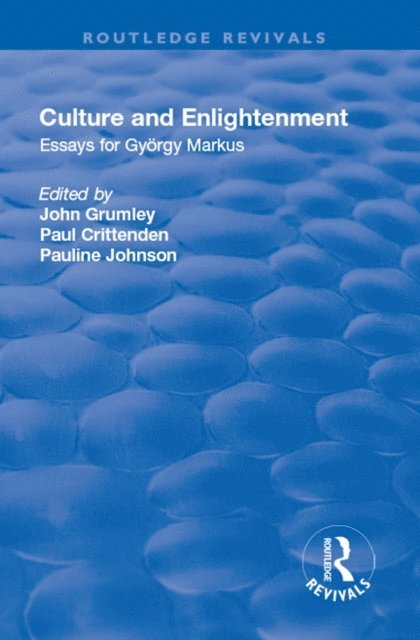
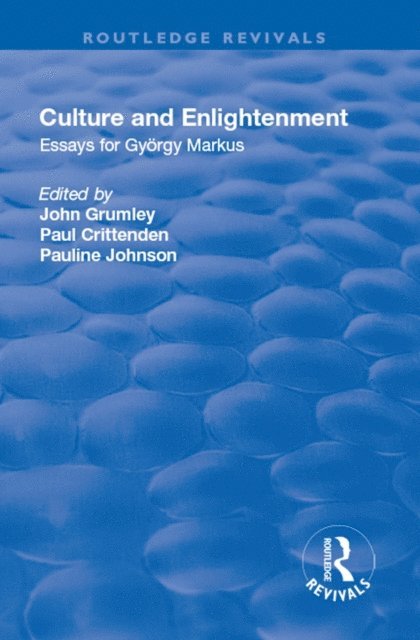
Culture and Enlightenment
Essays for György Markus
Av Paul Crittenden, John Grumley
Häftad, 2019
560 kr
Lägg i varukorg
This title was first published in 2002: Culture and Enlightenment are the two words that best characterise the essence of György Markus's career, in whose honour this book is published. Markus devoted the last twenty years of research towards a theory of cultural objectivations and their …
Culture and Enlightenment
Essays for György Markus
Av Paul Crittenden, John Grumley
Inbunden, 2017
2512 kr
Lägg i varukorg
This title was first published in 2002: Culture and Enlightenment are the two words that best characterise the essence of György Markus's career, in whose honour this book is published. Markus devoted the last twenty years of research towards a theory of cultural objectivations and their …
History and Totality
Radical Historicism From Hegel to Foucault
Av John Grumley
E-bok, 2016
849 kr
Lägg i varukorg
In this work, originally published in 1989, the author establishes a tradition of radical historicism from Hegel to the Budapenst School. He charts both its continuous evolution from the early 19th century to the late 20thh, and its transformation in the context of European social, economic and …
History and Totality
Radical Historicism From Hegel to Foucault
Av John Grumley
E-bok, 2016
849 kr
Lägg i varukorg
In this work, originally published in 1989, the author establishes a tradition of radical historicism from Hegel to the Budapenst School. He charts both its continuous evolution from the early 19th century to the late 20thh, and its transformation in the context of European social, economic and …
Culture and Enlightenment
Essays for Gyorgy Markus
Av Paul Crittenden, John Grumley
E-bok, 2017
658 kr
Lägg i varukorg
This title was first published in 2002: Culture and Enlightenment are the two words that best characterise the essence of György Markus''s career, in whose honour this book is published. Markus devoted the last twenty years of research towards a theory of cultural objectivations and their …
Culture and Enlightenment
Essays for Gyorgy Markus
Av Paul Crittenden, John Grumley
E-bok, 2017
637 kr
Lägg i varukorg
This title was first published in 2002: Culture and Enlightenment are the two words that best characterise the essence of György Markus''s career, in whose honour this book is published. Markus devoted the last twenty years of research towards a theory of cultural objectivations and their …