John H. McWhorter - Böcker
Visar alla böcker från författaren John H. McWhorter. Handla med fri frakt och snabb leverans.
8 produkter
8 produkter
170 kr
Skickas inom 5-8 vardagar
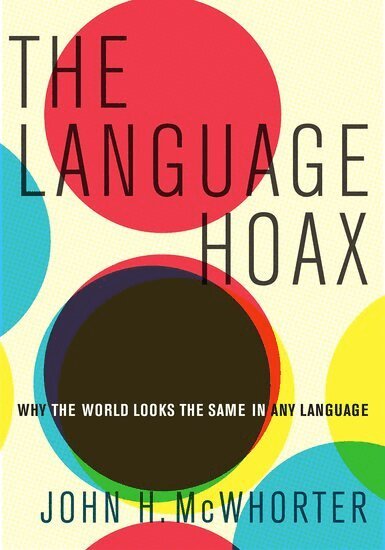
Japanese has a term that covers both green and blue. Russian has separate terms for dark and light blue. Does this mean that Russians perceive these colors differently from Japanese people? Does language control and limit the way we think? This short, opinionated book addresses the Sapir-Whorf hypothesis, which argues that the language we speak shapes the way we perceive the world. Linguist John McWhorter argues that while this idea is mesmerizing, it is plainly wrong. It is language that reflects culture and worldview, not the other way around. The fact that a language has only one word for eat, drink, and smoke doesn't mean its speakers don't process the difference between food and beverage, and those who use the same word for blue and green perceive those two colors just as vividly as others do. McWhorter shows not only how the idea of language as a lens fails but also why we want so badly to believe it: we're eager to celebrate diversity by acknowledging the intelligence of peoples who may not think like we do. Though well-intentioned, our belief in this idea poses an obstacle to a better understanding of human nature and even trivializes the people we seek to celebrate. The reality -- that all humans think alike -- provides another, better way for us to acknowledge the intelligence of all peoples.
850 kr
Skickas inom 5-8 vardagar
This volume gathers the last ten years worth of published articles on creole languages and their origins by John H. McWhorter, a unique and often controversial scholar in the field. The articles fall into roughly three categories: defending his hypothesis that creole languages are synchronically distinguishable from older grammars, addressing the intersection between creole genesis and language change, and lastly countering the accepted argument that creoles' differences from their source languages (called lexifiers) are simply a matter of inflection. This book will be of interest to scholars and students of creole and pidgin studies, and lingustics more broadly.
276 kr
Skickas inom 5-8 vardagar
Japanese has a term that covers both green and blue. Russian has separate terms for dark and light blue. Does this mean that Russians perceive these colors differently from Japanese people? Does language control and limit the way we think? This short, opinionated book addresses the Sapir-Whorf hypothesis, which argues that the language we speak shapes the way we perceive the world. Linguist John McWhorter argues that while this idea is mesmerizing, it is plainly wrong. It is language that reflects culture and worldview, not the other way around. The fact that a language has only one word for eat, drink, and smoke doesn't mean its speakers don't process the difference between food and beverage, and those who use the same word for blue and green perceive those two colors just as vividly as others do. McWhorter shows not only how the idea of language as a lens fails but also why we want so badly to believe it: we're eager to celebrate diversity by acknowledging the intelligence of peoples who may not think like we do. Though well-intentioned, our belief in this idea poses an obstacle to a better understanding of human nature and even trivializes the people we seek to celebrate. The reality -- that all humans think alike -- provides another, better way for us to acknowledge the intelligence of all peoples.
712 kr
Skickas inom 7-10 vardagar
Creoles have long been the subject of debate in linguistics, with many conflicting views, both on how they are formed, and what their political and linguistic status should be. Indeed, over the past twenty years, some creole specialists have argued that it has been wrong to think of creoles as anything but language blends in the same way that Yiddish is a blend of German and Hebrew and Slavic. Here, John H. McWhorter debunks the most widely accepted idea that creoles are created in the same way as 'children', taking characteristics from both 'parent' languages, and its underlying assumption that all historical and biological processes are the same. Instead, the facts support the original, and more interesting, argument that creoles are their own unique entity and are among the world's only genuinely new languages.
280 kr
Skickas inom 7-10 vardagar
Creoles have long been the subject of debate in linguistics, with many conflicting views, both on how they are formed, and what their political and linguistic status should be. Indeed, over the past twenty years, some creole specialists have argued that it has been wrong to think of creoles as anything but language blends in the same way that Yiddish is a blend of German and Hebrew and Slavic. Here, John H. McWhorter debunks the most widely accepted idea that creoles are created in the same way as 'children', taking characteristics from both 'parent' languages, and its underlying assumption that all historical and biological processes are the same. Instead, the facts support the original, and more interesting, argument that creoles are their own unique entity and are among the world's only genuinely new languages.
389 kr
Kommande
From Show Boat to The Wiz, The Lion King, and Ragtime, everyone recognizes the “Broadway sound.” But what’s less known is how Black artists, collaborating with white creatives, pioneered the very essence of this uniquely American art form. In Broadway in Black and White, John Mauceri, a renowned conductor and music scholar, and John McWhorter, a celebrated linguist and New York Times columnist, bring their wide-ranging expertise to reveal Broadway’s culturally hybrid roots. Featuring intimate portraits of stars such as Ethel Waters, Paul Robeson, and Pearl Bailey, Mauceri and McWhorter explore the interrelationship between Black and white writers, musicians, actors, and producers throughout Broadway’s history. From Shuffle Along to Hamilton, Broadway in Black and White illustrates how culturally diverse artists created a politically active art form with the goal of fulfilling America’s foundational ideal that all people are created equal.
2 440 kr
Skickas inom 5-8 vardagar
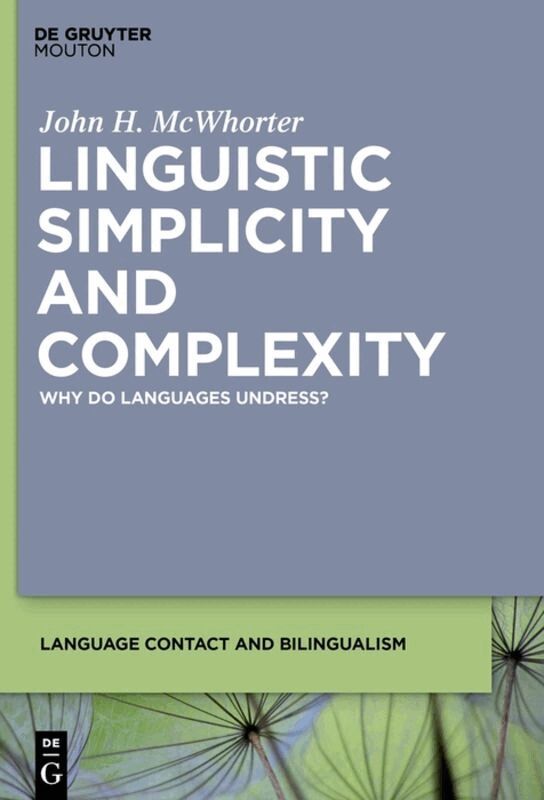
In John McWhorter’s Defining Creole anthology of 2005, his collected articles conveyed the following theme: His hypothesis that creole languages are definable not just in the sociohistorical sense, but in the grammatical sense. His publications since the 1990s have argued that all languages of the world that lack a certain three traits together are creoles (i.e. born as pidgins a few hundred years ago and fleshed out into real languages). He also argued that in light of their pidgin birth, such languages are less grammatically complex than others, as the result of their recent birth as pidgins. These two claims have been highly controversial among creolists as well as other linguists.In this volume, Linguistic Simplicity and Complexity, McWhorter gathers articles he has written since then, in the wake of responses from a wide range of creolists and linguists. These articles represent a considerable divergence in direction from his earlier work.
427 kr
Skickas inom 7-10 vardagar
In John McWhorter’s Defining Creole anthology of 2005, his collected articles conveyed the following theme: His hypothesis that creole languages are definable not just in the sociohistorical sense, but in the grammatical sense. His publications since the 1990s have argued that all languages of the world that lack a certain three traits together are creoles (i.e. born as pidgins a few hundred years ago and fleshed out into real languages). He also argued that in light of their pidgin birth, such languages are less grammatically complex than others, as the result of their recent birth as pidgins. These two claims have been highly controversial among creolists as well as other linguists. In this volume, Linguistic Simplicity and Complexity,McWhorter gathers articles he has written since then, in the wake of responses from a wide range of creolists and linguists. These articles represent a considerable divergence in direction from his earlier work.