
John Harley – författare
Visar alla böcker från författaren John Harley. Handla med fri frakt och snabb leverans.
17 produkter
17 produkter
Häftad, Engelska, 2020
662 kr
Skickas inom 10-15 vardagar
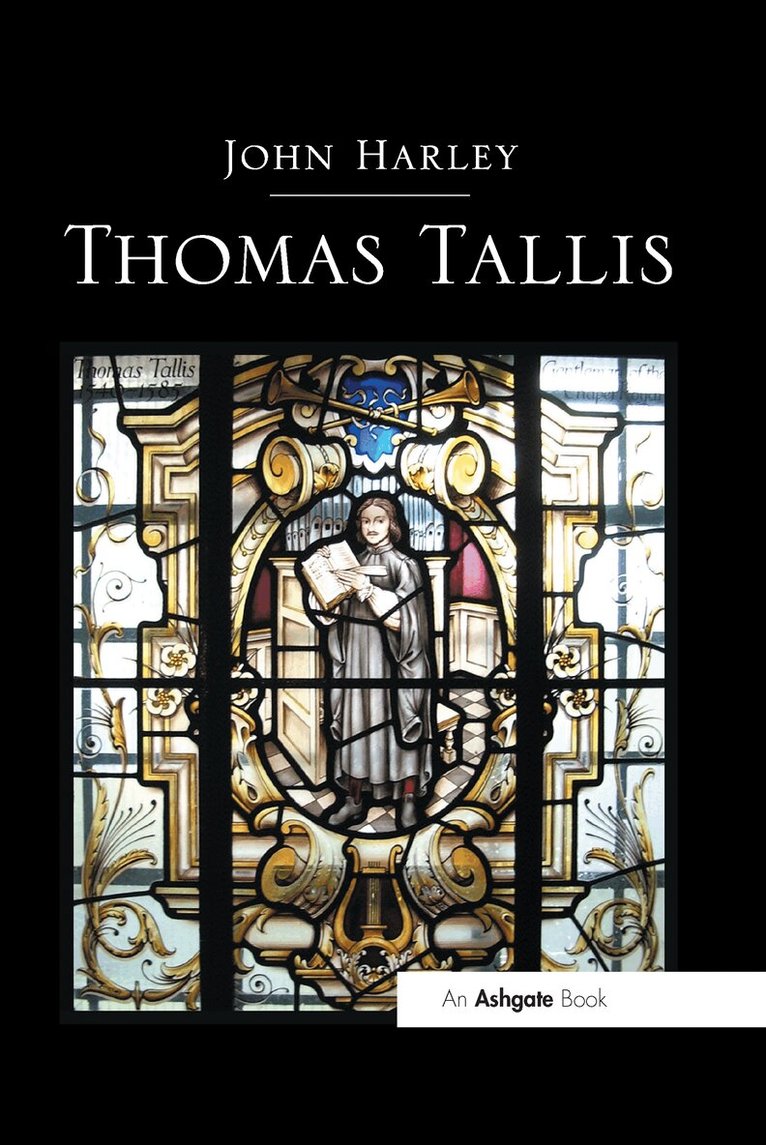
John Harley’s Thomas Tallis is the first full-length book to deal comprehensively with the composer’s life and works. Tallis entered the Chapel Royal in the middle of a long life, and remained there for over 40 years. During a colourful period of English history he famously served King Henry VIII and the three of Henry’s children who followed him to the throne. His importance for English music during the second half of the sixteenth century is equalled only by that of his pupil, colleague and friend William Byrd. In a series of chronological chapters, Harley describes Tallis’s career before and after he entered the Chapel. The fully considered biography is placed in the context of larger political and cultural changes of the period. Each monarch’s reign is treated with an examination of the ways in which Tallis met its particular musical needs. Consideration is given to all of Tallis’s surviving compositions, including those probably intended for patrons and amateurs beyond the court, and attention is paid to the context within which they were written. Tallis emerges as a composer whose music displays his special ability in setting words and creating ingenious musical patterns. A table places most of Tallis’s compositions in a broad chronological order.

Inbunden, Engelska, 2001
420 kr
Skickas inom 5-8 vardagar

Häftad, Engelska, 2001
297 kr
Skickas inom 5-8 vardagar
Häftad, Engelska, 1999
789 kr
Skickas inom 10-15 vardagar
This is the first comprehensive study of William Byrd’s life (1540-1623) and works to appear for sixty years, and fully takes into consideration recent scholarship. The biographical section includes many newly discovered facts about Byrd and his family, while in the chapters dealing with his music an attempt is made for the first time to outline the chronology of all his compositions. The book begins with a detailed account of Byrd's life, based on a completely fresh examination of original documents, which are quoted extensively. Several previously known documents have now been identified as being in Byrd’s hand, and some fresh holographs have been discovered. A number of questions such as his parentage and date of birth have been conclusively settled. The book continues with a survey of Byrd’s music which pays particular attention to its chronological development, and links it where possible to the events and background of his life. A series of appendices includes additional texts of important documents, and a summary catalogue of works. A bibliography and index complete the book. Besides musical illustrations there is a series of plates illustrating documents and places associated with Byrd.
Häftad, Engelska, 2016
804 kr
Skickas inom 10-15 vardagar
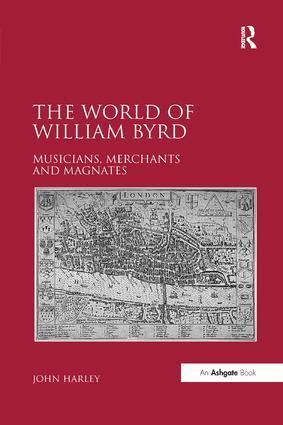
In The World of William Byrd John Harley builds on his previous work, William Byrd: Gentleman of the Chapel Royal (Ashgate, 1997), in order to place the composer more clearly in his social context. He provides new information about Byrd's youthful musical training, and reveals how in his adult life his music emerged from a series of overlapping family, business and social networks. These networks and Byrd's navigation within and between them are examined, as are the lives of a number of the individuals comprising them.
Inbunden, Engelska, 2018
2 010 kr
Skickas inom 10-15 vardagar
First published in 1999, this volume is the first full-length study to deal with the life and music of Orlando Gibbons since E.H. Fellowes’s short book, originally published in 1923. John Harley investigates in detail the family and musical background from which Orlando Gibbons emerged, and gives a fascinating account of the activities of his father, William Gibbons, as a wait in Oxford and Cambridge. He traces, too, the activities of Orlando’s brothers – Edward, who was the master of the choristers at King’s College, Cambridge and later at Exeter Cathedral; Ferdinando, who may have taken over from his father as head of the Cambridge waits, and who became a wait in Lincoln; and Ellis, who contributed two madrigals to Thomas Morley’s collection of 1601, The Triumphs of Oriana. Attention naturally focuses principally on Orlando Gibbons. A full record is given of his remarkably youthful appointment as an organist of the Chapel Royal (he was probably less than twenty at the time) and of his life at court. His additional appointments as one of Prince Charles’s musicians and as organist of Westminster Abbey are also described, as is his sudden and premature death in his early forties. Gibbons’s music is carefully examined in a series of chapters dealing with his pieces for keyboard and for viols, his songs, his full and verse anthems, and his works for the Anglican liturgy. His development as a composer within these genres is followed, and the character of particular pieces is considered. John Harley concludes that whereas, at one time, Gibbons ‘tended to be admired as a successor to Tallis and Byrd, working in a style not essentially different from theirs’, it is now ‘easier to view him as a pioneer, whose work was cut short by his untimely death’. Orlando Gibbons’s son Christopher was only a child when his father died, but he became one of the foremost composers and keyboard players of his generation, writing and performing chamber works and music for the stage during the Commonwealth. Following the Restoration of King Charles II, Christopher Gibbons gained his father’s former posts at the Chapel Royal and Westminster Abbey, for which establishments he wrote a number of anthems. His importance is recognized by the inclusion of a long chapter on his life and works.
Häftad, Engelska, 2020
522 kr
Skickas inom 10-15 vardagar
First published in 1999, this volume is the first full-length study to deal with the life and music of Orlando Gibbons since E.H. Fellowes’s short book, originally published in 1923. John Harley investigates in detail the family and musical background from which Orlando Gibbons emerged, and gives a fascinating account of the activities of his father, William Gibbons, as a wait in Oxford and Cambridge. He traces, too, the activities of Orlando’s brothers – Edward, who was the master of the choristers at King’s College, Cambridge and later at Exeter Cathedral; Ferdinando, who may have taken over from his father as head of the Cambridge waits, and who became a wait in Lincoln; and Ellis, who contributed two madrigals to Thomas Morley’s collection of 1601, The Triumphs of Oriana. Attention naturally focuses principally on Orlando Gibbons. A full record is given of his remarkably youthful appointment as an organist of the Chapel Royal (he was probably less than twenty at the time) and of his life at court. His additional appointments as one of Prince Charles’s musicians and as organist of Westminster Abbey are also described, as is his sudden and premature death in his early forties. Gibbons’s music is carefully examined in a series of chapters dealing with his pieces for keyboard and for viols, his songs, his full and verse anthems, and his works for the Anglican liturgy. His development as a composer within these genres is followed, and the character of particular pieces is considered. John Harley concludes that whereas, at one time, Gibbons ‘tended to be admired as a successor to Tallis and Byrd, working in a style not essentially different from theirs’, it is now ‘easier to view him as a pioneer, whose work was cut short by his untimely death’. Orlando Gibbons’s son Christopher was only a child when his father died, but he became one of the foremost composers and keyboard players of his generation, writing and performing chamber works and music for the stage during the Commonwealth. Following the Restoration of King Charles II, Christopher Gibbons gained his father’s former posts at the Chapel Royal and Westminster Abbey, for which establishments he wrote a number of anthems. His importance is recognized by the inclusion of a long chapter on his life and works.
Häftad, Engelska
576 kr
Skickas inom 3-6 vardagar
Häftad, Engelska, 2023
739 kr
Skickas inom 3-6 vardagar
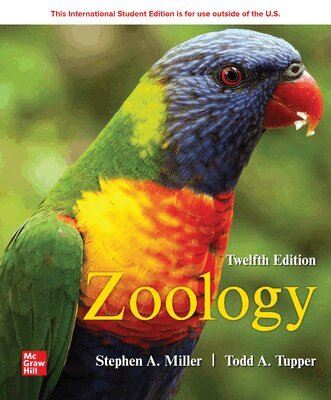
The 12th edition of Zoology continues to offer students an introductory general zoology text that is manageable in size and adaptable to a variety of course formats. It is a principles-oriented text written for the non-majors or the combined course, presented at the freshman and sophomore level.
Inbunden, Engelska, 2010
2 284 kr
Skickas inom 10-15 vardagar
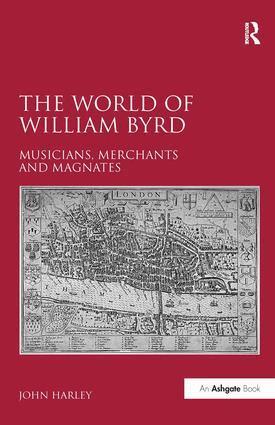
In The World of William Byrd John Harley builds on his previous work, William Byrd: Gentleman of the Chapel Royal (Ashgate, 1997), in order to place the composer more clearly in his social context. He provides new information about Byrd's youthful musical training, and reveals how in his adult life his music emerged from a series of overlapping family, business and social networks. These networks and Byrd's navigation within and between them are examined, as are the lives of a number of the individuals comprising them.
Inbunden, Engelska, 2015
2 225 kr
Skickas inom 10-15 vardagar
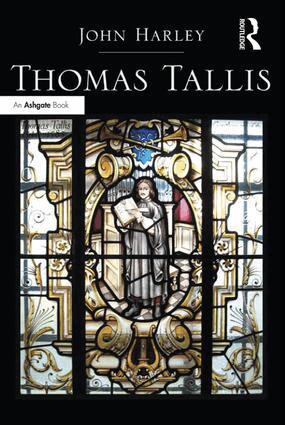
John Harley’s Thomas Tallis is the first full-length book to deal comprehensively with the composer’s life and works. Tallis entered the Chapel Royal in the middle of a long life, and remained there for over 40 years. During a colourful period of English history he famously served King Henry VIII and the three of Henry’s children who followed him to the throne. His importance for English music during the second half of the sixteenth century is equalled only by that of his pupil, colleague and friend William Byrd. In a series of chronological chapters, Harley describes Tallis’s career before and after he entered the Chapel. The fully considered biography is placed in the context of larger political and cultural changes of the period. Each monarch’s reign is treated with an examination of the ways in which Tallis met its particular musical needs. Consideration is given to all of Tallis’s surviving compositions, including those probably intended for patrons and amateurs beyond the court, and attention is paid to the context within which they were written. Tallis emerges as a composer whose music displays his special ability in setting words and creating ingenious musical patterns. A table places most of Tallis’s compositions in a broad chronological order.
Inbunden, Engelska, 2022
427 kr
Tillfälligt slut
Häftad, Engelska, 2022
304 kr
Tillfälligt slut

Häftad, Engelska, 2020
644 kr
Tillfälligt slut
Inbunden, Engelska, 2020
936 kr
Tillfälligt slut