John Henry Schlegel - Böcker
Visar alla böcker från författaren John Henry Schlegel. Handla med fri frakt och snabb leverans.
3 produkter
3 produkter
515 kr
Skickas
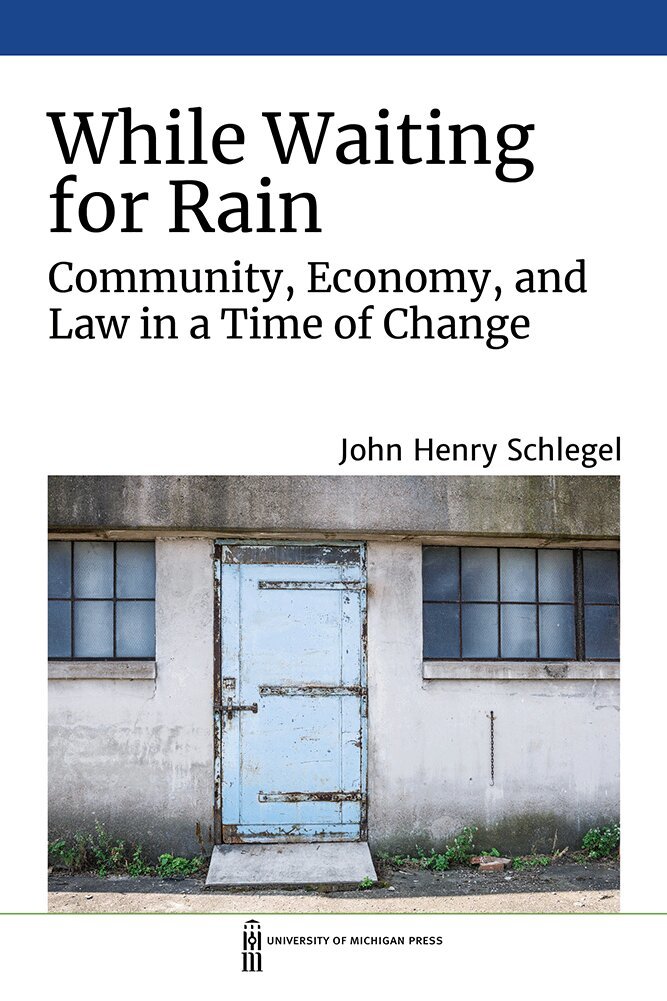
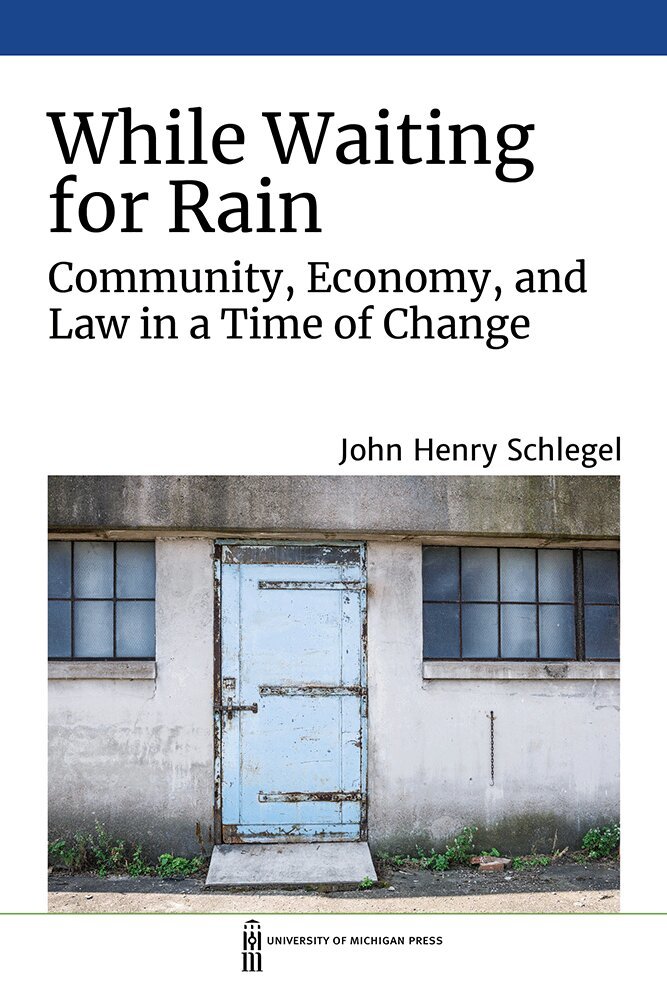
What might a sensible community choose to do if its economy has fallen apart and becoming a ghost town is not an acceptable option? Unfortunately, answers to this question have long been measured against an implicit standard: the postwar economy of the 1950s. After showing why that economy provides an implausible standard—made possible by the lack of economic competition from the European and Asian countries, winners or losers, touched by the war—John Henry Schlegel attempts to answer the question of what to do.While Waiting for Rain first examines the economic history of the United States as well as that of Buffalo, New York: an appropriate stand-in for any city that may have seen its economy start to fall apart in the 1960s, 70s, and 80s. It makes clear that neither Buffalo nor the United States as a whole has had an economy in the sense of “a persistent market structure that is the fusion of an understanding of economic life with the patterns of behavior within the economic, political, and social institutions that enact that understanding” since both economies collapsed. Next, this book builds a plausible theory of how economic growth might take place by examining the work of the famous urbanist, Jane Jacobs, especially her book Cities and the Wealth of Nations. Her work, like that of many others, emphasizes the importance of innovation for economic growth, but is singular in its insistence that such innovation has to come from local resources. It can neither be bought nor given, even by well-intentioned political actors. As a result Americans generally, as well as locally, are like farmers in the midst of a drought, left to review their resources and wait. Finally, it returns to both the local Buffalo and the national economies to consider what these political units might plausibly do while waiting for an economy to emerge.
1 159 kr
Skickas
What might a sensible community choose to do if its economy has fallen apart and becoming a ghost town is not an acceptable option? Unfortunately, answers to this question have long been measured against an implicit standard: the postwar economy of the 1950s. After showing why that economy provides an implausible standard—made possible by the lack of economic competition from the European and Asian countries, winners or losers, touched by the war—John Henry Schlegel attempts to answer the question of what to do.While Waiting for Rain first examines the economic history of the United States as well as that of Buffalo, New York: an appropriate stand-in for any city that may have seen its economy start to fall apart in the 1960s, 70s, and 80s. It makes clear that neither Buffalo nor the United States as a whole has had an economy in the sense of “a persistent market structure that is the fusion of an understanding of economic life with the patterns of behavior within the economic, political, and social institutions that enact that understanding” since both economies collapsed. Next, this book builds a plausible theory of how economic growth might take place by examining the work of the famous urbanist, Jane Jacobs, especially her book Cities and the Wealth of Nations. Her work, like that of many others, emphasizes the importance of innovation for economic growth, but is singular in its insistence that such innovation has to come from local resources. It can neither be bought nor given, even by well-intentioned political actors. As a result Americans generally, as well as locally, are like farmers in the midst of a drought, left to review their resources and wait. Finally, it returns to both the local Buffalo and the national economies to consider what these political units might plausibly do while waiting for an economy to emerge.
641 kr
Skickas inom 10-15 vardagar
John Henry Schlegel recovers a largely ignored aspect of American Legal Realism, a movement in legal thought in the 1920s and 1930s that sought to bring the modern notion of empirical science into the study and teaching of law. In this book, he explores individual Realist scholars' efforts to challenge the received notion that the study of law was primarily a matter of learning rules and how to manipulate them. He argues that empirical research was integral to Legal Realism, and he explores why this kind of research did not, finally, become a part of American law school curricula. Schlegel reviews the work of several prominent Realists but concentrates on the writings of Walter Wheeler Cook, Underhill Moore, and Charles E. Clark. He reveals how their interest in empirical research was a product of their personal and professional circumstances and demonstrates the influence of John Dewey's ideas on the expression of that interest. According to Schlegel, competing understandings of the role of empirical inquiry contributed to the slow decline of this kind of research by professors of law.A UNC Press Enduring Edition -- UNC Press Enduring Editions use the latest in digital technology to make available again books from our distinguished backlist that were previously out of print. These editions are published unaltered from the original, and are presented in affordable paperback formats, bringing readers both historical and cultural value.