John I. Kitsuse - Böcker
Visar alla böcker från författaren John I. Kitsuse. Handla med fri frakt och snabb leverans.
6 produkter
6 produkter
684 kr
Skickas inom 3-6 vardagar
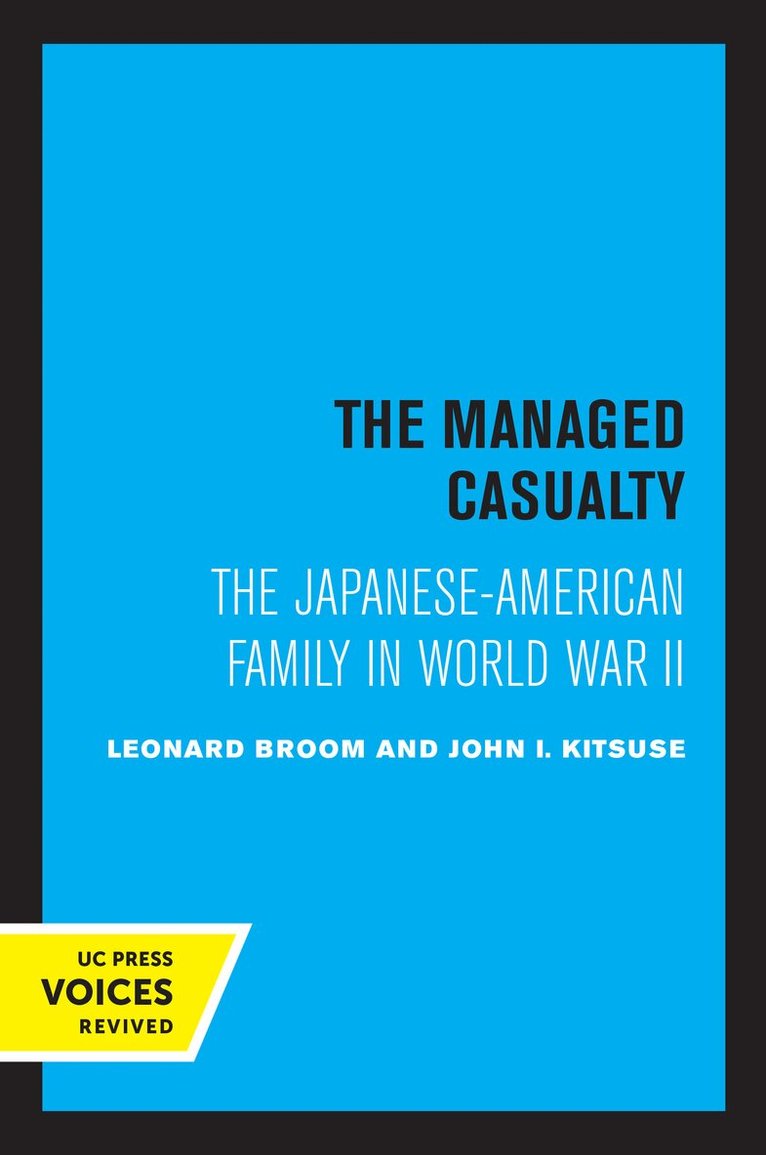
Managed Casualty investigates the profound effects of World War II-era policies on Japanese-American families, focusing on their forced removal, internment, and eventual release. By centering the analysis on the family unit, the study captures the unique dynamics of cultural resilience, adaptation, and the challenges imposed by administrative policies during one of the most tumultuous periods in Japanese-American history. The research explores how families, integral to Japanese-American community structure, navigated the pressures of displacement while striving to maintain cohesion under government-imposed constraints.The book meticulously examines the origins of the Japanese family system, the immigrant experience, and the development of ethnic communities in the United States. It contrasts pre-war conditions with the upheavals brought by wartime policies, documenting the adaptations families made to preserve their unity and identity. Drawing on diverse case studies, the work provides a textured understanding of the social, economic, and cultural realities faced by Japanese Americans. By weaving together administrative context and individual experiences, the study offers critical insights into the lasting impacts of this historical period on family structures and the broader Japanese-American community.This title is part of UC Press's Voices Revived program, which commemorates University of California Press’s mission to seek out and cultivate the brightest minds and give them voice, reach, and impact. Drawing on a backlist dating to 1893, Voices Revived makes high-quality, peer-reviewed scholarship accessible once again using print-on-demand technology. This title was originally published in 1973.
780 kr
Skickas inom 7-10 vardagar
Managed Casualty investigates the profound effects of World War II-era policies on Japanese-American families, focusing on their forced removal, internment, and eventual release. By centering the analysis on the family unit, the study captures the unique dynamics of cultural resilience, adaptation, and the challenges imposed by administrative policies during one of the most tumultuous periods in Japanese-American history. The research explores how families, integral to Japanese-American community structure, navigated the pressures of displacement while striving to maintain cohesion under government-imposed constraints.The book meticulously examines the origins of the Japanese family system, the immigrant experience, and the development of ethnic communities in the United States. It contrasts pre-war conditions with the upheavals brought by wartime policies, documenting the adaptations families made to preserve their unity and identity. Drawing on diverse case studies, the work provides a textured understanding of the social, economic, and cultural realities faced by Japanese Americans. By weaving together administrative context and individual experiences, the study offers critical insights into the lasting impacts of this historical period on family structures and the broader Japanese-American community.This title is part of UC Press's Voices Revived program, which commemorates University of California Press’s mission to seek out and cultivate the brightest minds and give them voice, reach, and impact. Drawing on a backlist dating to 1893, Voices Revived makes high-quality, peer-reviewed scholarship accessible once again using print-on-demand technology. This title was originally published in 1973.
674 kr
Skickas inom 10-15 vardagar
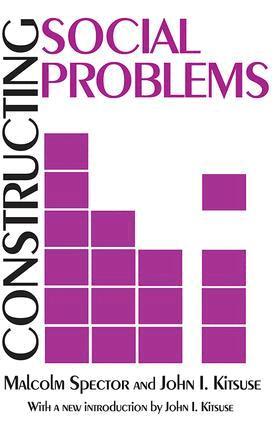
There is no adequate definition of social problems within sociology, and there is not and never has been a sociology of social problems. That observation is the point of departure of this book. The authors aim to provide such a definition and to prepare the ground for the empirical study of social problems. They are aware that their objective will strike many fellow sociologists as ambitious, perhaps even arrogant. Their work challenges sociologists who have, over a period of fifty years, written treatises on social problems, produced textbooks cataloguing the nature, distribution, and causes of these problems, and taught many sociology courses. It is only natural that the authors' work will be viewed as controversial in light of the large literature which has established a "sociology of" a wide range of social problems-the sociology of race relations, prostitution, poverty, crime, mental illness, and so forth. In the 1970s when the authors were preparing for a seminar on the sociology of social problems, their review of the "literature" revealed the absence of any systematic, coherent statement of theory or method in the study of social problems. For many years the subject was listed and offered by university departments of sociology as a "service course" to present undergraduates with what they should know about the various "social pathologies" that exist in their society. This conception of social problems for several decades has been reflected in the substance and quality of the literature dominated by textbooks. In 'Constructing Social Problems', the authors propose that social problems be conceived as the claims-making activities of individuals or groups regarding social conditions they consider unjust, immoral, or harmful and that should be addressed. This perspective, as the authors have formulated it, conceives of social problems as a process of interaction that produces social problems as social facts in society. The authors further propose that this process and the social facts it produces are the data to be researched for the sociology of social problems. This volume will be of interest to those concerned with the discipline of sociology, especially its current theoretical development and growth.
1 152 kr
Skickas inom 3-6 vardagar
This comprehensive volume explores the concrete implications of social constructionist theory, and provides a clear overview of how to do social constructionist research and analysis.
Leading psychologists and sociologists ground theory with practical examples to clearly illustrate the view that human beings are principally social agents rather than passive reactors or information processors. Each chapter analyzes the historical and cultural contexts implicit in a wide range of key issues including anxiety, the family, intelligence, ageing and depression.
581 kr
Skickas inom 10-15 vardagar
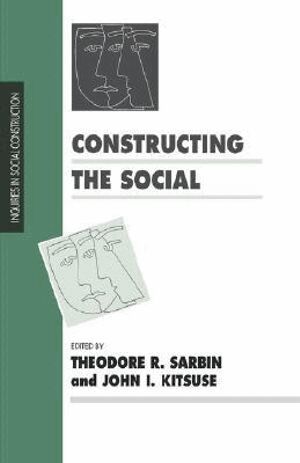
This collection contributes data and analysis to the current sate of work in social problems sociology. The chapters are drawn together based on the social definitional or social constructionist view that social problems are not conditions but rather the definitional activities of people making claims and responses to such conditions. The emphasis is on social problems sociology as the distinct subfield of the discipline that addresses this kind of social conduct. The chapters seek to expand upon and elaborate various elements of this general theme.
2 088 kr
Skickas inom 10-15 vardagar
There is no adequate definition of social problems within sociology, and there is not and never has been a sociology of social problems. That observation is the point of departure of this book. The authors aim to provide such a definition and to prepare the ground for the empirical study of social problems. They are aware that their objective will strike many fellow sociologists as ambitious, perhaps even arrogant. Their work challenges sociologists who have, over a period of fifty years, written treatises on social problems, produced textbooks cataloguing the nature, distribution, and causes of these problems, and taught many sociology courses. It is only natural that the authors' work will be viewed as controversial in light of the large literature which has established a "sociology of" a wide range of social problems-the sociology of race relations, prostitution, poverty, crime, mental illness, and so forth. In the 1970s when the authors were preparing for a seminar on the sociology of social problems, their review of the "literature" revealed the absence of any systematic, coherent statement of theory or method in the study of social problems. For many years the subject was listed and offered by university departments of sociology as a "service course" to present undergraduates with what they should know about the various "social pathologies" that exist in their society. This conception of social problems for several decades has been reflected in the substance and quality of the literature dominated by textbooks. In 'Constructing Social Problems', the authors propose that social problems be conceived as the claims-making activities of individuals or groups regarding social conditions they consider unjust, immoral, or harmful and that should be addressed. This perspective, as the authors have formulated it, conceives of social problems as a process of interaction that produces social problems as social facts in society. The authors further propose that this process and the social facts it produces are the data to be researched for the sociology of social problems. This volume will be of interest to those concerned with the discipline of sociology, especially its current theoretical development and growth.