John J. Lepri - Böcker
Visar alla böcker från författaren John J. Lepri. Handla med fri frakt och snabb leverans.
2 produkter
2 produkter
2 115 kr
Skickas inom 10-15 vardagar
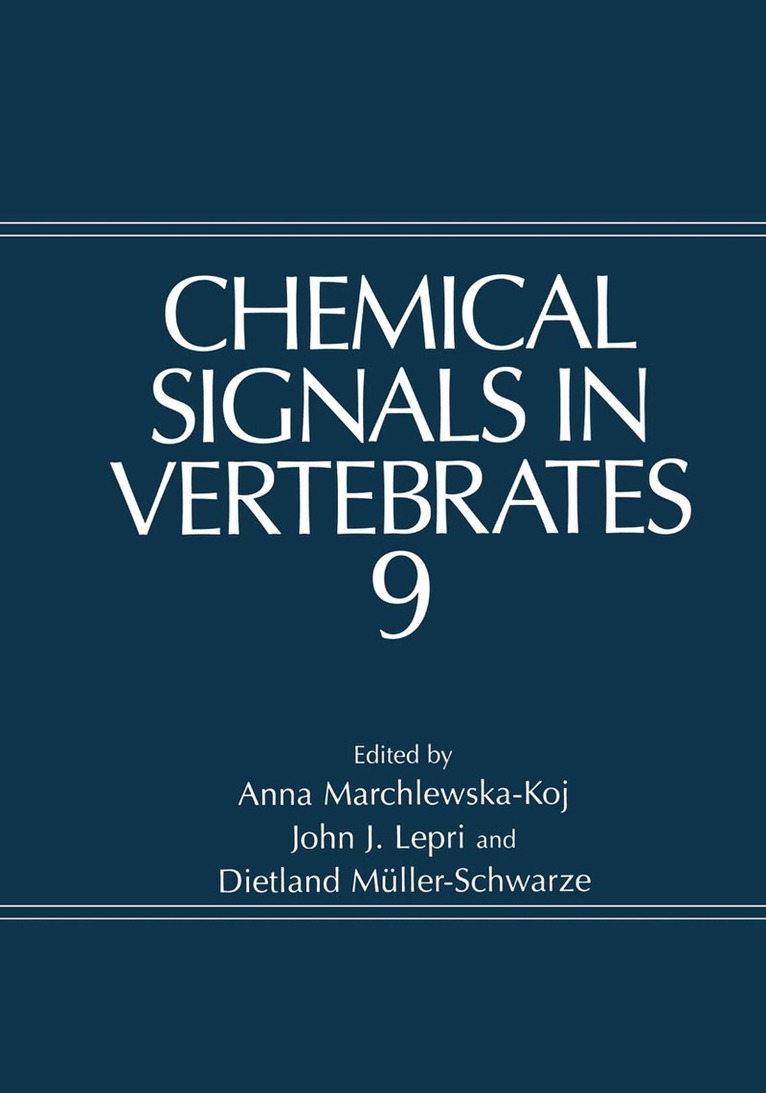
This volume presents recent progress in our understanding of various mechanisms involved in chemical communication between individual animals. Such communication is important for survival and reproduction of any vertebrate species in a variable environment. Apart from visual and acoustic signals, many animals developed highly complex means of conveying message by odor and taste. Low molecular weight and volatile compounds known as pheromones affect many metabolic processes and behavioral traits. The chapters in this volume are derived from presentations and discussions at the Ninth International Symposium on Chemical Signals in Vertebrates, held at the Jagiellonian University, Krakow, Poland, on July 25-29, 2000. The four days and nights of discussions at the conference explored diverse topics in chemical communication, and many of the chapters in this volume were improved by revisions in which the authors took into account the discussions in Krakow.
2 115 kr
Skickas inom 10-15 vardagar
It is generally accepted that the recent progress in molecular and cellular biology would not have been possible without an understanding of the mechanisms and signaling pathways of communication inside the cell and between various cells of the animal organism. In fact a similar progress occurred in the field of chemical communication between individual organisms of vertebrate species, and this volume is aimed at presenting the current state of the art on this subject. The reader can find here both original results obtained in the laboratory or field studies and comprehensive reviews summarizing many years of research. The presentations of over 60 scientists have been grouped according to their approach into nine parts covering such fields as ecological and evolutionary aspects of chemical communication, structure and neuronal mechanisms of chemosensory systems, chemical structure of pheromones and binding proteins, kin, individual and sexual recognition, predator-prey relationships, purpose and consequences of marking behavior, scent signals and reproductive processes. Expanding on former volumes of this series, entirely new chapters have been added on prenatal chemical communication describing specific effects of the intrauterine environment. In many cases a truly multidisciplinary approach was required, such as with the population analysis of polymorphic variants of the mouse's major urinary proteins that function in carrying pheromones.