John L. H. Keep – författare
Visar alla böcker från författaren John L. H. Keep. Handla med fri frakt och snabb leverans.
5 produkter
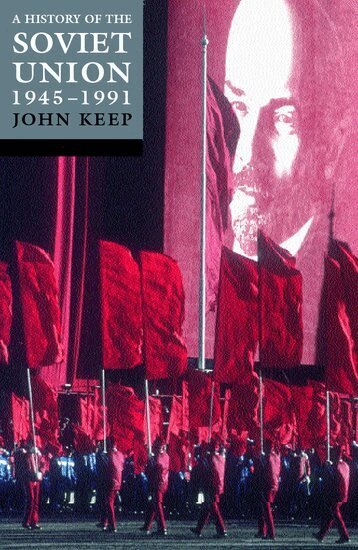
A History of the Soviet Union 1945-1991
Last of the Empires
Häftad, 2002
519 kr
Lägg i varukorg
Described as 'one of the most tragic human experiences in human history', the Soviet Union as an empire holds much intrigue and fascination for the Western world. It held unquestionable status as an empire, with its coverage of over 100 nationalities. Its status as the 'Last of the Empires' depends …
Stalinism
Russian and Western Views at the Turn of the Millenium
Av John L. H. Keep, Alter L. Litvin
Inbunden, 2004
2588 kr
Lägg i varukorg
Stalinism surveys the efforts made in recent years by professional historians, in Russia and the West, to better understand what really went on in the USSR between 1929 and 1953, when the country's affairs were shrouded in secrecy. The opening of the Soviet archives in 1991 has led to a profusion …
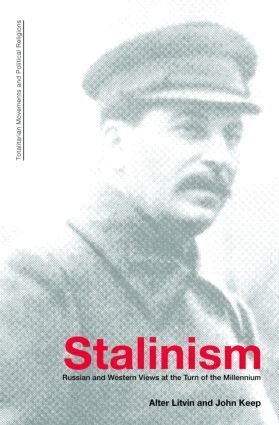
Stalinism
Russian and Western Views at the Turn of the Millenium
Av John L. H. Keep, Alter L. Litvin
Häftad, 2004
1073 kr
Lägg i varukorg
Stalinism surveys the efforts made in recent years by professional historians, in Russia and the West, to better understand what really went on in the USSR between 1929 and 1953, when the country's affairs were shrouded in secrecy. The opening of the Soviet archives in 1991 has led to a profusion …
Stalinism
Russian and Western Views at the Turn of the Millenium
Av Alter L. Litvin, John L. H. Keep
E-bok, 2004
1203 kr
Lägg i varukorg
Stalinism surveys the efforts made in recent years by professional historians, in Russia and the West, to better understand what really went on in the USSR between 1929 and 1953, when the country''s affairs were shrouded in secrecy. The opening of the Soviet archives in 1991 has led to a profusion …
Stalinism
Russian and Western Views at the Turn of the Millenium
Av Alter L. Litvin, John L. H. Keep
E-bok, 2004
1230 kr
Lägg i varukorg
Stalinism surveys the efforts made in recent years by professional historians, in Russia and the West, to better understand what really went on in the USSR between 1929 and 1953, when the country''s affairs were shrouded in secrecy. The opening of the Soviet archives in 1991 has led to a profusion …