John Lamberton Harper - Böcker
Visar alla böcker från författaren John Lamberton Harper. Handla med fri frakt och snabb leverans.
6 produkter
6 produkter
1 589 kr
Skickas inom 7-10 vardagar
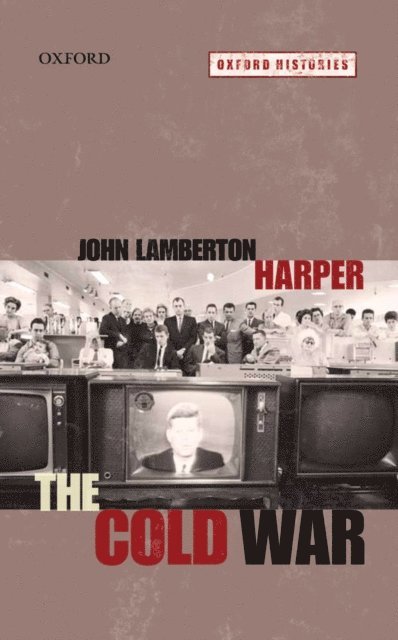
The East-West struggle for supremacy from 1945 to 1989 shaped the lives of hundreds of millions and brought the world to the brink of disaster on several occasions. More than two decades on, the debate over its causes and dynamics is far from over. Drawing on the latest archival evidence and scholarly research, prize-winning historian John Lamberton Harper provides a concise, briskly-written assessment of the Cold War. Why did it start, and eventually envelope nearly every corner of the planet? Why did it stay "cold," at least in its original, European theatre? Why did it end, and who should take the credit? Harper illuminates the deep-seated behavioural patterns within both the Soviet Union and the United States: the search for security through expansion and military might, the belief in a "messianic" mission to uplift humanity, but also a readiness to live and let live based on membership in a common state system and a shared interest in survival. He stresses ways in which internal competitions for political power tilted both the U.S. and Soviet systems towards bellicosity and obsessive preparation for a hot war that no one seriously intended to begin. It is a story of delusions of omnipotence and rash behavior, punctuated by moments of redeeming statesmanship and self-restraint. Harper concludes that, rather than triumphalism, a clear look back at the Cold War's close calls with catastrophe and enormous cost in lives and treasure ought to evoke a sense of regret and humility, as well as relief.
401 kr
Skickas inom 5-8 vardagar
The East-West struggle for supremacy from 1945 to 1989 shaped the lives of hundreds of millions and brought the world to the brink of disaster on several occasions. More than two decades on, the debate over its causes and dynamics is far from over. Drawing on the latest archival evidence and scholarly research, prize-winning historian John Lamberton Harper provides a concise, briskly-written assessment of the Cold War. Why did it start, and eventually envelope nearly every corner of the planet? Why did it stay "cold," at least in its original, European theatre? Why did it end, and who should take the credit? Harper illuminates the deep-seated behavioural patterns within both the Soviet Union and the United States: the search for security through expansion and military might, the belief in a "messianic" mission to uplift humanity, but also a readiness to live and let live based on membership in a common state system and a shared interest in survival. He stresses ways in which internal competitions for political power tilted both the U.S. and Soviet systems towards bellicosity and obsessive preparation for a hot war that no one seriously intended to begin. It is a story of delusions of omnipotence and rash behavior, punctuated by moments of redeeming statesmanship and self-restraint. Harper concludes that, rather than triumphalism, a clear look back at the Cold War's close calls with catastrophe and enormous cost in lives and treasure ought to evoke a sense of regret and humility, as well as relief.
428 kr
Skickas inom 7-10 vardagar
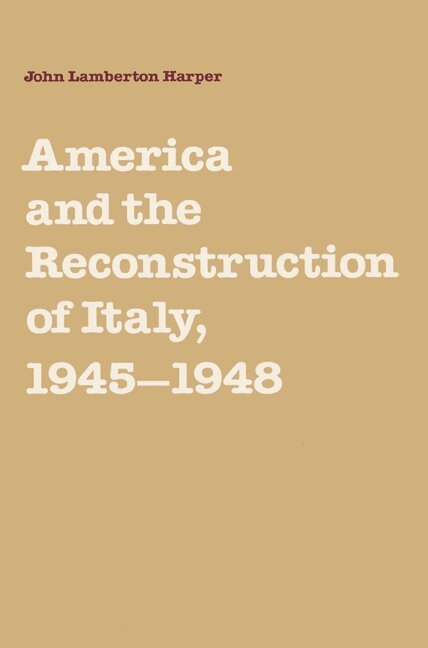
America's special relationship with Italy took form during the years 1945 to 1948. The postwar reconstruction period witnessed an intense struggle to determine the new Italy's political and economic orientation. By virtue of their physical presence, ambitions, and evident strategic interests in Italy, the Americans aspired to play an active part in the internal political contest and ideological debate. Professor Harper's book explores the American role in Italy from the end of the war until the decisive elections of 1948, setting forth its objectives, contradictions, and fundamental limitations. Concentrating on U.S. aid and the economic policies, Professor Harper skilfully traces the attempts of different parties within the U.S. government to build ties to their respective Italian counterparts to bring about basic changes in the Italian political economy. Those alliances remained largely inchoate as, despite their considerable power, the Americans lacked the intellectual preparation and diplomatic leverage to carry out their designs.
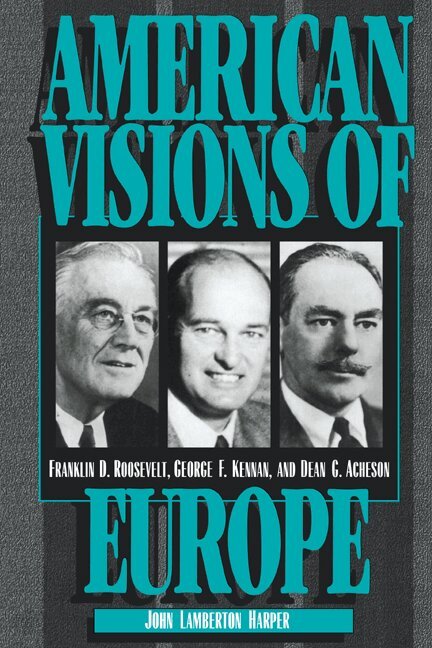
American Visions of Europe
Franklin D. Roosevelt, George F. Kennan, and Dean G. Acheson
Häftad, Engelska, 1996
422 kr
Skickas inom 7-10 vardagar
This book is a biographical study of three American statesmen, concentrating on the development of their distinct attitudes and political programs with respect to the problem of Europe in American foreign policy: Roosevelt's partial internationalism, aiming at the retirement of Europe from world politics while avoiding American entanglement; Kennan's partial isolationism, aspiring to restore Europe's centrality and autonomy through temporary American engagement; and Acheson's accommodating interventionism, establishing the United States as a permanent power in Europe at the behest of European and American interests. The purpose of the book is to explain how and why they arrived at very different solutions to the problem of internecine conflict in Europe, and to show the continuing relevance of their ideas. Three learned and elegantly written portraits are set against the background of the dramatic events and foreign policy controversies of the twentieth century.
435 kr
Skickas inom 7-10 vardagar
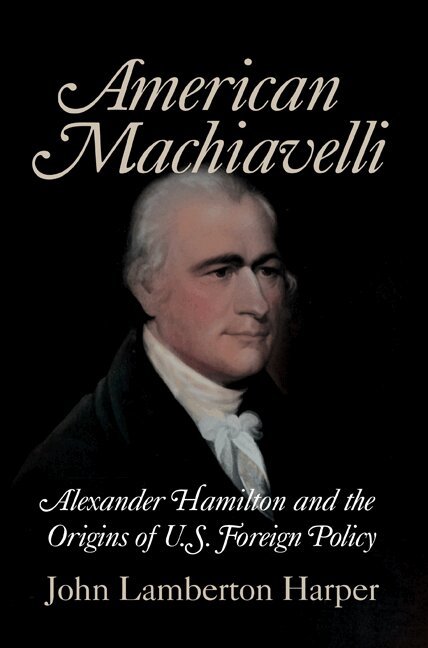
Alexander Hamilton rose from his humble beginnings as an illegitimate West Indian orphan and emigrant to become the premier statebuilder and strategic thinker of the American Founding generation. This is the first detailed narrative study of his foreign policy role and ideas to appear in more than thirty years. It focuses on Hamilton's controversial activities as a key member of President George Washington's cabinet and as an aspiring military leader in the 1790s, a decade of profound division over the shape and powers of the Federal government, and US policy toward the warring powers of Europe. Drawing parallels between Hamilton and the Florentine diplomatist and thinker, Niccol- Machiavelli, prize-winning historian John Lamberton Harper offers an insightful and accessible account of the origins of Hamilton's outlook, his bitterly personal rivalries with Thomas Jefferson and John Adams, and his indispensable part in designing and implementing US foreign policy.
American Machiavelli
Alexander Hamilton and the Origins of U.S. Foreign Policy
Inbunden, Engelska, 2004
623 kr
Skickas inom 7-10 vardagar
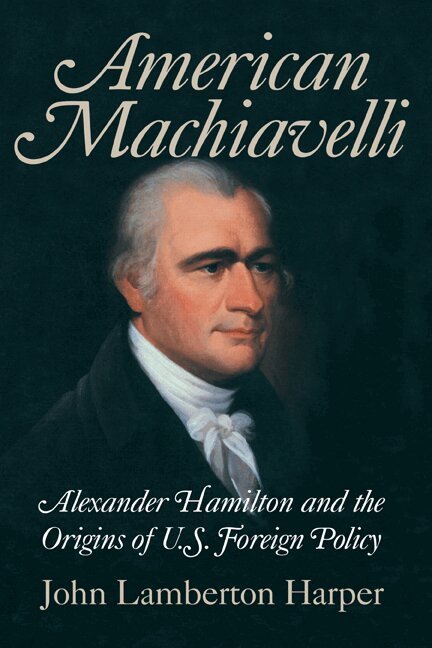
Alexander Hamilton rose from his humble beginnings as an illegitimate West Indian orphan and emigrant to become the premier statebuilder and strategic thinker of the American Founding generation. This is the first detailed narrative study of his foreign policy role and ideas to appear in more than thirty years. It focuses on Hamilton's controversial activities as a key member of President George Washington's cabinet and as an aspiring military leader in the 1790s, a decade of profound division over the shape and powers of the Federal government, and US policy toward the warring powers of Europe. Drawing parallels between Hamilton and the Florentine diplomatist and thinker, Niccol- Machiavelli, prize-winning historian John Lamberton Harper offers an insightful and accessible account of the origins of Hamilton's outlook, his bitterly personal rivalries with Thomas Jefferson and John Adams, and his indispensable part in designing and implementing US foreign policy.