John Llewelyn – författare
Visar alla böcker från författaren John Llewelyn. Handla med fri frakt och snabb leverans.
15 produkter
Rigor of a Certain Inhumanity
Toward a Wider Suffrage
Häftad, 2012
385 kr
Lägg i varukorg
Focusing on the idea of universal suffrage, John Llewelyn accepts the challenge of Derrida's later thought to renew his focus on the ethical, political, and religious dimensions of what makes us uniquely human. Llewelyn builds this concern on issues of representation, language, meaning, and logic …
Appositions of Jacques Derrida and Emmanuel Levinas
Häftad, 2002
332 kr
Lägg i varukorg
"This is a book of scintillating intelligence, a book whose range of references, whose extraordinary ethical sensibility and linguistic creativity, set a standard for philosophy that few if any contemporary thinkers other than Derrida and Levinas themselves can match. . . . On every page, there is …
Margins of Religion
Between Kierkegaard and Derrida
Häftad, 2008
427 kr
Lägg i varukorg
Pursuing Jacques Derrida's reflections on the possibility of "religion without religion," John Llewelyn makes room for a sense of the religious that does not depend on the religions or traditional notions of God or gods. Beginning with Derrida's statement that it was Kierkegaard to whom he remained …
Emmanuel Levinas
The Genealogy of Ethics
Inbunden, 1995
2512 kr
Lägg i varukorg
First Published in 2004. 'Emmanuel Levinas's thought can make us tremble' exclaims Jacques Derrida, one of the increasing number of writers in many different fields through whose works reverberate shock waves transmitted by the prophetic words of this eminent contemporary philosopher. John …
Emmanuel Levinas
The Genealogy of Ethics
Häftad, 1995
560 kr
Lägg i varukorg
First Published in 2004. 'Emmanuel Levinas's thought can make us tremble' exclaims Jacques Derrida, one of the increasing number of writers in many different fields through whose works reverberate shock waves transmitted by the prophetic words of this eminent contemporary philosopher. John …
Guide to Heidegger's Being and Time
Häftad, 2001
657 kr
Lägg i varukorg
An indispensable guide to the major work of one of the twentieth century's most influential thinkers.This is the most comprehensive commentary on both Divisions of Heidegger's Being and Time, making it the essential guide for newcomers and specialists alike. Beginning with a non-technical …
Emmanuel Levinas
The Genealogy of Ethics
E-bok, 2003
658 kr
Lägg i varukorg
First Published in 2004. ''Emmanuel Levinas''s thought can make us tremble'' exclaims Jacques Derrida, one of the increasing number of writers in many different fields through whose works reverberate shock waves transmitted by the prophetic words of this eminent contemporary philosopher. John …
Emmanuel Levinas
The Genealogy of Ethics
E-bok, 2003
644 kr
Lägg i varukorg
First Published in 2004. ''Emmanuel Levinas''s thought can make us tremble'' exclaims Jacques Derrida, one of the increasing number of writers in many different fields through whose works reverberate shock waves transmitted by the prophetic words of this eminent contemporary philosopher. John …
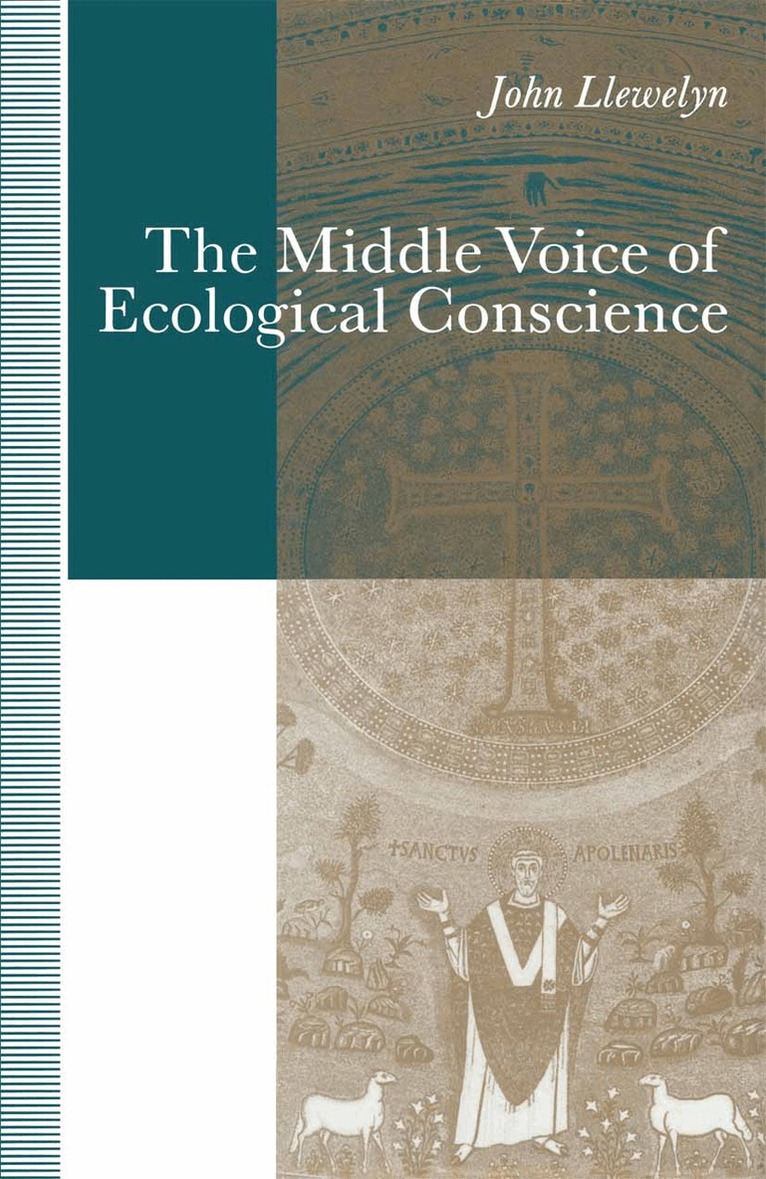
Middle Voice of Ecological Conscience
A Chiasmic Reading of Responsibility in the Neighborhood of Levinas, Heidegger and Others
E-bok, 1991
1101 kr
Lägg i varukorg
Middle Voice of Ecological Conscience
A Chiasmic Reading of Responsibility in the Neighborhood of Levinas, Heidegger and Others
Häftad, 1991
825 kr
Lägg i varukorg
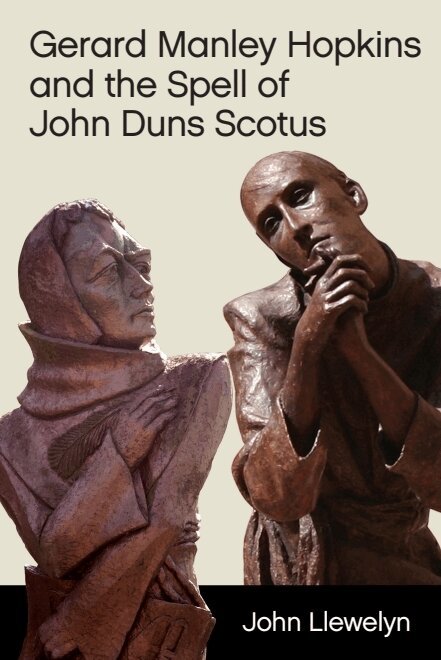
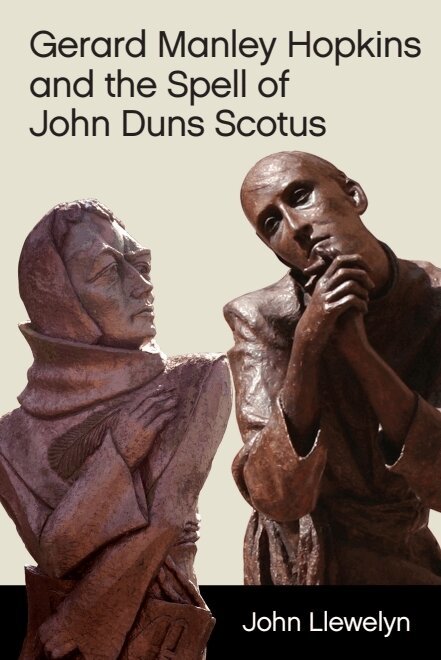
Gerard Manley Hopkins and the Spell of John Duns Scotus
Inbunden, 2015
2605 kr
Lägg i varukorg
The early medieval Scottish philosopher and theologian John Duns Scotus shook traditional doctrines of universality and particularity by arguing for a metaphysics of ‘formal distinction’. Hundreds of years later, why did the 19th-century poet and self-styled philosopher Gerard Manley Hopkins find …
Gerard Manley Hopkins and the Spell of John Duns Scotus
Häftad, 2021
324 kr
Lägg i varukorg
The early medieval Scottish philosopher and theologian John Duns Scotus shook traditional doctrines of universality and particularity by arguing for a metaphysics of 'formal distinction'. Why did the nineteenth-century poet and self-styled philosopher Gerard Manley Hopkins find this revolutionary …