
John Lurz – författare
Visar alla böcker från författaren . Handla med fri frakt och snabb leverans.
4 produkter
4 produkter
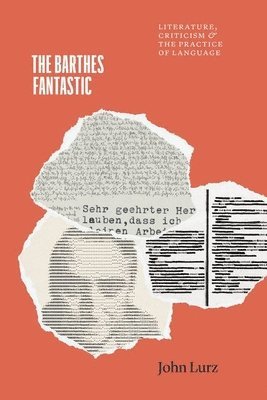
Inbunden, Engelska, 2025
1 085 kr
Skickas inom 5-8 vardagar
This study of the writing of Roland Barthes breaks down the divide between lived experience and the language of a literary work.In The Barthes Fantastic, John Lurz explores the intersection of literature and everyday life—and confronts some habits of literary study—through a reading of the work of Roland Barthes. An influential French theorist, Barthes wrote prolifically on the place of language and the play of signs in the ways we produce cultural and aesthetic meaning. Ranging across the entire sweep of Barthes’s varied career, Lurz shows how Barthes’s insights into signification and literature involve particular intellectual activities that impart significance to the world. Doing so allows him to develop an expanded understanding of the fantastic as a conceptual category—a way of thinking—in which the texts we read come to inform the texture of our real lives. Ultimately, The Barthes Fantastic enlarges our sense of what we learn as students of literature and gives us a new picture of a writer we thought we knew.
Häftad, Engelska, 2025
266 kr
Skickas inom 5-8 vardagar
This study of the writing of Roland Barthes breaks down the divide between lived experience and the language of a literary work.In The Barthes Fantastic, John Lurz explores the intersection of literature and everyday life—and confronts some habits of literary study—through a reading of the work of Roland Barthes. An influential French theorist, Barthes wrote prolifically on the place of language and the play of signs in the ways we produce cultural and aesthetic meaning. Ranging across the entire sweep of Barthes’s varied career, Lurz shows how Barthes’s insights into signification and literature involve particular intellectual activities that impart significance to the world. Doing so allows him to develop an expanded understanding of the fantastic as a conceptual category—a way of thinking—in which the texts we read come to inform the texture of our real lives. Ultimately, The Barthes Fantastic enlarges our sense of what we learn as students of literature and gives us a new picture of a writer we thought we knew.
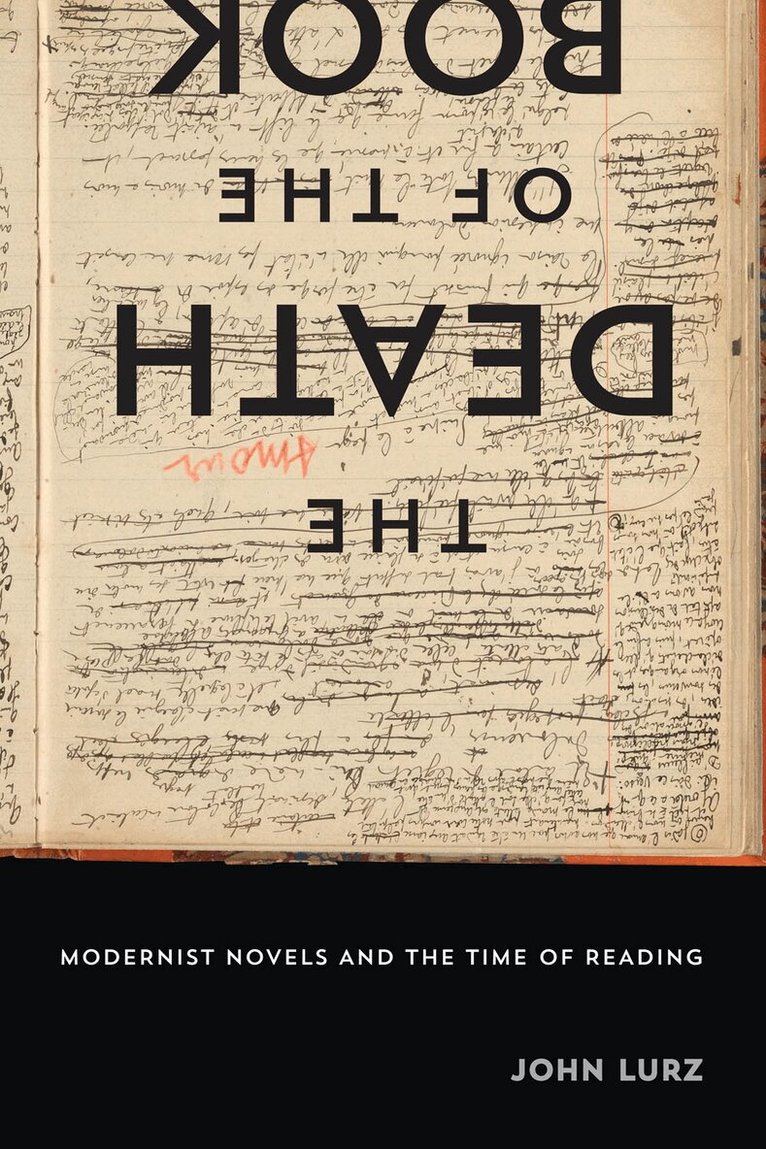
Inbunden, Engelska, 2016
1 409 kr
Skickas inom 10-15 vardagar
An examination of the ways major novels by Marcel Proust, James Joyce, and Virginia Woolf draw attention to their embodiment in the object of the book, The Death of the Book considers how bookish format plays a role in some of the twentieth century's most famous literary experiments. Tracking the passing of time in which reading unfolds, these novels position the book's so-called death in terms that refer as much to a simple description of its future vis-à-vis other media forms as to the sense of finitude these books share with and transmit to their readers.As he interrogates the affective, physical, and temporal valences of literature's own traditional format and mode of access, John Lurz shows how these novels stage intersections with the phenomenal world of their readers and develop a conception of literary experience not accounted for by either rigorously historicist or traditionally formalist accounts of the modernist period. Bringing together issues of media and mediation, book history, and modernist aesthetics, The Death of the Book offers a new and deeper understanding of the way we read now.
Häftad, Engelska, 2016
385 kr
Skickas inom 5-8 vardagar
An examination of the ways major novels by Marcel Proust, James Joyce, and Virginia Woolf draw attention to their embodiment in the object of the book, The Death of the Book considers how bookish format plays a role in some of the twentieth century's most famous literary experiments. Tracking the passing of time in which reading unfolds, these novels position the book's so-called death in terms that refer as much to a simple description of its future vis-à-vis other media forms as to the sense of finitude these books share with and transmit to their readers.As he interrogates the affective, physical, and temporal valences of literature's own traditional format and mode of access, John Lurz shows how these novels stage intersections with the phenomenal world of their readers and develop a conception of literary experience not accounted for by either rigorously historicist or traditionally formalist accounts of the modernist period. Bringing together issues of media and mediation, book history, and modernist aesthetics, The Death of the Book offers a new and deeper understanding of the way we read now.