
John M. Efron – författare
Visar alla böcker från författaren John M. Efron. Handla med fri frakt och snabb leverans.
4 produkter
4 produkter
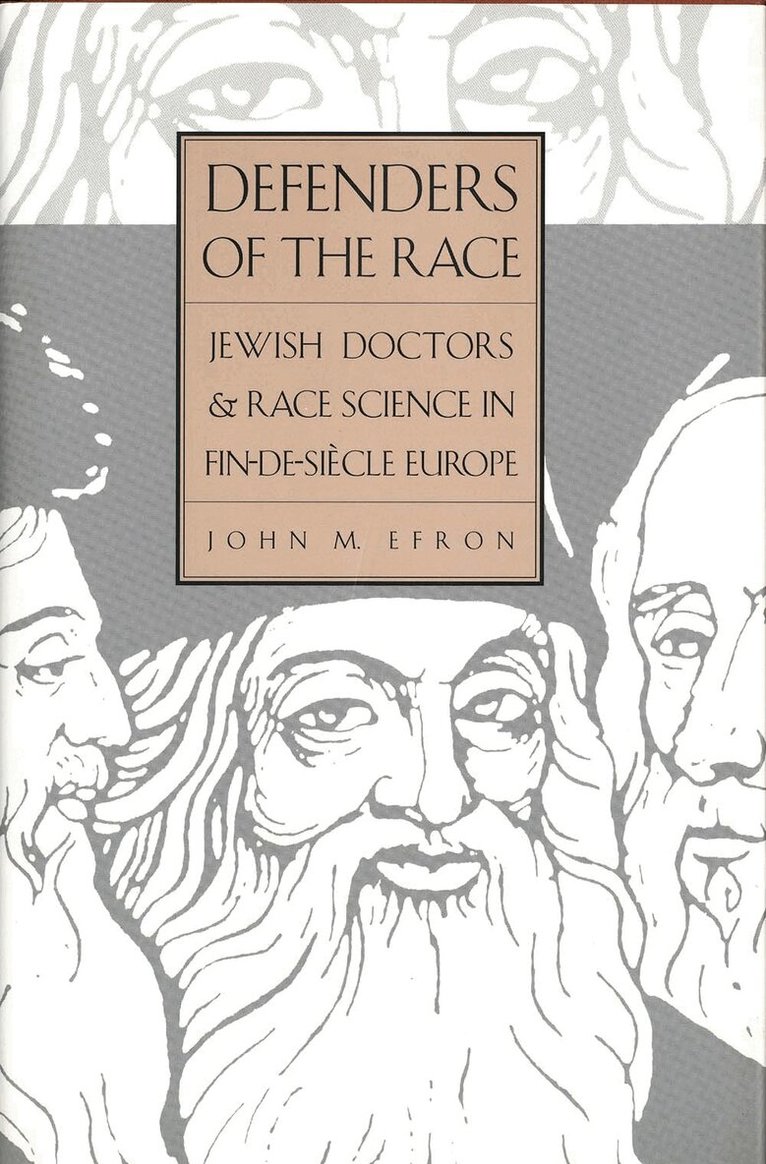
Defenders of the Race
Jewish Doctors and Race Science in Fin-de-Siècle Europe
Inbunden, Engelska, 1995
823 kr
Skickas inom 5-8 vardagar
By the late nineteenth century, physical anthropologists were engaged in debates about the "Jewish Racial Question," asking whether there was a biological basis for Jewish distinctiveness and social development. This fascinating book describes for the first time the response of Jewish race scientists to these debates, demonstrating that in their participation, the scientists were involved in a complex process of Jewish self-definition, one that was impelled by two factors: the external threat of antisemitism and the internal need to reassert a Jewish ethnic pride that had been battered by assimilation. John Efron examines the racial science of Jewish anthropologists and physicians in Germany, England, Russia, and Austria, showing that their work differed from place to place because it was contingent on such historical factors as the nature of Jewish integration in a given country, the character of a nation's Jewish community or communities, and the level of antisemitism there. Efron sketches the growth of race science from the eighteenth to the twentieth centuries and considers how Jews were represented in it. He then studies the image of Jews in British anthropology, discusses the first Jewish race scientist, Joseph Jacobs, an Anglo-Australian who focused on the Jews of Western Europe, and the Russian Jewish race scientist Samuel Weissenberg, who studied the Jews of Eastern Europe, Central Asia, and the Near East. Finally he examines the link between race science and the politics of Zionism, showing how Zionist scientists used race science not to assert Jewish superiority but to bolster a political cause that was concerned with Jewish spiritual and physical regeneration.
455 kr
Skickas inom 7-10 vardagar
In the eighteenth and nineteenth centuries, as German Jews struggled for legal emancipation and social acceptance, they also embarked on a program of cultural renewal, two key dimensions of which were distancing themselves from their fellow Ashkenazim in Poland and giving a special place to the Sephardim of medieval Spain. Where they saw Ashkenazic Jewry as insular and backward, a result of Christian persecution, they depicted the Sephardim as worldly, morally and intellectually superior, and beautiful, products of the tolerant Muslim environment in which they lived. In this elegantly written book, John Efron looks in depth at the special allure Sephardic aesthetics held for German Jewry. Efron examines how German Jews idealized the sound of Sephardic Hebrew and the Sephardim's physical and moral beauty, and shows how the allure of the Sephardic found expression in neo-Moorish synagogue architecture, historical novels, and romanticized depictions of Sephardic history. He argues that the shapers of German-Jewish culture imagined medieval Iberian Jewry as an exemplary Jewish community, bound by tradition yet fully at home in the dominant culture of Muslim Spain.Efron argues that the myth of Sephardic superiority was actually an expression of withering self-critique by German Jews who, by seeking to transform Ashkenazic culture and win the acceptance of German society, hoped to enter their own golden age. Stimulating and provocative, this book demonstrates how the goal of this aesthetic self-refashioning was not assimilation but rather the creation of a new form of German-Jewish identity inspired by Sephardic beauty.
669 kr
Skickas inom 3-6 vardagar
In the eighteenth and nineteenth centuries, as German Jews struggled for legal emancipation and social acceptance, they also embarked on a program of cultural renewal, two key dimensions of which were distancing themselves from their fellow Ashkenazim in Poland and giving a special place to the Sephardim of medieval Spain. Where they saw Ashkenazic Jewry as insular and backward, a result of Christian persecution, they depicted the Sephardim as worldly, morally and intellectually superior, and beautiful, products of the tolerant Muslim environment in which they lived. In this elegantly written book, John Efron looks in depth at the special allure Sephardic aesthetics held for German Jewry.Efron examines how German Jews idealized the sound of Sephardic Hebrew and the Sephardim's physical and moral beauty, and shows how the allure of the Sephardic found expression in neo-Moorish synagogue architecture, historical novels, and romanticized depictions of Sephardic history. He argues that the shapers of German-Jewish culture imagined medieval Iberian Jewry as an exemplary Jewish community, bound by tradition yet fully at home in the dominant culture of Muslim Spain. Efron argues that the myth of Sephardic superiority was actually an expression of withering self-critique by German Jews who, by seeking to transform Ashkenazic culture and win the acceptance of German society, hoped to enter their own golden age.Stimulating and provocative, this book demonstrates how the goal of this aesthetic self-refashioning was not assimilation but rather the creation of a new form of German-Jewish identity inspired by Sephardic beauty.
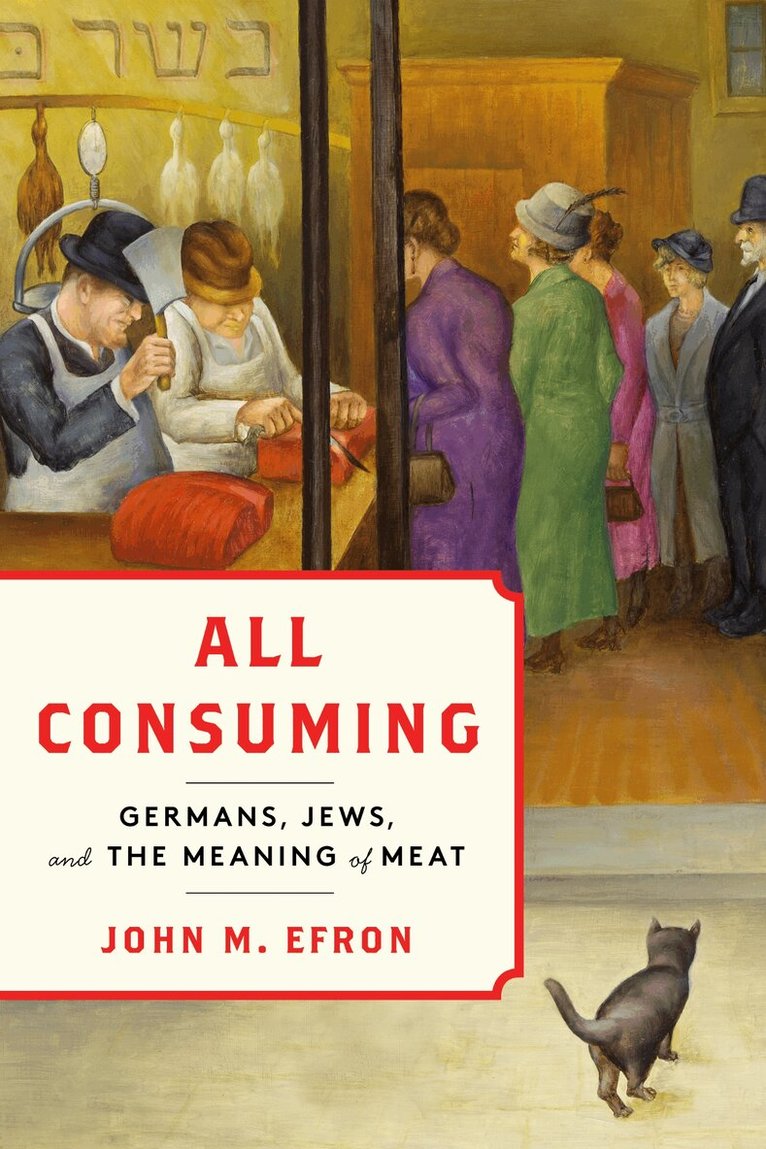
351 kr
Skickas inom 10-15 vardagar
An engaging 700-year history of meat at the intersection of German and Jewish culture, uniquely illuminating the rich, fraught, and tragic history of German Jewry.In Judaism, meat is of paramount importance as it constitutes the very focal point of the dietary laws. With an intricate set of codified regulations concerning forbidden and permissible meats, highly prescribed methods of killing, and elaborate rules governing consumption, meat is one of the most visible, and gustatory, markers of Jewish distinctness and social separation. It is an object of tangible, touchable, and tastable difference like no other. In All Consuming, historian John M. Efron focuses on the contested culture of meat and its role in the formation of ethnic identities in Germany. To an extent not seen elsewhere in Europe, Germans have identified, thought about, studied, decried, and gladly eaten meat understood to be "Jewish." Expressions of this engagement are found across the cultural landscape—in literature, sculpture, and visual arts—and evident in legal codes and commercial enterprises. Likewise, Jews in Germany have vigorously defended their meats and the culture and rituals surrounding them by educating Germans and Jews alike about their meaning and relevance.Exploring a cultural history that extends some seven hundred years, from the Middle Ages to today, Efron goes beyond a discussion of dietary laws and ritual slaughter to take a broad view of what meat can tell us about German-Jewish identity and culinary culture, Jewish and Christian religious sensibilities, and religious freedom for minorities in Germany. In so doing, he provides a singular window into the rich, fraught, and ultimately tragic history of German Jewry.