John M. Wood - Böcker
Visar alla böcker från författaren John M. Wood. Handla med fri frakt och snabb leverans.
3 produkter
3 produkter
2 785 kr
Skickas inom 5-8 vardagar
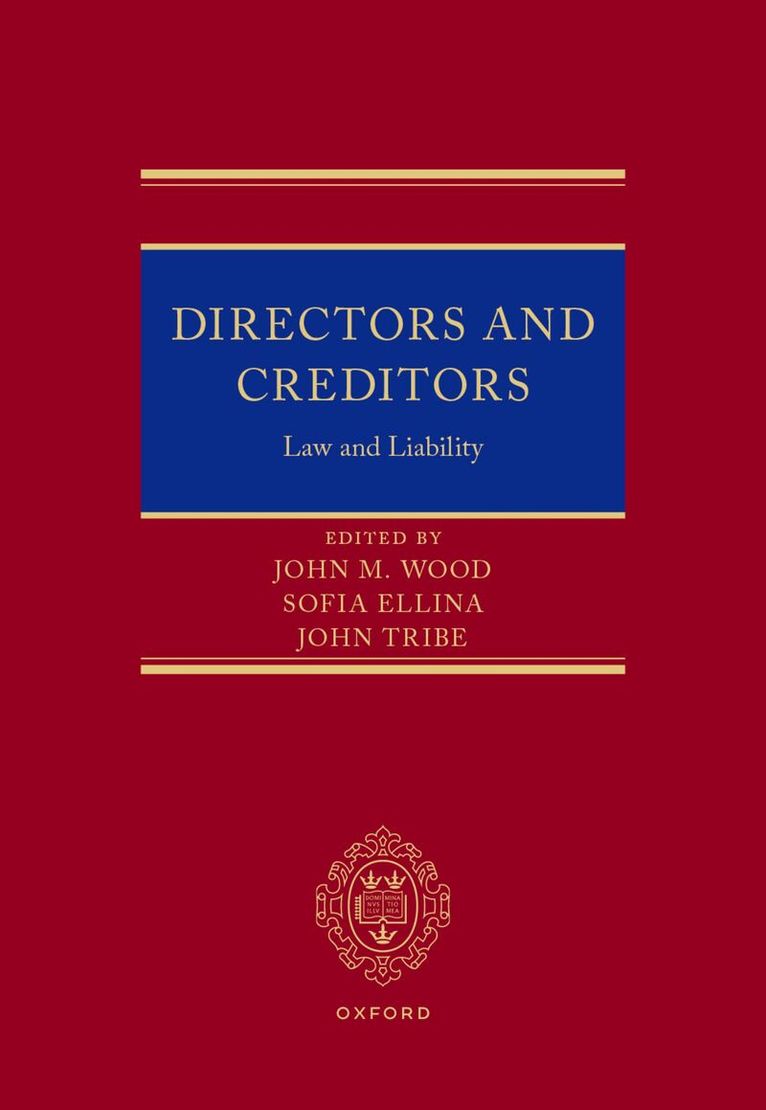
This new work explores the evolving challenges faced by directors and creditors in both corporate and insolvency contexts. Structured in five parts, it offers a rigorous yet practical examination of key legal developments and their implications for practice and policy.The volume opens with a foundational overview of the legal principles that shape the director-creditor relationship, before turning to the landmark Supreme Court decision in BTI 2014 LLC v Sequana SA and others [2022] UKSC 25. This pivotal case has reshaped the legal landscape, influencing how courts and practitioners approach limited liability, wrongful trading, transactional avoidance, and directors' duties—particularly the creditor duty and the definition of insolvency.Subsequent chapters broaden the scope to address contemporary issues beyond Sequana, many of which are relevant to both solvent and insolvent companies. Topics include fiduciary duties, directors' personal liability, fraudulent and wrongful trading, corporate sustainability, creditor vulnerability, and the growing impact of climate change litigation.The discussion then extends to a global scale, examining how Sequana has influenced legal thinking across jurisdictions including the EU, Australia, the US, Singapore, Hong Kong, and Canada. With a focus on both common law and civil law systems, the book offers a comparative perspective on global efforts to refine insolvency frameworks and harmonise corporate governance standards. Combining detailed legal analysis with practical insights, Directors and Creditors: Law and Liability is an essential resource for legal practitioners, academics, and policymakers navigating the complexities of modern corporate and insolvency law.
1 820 kr
Skickas inom 7-10 vardagar
An original book offering a unique theoretical approach, Re-examining Insolvency Law and Theory analyses the important role that legal theory plays in the development of insolvency law. It explores how law and theory are able to respond to issues of financial distress in the 21st century and questions how insolvency law could develop to address contemporary challenges.Re-examining Insolvency Law and Theory brings together international experts in insolvency, who consider the key conceptual influences that have impacted insolvency law since the beginning of the 21st century. Chapters address a number of theoretical perspectives, divided into overall philosophical considerations, theoretical criticisms of the internal mechanisms of insolvency law, and how external theoretical paradigms could be used to shift perspectives on insolvency frameworks. Presenting a distinctive and conceptually holistic approach, this erudite book provides an essential contribution to an ever evolving area of legal research and practice.Re-examining Insolvency Law and Theory is a crucial read for academics and students interested in insolvency law both in the UK and internationally. It will also be highly insightful for legal professionals and practitioners specialising in insolvency law.
1 496 kr
Skickas inom 7-10 vardagar
This incisive book critically explores the principles, purpose and application of corporate rescue in order to bring new significance to rescue theory. Responding to key legislative developments and recent case law, it examines major insolvency theories and establishes which theoretical principles are prominently applied in practice, and whether these principles have affected the drivers of policy consideration.John M. Wood gives unique consideration to value within a corporate failure and rescue context, focusing on the issue of identifying the value of a company and its assets so that optimal rescue outcomes can be realised. Wood provides a detailed examination of the professional discretion afforded to insolvency practitioners to determine how commercial decisions, like rescue proposals, are construed.The in-depth analysis of key cases such as Re One Blackfriars Ltd and legislation including the Corporate Insolvency and Governance Act 2020 will prove invaluable for both practitioners and policy makers exploring corporate insolvency and rescue reform. It will also be of interest to scholars and students of insolvency law, as well as company law more broadly.