John Mandalios - Böcker
Visar alla böcker från författaren John Mandalios. Handla med fri frakt och snabb leverans.
2 produkter
2 produkter
1 719 kr
Skickas inom 5-8 vardagar
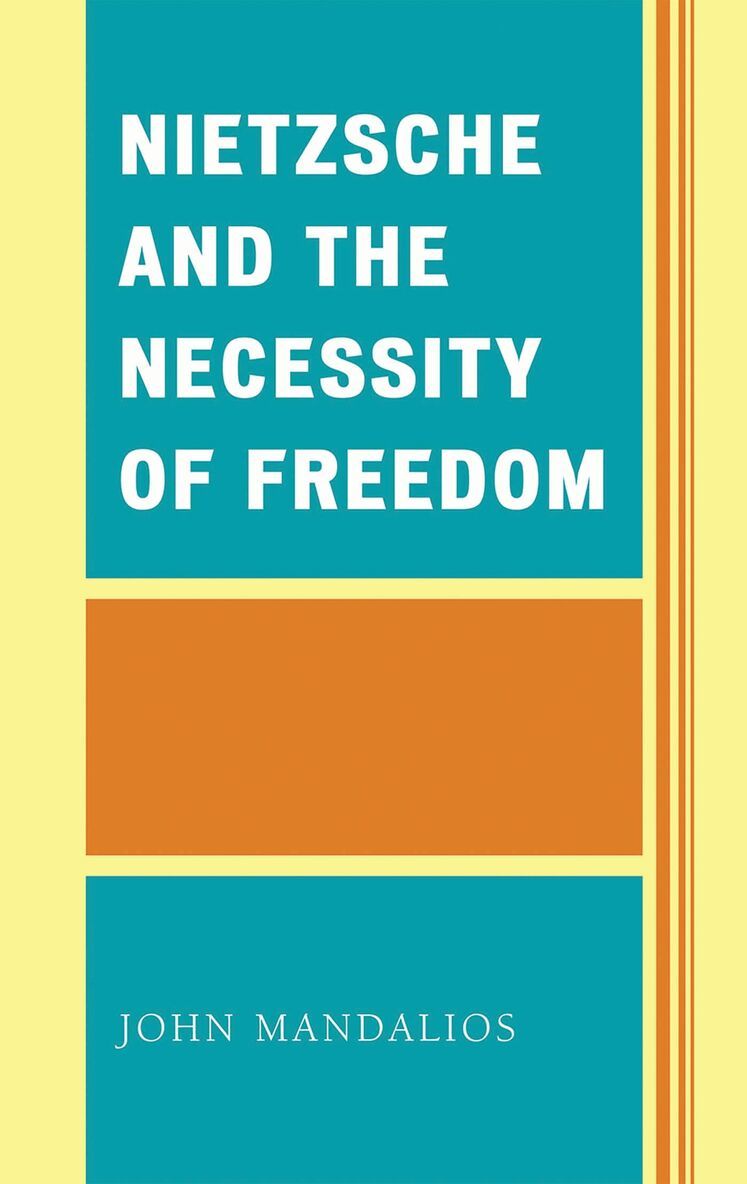
Nietzsche and the Necessity of Freedom addresses a central question of modern philosophy and contemporary life that is usually overlooked in discussions of Friedrich Nietzsche. Radical and analytic-linguistic approaches, including variants of Martin Heidegger's philosophical legacy, emphasize salient motifs in Nietzsche's work while largely failing to examine freedom as an overarching philosophical concern. While Nietzsche commonly figures as the critic of truth and formal theories of knowledge, he is not often considered a thinker of freedom-a central theme of both German idealism and Greek thought. As John Mandalios argues, Nietzsche's critique of western metaphysics and free-will thinking does not preclude him from positing a different form of freedom that reflects influences from German idealism, Greek tragic values, and Enlightenment scientific images of the seeker of knowledge while embodying a radically different notion of responsibility. With this new conception of freedom, Mandalios argues that Nietzsche inextricably links freedom and necessity while charging the human being with the responsibility to live a noble (free) life. Moreover, such a life which welcomes 'destiny' and cultivates a good conscience can grow out of nihilistic decadence or slave moralities because bios is of necessity a process of struggle and overcoming. Thus, an all-important tension Nietzsche identified within both the soul and 'city of man' recurs in the eternity of becoming. Nietzsche and the Necessity of Freedom is appropriate for upper-level students and scholars of philosophy.
656 kr
Skickas inom 10-15 vardagar
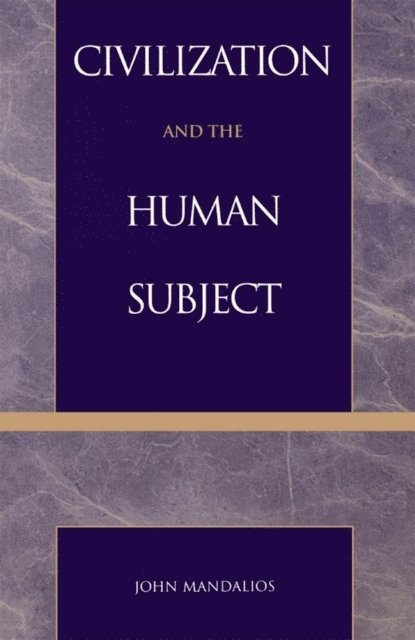
Recent debates have highlighted the importance of the self to a better understanding of the nature of culture and its relation to power. In his new book, John Mandalios incorporates the current 'postmodern' debate on these issues with a deeper, philosophical exploration of identity and cultural formation, and the dynamics of social power underlying them. He takes up identity formation within an analysis of the historical, social, political, religious, and psychoanalytical dimensions of civilized life that can be traced back to the classical world. Questions ordinarily associated with the 'postmodern condition'_otherness, fragmentation, power, the situated self, disciplinary practices, and multiplicity_are related to the problematic of human subjectivity and how civilized modes of conduct of the self cannot simply be explained by national cultural traditions. Mandalios argues that self-identity is not reducible to the effects of globalization or power or any one single collective identity representation. The self is enveloped within a complex which requires a 'civilization-analytic' perspective into the world and the inner life.