John Martin Fischer – författare
Visar alla böcker från författaren John Martin Fischer. Handla med fri frakt och snabb leverans.
21 produkter
21 produkter
309 kr
Skickas inom 5-8 vardagar
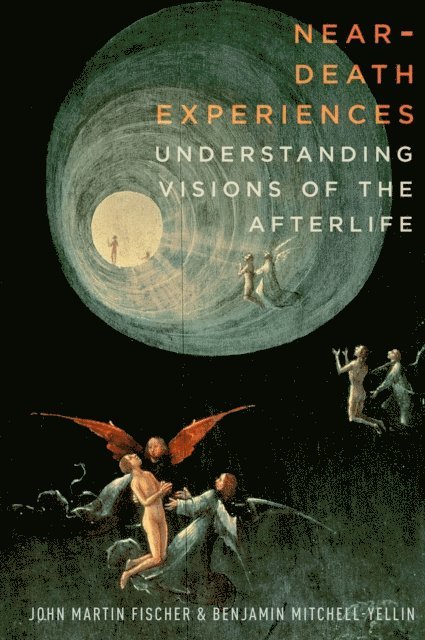
Near-death experiences offer a glimpse not only into the nature of death but also into the meaning of life. They are not only useful tools to aid in the human quest to understand death but are also deeply meaningful, transformative experiences for the people who have them. In a unique contribution to the growing and popular literature on the subject, philosophers John Martin Fischer and Benjamin Mitchell-Yellin examine prominent near-death experiences, such as those of Pam Reynolds, Eben Alexander and Colton Burpo. They combine their investigations with critiques of the narratives' analysis by those who take them to show that our minds are immaterial and heaven is for real. In contrast, the authors provide a blueprint for a science-based explanation. Focusing on the question of whether near-death experiences provide evidence that consciousness is separable from our brains and bodies, Fischer and Mitchell-Yellin give a naturalistic account of the profound meaning and transformative effects that these experiences engender in many. This book takes the reality of near-death experiences seriously. But it also shows that understanding them through the tools of science is completely compatible with acknowledging their profound meaning.
850 kr
Skickas inom 3-6 vardagar
942 kr
Skickas inom 3-6 vardagar
This is a selection of essays on moral responsibility that represent the major components of John Martin Fischer's overall approach to freedom of the will and moral responsibility. The collection exhibits the overall structure of Fischer's view and shows how the various elements fit together to form a comprehensive framework for analyzing free will and moral responsibility. The topics include deliberation and practical reasoning, freedom of the will, freedom of action, various notions of control, and moral accountability. The essays seek to provide a foundation for our practices of holding each other (and ourselves) morally and legally accountable for our behavior. A crucial move is the distinction between two kinds of control. According to Fischer, "regulative control" involves freedom to choose and do otherwise ("alternative possibilities"), whereas "guidance control" does not. Fischer contends that guidance control is all the freedom we need to be morally responsible agents. Further, he contends that such control is fully compatible with causal determinism. Additionally, Fischer argues that we do not need genuine access to alternative possibilities in order for there to be a legitimate point to practical reasoning.Fischer's overall framework contains an argument for the contention that guidance control, and not regulative control, is associated with moral responsibility, a sketch of a comprehensive theory of moral responsibility (that ties together responsibility for actions, omissions, consequences, and character), and an account of the value of moral responsibility. On this account, the value of exhibiting freedom (of the relevant sort) and thus being morally responsible for one's behavior is a species of the value of artistic self-expression.
371 kr
Skickas inom 5-8 vardagar
This is a selection of essays on moral responsibility that represent the major components of John Martin Fischer's overall approach to freedom of the will and moral responsibility. The collection exhibits the overall structure of Fischer's view and shows how the various elements fit together to form a comprehensive framework for analyzing free will and moral responsibility.The topics include deliberation and practical reasoning, freedom of the will, freedom of action, various notions of control, and moral accountability. The essays seek to provide a foundation for our practices of holding each other (and ourselves) morally and legally accountable for our behavior. A crucial move is the distinction between two kinds of control. According to Fischer, "regulative control" involves freedom to choose and do otherwise ("alternative possibilities"), whereas "guidance control" does not. Fischer contends that guidance control is all the freedom we need to be morally responsible agents. Further, he contends that such control is fully compatible with causal determinism. Additionally, Fischer argues that we do not need genuine access to alternative possibilities in order for there to be a legitimate point to practical reasoning.Fischer's overall framework contains an argument for the contention that guidance control, and not regulative control, is associated with moral responsibility, a sketch of a comprehensive theory of moral responsibility (that ties together responsibility for actions, omissions, consequences, and character), and an account of the value of moral responsibility. On this account, the value of exhibiting freedom (of the relevant sort) and thus being morally responsible for one's behavior is a species of the value of artistic self-expression.
933 kr
Skickas inom 3-6 vardagar
In this collection of essays on the metaphysical issues pertaining to death, the meaning of life, and freedom of the will, John Martin Fischer argues (against the Epicureans) that death can be a bad thing for the individual who dies. He defends the claim that something can be a bad thing--a misfortune--for an individual, even if he never experiences it as bad (and even if he does not any longer exist). Fischer also defends the commonsense asymmetry in our attitudes toward death and prenatal nonexistence: we are indifferent to the time before we are born, but we regret that we do not live longer. Further, Fischer argues (against the immortality curmudgeons, such as Heidegger and Bernard Williams), that immortal life could be desirable, and shows how the defense of the (possible) badness of death and the (possible) goodness of immortality exhibit a similar structure; on Fischer's view, the badness of death and the goodness of life can be represented on spectra that display certain continuities. Building on Fischer's previous book, My Way a major aim of this volume is to show important connections between issues relating to life and death and issues relating to free will. More specifically, Fischer argues that we endow our lives with a certain distinctive kind of meaning--an irreducible narrative dimension of value--by exhibiting free will. Thus, in acting freely, we transform our lives so that our stories matter.
1 113 kr
Skickas inom 5-8 vardagar
Our Fate is a collection of John Martin Fischer's previously published articles on the relationship between God's foreknowledge and human freedom. The book contains a new introductory essay that places all of the chapters in the book into a cohesive framework. The introductory essay also provides some new views about the issues treated in the book, including a bold and original account of God's foreknowledge of free actions in a causally indeterministic world. The focus of the book is a powerful traditional argument for the incompatibility of God's foreknowledge and human freedom to do otherwise. Fischer presents this argument (in various forms) and defends it against some of the most salient criticisms, especially Ockhamism.The incompatibilist's argument is driven by the fixity of the past, and, in particular, the fixity of God's prior beliefs about our current behavior. The author gives special attention to Ockhamism, which contends that God's prior beliefs are not "over-and-done-with" in the past, and are thus not subject to the intuitive idea of the fixity of the past. In the end, Fischer defends the argument for the incompatibility of God's foreknowledge and human freedom to do otherwise, but he further argues that this incompatibility need not entail the incompatibility of God's foreknowledge and human moral responsibility. Thus, through this collection of essays, Fischer develops a "semicompatibilist" view -- the belief that God's foreknowledge is entirely compatible with human moral responsibility, even if God's foreknowledge rules out freedom to do otherwise.
500 kr
Skickas inom 5-8 vardagar
In this collection of essays -- a follow up to My Way and Our Stories -- John Martin Fischer defends the contention that moral responsibility is associated with "deep control". Fischer defines deep control as the middle ground between two untenable extreme positions: "superficial control" and "total control". Our freedom consists of the power to add to the given past, holding fixed the laws of nature, and therefore, Fischer contends, we must be able to interpret our actions as extensions of a line that represents the actual past. In "connecting the dots", we engage in a distinctive sort of self-expression. In the first group of essays in this volume, Fischer argues that we do not need genuine access to alterative possibilities in order to be morally responsible. Thus, the line need not branch off at crucial points (where the branches represent genuine metaphysical possibilities). In the remaining essays in the collection he demonstrates that deep control is the freedom condition on moral responsibility. In so arguing, Fischer contends that total control is too much to ask--it is a form of "metaphysical megalomania". So we do not need to "trace back" all the way to the beginning of the line (or even farther) in seeking the relevant kind of freedom or control. Additionally, he contends that various kinds of "superficial control"--such as versions of "conditional freedom" and "judgment-sensitivity" are too shallow; they don't trace back far enough along the line. In short, Fischer argues that, in seeking the freedom that grounds moral responsibility, we need to carve out a middle ground between superficiality and excessive penetration. Deep Control is the "middle way". Fischer presents a new argument that deep control is compatible not just with causal determinism, but also causal indeterminism. He thus tackles the luck problem and shows that the solution to this problem is parallel in important ways to the considerations in favor of the compatibility of causal determinism and moral responsibility.
1 557 kr
Skickas inom 7-10 vardagar
In this collection of essays -- a follow up to My Way and Our Stories -- John Martin Fischer defends the contention that moral responsibility is associated with "deep control". Fischer defines deep control as the middle ground between two untenable extreme positions: "superficial control" and "total control". Our freedom consists of the power to add to the given past, holding fixed the laws of nature, and therefore, Fischer contends, we must be able to interpret our actions as extensions of a line that represents the actual past. In "connecting the dots", we engage in a distinctive sort of self-expression. In the first group of essays in this volume, Fischer argues that we do not need genuine access to alterative possibilities in order to be morally responsible. Thus, the line need not branch off at crucial points (where the branches represent genuine metaphysical possibilities). In the remaining essays in the collection he demonstrates that deep control is the freedom condition on moral responsibility. In so arguing, Fischer contends that total control is too much to ask--it is a form of "metaphysical megalomania". So we do not need to "trace back" all the way to the beginning of the line (or even farther) in seeking the relevant kind of freedom or control. Additionally, he contends that various kinds of "superficial control"--such as versions of "conditional freedom" and "judgment-sensitivity" are too shallow; they don't trace back far enough along the line. In short, Fischer argues that, in seeking the freedom that grounds moral responsibility, we need to carve out a middle ground between superficiality and excessive penetration. Deep Control is the "middle way". Fischer presents a new argument that deep control is compatible not just with causal determinism, but also causal indeterminism. He thus tackles the luck problem and shows that the solution to this problem is parallel in important ways to the considerations in favor of the compatibility of causal determinism and moral responsibility.
472 kr
Skickas inom 5-8 vardagar
In this collection of essays on the metaphysical issues pertaining to death, the meaning of life, and freedom of the will, John Martin Fischer argues (against the Epicureans) that death can be a bad thing for the individual who dies. He defends the claim that something can be a bad thing--a misfortune--for an individual, even if he never experiences it as bad (and even if he does not any longer exist). Fischer also defends the commonsense asymmetry in our attitudes toward death and prenatal nonexistence: we are indifferent to the time before we are born, but we regret that we do not live longer. Further, Fischer argues (against the immortality curmudgeons, such as Heidegger and Bernard Williams), that immortal life could be desirable, and shows how the defense of the (possible) badness of death and the (possible) goodness of immortality exhibit a similar structure; on Fischer's view, the badness of death and the goodness of life can be represented on spectra that display certain continuities. Building on Fischer's previous book, My Way a major aim of this volume is to show important connections between issues relating to life and death and issues relating to free will. More specifically, Fischer argues that we endow our lives with a certain distinctive kind of meaning--an irreducible narrative dimension of value--by exhibiting free will. Thus, in acting freely, we transform our lives so that our stories matter.
1 661 kr
Skickas inom 5-8 vardagar
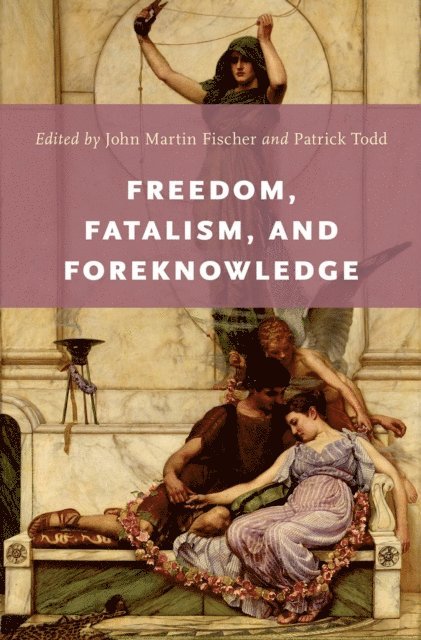
We typically think we have free will. But how could we have free will, if for anything we do, it was already true in the distant past that we would do that thing? Or how could we have free will, if God already knows in advance all the details of our lives? Such issues raise the specter of "fatalism". This book collects sixteen previously published articles on fatalism, truths about the future, and the relationship between divine foreknowledge and human freedom, and includes a substantial introductory essay and bibliography. Many of the pieces collected here build bridges between discussions of human freedom and recent developments in other areas of metaphysics, such as philosophy of time. Ideal for courses in free will, metaphysics, and philosophy of religion, Freedom, Fatalism, and Foreknowledge will encourage important new directions in thinking about free will, time, and truth.
535 kr
Skickas inom 5-8 vardagar
We typically think we have free will. But how could we have free will, if for anything we do, it was already true in the distant past that we would do that thing? Or how could we have free will, if God already knows in advance all the details of our lives? Such issues raise the specter of "fatalism". This book collects sixteen previously published articles on fatalism, truths about the future, and the relationship between divine foreknowledge and human freedom, and includes a substantial introductory essay and bibliography. Many of the pieces collected here build bridges between discussions of human freedom and recent developments in other areas of metaphysics, such as philosophy of time. Ideal for courses in free will, metaphysics, and philosophy of religion, Freedom, Fatalism, and Foreknowledge will encourage important new directions in thinking about free will, time, and truth.
2 126 kr
Skickas inom 10-15 vardagar
Should You Choose to Live Forever?: A Debate addresses a centuries old question in philosophy, but also one with increasing relevance as scientists now see the real possibility of extending people’s lives for many hundreds of years.This accessible yet profound debate from two leading researchers in the area, Stephen Cave and John Martin Fischer, offers:Engaging philosophical discourse that brings abstract concepts to life through myth, literature, and thought experimentsBalanced perspectives with Cave arguing against immortality (citing problems of meaninglessness, overpopulation, social injustice, and boredom) and Fischer making the case for radical life extensionStructured format with clear chapter breakdowns, summaries, and a three-part debate format that models scholarly discourseContemporary relevance, connecting ancient philosophical questions to modern anti-aging research and technological developmentsInstrcutors praise this book as the most accessible volume in the ‘Little Debates’ series, noting its ideal structure for introducing complex literature to newcomers while presenting the most current positions from both authors.Perfect for courses in Philosophy of Death and Mortality, Ethics, Bioethics, Philosophy of Religion, Contemporary Philosophical Issues, and Introduction to Philosophy.
431 kr
Skickas inom 10-15 vardagar
Should You Choose to Live Forever?: A Debate addresses a centuries old question in philosophy, but also one with increasing relevance as scientists now see the real possibility of extending people’s lives for many hundreds of years.This accessible yet profound debate from two leading researchers in the area, Stephen Cave and John Martin Fischer, offers:Engaging philosophical discourse that brings abstract concepts to life through myth, literature, and thought experimentsBalanced perspectives with Cave arguing against immortality (citing problems of meaninglessness, overpopulation, social injustice, and boredom) and Fischer making the case for radical life extensionStructured format with clear chapter breakdowns, summaries, and a three-part debate format that models scholarly discourseContemporary relevance, connecting ancient philosophical questions to modern anti-aging research and technological developmentsInstrcutors praise this book as the most accessible volume in the ‘Little Debates’ series, noting its ideal structure for introducing complex literature to newcomers while presenting the most current positions from both authors.Perfect for courses in Philosophy of Death and Mortality, Ethics, Bioethics, Philosophy of Religion, Contemporary Philosophical Issues, and Introduction to Philosophy.
Free Will
2005
18 222 kr
Skickas inom 10-15 vardagar
Over the last three decades there has been a tremendous amount of philosophical work in the Anglo-American tradition on the cluster of topics pertaining to Free Will.Contemporary work has in some instances been in the form of lively debates between proponents of different viewpoints, and literature surrounding the area is therefore characterized by a genuine vitality. This collection selects the very best of this material and presents it in a single, accessible set of volumes.
467 kr
Skickas inom 7-10 vardagar
This book provides a comprehensive, systematic theory of moral responsibility. The authors explore the conditions under which individuals are morally responsible for actions, omissions, consequences, and emotions. The leading idea in the book is that moral responsibility is based on 'guidance control'. This control has two components: the mechanism that issues in the relevant behavior must be the agent's own mechanism, and it must be appropriately responsive to reasons. The book develops an account of both components. The authors go on to offer a sustained defense of the thesis that moral responsibility is compatible with causal determinism.
357 kr
Skickas inom 10-15 vardagar
Explores aspects of responsibility, including moral accountability; hierarchy, rationality, and the real self; and ethical responsibility and alternative possibilities.
1 729 kr
Skickas inom 10-15 vardagar
This collection of seventeen essays deals with the metaphysical, as opposed to the moral issues pertaining to death. For example, the authors investigate (among other things) the issue of what makes death a bad thing for an individual, if indeed death is a bad thing. This issue is more basic and abstract than such moral questions as the particular conditions under which euthanasia is justified, if it is ever justified.Though there are important connections between the more abstract questions addressed in this book and many contemporary moral issues, such as euthanasia, suicide, and abortion, the primary focus of this book is on metaphysical issues concerning the nature of death: What is the nature of the harm or bad involved in death? (If it is not pain, wha is it, and how can it be bad?) Who is the subject of the harm or bad? (if the person is no longer alive, how can he be the subject of the bad? An if he is not the subject, who is? Can one have harm with no subject?) When does the harm take place? (Can a harm take place after its subject ceases to exist? If death harms a person, can the harm take place before the death occurs?) If death can be a bad thing, would immorality be a desirable alternative? This family of questions helps to fram ethe puzzle of why—and how—death is bad.Other subjects addressed include the Epicurean view othat death is not a misfortune (for the person who dies); the nature of misfortune and benefit; the meaningulness and value of life; and the distinction between the life of a person and the life of a living creature who is not a person. There is an extensive bibiography that includes science-fiction treatments of death and immorality.
418 kr
Skickas inom 5-8 vardagar
This collection of seventeen essays deals with the metaphysical, as opposed to the moral issues pertaining to death. For example, the authors investigate (among other things) the issue of what makes death a bad thing for an individual, if indeed death is a bad thing. This issue is more basic and abstract than such moral questions as the particular conditions under which euthanasia is justified, if it is ever justified.Though there are important connections between the more abstract questions addressed in this book and many contemporary moral issues, such as euthanasia, suicide, and abortion, the primary focus of this book is on metaphysical issues concerning the nature of death: What is the nature of the harm or bad involved in death? (If it is not pain, wha is it, and how can it be bad?) Who is the subject of the harm or bad? (if the person is no longer alive, how can he be the subject of the bad? An if he is not the subject, who is? Can one have harm with no subject?) When does the harm take place? (Can a harm take place after its subject ceases to exist? If death harms a person, can the harm take place before the death occurs?) If death can be a bad thing, would immorality be a desirable alternative? This family of questions helps to fram ethe puzzle of why—and how—death is bad.Other subjects addressed include the Epicurean view othat death is not a misfortune (for the person who dies); the nature of misfortune and benefit; the meaningulness and value of life; and the distinction between the life of a person and the life of a living creature who is not a person. There is an extensive bibiography that includes science-fiction treatments of death and immorality.
424 kr
Skickas
A lively and engaging debate between four representative views on free will, completely revised and updated with new perspectives Four Views on Free Will is a robust and careful debate about free will, how it interacts with determinism and indeterminism, and whether we have it or not. Providing the most up-to-date account of four major positions in the free will debate, the second edition of this classic text presents the opposing perspectives of renowned philosophers John Martin Fischer, Robert Kane, Derk Pereboom, and Manuel Vargas. Substantially revised throughout, this new volume contains eight in-depth chapters, almost entirely rewritten for the new edition, in which the authors state their different positions on the debate, offer insights into how their views have evolved over the past fifteen years, respond to recent critical literature in the field, and interact and engage with each other in dialogue. In the first four chapters the authors defend their distinctive views about free will: libertarianism, compatibilism, hard incompatibilism, and revisionism. The subsequent four chapters consist of direct replies by each of the authors to the other three. Offering a one-of-a-kind interactive conversation about the most recent work on the subject, Four Views on Free Will, Second Edition provides a balanced and enlightening discussion on all the key concepts and conflicts in the free will debate. Part of the acclaimed Great Debates in Philosophy series, it remains essential reading for undergraduate and graduate students, lecturers and scholars in philosophy, ethics, free will, philosophy of mind, political philosophy, law, and related subjects.
1 293 kr
Skickas inom 5-8 vardagar
Focusing on the concepts and interactions of free will, moral responsibility, and determinism, this text represents the most up-to-date account of the four major positions in the free will debate. Four serious and well-known philosophers explore the opposing viewpoints of libertarianism, compatibilism, hard incompatibilism, and revisionismThe first half of the book contains each philosopher's explanation of his particular view; the second half allows them to directly respond to each other's arguments, in a lively and engaging conversationOffers the reader a one of a kind, interactive discussionForms part of the acclaimed Great Debates in Philosophy series
524 kr
Skickas inom 5-8 vardagar
The Metaphysics of Free Will provides a through statement of the major grounds for skepticism about the reality of free will and moral responsibility. The author identifies and explains the sort of control that is associated with personhood and accountability, and shows how it is consistent with causal determinism. In so doing, out view of ourselves as morally responsible agents is protected against the disturbing changes posed by science and religion.