John Myles – författare
Visar alla böcker från författaren John Myles. Handla med fri frakt och snabb leverans.
8 produkter
8 produkter
E-bok
PDF, Engelska, 20041 065 kr
Läs direkt efter köp
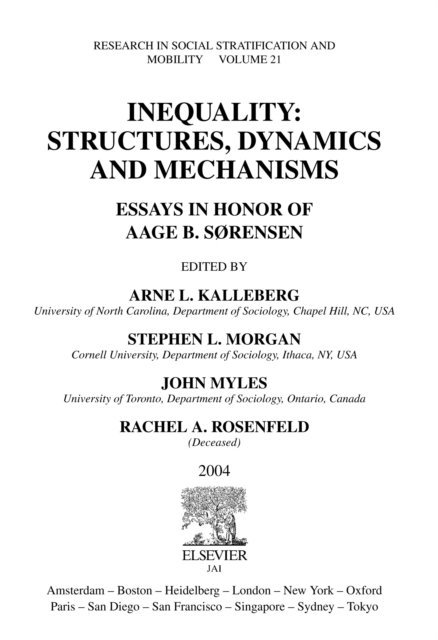
Aage Sorensen was an influential intellectual presence who was one of the world''s leading authorities on social stratification and the sociology of education. His research sought to understand the structures, dynamics and mechanisms that underlie inequalities in industrial societies by focusing on how individuals'' attainments are shaped by characteristics of a society''s or organization''s opportunity structure, on the one hand, and individuals'' education, experience and other human capital resources, on the other. He emphasized inequalities associated with education and schooling, class, and stratification outcomes such as income and occupational status. Within these general foci, he tackled the study of phenomena as diverse as rates of learning in elementary school reading groups and promotion patterns in large industrial corporations. The chapters of this volume illustrate some of the major themes that characterized Aage''s research; these topics are also likely to constitute important concerns for future efforts to understand structured social inequality in society. These themes include: the development of explicit dynamic models to account for observed patterns of education, career, and labor market outcomes; aspects of educational inequality such as school effects and learning opportunities; issues related to intragenerational mobility and careers; and the role of rents in generating structural inequality.
E-bok
Engelska, 2002321 kr
Läs direkt efter köp
Leading scholars in the field examine the highly topical issue of the future of the welfare state in Europe. They argue that welfare states need to adjust, and examine which kind of welfare architecture will further Europe''s stated goal of maximum social inclusion and justice. The volume concentrates on four principal social policy domains; the aged and transition to retirement; the welfare issues related to profound changes in working life; the new risks and needsthat arise in households and, especially, in child families; and the challenges of creating gender equality. The volume aims to promote a better understanding of the key welfare issues that will have to be faced in the coming decades. It also warns against the all-too-frequent recourse to patentpolicy solutions that have all to often characterized contemporary debate. It intends to move the policy debate from it often frustrating vague and generic level towards greater specificity and nuance.
Inbunden, Engelska, 2002
2 247 kr
Skickas inom 5-8 vardagar
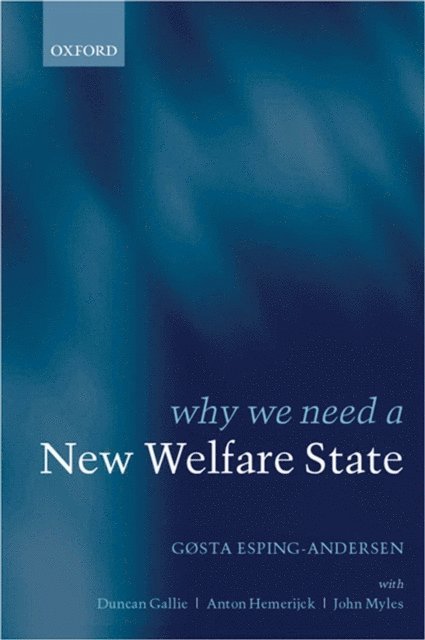
Leading scholars in the field examine the highly topical issue of the future of the welfare state in Europe. They argue that welfare states need to adjust, and examine which kind of welfare architecture will further Europe's stated goal of maximum social inclusion and justice. The volume concentrates on four principal social policy domains; the aged and transition to retirement; the welfare issues related to profound changes in working life; the new risks and needs that arise in households and, especially, in child families; and the challenges of creating gender equality. The volume aims to promote a better understanding of the key welfare issues that will have to be faced in the coming decades. It also warns against the all-too-frequent recourse to patent policy solutions that have all to often characterized contemporary debate. It intends to move the policy debate from it often frustrating vague and generic level towards greater specificity and nuance.
E-bok
PDF, Engelska, 1994975 kr
Läs direkt efter köp
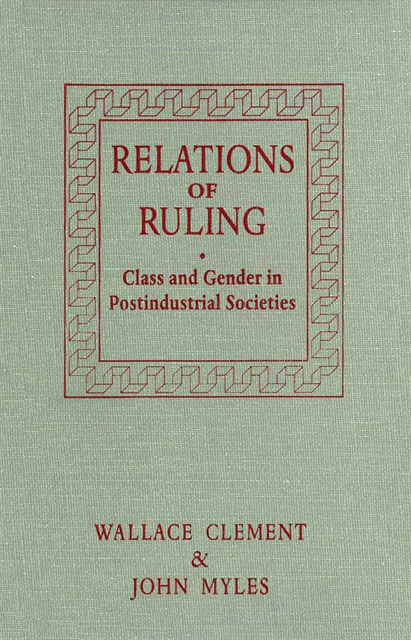
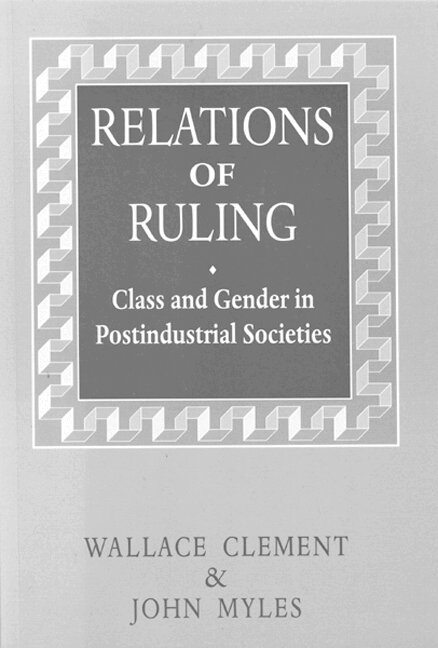
For some, the postindustrial world promises a new kind of capitalism that will draw its vitality from an expansion of knowledge and the creative capacities of working men and women. Others have highlighted postindustrialism''s darker side and concluded that it is simply the next stage in the degradation of labour. For some, the massive entry of women into paid labour that accompanies postindustrialism will finally liberate women from domestic patriarchy. For others, it is no more than an extension of private patriarchy into the public sphere. The authors show that historical residues and the contemporary impact of major economic and political factors have produced not one but several postindustrial trajectories. They reveal how postindustrialism has brought a new distribution of productive forces and of effective powers over people, and show that the shape of that distribution varies considerably in different countries and different fields as a result of both institutionalized practices (inherited from industrial capitalism) and the contemporary effects of state policies, organized labour, and the women''s movement. Addressing issues of class and gender, Relations of Ruling deals with problems involved in regulating paid labour as well as the relationship between paid and domestic labour. It will be of particular interest to specialists in gender issues and scholars in women''s, family, and labour studies.
Inbunden, Engelska, 2013
1 081 kr
Skickas inom 5-8 vardagar
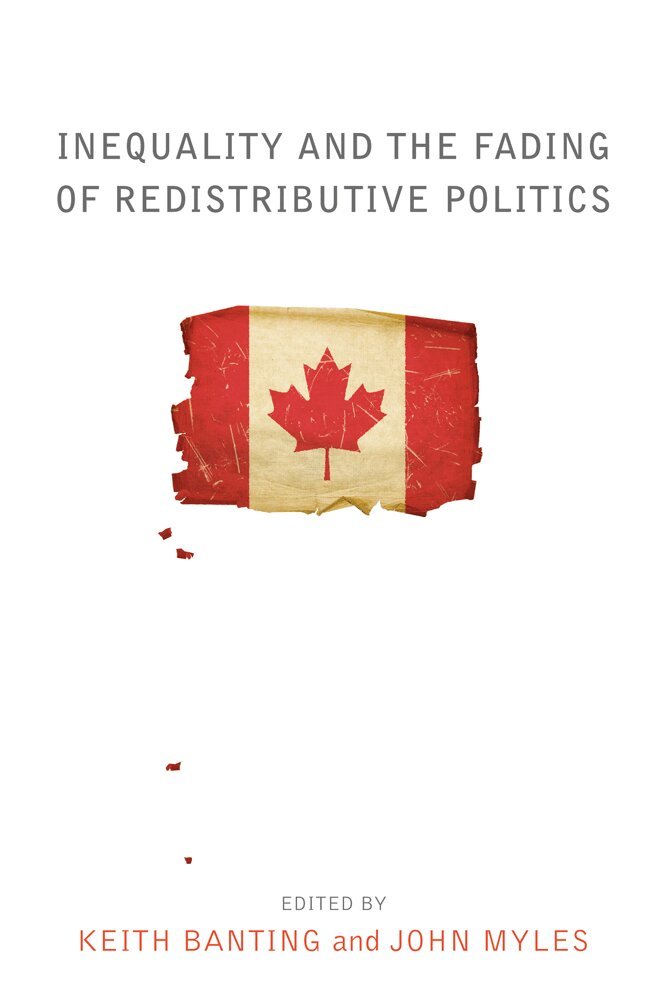
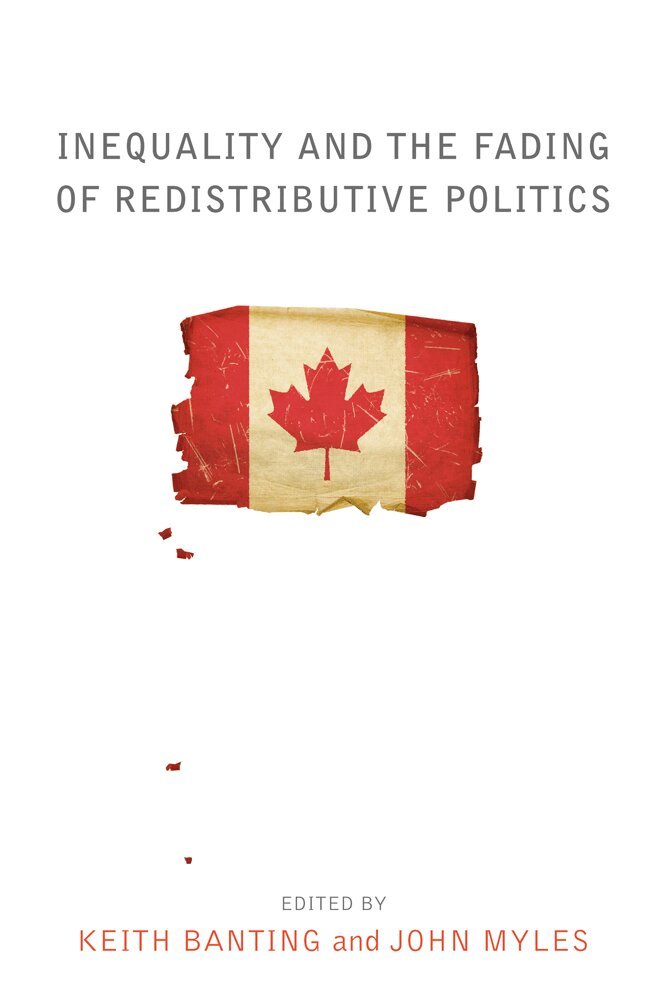
All advanced democracies have faced the pressures of globalization, technological change, and new family forms, which have generated higher levels of inequality in market incomes. But countries have responded differently, reflecting differences in their domestic politics. The politics of who gets what and why is at the core of this volume, the first to examine this question in an explicitly Canadian context.In Inequality and the Fading of Redistributive Politics, leading political scientists, sociologists, and economists point to the failure of public policy to contain surging income inequality. Government programs are no longer offsetting the growth in inequality generated by the market, and Canadian society has become more unequal. The redistributive state is fading due to powerful forces that have reshaped the politics of social policy, including global economic pressures, ideological change, shifts in the influence of business and labour, changes in the party system, and the decline of equality-seeking civil society organizations.This volume demonstrates conclusively that action and inaction -- policy change and policy drift -- are at the heart of growing inequality, calling into question Canada's record as a kinder, gentler nation.
Häftad, Engelska, 2014
401 kr
Skickas inom 5-8 vardagar
All advanced democracies have faced the pressures of globalization, technological change, and new family forms, which have generated higher levels of inequality in market incomes. But countries have responded differently, reflecting differences in their domestic politics. The politics of who gets what and why is at the core of this volume, the first to examine this question in an explicitly Canadian context.In Inequality and the Fading of Redistributive Politics, leading political scientists, sociologists, and economists point to the failure of public policy to contain surging income inequality. Government programs are no longer offsetting the growth in inequality generated by the market, and Canadian society has become more unequal. The redistributive state is fading due to powerful forces that have reshaped the politics of social policy, including global economic pressures, ideological change, shifts in the influence of business and labour, changes in the party system, and the decline of equality-seeking civil society organizations.This volume demonstrates conclusively that action and inaction -- policy change and policy drift -- are at the heart of growing inequality, calling into question Canada's record as a kinder, gentler nation.
E-bok
Engelska, 2019415 kr
Läs direkt efter köp
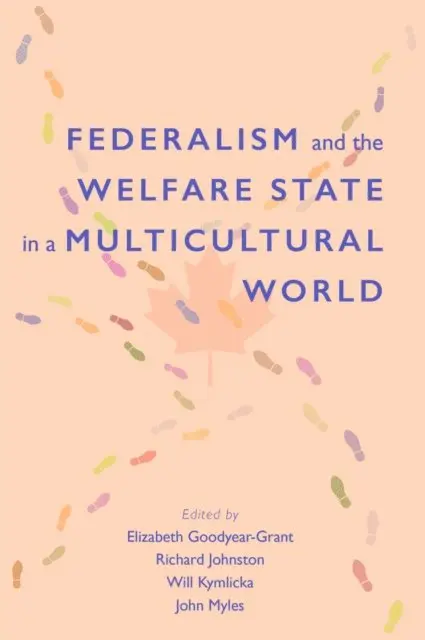
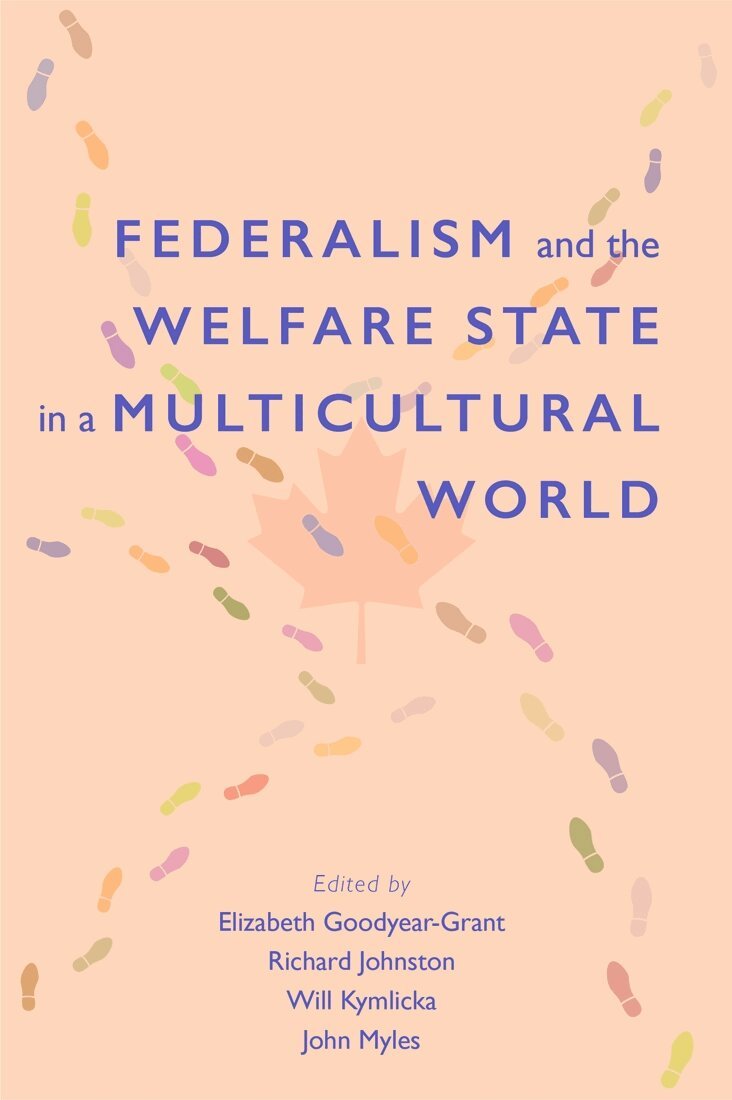
Until the 1990s social policy played an integrative role in Canada, providing a counter-narrative to claims that federalism and diversity undermine the potential of social policy. Today, however, the Canadian model is under strain, reflecting changes in both the welfare state and the immigration-citizenship-multiculturalism regime. Federalism and the Welfare State in a Multicultural World illustrates that there are clear trends that, if unchecked, may exacerbate rather than overcome important social cleavages. The editors argue that we are at a crucial moment to re-evaluate the role of social policy in a federal state and a multicultural society, and if federalism and diversity challenge traditional models of the nation-building function of social policy, they also open up new pathways for social policy to overcome social divisions. Complacency about, or naive celebration of, the Canadian model is unwarranted, but it is premature to conclude that the model is irredeemably broken, or that all the developments are centrifugal rather than centripetal. Social policy is integral to mitigating divisions of class, region, language, race, and ethnicity, and its underlying values of solidarity and risk-sharing also make it a critical mechanism for nation-building. Whether social policy actually accomplishes these goals is variable and contested. The essays in this volume provide some timely answers.
E-bok
PDF, Engelska, 2019415 kr
Läs direkt efter köp
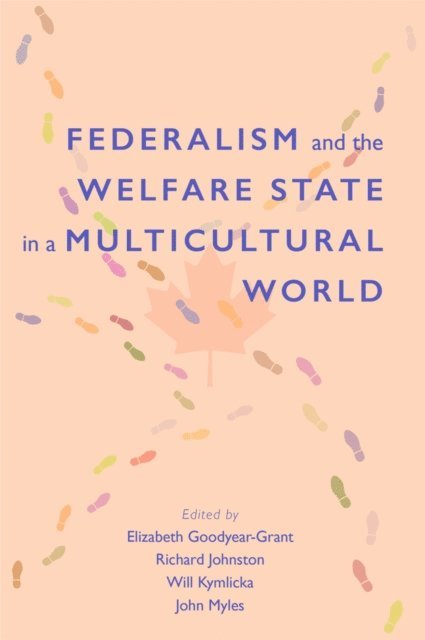
Until the 1990s social policy played an integrative role in Canada, providing a counter-narrative to claims that federalism and diversity undermine the potential of social policy. Today, however, the Canadian model is under strain, reflecting changes in both the welfare state and the immigration-citizenship-multiculturalism regime. Federalism and the Welfare State in a Multicultural World illustrates that there are clear trends that, if unchecked, may exacerbate rather than overcome important social cleavages. The editors argue that we are at a crucial moment to re-evaluate the role of social policy in a federal state and a multicultural society, and if federalism and diversity challenge traditional models of the nation-building function of social policy, they also open up new pathways for social policy to overcome social divisions. Complacency about, or naive celebration of, the Canadian model is unwarranted, but it is premature to conclude that the model is irredeemably broken, or that all the developments are centrifugal rather than centripetal. Social policy is integral to mitigating divisions of class, region, language, race, and ethnicity, and its underlying values of solidarity and risk-sharing also make it a critical mechanism for nation-building. Whether social policy actually accomplishes these goals is variable and contested. The essays in this volume provide some timely answers.