John Neil - Böcker
Visar alla böcker från författaren John Neil. Handla med fri frakt och snabb leverans.
2 produkter
2 produkter
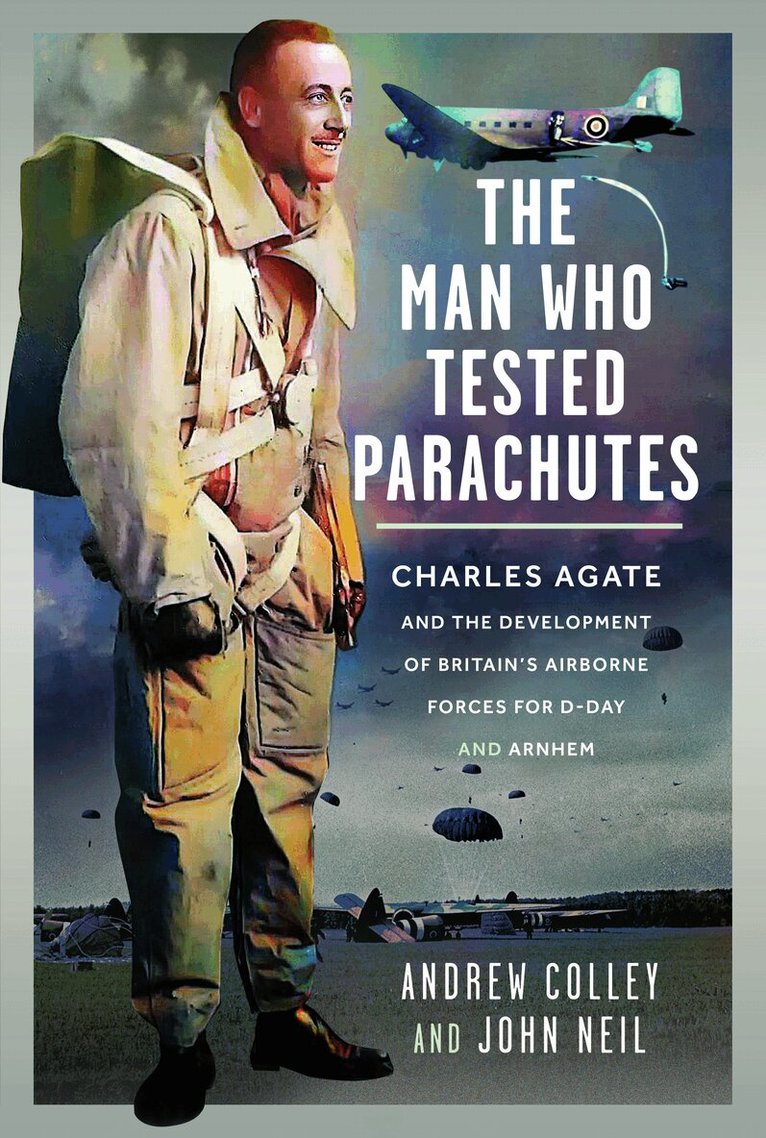
Man Who Tested Parachutes
Charles Agate and the Development of Britain’s Airborne Forces for D-Day and Arnhem
Inbunden, Engelska, 2025
266 kr
Skickas
By 1940 the Allies had fallen behind the Axis powers in parachute design and research. Other than as a means of escape from a doomed aircraft, the British regarded parachuting as of little military value. All that changed when the Germans used paratroops, the Fallschirmjäger, to devastating effect in the invasion of the Low Countries, and Churchill demanded immediate action. The call went out for men who would be prepared to risk their lives testing parachutes, jumping and landing techniques.Charles Agate was a 34-year-old schoolteacher with a taste for adventure when he joined a pioneering group of mavericks at RAF Ringway in Manchester. The breath-taking risks they took alongside the essential work of the women of the WAAF changed the course of the war and the face of airborne warfare. Their work though often came at a terrible cost.Between 1941 and 1945 Agate and his fellow Parachute Jump Instructors (PJIs) completed thousands of jumps, often from low altitude or using prototype parachutes. They jumped carrying heavy kit bags, had sandbags strapped to their legs, and landed in deep freezing water. They also trained thousands of raw recruits for the key airborne operations of the war, as well as over 600 Special Operation Executive agents for dropping into enemy territory, frequently accompanying them as dispatchers on these hazardous flights. They were proud of the knowledge they were acquiring and imparting at Ringway, but, as the authors reveal, this led to disputes with the Americans over tactics and equipment as they prepared for the Allied invasion of France.Agate amassed a record 1,601 jumps and was awarded the Air Force Cross. He and his fellow PJIs at Ringway were also personally thanked by Churchill for their unique contribution to the war effort. His last jump, in 1946, with his flying suit stuffed with winnings won on a horse called Airborne at the Epsom Derby, was reported in the press worldwide.He acknowledged after the war that he had seen ‘21 good soldiers hit the deck’ during training at RAF Ringway, and these tragedies, as well as the effects of risking his life on a daily basis, took a heavy emotional toll on him and many of the other PJIs. The Man Who Tested Parachutes explores Agate’s ‘lost’ post-war years: his struggles with his mental health, and the impact on his family. It charts his journey to becoming the unconventional head teacher of a village school and his clashes with local authorities. Finally, it describes unflinchingly the last dark twist in the life of this complex man, alone in his flat overlooking the sea just before Christmas 1986.This book tells the story of an ordinary man who took extraordinary risks, and the men and women who served alongside him. It also remembers the young recruits who died before they were able to take part in the key battles for which they were being trained.
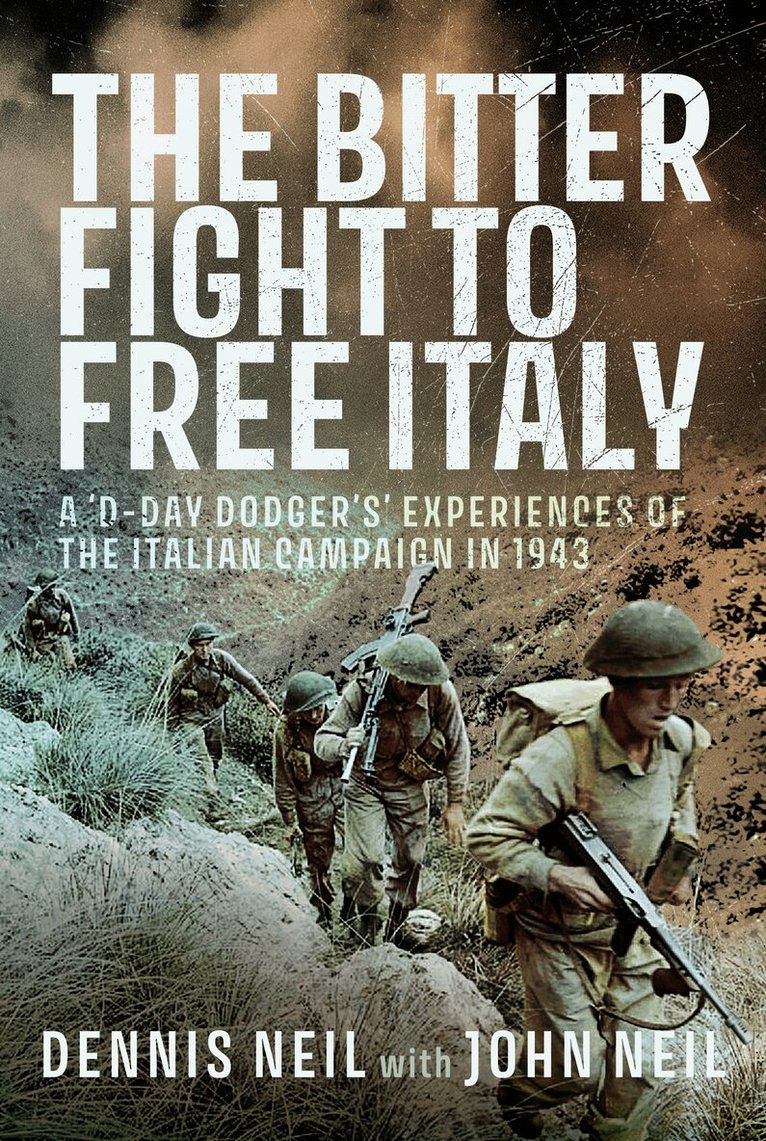
Bitter Fight to Free Italy
A ‘D-Day Dodger’s’ Experiences of the Italian Campaign in 1943
Inbunden, Engelska, 2025
266 kr
Skickas
The troops who fought their way up through the Italian peninsula in 1943 were labelled the ‘D-Day Dodgers’, but for the tens of thousands of men who were seriously wounded in the first months of the campaign, the mocking phrase was loaded with irony.It had all started so positively on 10 July 1943, when 2,600 ships landed more than 180,000 Commonwealth and American troops on the island of Sicily, part of what Churchill had described as the ‘soft under-belly of Europe’. This amphibious assault, supported by airborne landings, marked the start of the Italian Campaign. The Allies’ military planners thought it might be possible for a concentrated invasion to quickly knock Italy out of the war. The reality, however, was completely different. The situation was compounded by Italy’s surrender on 3 September 1943, an act which forced Hitler to launch Operation Axis, the occupation of Italy.In the months that followed, Allied troops were required to perform multiple amphibious assaults, engage in trench warfare, fight in mud, in freezing rain and snow, in the most challenging terrain imaginable. This book tells the story of the early months of the Italian campaign through the eyes of one 21-year-old private in the Royal Berkshire Regiment, Dennis Neil, who found himself lying severely wounded and near death on an Italian mountain on a bitterly cold day in November 1943. While a surgeon at a Field Hospital fought to save his life, his family received a telegram notifying them of the death of his elder brother in that same campaign.This is a story that traces one soldier’s journey to that mountainside and how his life changed irrevocably as a result of the wounds he suffered that day. It is a dramatic, and harrowing, story that is told in unparalleled detail, with the benefit of contemporary records and unpublished photographs, having been compiled through the memoirs of Dennis Neil by his son, John. Winston Churchill called Italy the ‘soft underbelly of the Axis’. It proved to be quite the opposite.